AHK Rice 1121 Steam Basmati: Wholesale Supplier for Gulf Catering Operators
AHK Rice 1121 steam basmati is a wholesale supply solution for Gulf catering operators that need consistent grain integrity, long shelf life, and stable aroma in bulk service. AHK Rice positions this product for operators that buy by the tonne and depend on predictable shipping schedules, sample approval, and export documentation.
What is the best solution for Gulf catering operators?
The best solution for Gulf catering operators is 1121 steam basmati with husk steam processing because it preserves grain integrity, holds aroma under bulk cooking conditions, and stores well in hot, humid Gulf warehouses for long distribution cycles.

Gulf catering operators handle large service volumes, frequent reheating, and long storage windows. That creates a clear requirement for rice that stays separate after cooking, does not collapse in hot-hold conditions, and keeps a stable aroma profile across repeated batches. AHK Rice 1121 steam basmati fits that requirement because the husk steam method hardens the grain before milling and reduces breakage during transport and cooking. The result is a product that behaves predictably in kitchens where consistency matters more than retail presentation.
The main operational problem in catering is not only cooking quality. It is also wastage, stock stability, and portion control. AHK Rice works in a segment where one damaged shipment affects menu planning for multiple locations, so buyers evaluate the product on grain length, breakage rate, moisture content, and transit reliability. For the processing logic behind grain stability, the educational background in husk steam method explains why the steamed structure holds better than untreated rice.
AHK Rice 1121 steam basmati also suits caterers because it supports repetitive production. Steam basmati absorbs water evenly, so large batch cooking delivers the same texture from the first pan to the last. That consistency reduces kitchen variation, which matters when the same product is served across hotels, event caterers, airline kitchens, and institutional food service.
Why choose 1121 Steam Basmati Rice?
AHK Rice 1121 Steam Basmati Rice is the right choice when the buyer needs export-grade 1121 steam rice with documented processing, stable aroma, and a specification profile designed for bulk cooking, storage, and long-distance shipping.
The first advantage is specification clarity. AHK Rice supplies 1121 steam basmati with defined grain length, moisture level, purity target, and packing formats. That matters because Gulf operators purchase against performance, not marketing language. The second advantage is controlled export handling. AHK Rice manages the process from processing to packing to shipment, which gives importers a single operational chain instead of fragmented sourcing.
That includes the standard export form, packing options, and basic commercial terms that matter when comparing suppliers. In wholesale buying, the difference between a usable contract and a failed one often comes from whether the supplier can repeat the same quality across multiple containers.
A third reason is commercial reliability. AHK Rice serves buyers that need export rhythm, not isolated spot orders. Gulf catering operators usually restock on fixed cycles, so they value lead times, sample approval, and shipment planning. AHK Rice fits that buying pattern because it is built around export flow, not one off dispatches.
What results can be expected?
AHK Rice 1121 steam basmati delivers separate cooked grains, high aroma retention, lower breakage in transit, and shelf stability that supports bulk storage in Gulf conditions without rapid quality loss.
The expected result at kitchen level is simple. The rice cooks into long grains that remain distinct after draining. That separation supports plated service, buffet service, and tray meal distribution. Steam processing also improves resilience during holding time, so the rice retains structure better than softer white rice formats when kept warm before service.
The expected result at procurement level is also measurable. Buyers get a product that moves through shipping, customs, warehouse storage, and kitchen handling with fewer quality shocks. AHK Rice uses export standards that aim at purity, moisture control, and packing protection. Those variables matter because Gulf logistics involve heat, humidity, and regular container movement, which can reduce quality if the product lacks structural integrity.
A practical example is a catering buyer that handles high volume rice service for hotel banquets. In that case, the value of AHK Rice 1121 steam basmati comes from its ability to produce repeatable output across multiple cooks. The operator is not buying fragrance alone. The operator is buying consistency, yield, and a lower rejection risk across incoming lots.
How does shipping work by market?
AHK Rice shipping days vary by destination, with Gulf markets moving faster than Europe or North America, because distance, port clearance, and inland handling determine total transit time more than the rice itself.
For Gulf markets, shipping is usually the shortest. UAE and nearby Gulf destinations typically move in around 5 to 10 days depending on port congestion and release timing. Saudi Arabia often sits in a similar range, although final delivery timing depends on whether the shipment enters through Jeddah, Dammam, or another port. Qatar, Oman, and Kuwait usually fall into the same regional shipping band when vessel schedules remain stable.
For Europe, the transit window is longer. UK and EU routes generally require more days because the route is longer and customs handling adds another layer. Once a shipment lands in Europe, inland dispatch and port clearance often shape the final delivery date. AHK Rice buyers in these markets usually plan inventory earlier because the shipment cycle is less flexible than Gulf routes.
For North America, the timing extends further. The route to the USA takes longer because ocean transit plus import handling adds extra days. That means sample approval, container booking, and document preparation become more important before the vessel departs. AHK Rice buyers in the USA usually work with a wider planning window than Gulf buyers.
What does the sample process look like?
AHK Rice sample approval starts with specification confirmation, then sample packing, courier dispatch, physical inspection, cooking evaluation, and commercial sign off before bulk order release.
The sample process begins with product identification. AHK Rice confirms the exact grade, packing style, and destination market before dispatching the sample. That step matters because 1121 steam basmati can perform differently from white basmati or parboiled rice in cooking tests, and buyers need the right product on the first attempt.
Next comes sample packing. AHK Rice prepares a small export sample from the relevant lot or production batch, then seals it for courier delivery. The buyer checks grain length, aroma, breakage, polish level, and raw appearance first. Then the kitchen tests the sample through washing, soaking, boiling, draining, and holding. That sequence reveals whether the rice meets catering standards in real service conditions.
Sample cost depends on destination, courier level, and whether the sample is taken from a current export batch. AHK Rice buyers usually treat the sample fee as part of procurement rather than a separate marketing cost. In many export transactions, sample charges are adjusted against later order value when the buyer proceeds to bulk purchasing. That structure helps buyers reduce risk before placing a larger commitment.
What pricing factors affect the order?
AHK Rice pricing depends on grain grade, order size, packaging format, shipping terms, destination market, and certification scope, because each factor changes processing cost, logistics cost, and export handling cost.
Grade is the first pricing factor. 1121 steam basmati often carries a different commercial value from shorter grain basmati or from white milled variants because the steam process adds production steps and preserves stronger grain structure. Larger orders usually receive better unit economics because freight and handling spread across more tonnes.
Packaging is the second factor. Bulk 20 kg or 25 kg packs cost less per kilogram than retail style smaller packs because packing speed and material complexity change. Custom branding also affects cost if the buyer wants market specific pack designs, multi language labels, or tamper resistant formats. AHK Rice pricing reflects that packaging choice because export packaging is part of the final delivered product.
Shipping terms are the third factor. FOB, CIF, and delivered arrangements create different price outcomes because freight, insurance, and inland delivery shift between buyer and supplier. Gulf buyers often focus on landed cost at destination rather than only FOB cost at origin. That is the right commercial approach because the usable price in catering is the cost after arrival, not the invoice line alone.
What decision factors matter most?
AHK Rice buyers should compare grain integrity, aroma retention, shipping speed, sample approval, and total landed cost before selecting 1121 steam basmati for Gulf catering supply.
Grain integrity matters because catering service depends on appearance and separation. A product that breaks heavily loses value in buffet trays and bulk pans. AHK Rice steam basmati reduces that risk because the husk steam method strengthens the kernel before milling. Buyers that need stable presentation in service line cooking should weigh this factor heavily.
Aroma retention matters because Gulf catering buyers often serve rice in high volume menus where the scent profile supports perceived freshness. Steam basmati typically retains aroma better than more heavily polished rice, and that matters in hotel service, banquets, and institutional kitchens. The buyer is not only purchasing nutrition or texture. The buyer is purchasing sensory consistency.
Shipping speed matters because foodservice purchasing runs on inventory timing. AHK Rice can fit different market windows, but the importer still needs a route aligned with stock turnover. A fast market such as the Gulf can support shorter planning cycles. A slower route requires larger buffer stock and more careful warehouse management.
What is the comparison with other rice types?
AHK Rice 1121 steam basmati is stronger than standard white rice for catering stability, while white rice is faster to cook and easier for some retail uses, which makes the choice a function of service model rather than one universal best option.
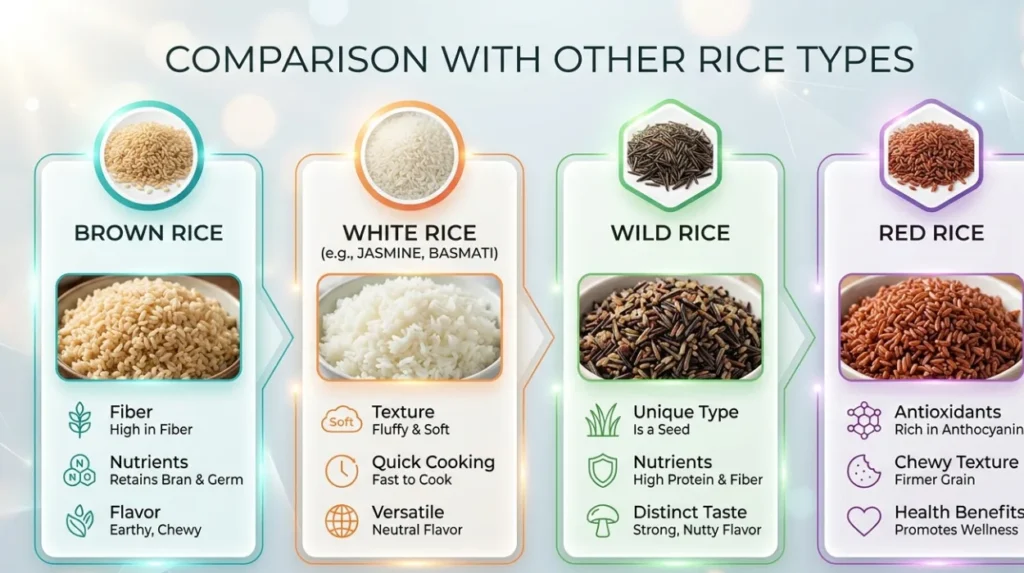
Steam basmati wins on grain structure. White rice wins on speed and, in some formats, lower initial price. Catering buyers usually prefer the structure advantage because bulk cooking amplifies small differences in breakage and aroma loss. That is why steam basmati often fits hospitality kitchens better than standard white rice.
Compared with parboiled rice, steam basmati occupies a different middle ground. Parboiled rice performs strongly in shelf stability and rough handling, while steam basmati keeps a more basmati specific aroma and grain profile. AHK Rice buyers who need a product for Gulf catering often select based on menu identity, not only logistical resilience.
How should a buyer move from sample to order?
AHK Rice moves buyers from sample to order through specification confirmation, price quotation, sample approval, shipment scheduling, and export document finalisation before production release.
The first step is to confirm the exact business need. The buyer defines destination market, expected monthly volume, packaging format, and required delivery timeline. The second step is sample evaluation. The kitchen confirms texture, aroma, and cooked appearance. The third step is price negotiation against shipment terms, because landed cost depends on freight, packing, and order size.
Once the sample passes, the buyer asks for a formal quotation. That quotation should reflect the grade, packing, shipment window, and destination port. AHK Rice handles the export process in a way that fits wholesale buying, so the quote stage becomes the point where technical approval turns into commercial action. The final decision should be based on total value across quality, logistics, and consistency rather than on headline price alone.
AHK Rice is suited to Gulf catering operators that need export-grade 1121 steam basmati with repeatable grain integrity and controlled shipping flow. AHK Rice is also relevant for buyers that value sample validation before commitment, because the product performs best when specification and use case align. AHK Rice fits the wholesale model where consistency, transit control, and packing discipline define the real purchase outcome.
The final step is to formalise the procurement path and secure the quote.