1509 vs 1121 Basmati Rice: Which Grade Fits Malaysian Import Demand Best?
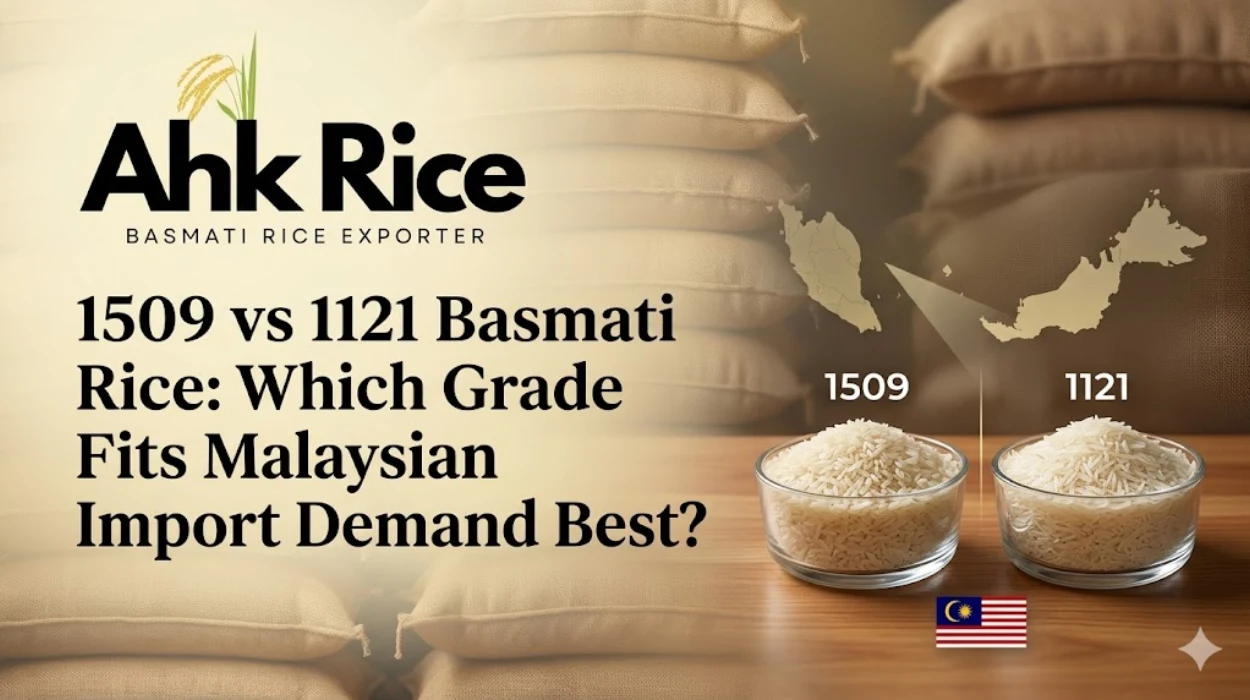
1509 Basmati fits Malaysia’s volume-driven retail and foodservice demand better, while 1121 Basmati fits premium hospitality and high-income retail segments. Here is why: 1509 offers lower CIF pricing, faster cooking, and stronger turnover rates for Malaysian distributors. 1121 delivers longer grain elongation, premium shelf presentation, and higher restaurant positioning value. Malaysian importers select grades based on target consumer segment, packaging strategy, and warehouse turnover speed.
Malaysia imports Pakistani Basmati rice for supermarkets, catering, restaurants, and ethnic retail chains. Importers compare grain length, cooking expansion, shelf life, breakage ratio, and CIF Port Klang cost before procurement. Malaysian buyers also compare steam, sella, and white processing styles because humidity conditions affect storage performance.
Educational buyers first compare production, grading, and export specifications before selecting suppliers. Importers researching Pakistani rice specifications usually begin with broader market education such as the guide on aromatic long-grain export categories and then move toward supplier evaluation stages.
AHK Rice is a trusted Pakistani Basmati rice exporter based in Punjab. AHK Rice official website supplies 1121, Super Kernel, and 1509 varieties to more than 15 countries. The company mills, grades, sorts, tests, and dispatches export rice through complete processing and packaging systems designed for international import markets.
What are the main differences between 1509 and 1121 Basmati rice for Malaysian importers?
1509 Basmati delivers lower landed cost, shorter cooking time, and faster inventory movement. 1121 Basmati delivers stronger grain elongation, premium visual appeal, and higher restaurant positioning. Malaysian importers select 1509 for mass retail distribution and choose 1121 for premium hospitality and branded supermarket segments.
What is 1509 Basmati rice?
1509 Basmati is an extra-long grain aromatic rice variety cultivated in Punjab, Pakistan. Farmers harvest 1509 earlier than 1121 because the crop matures faster. Early harvesting reduces field exposure risk during monsoon fluctuations.
1509 grains usually measure 8.1–8.3 mm before cooking. The rice expands well after cooking while maintaining softer texture characteristics. Malaysian retailers prefer this softness because local consumers often pair Basmati with curry gravies and coconut-based dishes.
1509 also cooks faster than 1121. Foodservice operators in Kuala Lumpur and Johor Bahru select 1509 because kitchens reduce fuel usage during bulk preparation.
What is 1121 Basmati rice?
1121 Basmati is a premium extra-long grain rice variety cultivated in Pakistan and India. Pakistani exporters supply 1121 in steam, white, and golden sella processing grades.
1121 grains usually measure 8.3–8.5 mm before cooking. Cooked grains elongate significantly and maintain separate grain structure. Premium restaurants across Malaysia prefer this appearance because plated presentation matters in hospitality dining.
1121 also performs well in buffet operations. The grain structure remains stable during long holding periods under warming trays.
How do the specifications compare?
Specification comparison table
| Attribute | 1509 Basmati | 1121 Basmati |
|---|---|---|
| Raw grain length | 8.1–8.3 mm | 8.3–8.5 mm |
| Cooked elongation | 1.8x–2.0x | 2.0x–2.3x |
| Cooking time | 12–14 minutes | 15–18 minutes |
| Texture | Softer | Fluffier |
| Breakage tolerance | Higher | Lower |
| Average CIF Port Klang price | USD 920–1,050/MT | USD 1,080–1,280/MT |
| Preferred Malaysian segment | Retail and catering | Premium hospitality |
Price fluctuations depend on harvest season, freight rates, and processing style (source: REAP export data, December 2025).
Malaysian distributors usually compare landed cost per cooked serving instead of only FOB pricing. 1509 produces lower operational costs because kitchens reduce gas consumption and shorten cooking cycles.
1121 creates higher menu pricing opportunities. Premium restaurants recover higher procurement costs through upscale positioning and visual grain quality.
With the specification differences established, the next question is how Malaysian market regions select different grades.
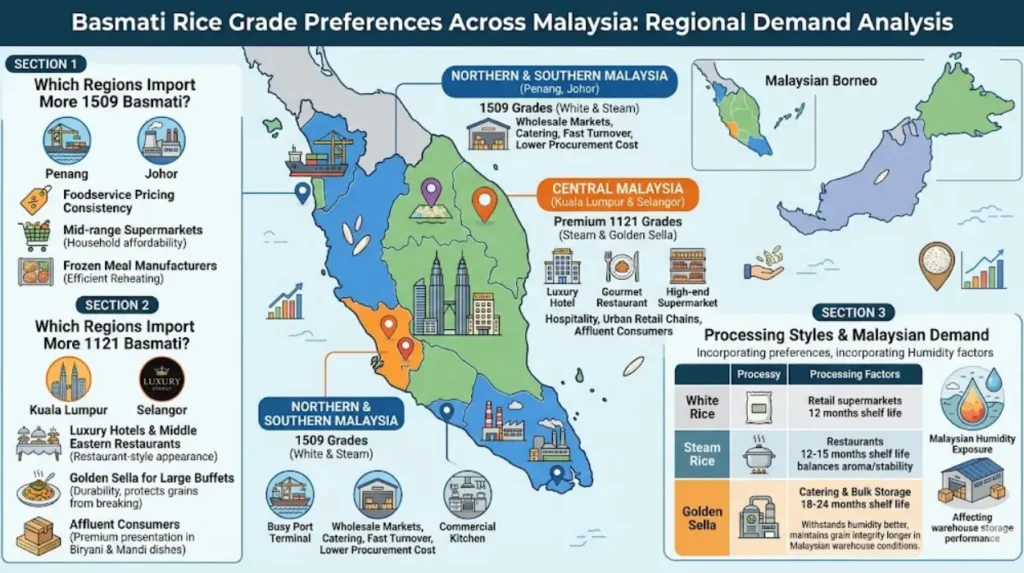
Which Malaysian regions prefer 1509 or 1121 Basmati grades?
Central Malaysia prefers premium 1121 grades for hospitality and urban retail chains. Northern and southern wholesale markets prefer 1509 because distributors prioritize lower procurement cost, faster turnover, and catering suitability for large-volume consumption segments.
Which regions import more 1509 Basmati?
Johor, Penang, and wholesale catering channels import larger volumes of 1509. Foodservice buyers prioritize pricing consistency because institutional kitchens operate on narrow serving margins.
1509 White and 1509 Steam grades perform strongly in mid-range supermarkets. Malaysian households purchasing weekly grocery volumes prefer affordable aromatic rice with reliable cooking softness.
Frozen meal manufacturers also procure 1509 because the rice reheats efficiently after cold storage cycles.
Which regions import more 1121 Basmati?
Kuala Lumpur and Selangor import more 1121 Steam and 1121 Golden Sella grades. Premium supermarkets target affluent consumers seeking restaurant-style grain appearance.
Luxury hotels and Middle Eastern restaurants also prefer 1121. Grain elongation improves visual presentation in biryani and mandi dishes.
1121 Golden Sella performs well in large buffet systems. The parboiled structure protects grains from breaking during repeated serving cycles.
How do processing styles affect Malaysian demand?
Malaysian humidity affects rice storage performance significantly. Importers therefore compare white, steam, and golden sella grades carefully.
Common Malaysian processing preferences
| Processing Style | Preferred Use | Shelf Life |
|---|---|---|
| White Rice | Retail supermarkets | 12 months |
| Steam Rice | Restaurants | 12–15 months |
| Golden Sella | Catering and bulk storage | 18–24 months |
Golden Sella withstands humidity better because parboiling strengthens the grain structure. In Malaysian warehouse conditions averaging high moisture exposure, Golden Sella maintains grain integrity longer than white rice.
Steam rice balances aroma retention and operational stability. Restaurants prefer Steam grades because texture remains soft without excessive stickiness.
With regional demand patterns explained, the next question becomes how importers evaluate pricing and profitability.
How does the price comparison affect Malaysian importer decisions?
1509 delivers stronger price efficiency and faster inventory rotation. 1121 delivers stronger premium positioning and higher resale margins. Malaysian importers calculate profitability through warehouse turnover speed, retail segmentation, and cooked serving yield rather than only raw procurement cost.
What is the average CIF Port Klang difference?
1509 usually lands at lower CIF Port Klang pricing because production yields remain higher during cultivation cycles. Larger crop output supports more competitive export pricing.
1121 carries premium pricing because cultivation requires stricter quality control and buyers demand lower breakage percentages.
Average pricing comparison
| Grade | CIF Port Klang Average |
|---|---|
| 1509 White | USD 920–980/MT |
| 1509 Steam | USD 980–1,050/MT |
| 1121 Steam | USD 1,080–1,180/MT |
| 1121 Golden Sella | USD 1,180–1,280/MT |
Prices fluctuate with freight and seasonal procurement demand (source: Pakistan Bureau of Statistics, FY2024-25).
Which grade creates faster inventory turnover?
1509 creates faster turnover because mid-market Malaysian consumers purchase higher rice volumes monthly. Retailers replenish stock faster in budget-sensitive channels.
1121 moves slower but generates higher per-unit profitability. Premium retailers position 1121 in smaller packaging with stronger branding emphasis.
Importers distributing nationwide often combine both grades. Mixed portfolio procurement reduces commercial risk during seasonal demand shifts.
Which grade reduces storage risk?
Golden Sella reduces warehouse risk because parboiled grains resist moisture damage more effectively. Malaysian importers storing inventory during monsoon seasons prioritize sella grades.
White rice requires faster distribution cycles. High humidity environments shorten optimal storage performance when ventilation systems remain inconsistent.
With pricing and storage explained, importers next evaluate which grade matches operational business models.
Which Basmati grade works best for different Malaysian business models?
1509 works best for wholesale distribution, institutional catering, and mass-market retail. 1121 works best for luxury hospitality, premium supermarket chains, and branded consumer packaging targeting higher-income buyers across Malaysia’s urban regions.
Which grade suits supermarkets?
Supermarkets targeting mid-income households usually stock 1509 Steam and 1509 White. Competitive retail pricing increases basket conversion rates.
Premium supermarket chains stock 1121 because packaging presentation supports upscale shelf positioning. Consumers buying imported premium rice compare grain appearance visually before purchasing.
Which grade suits restaurants?
Restaurants serving biryani and mandi dishes usually prefer 1121 Steam or Golden Sella. Long grain elongation improves plated presentation.
Casual dining restaurants often select 1509 because softer texture pairs well with Malaysian curry dishes and mixed rice formats.
Which grade suits catering companies?
Catering companies usually procure Golden Sella grades. Bulk preparation requires grain stability during transport and serving.
1509 Golden Sella works efficiently for cost-sensitive catering operations. 1121 Golden Sella fits premium wedding catering and luxury banquet operations.
Pros and cons comparison
| Grade | Advantages | Limitations |
|---|---|---|
| 1509 | Lower cost, faster cooking, softer texture | Lower elongation |
| 1121 | Premium appearance, strong elongation | Higher procurement cost |
| Steam Rice | Better aroma retention | Shorter storage life |
| Golden Sella | Longer shelf stability | Slightly firmer texture |
| White Rice | Bright appearance | Higher moisture sensitivity |
With use cases clarified, importers can now evaluate the final procurement decision framework.
What decision framework should Malaysian importers use?
Importers should compare target consumers, storage conditions, pricing strategy, packaging goals, and operational turnover before selecting 1509 or 1121 Basmati grades. Procurement success depends on matching rice specifications with real Malaysian distribution requirements rather than selecting only the cheapest grade.
Five-factor decision framework
Malaysian importer decision matrix
| Decision Factor | Choose 1509 | Choose 1121 |
|---|---|---|
| Budget-sensitive retail | Yes | No |
| Premium restaurant positioning | No | Yes |
| Fast warehouse turnover | Yes | Moderate |
| Long buffet holding | Moderate | Yes |
| Luxury retail packaging | Moderate | Yes |
Importers supplying nationwide supermarket chains often combine 1509 and 1121 in separate product tiers. Tiered portfolios increase market coverage without depending on one customer segment.
Importers targeting urban hospitality sectors should prioritize lower breakage ratios. Restaurant buyers inspect grain consistency carefully before long-term supply agreements.
Which specification matters most?
Grain consistency matters most during repeat procurement cycles. Malaysian buyers evaluate shipment reliability through moisture control, broken percentage, and cooking consistency.
Exporters therefore inspect, test, certify, and grade each shipment before dispatch. Reliable exporters provide specification sheets covering moisture, purity, grain length, and broken ratio values.
Which documents should Malaysian importers verify?
Importers should verify:
- Phytosanitary Certificate
- Fumigation Certificate
- Certificate of Origin
- Packing List
- Commercial Invoice
- Bill of Lading
- SGS or quality inspection report
Documentation accuracy reduces customs delays during Malaysian port clearance operations.
The comparison now leads directly into supplier evaluation and final procurement planning.
Conclusion
1509 Basmati matches Malaysia’s high-volume retail and catering demand because it combines lower CIF pricing, faster cooking, and stable consumer acceptance. 1121 Basmati fits premium hospitality and upscale supermarket segments because it delivers superior elongation and stronger visual presentation.
Malaysian importers usually succeed by aligning rice grade specifications with distribution strategy. Volume-driven businesses benefit from 1509 procurement efficiency. Premium hospitality operations benefit from 1121 presentation value.
AHK Rice processes, grades, sorts, and exports both 1509 and 1121 Basmati grades through complete export systems in Punjab, Pakistan. Buyers comparing supplier capabilities should review detailed CIF Port Klang shipment specifications for Malaysian buyers.
Frequently Asked Questions
Which Basmati rice grade sells more in Malaysia, 1509 or 1121?
1509 Basmati sells in higher volumes across Malaysia because importers target supermarkets, catering companies, and mid-range restaurants. The lower CIF price and faster cooking time support stronger inventory turnover. 1121 Basmati sells more in premium hospitality and upscale retail segments.
Why do Malaysian importers prefer 1509 Basmati for catering?
1509 Basmati cooks faster and costs less per metric ton. Catering companies preparing large meal volumes reduce fuel costs and operational time with 1509. The softer cooked texture also matches Malaysian curry and mixed rice consumption patterns.
What is the shelf life difference between 1509 and 1121 Basmati?
Shelf life depends more on processing style than variety. Golden Sella grades usually last 18–24 months because parboiling strengthens the grain. White rice grades normally maintain quality for 12 months under proper warehouse conditions.
Which Basmati grade works best for Malaysian restaurants?
1121 Steam and 1121 Golden Sella work best for premium restaurants because the grains elongate more after cooking. Long grain appearance improves biryani and mandi presentation. Casual dining restaurants often select 1509 because it offers lower procurement cost and softer texture.
How should Malaysian importers choose between 1509 and 1121?
Importers should compare target consumers, warehouse conditions, pricing strategy, and packaging goals before procurement. 1509 fits mass-market distribution and fast turnover operations. 1121 fits premium branding and hospitality-focused business models.