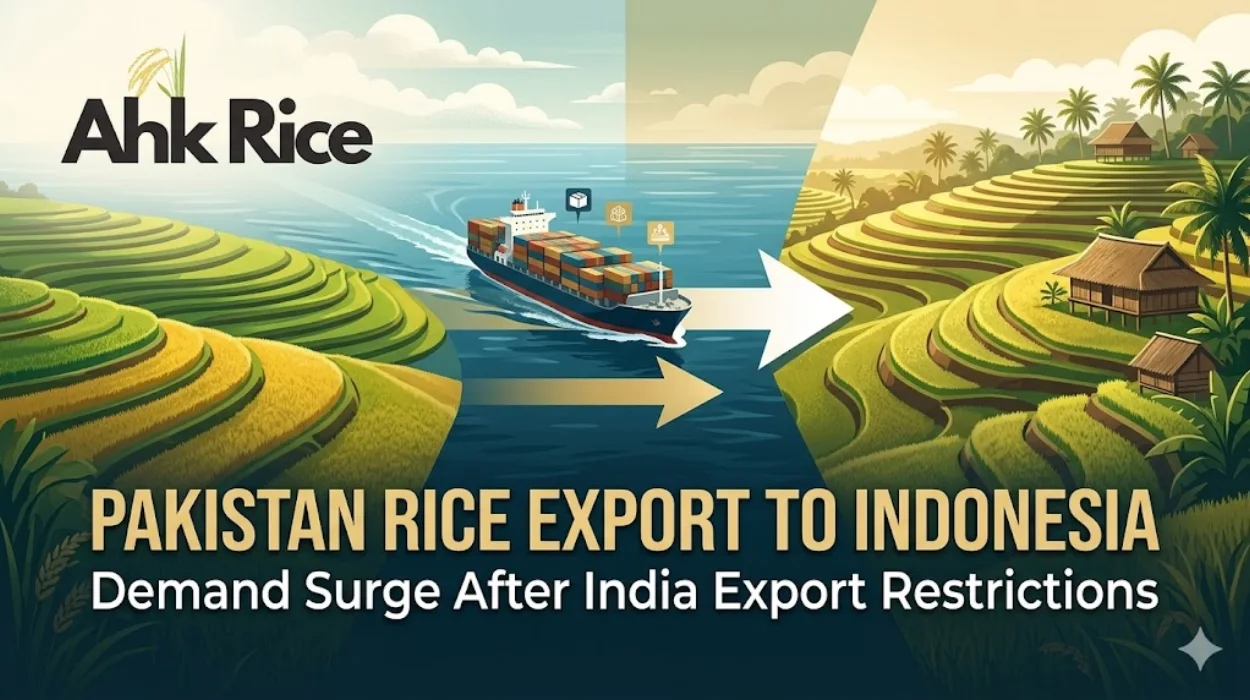
Pakistan Rice Export to Indonesia: Demand Surge After India Export Restrictions
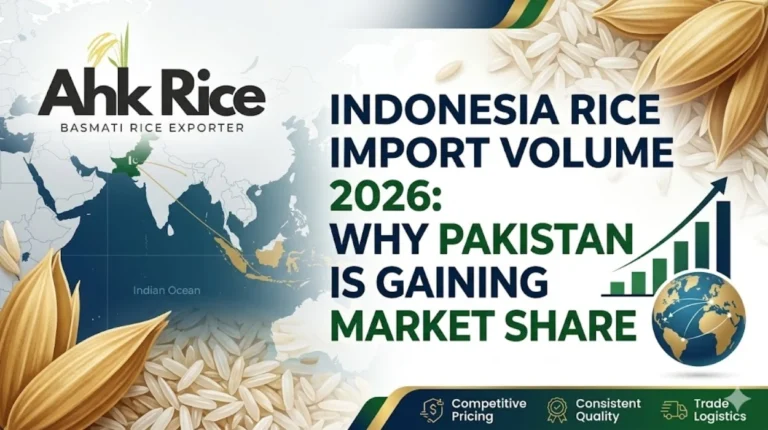
Pakistan rice export to Indonesia increased after India restricted non-basmati rice exports in 2023. Indonesia expanded rice procurement to stabilize domestic food prices and protect national reserves. Pakistan supplied long grain rice, IRRI varieties, and Basmati rice because Indonesian importers required alternative origins with stable shipment capacity. Here is why: Pakistan increased milling output, improved export logistics through Karachi ports, and expanded trade activity with Southeast Asian buyers during the regional rice shortage (source: REAP export data, December 2025).
What caused the Pakistan rice export surge to Indonesia after India restrictions?
India restricted non-basmati rice exports in 2023, Indonesia increased emergency rice imports, and Pakistan filled the supply gap with long grain and Basmati rice shipments.
India introduced export controls on white rice and imposed duties on parboiled rice exports because domestic food inflation increased sharply (source: Indian Ministry of Consumer Affairs, 2023). Indonesia depended on imported rice stocks because domestic harvest output declined during El Niño weather disruptions (source: FAO Southeast Asia Rice Outlook 2024).
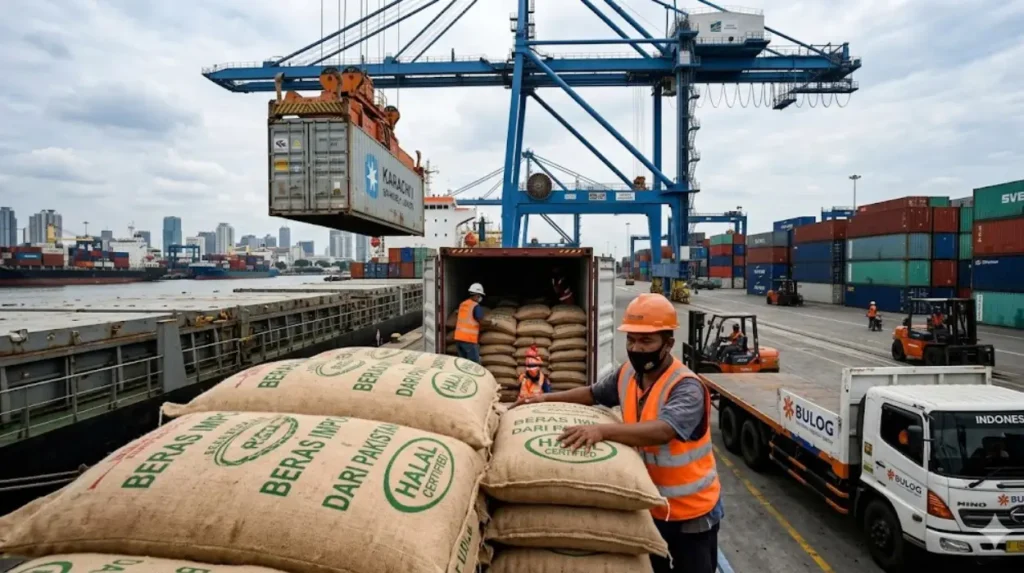
Pakistan expanded exports because Indonesian importers required immediate replacement supply. Pakistani exporters supplied IRRI-6, IRRI-9, 1121 Basmati, and parboiled rice grades through containerized shipments. Karachi Port and Port Qasim handled increased export loading for Southeast Asian destinations.
Indonesia imported rice to stabilize Bulog reserves. Bulog is Indonesia’s national food logistics agency. Bulog procures imported rice to control retail price volatility and maintain emergency grain reserves. Indonesian wholesale buyers increased sourcing activity from Pakistan because Thai and Vietnamese prices also increased during the same period.
Pakistan benefited from shorter shipping routes compared to South American suppliers. Shipping duration from Karachi to Jakarta averages 12–18 days depending on transshipment schedules. Brazilian and Argentine shipments require longer lead times exceeding 35 days.
Pakistan also increased competitive pricing. Pakistani long grain rice traded below Thai Hom Mali prices during several procurement cycles in 2024 (source: USDA Rice Market Report 2025).
The export surge established Pakistan as a stable regional supplier. The next question is how Pakistan’s rice export system works for Indonesian buyers.
How does Pakistan export rice to Indonesia?
Pakistan exports rice to Indonesia through cultivation, milling, grading, certification, container loading, customs clearance, and sea shipment through Karachi ports.
Pakistan cultivates rice mainly in Punjab and Sindh. Punjab produces premium Basmati rice because the region contains fertile alluvial soil and controlled canal irrigation systems. Sindh cultivates IRRI and long grain varieties because the climate supports higher-volume production cycles.
Rice exporters follow a structured processing chain before shipment.
How is rice cultivated and harvested for export?
Pakistan cultivates rice between May and July. Farmers irrigate fields through canal water systems connected to the Indus Basin network. Harvesting begins between September and November depending on the variety.
Basmati rice requires lower water stress during grain formation because aroma compounds develop during late maturation stages. Long grain IRRI rice requires higher production efficiency because buyers prioritize volume and price stability.
Farmers harvest paddy through combine harvesters or manual cutting. Moisture levels remain between 20%–24% immediately after harvesting. Export mills dry paddy to 12%–13% moisture before storage because excess moisture increases fungal contamination risk.
How is export rice processed?
Export mills follow standardized processing stages.
- Clean the paddy to remove stones and dust
- Dry the grain to stabilize moisture
- Dehusk the rice to remove husk layers
- Polish the kernels for appearance consistency
- Grade the rice by grain length
- Sort broken kernels through optical systems
- Inspect the rice for defects
- Test moisture and purity levels
- Pack the rice into export bags
Processing facilities use colour sorters, destoners, magnetic separators, and length graders because Indonesian buyers require uniform grain appearance.
Steam rice and parboiled rice require additional thermal treatment stages. Parboiling strengthens the grain structure before milling. Steam processing preserves softer cooking texture.
How is rice shipped to Indonesia?
Exporters load rice into 20-foot or 40-foot containers. Common packaging formats include:
- 5 kg retail bags
- 25 kg woven PP bags
- 40 kg bulk sacks
- 50 kg export sacks
Exporters clear customs through Pakistani authorities before vessel loading. Required export documents include:
- Phytosanitary certificate
- Certificate of origin
- Fumigation certificate
- Commercial invoice
- Packing list
- Bill of lading
Indonesian importers inspect shipments upon arrival because food safety compliance remains mandatory for national distribution.
With the export workflow explained, the next section examines which rice grades Indonesia imports from Pakistan.
Which Pakistani rice grades enter the Indonesian wholesale market?
Indonesia imports IRRI rice for price-sensitive consumption and Basmati rice for premium retail, hospitality, and ethnic food distribution channels.
A detailed explanation of Indonesian wholesale preferences fits naturally in the article about Pakistani rice specifications for Indonesian import channels.
What is 1121 Basmati rice?
1121 Basmati rice contains extra-long grains measuring 8.30 mm before cooking and expands significantly after cooking.
1121 Basmati grows mainly in Punjab. The variety produces strong aroma because Himalayan foothill conditions support aromatic compound development. Indonesian premium retailers distribute 1121 rice in urban markets including Jakarta, Surabaya, and Bandung.
1121 rice appears in several processing grades:
Golden Sella lasts longer than Steam rice. In humid Southeast Asian storage facilities, Golden Sella maintains grain strength for 18–24 months. Steam rice performs best within 12–16 months because softer kernels absorb moisture faster.
Indonesian restaurants prefer Steam Basmati because softer texture supports biryani and Middle Eastern rice dishes. Retail distributors prefer Golden Sella because the grain survives extended warehouse storage.
What is Super Kernel Basmati rice?
Super Kernel Basmati rice contains slender aromatic grains with strong fragrance and soft cooked texture.
Super Kernel Basmati originates from Punjab cultivation zones near Gujranwala and Sialkot. Indonesian importers distribute the variety through premium grocery chains because consumers associate the grain with traditional South Asian cuisine.
Super Kernel performs well in household cooking because cooked grains remain separate without excessive hardness. The variety also suits halal restaurant chains serving Pakistani and Indian cuisine.
What are IRRI rice varieties?
IRRI rice varieties deliver higher volume output, lower pricing, and stable supply for wholesale consumption markets.
IRRI-6 and IRRI-9 dominate Pakistan’s non-basmati exports. Indonesian buyers procure these grades because the grains support mass retail distribution and institutional food supply programs.
IRRI rice differs from Basmati in three areas:
| Specification | IRRI Rice | Basmati Rice |
|---|---|---|
| Grain length | 6.2–6.8 mm | 7.5–8.4 mm |
| Aroma level | Neutral | High fragrance |
| Price segment | Lower | Premium |
| Cooking texture | Soft and compact | Separate elongated grains |
| Main buyers | Wholesale distributors | Hotels and retailers |
| Storage duration | 12–18 months | 16–24 months |
| Export volume | High tonnage | Lower tonnage premium trade |
Buyers comparing wholesale specifications often review grain grades before procurement decisions. A detailed explanation of Indonesian wholesale preferences fits naturally in the article about Pakistani rice specifications for Indonesian import channels.
With the major grades established, the next section explains why Indonesia requires increasing rice imports.
Why does Indonesia continue importing rice from Pakistan?
Indonesia imports rice because domestic consumption exceeds local supply during production disruptions, population growth, and climate-related harvest declines.
Indonesia consumes over 30 million metric tons of rice annually because rice remains the country’s primary staple food (source: USDA Indonesia Grain Report 2025). Domestic harvests fluctuate during drought conditions caused by El Niño weather cycles.
Rice shortages in Southeast Asia intensified during 2023 and 2024 because multiple exporters restricted shipments simultaneously. India reduced exports. Vietnam increased domestic reserve controls. Thailand faced lower water availability in rice-growing regions.
Pakistan gained importance because the country maintained export continuity. Indonesian importers expanded procurement contracts because supply diversification reduced dependence on a single origin market.
Pakistan also supplied halal-compliant processing and documentation standards. Indonesian food distributors prioritize halal-certified imports because the national consumer market follows Islamic dietary standards.
Container freight routes between Pakistan and Indonesia also improved. Shipping companies expanded Southeast Asia schedules because regional agricultural trade volumes increased after the pandemic recovery period.
Indonesia’s import demand connects directly to food security concerns. The next section addresses the benefits Indonesian buyers gain from Pakistani rice.
What benefits does Pakistani rice provide Indonesian importers?
Pakistani rice provides supply stability, competitive pricing, diverse grain specifications, and strong storage performance for Indonesian wholesale markets.
Pakistani exporters supply multiple grades within one shipment portfolio. Importers combine IRRI rice for volume sales and Basmati rice for premium segments. This mixed sourcing structure improves inventory flexibility.
Pakistani Basmati rice also delivers strong elongation ratios. 1121 Basmati expands up to 2.2 times after cooking. Indonesian restaurants value elongation because plated meals appear visually larger without excessive grain breakage.
Parboiled rice improves storage performance. Golden Sella kernels resist cracking during humid storage conditions. In Jakarta warehouse environments with high moisture exposure, parboiled grains maintain stability longer than polished white rice.
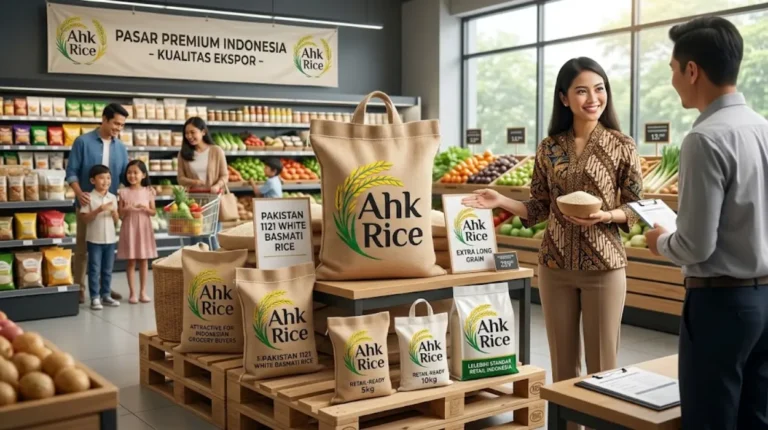
Pakistan also supports private label packaging. Indonesian distributors import rice under custom retail brands for supermarket sales. Common retail packaging sizes include 1 kg, 5 kg, and 10 kg consumer packs.
Quality verification systems strengthen buyer confidence. Exporters inspect:
- Broken percentage
- Chalky kernels
- Moisture levels
- Foreign matter
- Grain length
- Fragrance retention
Laboratories certify export quality before shipment dispatch.
With the benefits covered, the next section addresses misconceptions surrounding Pakistan rice export activity.
What misconceptions exist about Pakistan rice exports to Indonesia?
Many buyers incorrectly assume Pakistan exports only Basmati rice, but Pakistan also supplies high-volume IRRI and parboiled rice categories.
Pakistan exports both premium and commodity rice grades. IRRI rice contributes major export tonnage because bulk food programs require affordable pricing structures.
Another misconception involves shipment reliability. Some buyers associate Pakistan only with Middle Eastern markets. In reality, Pakistan exports rice to over 100 countries including Indonesia, Malaysia, Kenya, Saudi Arabia, and East Africa (source: REAP export statistics 2025).
Some importers also misunderstand parboiled rice quality. Golden Sella rice appears yellow because the parboiling process transfers nutrients from husk layers into the kernel. The colour indicates thermal treatment rather than grain aging.
Another misconception concerns Basmati cooking texture. Buyers sometimes expect soft sticky texture similar to Japonica rice. Basmati remains separate after cooking because the grain structure contains lower surface starch release.
Storage expectations also create confusion. Steam rice requires faster turnover in tropical climates. Golden Sella survives extended warehousing better because heat treatment hardens the grain structure before polishing.
These misconceptions affect sourcing decisions. The final section explains how regional rice trade continues evolving after India’s restrictions.
How is the Southeast Asian rice market changing after India restrictions?
Southeast Asian rice markets shifted toward diversified sourcing, larger reserve stocks, and higher demand for Pakistani export rice after India restricted shipments.
Indonesia expanded government rice reserves because food inflation increased political and economic pressure. Malaysia, the Philippines, and African buyers also increased procurement diversification strategies.
Pakistan strengthened regional trade relevance because exporters expanded milling investment and processing efficiency. Optical sorting systems, automated grading lines, and containerized logistics improved export consistency.
Rice importers also changed procurement timing. Buyers now secure contracts earlier because global rice supply volatility increased after export restrictions disrupted traditional sourcing patterns.
Climate pressure continues influencing Southeast Asian grain markets. Drought conditions reduce regional harvest predictability because irrigation reserves fluctuate annually.
Pakistan remains strategically positioned because Punjab cultivation zones continue producing both aromatic and non-basmati rice categories. Exporters serving Indonesia now compete through grain quality, shipment reliability, and processing consistency rather than price alone.
Indonesia’s demand surge established a stronger Pakistan–Southeast Asia rice trade corridor that continues reshaping regional agricultural commerce.
Frequently Asked Questions
Why did Indonesia increase rice imports from Pakistan after India restrictions?
Indonesia increased rice imports from Pakistan because India restricted non-basmati rice exports in 2023. Indonesian importers required alternative suppliers to stabilize domestic rice availability. Pakistan supplied IRRI rice, parboiled rice, and Basmati rice through consistent export shipments from Karachi ports.
Which Pakistani rice varieties are most popular in Indonesia?
1121 Basmati, Super Kernel Basmati, IRRI-6, and IRRI-9 are the most imported Pakistani rice varieties in Indonesia. Premium supermarkets import Basmati rice because consumers prefer aromatic long grains. Wholesale distributors procure IRRI rice because the pricing supports mass-market consumption.
How long does rice shipping from Pakistan to Indonesia take?
Rice shipments from Pakistan to Indonesia usually take 12–18 days depending on vessel schedules and port handling conditions. Karachi Port and Port Qasim manage most rice export loading operations. Containerized shipments reduce moisture exposure during sea transit.
What certifications are required for Pakistan rice exports to Indonesia?
Pakistan rice exports to Indonesia require phytosanitary certificates, fumigation certificates, certificates of origin, commercial invoices, and packing lists. Indonesian authorities inspect imported food shipments because national food safety compliance remains mandatory for distribution approval.
Why do Indonesian buyers prefer Golden Sella Basmati rice?
Indonesian buyers prefer Golden Sella Basmati rice because the parboiling process improves grain strength and storage durability. Golden Sella performs better in humid warehouse conditions. The rice also maintains longer shelf life compared to soft-texture Steam Basmati rice.