How Is Basmati Rice Exported from Pakistan?
Pakistan exports Basmati rice through a structured process, supplying Pakistani Basmati rice to international markets through controlled cultivation, processing, grading, testing, certification, packaging, and logistics. Every export shipment follows defined farming, milling, grading, testing, certification, packaging, customs, and logistics procedures. Here is why: each stage protects grain quality, food safety, and compliance with importing country regulations.
Pakistan ranks among the world’s leading Basmati rice exporters. Punjab produces most export-quality Basmati because its fertile soil, irrigation network, and climate support long-grain aromatic rice cultivation. Exporters process harvested paddy into internationally accepted grades before shipping containers to buyers across Asia, the Middle East, Europe, Africa, North America, and Oceania.
Understanding the complete export chain explains why quality varies between suppliers and why processing standards directly influence cooking performance, shelf life, and international acceptance.
What Is the Basmati Rice Export Process?
The export process includes cultivation, harvesting, milling, grading, laboratory testing, certification, packaging, customs clearance, container loading, and international shipping. Every stage follows quality control procedures before rice reaches overseas buyers.
Basmati rice export is the complete commercial movement of processed rice from Pakistan to overseas markets. The process begins in agricultural fields and finishes when the shipment arrives at the buyer’s destination port.
Exporters coordinate farmers, rice mills, laboratories, freight forwarders, customs authorities, inspection agencies, shipping lines, and importers throughout one continuous supply chain.
Unlike domestic rice distribution, export shipments require documented quality verification, legal compliance, and international packaging standards.
With the overall export process defined, the next question is where export-quality Basmati rice originates.
Where Is Export-Quality Basmati Rice Grown?
Punjab produces most export-quality Basmati rice because its fertile alluvial soil, reliable irrigation system, and seasonal climate support long, aromatic grain development.
Punjab is Pakistan’s primary Basmati-producing region. Districts including Gujranwala, Hafizabad, Sheikhupura, Narowal, Sialkot, Okara, and Nankana Sahib cultivate premium export varieties.
Farmers cultivate Basmati during the Kharif season. They prepare nursery beds, transplant seedlings, irrigate fields, manage weeds, and harvest mature crops after approximately 120 to 150 days.
Climate directly affects grain aroma. Warm growing conditions combined with cooler temperatures during grain filling improve fragrance and cooking quality.
After harvesting finishes, processing transforms raw paddy into export-ready rice.
How Does Basmati Rice Processing Work?
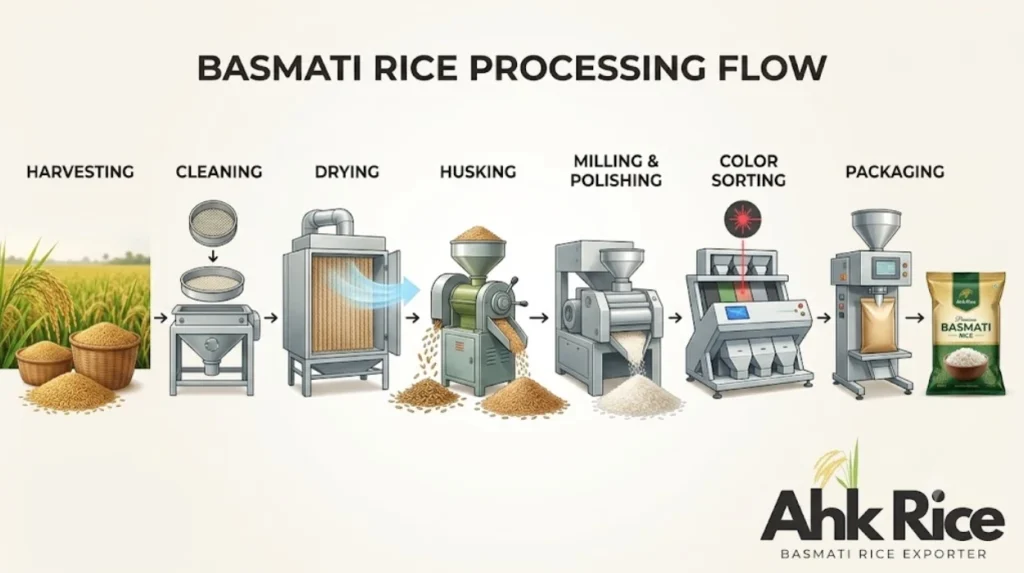
Processing converts harvested paddy into clean, graded export rice through nine controlled production stages that improve purity, appearance, cooking performance, and storage stability.
Harvest the Paddy
Farmers harvest mature rice after grain moisture reaches the proper harvesting level.
Dry the Paddy
Processors dry harvested paddy until moisture reaches safe storage levels.
Clean the Grain
Cleaning machines remove stones, straw, dust, immature kernels, and foreign materials.
De-husk the Paddy
Rubber roll shellers remove the outer husk without damaging the rice kernel.
Polish the Rice
Polishing improves grain appearance by removing bran layers according to customer specifications.
Grade the Rice
Graders separate grains according to length, thickness, and percentage of broken rice.
Sort the Rice
Optical colour sorters remove defective grains, chalky kernels, and discoloured rice.
Test the Rice
Laboratories verify moisture, grain length, purity, cooking characteristics, and foreign matter.
Package the Rice
Finished rice enters export bags before palletizing or direct container loading.
These processing stages produce consistent quality. The next section explains the available export grades.
What Makes Basmati Rice from Pakistan Suitable for Export?
Pakistan Basmati rice is export-oriented rice produced, processed, graded, tested, packaged, and shipped under specifications agreed with international buyers. The term covers Basmati varieties grown in Pakistan, including 1121, Super Kernel, and 1509, along with White, Steam, Golden Sella, and Creamy Sella processing forms.
The main production base is Punjab, where Basmati cultivation is supported by fertile agricultural land, irrigation, and suitable seasonal conditions. After harvesting, paddy passes through drying, cleaning, de-husking, polishing, grading, colour sorting, laboratory testing, and packaging before shipment.
The distinction between Pakistani Basmati rice and other rice available in international trade comes from its origin, variety, processing specification, and documented quality requirements. Buyers selecting Basmati rice from Pakistan therefore evaluate more than grain appearance. They compare grain length, broken percentage, purity, moisture, processing type, packaging, documentation, and destination-market requirements.
This supply chain also explains why Pak rice is sold across different market segments rather than as one standard product. Retailers, wholesalers, foodservice buyers, and importers can source different varieties and processing grades according to their cooking, packaging, and distribution requirements.
What Grades of Basmati Rice Are Exported?
Pakistan exports multiple Basmati varieties and processing grades to satisfy different market specifications, cooking preferences, and price segments.
1121 Basmati Rice
1121 Basmati produces extra-long cooked grains and strong aroma. It remains one of the most exported premium varieties.
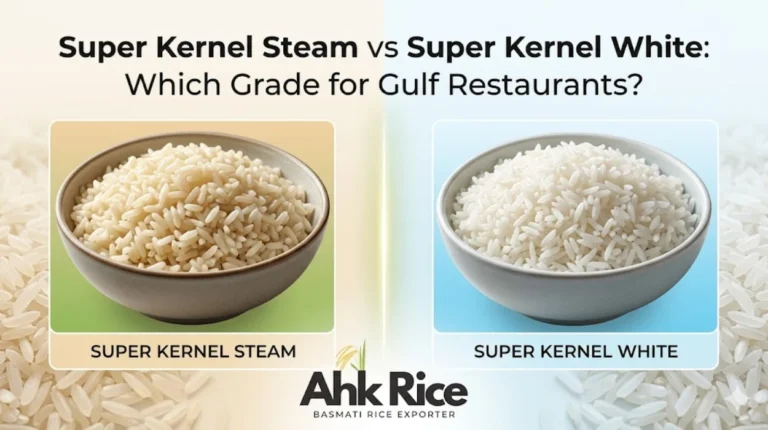
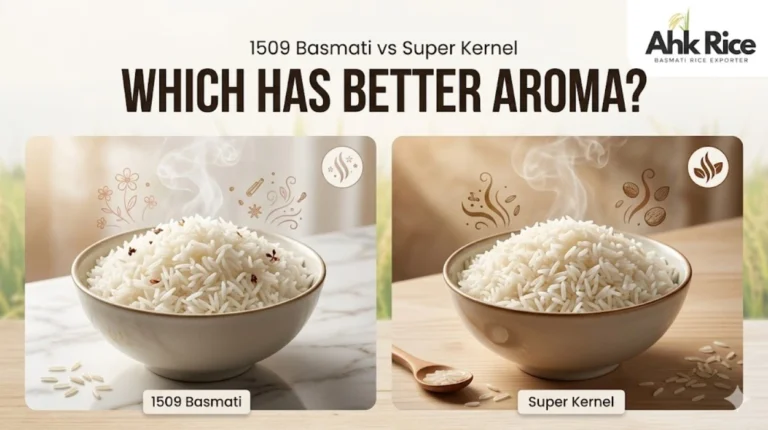
Super Kernel Basmati
Super Kernel offers traditional fragrance, excellent elongation, and premium table presentation.
1509 Basmati
1509 matures earlier than traditional varieties while maintaining long grain characteristics.
Steam Basmati
Steam processing preserves natural colour while improving cooking stability.
White Basmati
White rice undergoes standard milling and polishing without parboiling.
Golden Sella Basmati
Golden Sella receives parboiling before milling, creating stronger grains and longer storage performance.
Creamy Sella Basmati
Creamy Sella undergoes controlled parboiling that produces a lighter appearance than Golden Sella.
Different grades satisfy different buyer requirements. The next section explains how exporters maintain quality consistency.
What Quality Standards Are Applied Before Export?
Export-quality Basmati undergoes inspection, laboratory testing, grading, moisture verification, purity analysis, and packaging checks before shipment approval.
Quality inspection protects both exporters and importers.
Typical laboratory testing includes:
- Moisture content
- Grain length
- Broken percentage
- Foreign matter
- Damaged kernels
- Chalky grains
- Purity
- Cooking elongation
- Aroma evaluation
Exporters also inspect packaging quality, stitching strength, labeling accuracy, and pallet condition before dispatch.
Quality verification leads directly into certification requirements.
Which Certifications Apply to Pakistani Basmati Rice?
International buyers require certifications that verify food safety, product quality, traceability, and legal export compliance.
Common certifications include:
- ISO 22000 Food Safety Management
- HACCP
- FSSC 22000
- Halal Certification
- Phytosanitary Certificate
- Certificate of Origin
- Fumigation Certificate
- Health Certificate
- Commercial Invoice
- Packing List
- Bill of Lading
Specific importing countries request additional documentation according to local regulations.
Documentation completes product verification. Shipping logistics complete the export process.
How Is Basmati Rice Shipped Internationally?
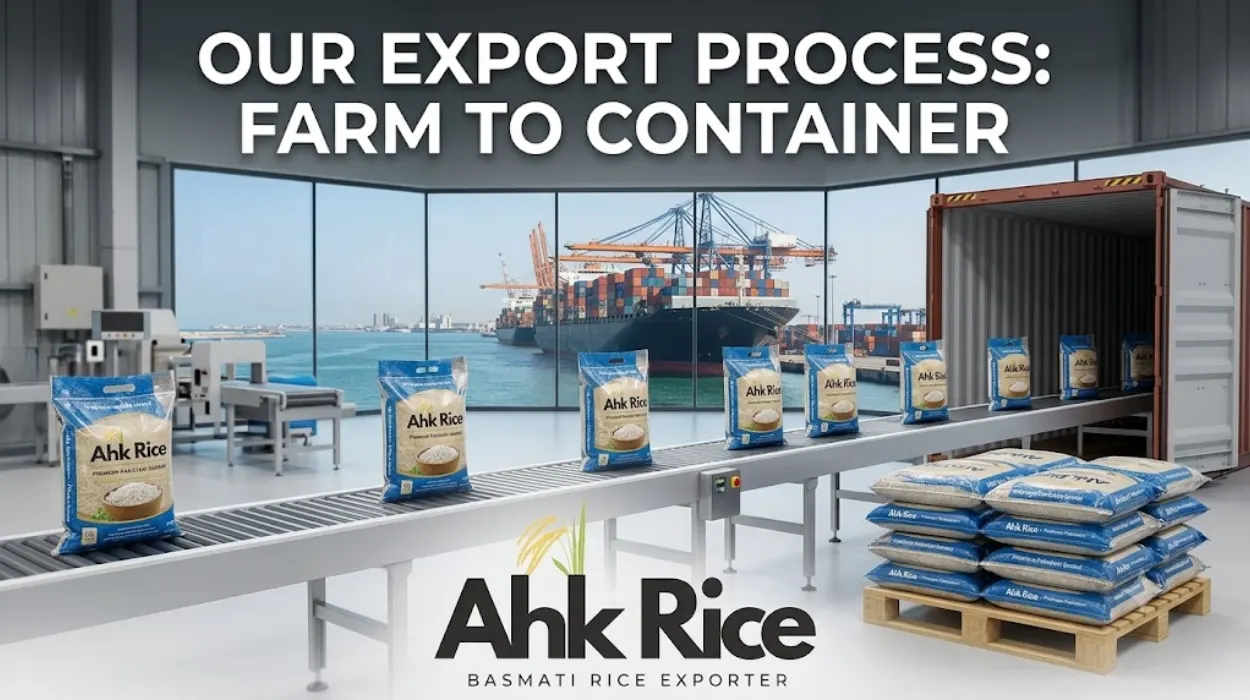
Exporters load packaged rice into containers after customs clearance and dispatch shipments through Pakistan’s major seaports to international destinations.
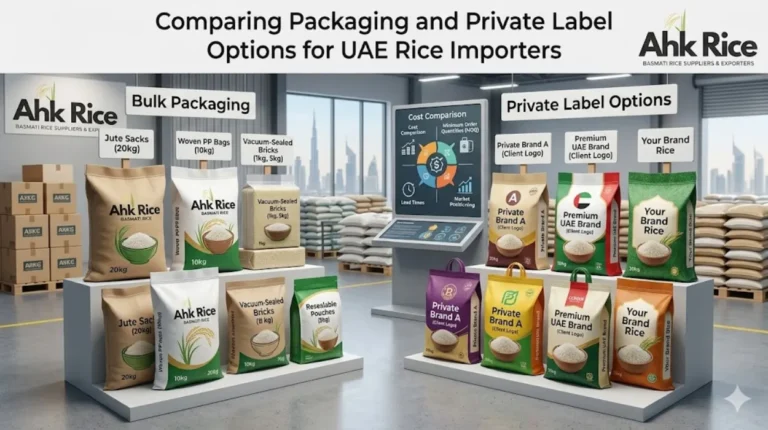
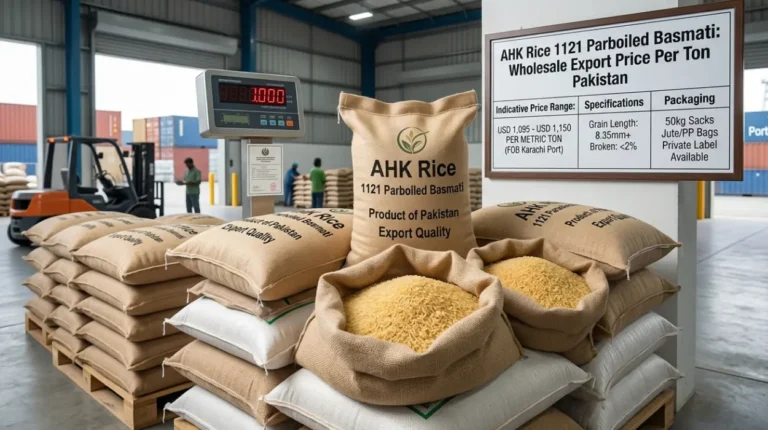
Rice enters food-grade PP bags, BOPP bags, paper bags, jute bags, or private-label retail packaging before loading.
Standard export packaging includes:
- 1 kg bags
- 2 kg bags
- 5 kg bags
- 10 kg bags
- 20 kg bags
- 25 kg bags
- 40 kg bags
- 50 kg bags
Containers are inspected before loading to ensure cleanliness and dryness.
Export shipments typically depart from Karachi Port or Port Qasim.
Shipping lines transport containers to importing countries according to contracted freight schedules.
With logistics explained, it becomes easier to understand where Pakistani Basmati is consumed.
Which Countries Import Pakistani Basmati Rice?
Pakistani Basmati reaches buyers across Asia, the Middle East, Europe, Africa, North America, and Oceania because its aroma and grain elongation satisfy diverse culinary traditions.
Major importing markets include:
- Saudi Arabia
- United Arab Emirates
- Iraq
- Iran
- Oman
- Qatar
- Kuwait
- United Kingdom
- Germany
- Canada
- United States
- Australia
- South Africa
- Malaysia
- Singapore
Different markets prefer different grades.
Middle Eastern buyers often purchase Golden Sella for catering.
European retailers commonly import premium White and Steam Basmati.
North American distributors frequently supply branded retail packaging.
Understanding market demand explains the value of standardized export processing.
What Are the Benefits of Pakistan’s Structured Export Process?
Standardized processing improves food safety, protects grain quality, supports international compliance, reduces shipment disputes, and delivers consistent cooking performance.
A structured export system provides measurable advantages.
Quality testing reduces rejected shipments.
Standard grading creates predictable product specifications.
Certified processing increases buyer confidence.
Controlled moisture extends storage life.
Professional packaging protects rice during ocean transportation.
Reliable documentation accelerates customs clearance.
These operational benefits strengthen international trade relationships.
The final section addresses common misconceptions about exporting Basmati rice.
What Are Common Misconceptions About Exporting Basmati Rice?
Exporting Basmati involves far more than shipping rice because production, inspection, documentation, certification, and logistics determine international acceptance.
One misconception is that all Basmati varieties are identical. Different varieties produce different cooking characteristics, grain lengths, and market values.
Another misconception is that polishing determines quality. Laboratory testing, purity, grading, moisture control, and processing consistency determine export quality.
Some buyers also assume every country requests identical specifications. Each destination establishes different documentation, packaging, labeling, and certification requirements.
Readers interested in evaluating exporters after understanding the complete export process should continue with our guide explaining how to identify dependable suppliers and compare processing standards.
Frequently Asked Questions
How long does the Basmati rice export process take?
The complete export process generally requires several weeks, including processing, laboratory testing, documentation, customs clearance, container booking, and ocean shipping.
Which province grows most export-quality Basmati rice?
Punjab produces the majority of Pakistan’s export-quality Basmati rice because of its fertile soil and favorable growing conditions.
What is the difference between White, Steam, and Golden Sella Basmati?
White Basmati undergoes standard milling. Steam Basmati receives steam treatment before milling. Golden Sella undergoes parboiling, producing stronger grains and longer storage performance.
Which documents are required for rice exports?
Common documents include the Commercial Invoice, Packing List, Certificate of Origin, Phytosanitary Certificate, Bill of Lading, Health Certificate, and Fumigation Certificate.
Why is grading important in rice exports?
Grading separates rice according to grain length, broken percentage, purity, and appearance. Standard grading ensures buyers receive consistent specifications.