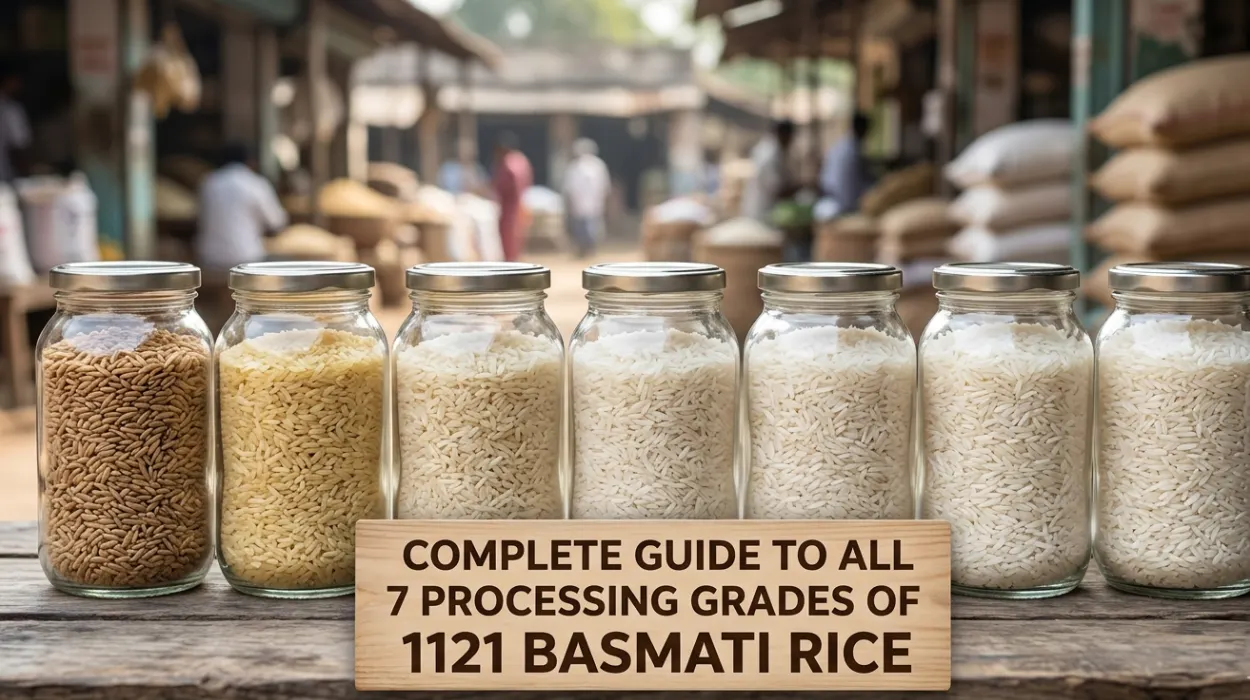
Complete Guide to All 7 Processing Grades of 1121 Basmati Rice
1121 Basmati Rice is an extra‑long‑grain basmati variety grown mainly in the Punjab rice belt, processed through several physical and cosmetic stages to create different export and retail grades.
The 1121 number identifies the basmati cultivar, not the processing method. The processing grade depends on how much of the grain surface is removed, how the grain is sorted, and whether the rice is aged or not. The “7 processing grades” concept refers to the main ways 1121 is finished: unpolished brown, standard milled, extra‑milled, parboiled, aged white, spray‑coated, and steam‑treated. Each route changes the grain’s appearance, cooking behaviour, and shelf role.
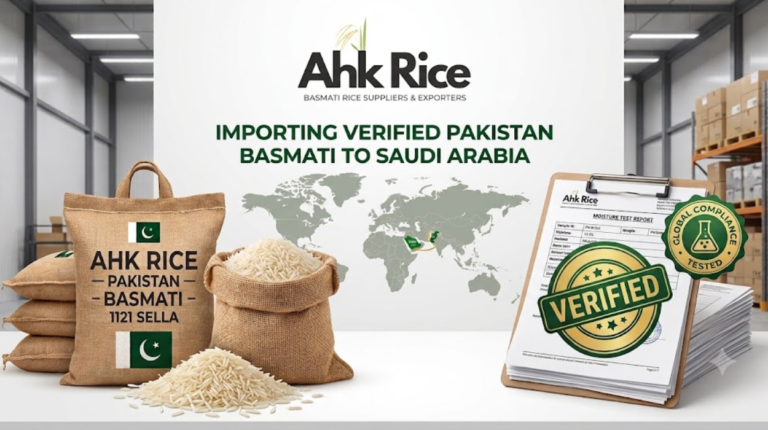
AHK Rice supplies 1121, Super Kernel, and 1509 varieties from Punjab with end‑to‑end processing, so the company uses these grades as distinct product lines rather than one monolithic basmati bag. The 1121 basmati variety is always the same at the seed level, but the 7 processing options create visibly different products on the shelf.
How are the 7 processing grades defined and ordered?
The 7 main processing grades of 1121 Basmati Rice are: brown 1121, standard white, extra‑milled white, parboiled 1121, aged white 1121, spray‑coated 1121, and steam‑treated 1121, each with a different milling and finishing step.
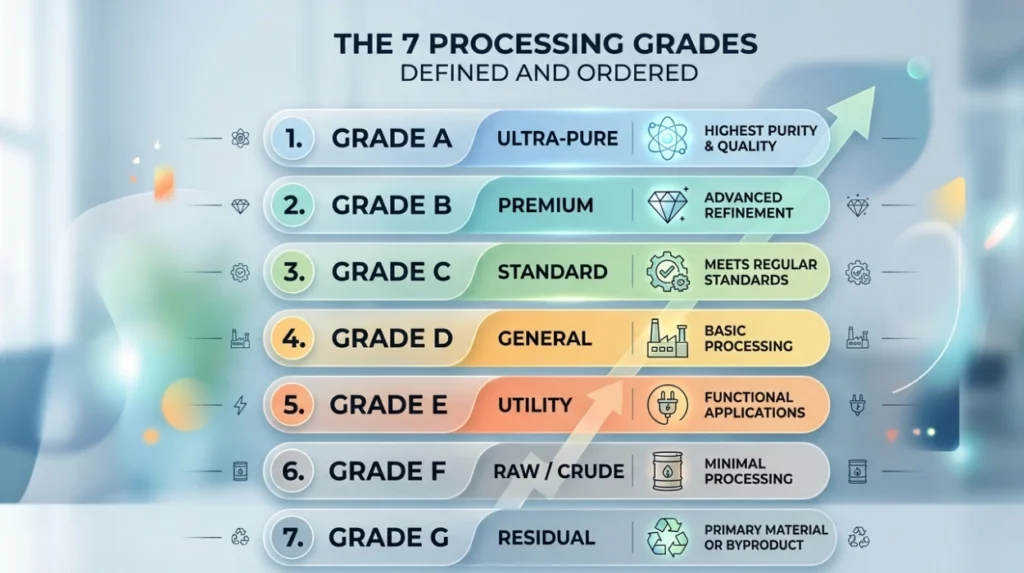
Brown 1121 is the least processed. The husk is removed, but the bran layer stays, giving the grain a light‑brown colour and higher fibre content. Standard white 1121 passes through regular whitening and polishing, giving a bright translucent white appearance. Extra‑milled white 1121 is milled more aggressively, removing more bran and creating a very clean, bright grain that suits premium packs.
Parboiled 1121 is soaked, steamed, and dried before milling, which hardens the grain and changes its cooking properties. Aged white 1121 is standard white 1121 stored under controlled conditions for 12–18 months, which tightens the grain and raises fragrance. Spray‑coated 1121 is white rice given a light adhesive or oil‑based coating to improve flow and anti‑clumping. Steam‑treated 1121 is pre‑steamed and then milled to reduce stickiness while keeping some starch intact.
How does 1121 get from paddy to 7 processing stages?
1121 Basmati Rice moves from paddy to the 7 processing grades through a sequence of cleaning, dehusking, whitening, polishing, sorting, and optional extra steps such as steaming, ageing, or coating.
The first step is paddy cleaning. The raw 1121 paddy is screened to remove stones, dust, straw, and other foreign matter. The second step is dehusking, which removes the outer husk and reveals brown 1121. The third step is primary whitening, where the bran layer is reduced or removed to create standard white 1121. The fourth step is polishing, which smooths the grain and improves brightness.
From here, the line splits. Some lots move into extra‑milling to create extra‑milled white 1121. Some lots are steamed, soaked, and dried to create parboiled 1121. Some lots are stored under controlled conditions to create aged white 1121. Others may receive a light spray coating or steam‑treatment before final packing. The 7‑grade map is not a single physical line. It is a branching flow that uses the same 1121 base to serve different markets and use cases.
What are the 7 processing grades and their key traits?
The 7 processing grades are brown 1121, standard white 1121, extra‑milled white 1121, parboiled 1121, aged white 1121, spray‑coated 1121, and steam‑treated 1121, each with distinct texture, cooking, and visual traits.
- Brown 1121 – Light‑brown colour, visible bran, higher fibre, firmer bite, shorter cooking time than many white grades. Examples include health‑oriented packs and whole‑grain lines.
- Standard white 1121 – Bright white, smooth, moderate fragrance, cooks into long separated grains. Examples include everyday basmati and mid‑tier retail.
- Extra‑milled white 1121 – Very clean white, glossy surface, slightly shorter grain, cooks very fluffy. Examples include premium “extra‑long grain” packs.
- Parboiled 1121 – Harder grain, yellow‑tinged, less stickiness, higher retention after cooking. Examples include catering and foodservice packs.
- Aged white 1121 – Controlled‑storage, 12–18 months, tighter grain, stronger aroma, more linear separation. Examples include gourmet and aged‑basmati lines.
- Spray‑coated 1121 – Light film on grain, anti‑clumping, smoother flow in machines. Examples include food‑industry bulk packs.
- Steam‑treated 1121 – Light pre‑steam, less starch leakage, slightly softer texture. Examples include ready‑to‑cook or convenience formats.
Each import market is the same 1121 variety at the genetic level. The difference is in the physical treatment applied after dehusking.
How do the 7 grades differ in cooking and eating experience?
The 7 grades differ in hardness, stickiness, fragrance, and grain separation because milling depth, steaming, and ageing change the internal starch and grain structure.
Brown 1121 cooks into a firmer, more textured grain with a nuttier bite and less stickiness. Standard white 1121 cooks into long, soft, separated grains with classic basmati fragrance. Extra‑milled white 1121 gives a very light, almost fluffy texture because more bran and starch are removed. Parboiled 1121 stays hard after cooking and retains more shape, which suits heavy‑sauces and dishes that need firm rice.
Aged white 1121 shows stronger aroma and more linear grain stretch due to tighter moisture and starch organisation. Spray‑coated 1121 resists clumping but does not change flavour. Steam‑treated 1121 reduces stickiness compared with raw white 1121 while keeping some softness. The cooking experience thus goes from whole‑grain and firm (brown) through fluffy and fragrant (standard white) to hardened and shape‑retaining (parboiled and steam‑treated).
What are the benefits of each 1121 processing grade?
The benefits of each 1121 processing grade lie in cooking performance, shelf role, and alignment with health, premium, or convenience demands.
Brown 1121 benefits buyers who want higher fibre and a whole‑grain claim. Standard white 1121 benefits everyday cooking and family‑meal use because it is familiar, easy to cook, and affordable. Extra‑milled white 1121 benefits premium and fine‑dining buyers who want the brightest, longest‑looking grain. Parboiled 1121 benefits foodservice that needs rice to hold shape in large pans and cold holding.
Aged white 1121 benefits gourmet and high‑end brands that link “12‑month aged” to aroma and texture. Spray‑coated 1121 benefits industrial packers and automated lines where grain flow matters. Steam‑treated 1121 benefits convenience‑oriented lines that need less stickiness without full parboiling. The 7‑grade structure lets AHK Rice match the same 1121 base to multiple buyer types.
Where are these 7 grades commonly used?
These 7 grades are commonly used in health‑food lines, supermarkets, foodservice, industrial supply, and premium ethnic ranges, each with its own ideal grade.
Brown 1121 appears in health‑food stores, organic lines, and whole‑grain meal kits. Standard white 1121 appears in regular grocery shelves, bulk packs, and value‑oriented ethnic ranges. Extra‑milled white 1121 appears in premium own‑brand packs and fine‑dining supply. Parboiled 1121 appears in caterers, fast‑casual chains, and canteen supply. Aged white 1121 appears in gourmet and aged‑basmati ranges.
Spray‑coated 1121 appears in processed‑rice lines such as instant rice mixes and frozen meals. Steam‑treated 1121 appears in convenience packs and pre‑portioned foodservice servings. The 15+ countries served by AHK Rice use different combinations of these grades depending on local taste, health preferences, and brand positioning.
What common misconceptions exist around these 7 grades?
Common misconceptions are that all 7 grades are different basmati varieties, that more processing always means higher quality, and that “aged” automatically means stale.
The 1121 variety is the same throughout. The only difference is how the grain is treated after harvest. More processing does not automatically mean higher quality. Extra‑milling gives a cleaner look but can reduce fibre and change texture. Brown 1121 is not “less refined” in a negative sense. It is simply less milled and more whole‑grain.
Aged white 1121 is not stale rice. It is 1121 stored under controlled conditions, where controlled moisture and temperature tighten the grain and raise aroma. The 7‑grade map is a spectrum of processing stages, not a hierarchy of goodness. Buyers should choose the grade based on cooking need, not on the label alone.
How to decide which 1121 grade suits a market?
Deciding which 1121 grade suits a market depends on buyer expectations for texture, appearance, health claims, and cooking use.
Premium markets that value appearance and aroma often prefer extra‑milled white 1121 and aged white 1121. Markets that value health and fibre often prefer brown 1121. Foodservice that needs rice to hold shape often uses parboiled 1121. Industrial lines that need smooth flow often use spray‑coated 1121. The AHK Rice 1121 product line allows buyers to match one of the 7 grades to the specific channel, pack format, and consumer profile.