Rice Import Regulations and Quota Rules in Vietnam for Exporters 2026
Rice import regulations in Vietnam for 2026 are a structured legal framework governing quotas, permits, phytosanitary compliance, and quality standards enforced by government bodies such as the Ministry of Industry and Trade Vietnam and Ministry of Agriculture and Rural Development Vietnam.
Rice import regulations define how foreign rice enters Vietnam’s domestic market. These rules control trade flow, protect local farmers, and maintain food safety standards. The system includes import quotas, licensing procedures, inspection protocols, and tariff structures.
Vietnam is globally recognized as a rice exporter, yet it still imports specific rice types. These include broken rice, specialty aromatic varieties, and raw materials for processing industries. Regulations exist to balance domestic supply and demand without destabilizing local production.
Each importer must comply with government-issued permits. These permits confirm eligibility, quota allocation, and adherence to safety standards. Exporters must understand these rules before shipping rice into Vietnam.
How do rice import regulations work in Vietnam?
Rice import regulations in Vietnam operate through a quota allocation system, licensing requirements, and strict inspection processes that ensure all imported rice meets food safety, origin, and quality standards before entering the market.
The system begins with quota allocation. The government sets annual import limits based on domestic production levels. These quotas define how much rice can be imported within a given year.
Importers must apply for permits through the Ministry of Industry and Trade Vietnam. The permit includes details such as quantity, origin country, and intended use.
After approval, exporters ship rice with complete documentation. This includes certificates of origin, phytosanitary certificates, and commercial invoices.
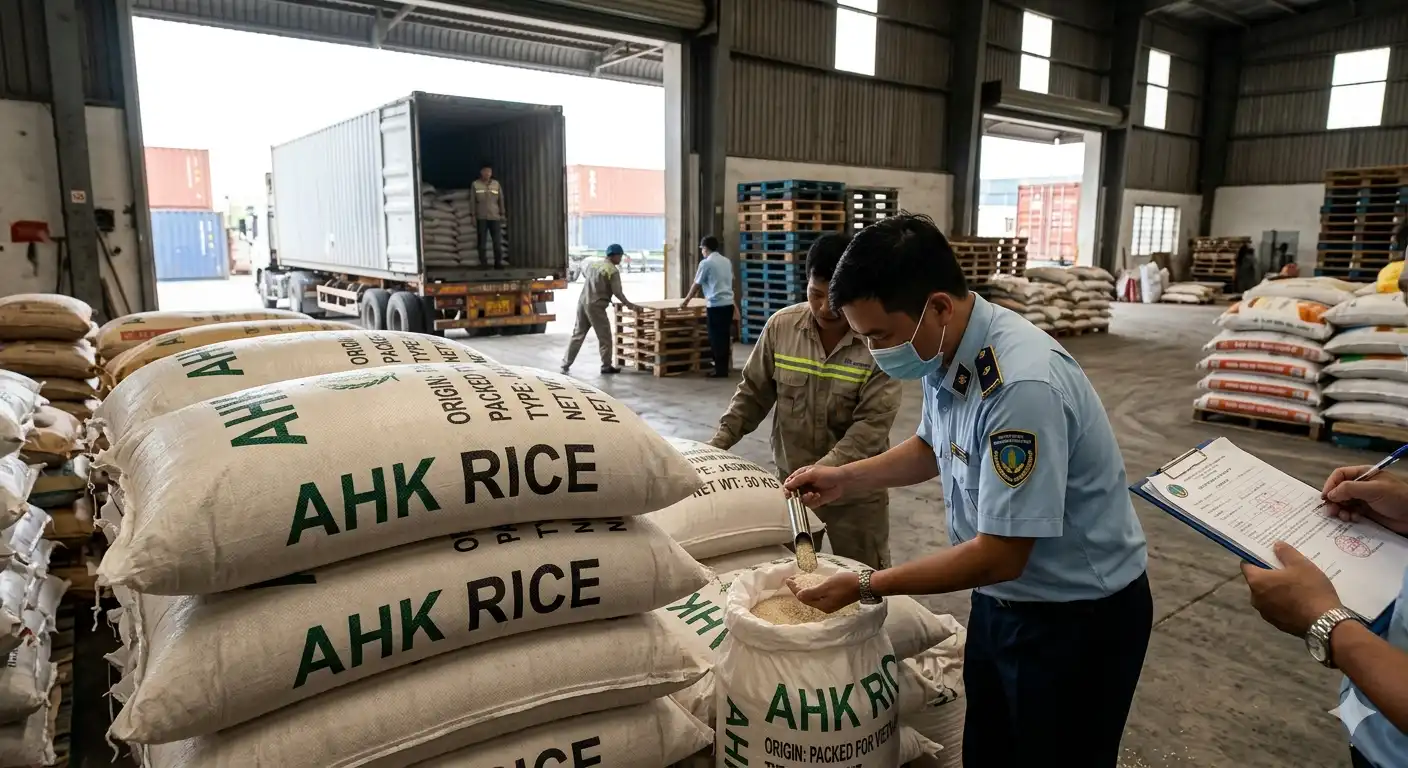
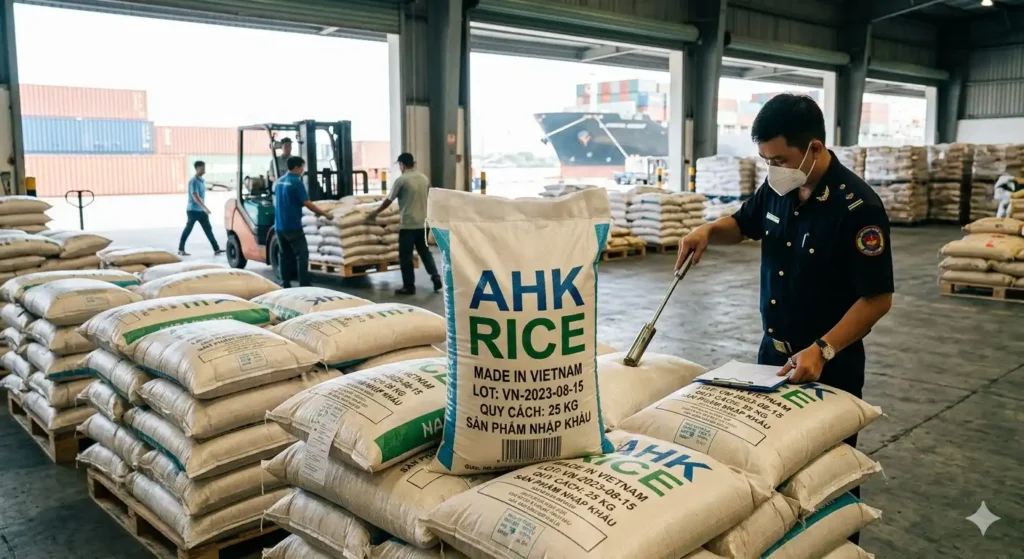
Upon arrival at ports such as Ho Chi Minh City, inspection authorities verify compliance. The Ministry of Agriculture and Rural Development Vietnam checks for pests, contaminants, and quality parameters.
Only compliant shipments are cleared for distribution.
What are the key components of Vietnam rice import regulations?
The key components include import quotas, licensing requirements, phytosanitary compliance, quality standards, tariff structures, and customs clearance procedures, all designed to regulate rice flow and ensure food safety.
Import quotas
Quotas limit the volume of rice entering Vietnam. These limits vary annually. The government adjusts quotas based on domestic harvest performance and market demand.
Licensing system
Importers require official permits. These permits specify exact quantities and conditions. Unauthorized imports face penalties and shipment rejection.
Phytosanitary requirements
Phytosanitary compliance ensures rice is free from pests and diseases. Exporters must provide certification approved by the importing authority.
Quality standards
Vietnam enforces strict quality parameters. These include moisture levels, broken grain percentage, and contamination thresholds. For example, broken rice imports must meet predefined grading standards.
Tariffs and duties
Tariffs apply based on trade agreements. ASEAN countries often benefit from reduced tariffs under regional agreements.
Customs clearance
Customs authorities verify all documents. Clearance depends on accurate documentation and inspection results.
Why does Vietnam implement rice import quotas?
Vietnam implements rice import quotas to protect domestic farmers, stabilize market prices, control supply levels, and ensure national food security while allowing controlled imports of specific rice categories.
Vietnam produces large quantities of rice domestically. Without quotas, excessive imports would reduce local prices. This would negatively affect farmers’ income.
Quotas maintain balance. They allow imports only when necessary. For example, broken rice imports support animal feed industries and food processing sectors.
The system also ensures food security. By controlling imports, Vietnam prevents dependency on foreign supply.
Government agencies monitor production data annually. Based on this data, they adjust quotas to maintain equilibrium.
What role do government authorities play in rice imports?
Government authorities such as the Ministry of Industry and Trade Vietnam and Ministry of Agriculture and Rural Development Vietnam regulate licensing, inspection, quota allocation, and compliance enforcement for rice imports.
The Ministry of Industry and Trade manages trade policies. It issues import licenses and defines quota allocations.
The Ministry of Agriculture and Rural Development oversees food safety. It enforces phytosanitary regulations and inspects shipments.
Customs authorities handle border clearance. They verify documents and ensure compliance with import laws.
These institutions work together. Their coordination ensures that only compliant rice enters Vietnam’s market.
What certifications are required for rice import into Vietnam?
Rice imports into Vietnam require certifications such as phytosanitary certificates, certificates of origin, quality inspection reports, and compliance documents issued by recognized authorities in the exporting country.
Phytosanitary certificates confirm that the rice is free from pests and diseases. These are mandatory for all shipments.
Certificates of origin identify the exporting country. These documents determine tariff eligibility under trade agreements.
Quality certificates verify parameters such as moisture content and grain length. These ensure the rice meets Vietnam’s standards.
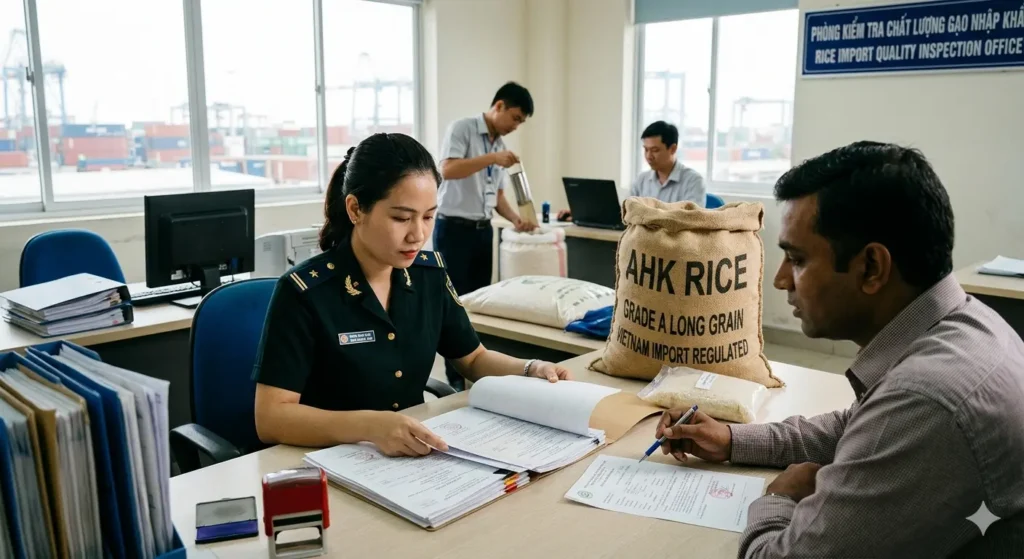
Additional documents include packing lists and commercial invoices. Missing or incorrect documents lead to shipment delays or rejection.
What types of rice are imported into Vietnam?
Vietnam imports specific rice types such as broken rice, specialty aromatic rice, and raw materials for industrial use, rather than standard consumer-grade rice which is abundantly produced domestically.
Broken rice is widely imported for feed and processing. This category includes 5% broken, 25% broken, and 100% broken rice.
Specialty rice includes aromatic varieties not commonly grown in Vietnam. These cater to niche consumer segments.
Industrial rice imports support food manufacturing. Examples include rice flour production and processed food industries.
Each category follows different quota and quality requirements.
What are the benefits of understanding Vietnam rice import regulations?
Understanding Vietnam rice import regulations ensures compliance, reduces shipment delays, prevents financial losses, and enables exporters to align product specifications with market requirements effectively.
Exporters who understand regulations avoid penalties. They prepare correct documentation and meet quality standards.
Compliance reduces clearance time. Faster clearance lowers storage costs at ports.
Market alignment improves competitiveness. Exporters can tailor rice grades to meet Vietnam’s demand.
Knowledge of quotas helps exporters plan shipments. This prevents overproduction and unsold inventory.
What are the common problems exporters face?
Exporters face challenges such as incomplete documentation, misunderstanding quota limits, failing phytosanitary inspections, and misalignment with Vietnam’s quality standards, leading to shipment delays or rejections.
Documentation errors are common. Missing certificates or incorrect data cause delays.
Quota misinterpretation leads to rejected applications. Exporters must track quota availability accurately.
Phytosanitary failures occur when shipments contain pests or contaminants. This results in rejection or destruction of goods.
Quality mismatches create issues. For example, incorrect moisture levels or grain size deviations lead to non-compliance.
Each problem increases costs and reduces profitability.
What misconceptions exist about rice import regulations in Vietnam?
A common misconception is that Vietnam freely imports rice, while in reality imports are strictly controlled through quotas, permits, and inspection systems designed to protect domestic production and ensure food safety.
Some exporters believe Vietnam has open import policies. This is incorrect. Imports are limited and regulated.
Another misconception is that all rice types are accepted. Only specific categories are allowed under quotas.
Many assume documentation is simple. In reality, compliance requires detailed and accurate paperwork.
Some exporters overlook phytosanitary standards. These are mandatory and strictly enforced.
Understanding these misconceptions helps avoid costly mistakes.
How do exporters align with Vietnam’s rice import system?
Exporters align with Vietnam’s system by ensuring compliance with quota allocations, preparing accurate documentation, meeting phytosanitary and quality standards, and coordinating closely with licensed importers in Vietnam.
Exporters must work with authorized importers. These importers hold valid licenses and quota approvals.
They must prepare documentation in advance. This includes certificates, invoices, and packing details.
Quality control begins at origin. Rice must meet Vietnam’s specifications before shipment.
Regular communication with import partners ensures smooth transactions. This reduces errors and delays.
Alignment improves efficiency and increases successful shipment rates.