Which 1121 Basmati Grade Should You Import? Market-by-Market Decision Guide
The available 1121 basmati grades for import are brown, standard white, extra‑milled white, parboiled, aged white, spray‑coated, and steam‑treated, each with its own milling depth, cooking traits, and market fit.
The 1121 basmati variety is the same genetic base in all seven grades. The difference comes from how much bran is removed, whether the grain is steamed or parboiled, and whether it is aged or given a light coating. Brown 1121 keeps the bran layer and offers a higher‑fibre, nuttier profile. Standard white 1121 removes the bran and polishes the grain, giving a bright, fluffy result. Extra‑milled white 1121 is whitened more aggressively, creating a very clean, glossy grain. Parboiled 1121 is soaked, steamed, and dried before milling, which hardens the grain. Aged white 1121 is stored under controlled conditions, often 12–18 months, to tighten moisture and raise aroma. Spray‑coated 1121 has a light film to reduce stickiness and improve flow. Steam‑treated 1121 is lightly steamed, then milled, to reduce starch leakage while keeping softness.
AHK Rice supplies 1121, Super Kernel, and 1509 varieties from Punjab with end‑to‑end processing, so these seven grades are treated as distinct product lines rather than one generic “white basmati” line.
How do the 7 grades compare in key specifications?
The 7 grades compare clearly on milling depth, texture, stickiness, aroma, and shelf role, with each grade occupying a different position in the 1121 basmati spec space.
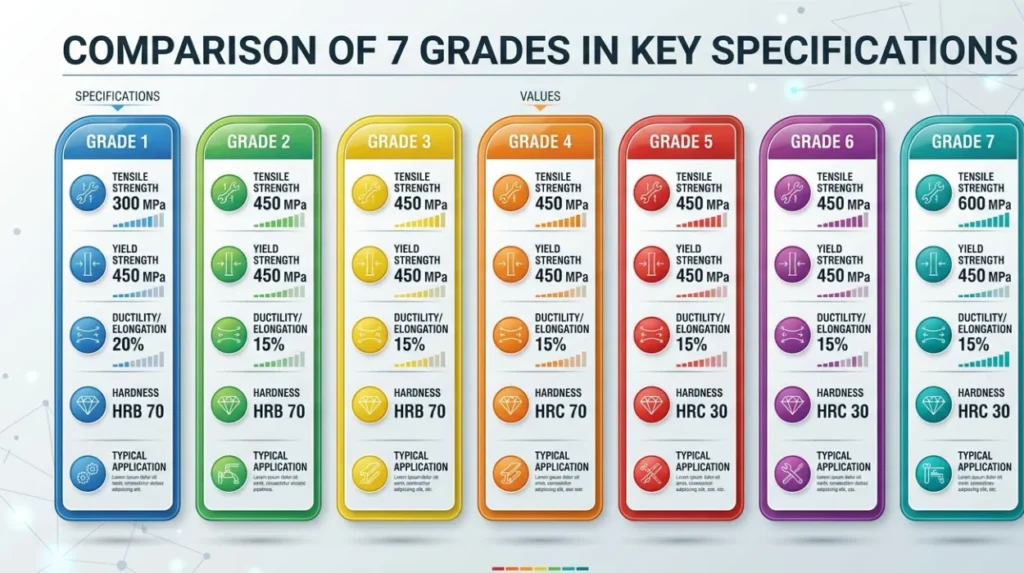
Below is a 7‑row specification comparison table focused on 1121 basmati as an export grade. The table uses standard 2026‑style ranges and traits rather than exact brand‑specific values.
| Attribute | Brown 1121 | Standard white 1121 | Extra‑milled white 1121 | Parboiled 1121 | Aged white 1121 | Spray‑coated 1121 | Steam‑treated 1121 |
|---|---|---|---|---|---|---|---|
| Milling depth | Very light (bran kept) | Medium (bran removed, light polish) | High (deep milling, shiny surface) | Medium, post‑parboil | Medium‑high, aged | Medium‑high, with light coating | Medium, post‑steam |
| Colour | Light brown, speckled | Bright white | Very bright white | Pale yellow‑cream | Bright white, stable | White, slightly glossy | Soft white |
| Texture when cooked | Firmer, chewier | Soft, long, separated | Very soft, fluffy, light | Very firm, shape‑retaining | Firm, long, aromatic | Soft, low‑clump | Soft‑firm, low‑stick |
| Stickiness | Low | Low‑medium | Medium‑low | Very low | Low‑medium | Low | Low‑medium |
| Aroma strength | Moderate | Medium | Medium‑high | Medium | High | Medium‑low | Medium |
| Typical shelf role | Health‑food, whole‑grain | Standard retail, family use | Premium “extra‑long” packs | Foodservice, catering | Gourmet, aged‑basmati | Industrial, bulk packs | Convenience, ready‑to‑use |
| Breakage tendency | Low | Medium | Medium‑high | Low | Medium | Low‑medium | Medium |
This table shows that the 1121 basmati grade is not only about “long grain” or “white grain.” It is about how the grain is milled, steamed, or aged to match the channel. For example, parboiled 1121 suits foodservice because it stays firm, while aged white 1121 suits premium shelves because of its stronger aroma and separation. The AHK Rice 1121 product line offers multiple versions of these grades, so buyers can match the spec to the destination.
How do EU and Gulf markets differ in grade preference?
EU and Gulf markets differ in their 1121 basmati grade preferences, with the EU favouring white and aged‑white 1121 for premium packs and the Gulf favouring white, parboiled, and spray‑coated 1121 for high‑volume catering and bulk supply.
The EU, including the UK, values consolidated quote labelling, residue compliance, and grain‑length‑based premium positioning. EU‑oriented importers often choose standard white 1121 and aged white 1121 for supermarket own‑brand and gourmet lines. The 12‑month aged white 1121 is especially attractive where the buyer can use the “aged basmati” claim on pack. Steam‑treated and spray‑coated 1121 are less common in EU retail but appear in food‑industry channels that need low‑stick rice blends.
In contrast, Gulf markets such as UAE, Saudi Arabia, Qatar, Kuwait, and Iraq prioritise high‑volume supply, grain length, and cost‑per‑MT efficiency. White 1121 is a staple, but parboiled 1121 and spray‑coated 1121 are widely used in foodservice, banquets, and industrial catering. The Gulf also uses more sella and golden‑style 1121 lines, which are extra‑milled and parboiled, giving a harder, yellow‑tinted grain that holds shape under large pans and long holding. AHK Rice supplies 1121, Super Kernel, and 1509 to 15+ countries, so the same 1121 base can be routed into different grades for EU and Gulf buyers.
How do price per MT and shelf life compare?
Price per MT and shelf life of 1121 basmati differ mainly by grade thickness, packaging, and compliance load, with parboiled and aged white often carrying a premium over standard white and brown.
At the 2026 export level, these are illustrative ranges rather than fixed quotes:
- Brown 1121 – Lower cost per MT, but higher shelf‑life risk if stored in warm, humid conditions. Shelf life under controlled storage: 18–24 months.
- Standard white 1121 – Mid‑range price, widely used in 10–25 kg retail packs. Shelf life: 18–24 months.
- Extra‑milled white 1121 – Slightly higher price, due to higher breakage and tighter grading. Shelf life: 18 months.
- Parboiled 1121 – Mid‑high price, justified by higher breakage, pre‑treatment, and durability. Shelf life: 24–36 months.
- Aged white 1121 – Premium price, reflecting 12‑month storage, controlled conditions, and premium positioning. Shelf life: 18–24 months.
- Spray‑coated 1121 – Mid‑range price, with a small premium for coating and industrial packaging. Shelf life: 18–24 months.
- Steam‑treated 1121 – Mid‑range, similar to standard white but with added steaming cost. Shelf life: 18–24 months.
The shelf life assumes controlled warehouse conditions: stable temperature, low humidity, and sealed packing. Parboiled and spray‑coated 1121 often show longer stability because the pre‑treatment and coating reduce moisture absorbing and grain fragmentation. That is why parboiled and spray‑coated 1121 are common in hot‑climate markets and industrial supply chains.
What are the pros and cons of each 1121 grade?
Pros and cons of each 1121 grade lie in how well the grain matches cooking use, health expectation, and commercial margin, not just in raw price.
Brown 1121 pros:
- Higher fibre and whole‑grain positioning.
- Lower price per MT than many premium white lines.
- Low breakage during milling.
Cons: - Longer cooking time.
- Grain has a nuttier, less “white‑rice” look.
- Less popular in channels that value bright white appearance.
Standard white 1121 pros:
- Balanced price and performance.
- Fits everyday meals and family use.
- Strong grain length and separation.
Cons: - Needs more careful cooking.
- Less premium than extra‑milled or aged‑white.
Extra‑milled white 1121 pros:
- Very bright, glossy grain for premium packs.
- High perceived quality.
Cons: - Higher breakage, higher cost.
- Grain can feel too light or fluffy for some buyers.
Parboiled 1121 pros:
- Holds shape under high‑volume cooking.
- Lower stickiness, efficient in catering.
Cons: - Slightly firmer, less “soft” bite.
- Often higher MT cost.
Aged white 1121 pros:
- Stronger aroma and tighter grain structure.
- Suitable for gourmet and aged‑basmati claims.
Cons: - Premium pricing, ageing‑window‑based volumes.
Spray‑coated 1121 pros:
- Good flow, low stickiness, easy handling.
- Consistent performance in automated lines.
Cons: - Small coating premium.
- Not ideal for traditional‑style claims.
Steam‑treated 1121 pros:
- Reduced stickiness, soft texture.
- Useful for ready‑to‑use formats.
Cons: - Requires clear labelling.
- Some buyers prefer raw or parboiled over steamed.
AHK Rice uses this grade‑by‑grade view to help buyers match 1121 to the right channel, pack size, and price point instead of treating all 1121 as one uniform commodity.
How to decide which 1121 grade suits a market?
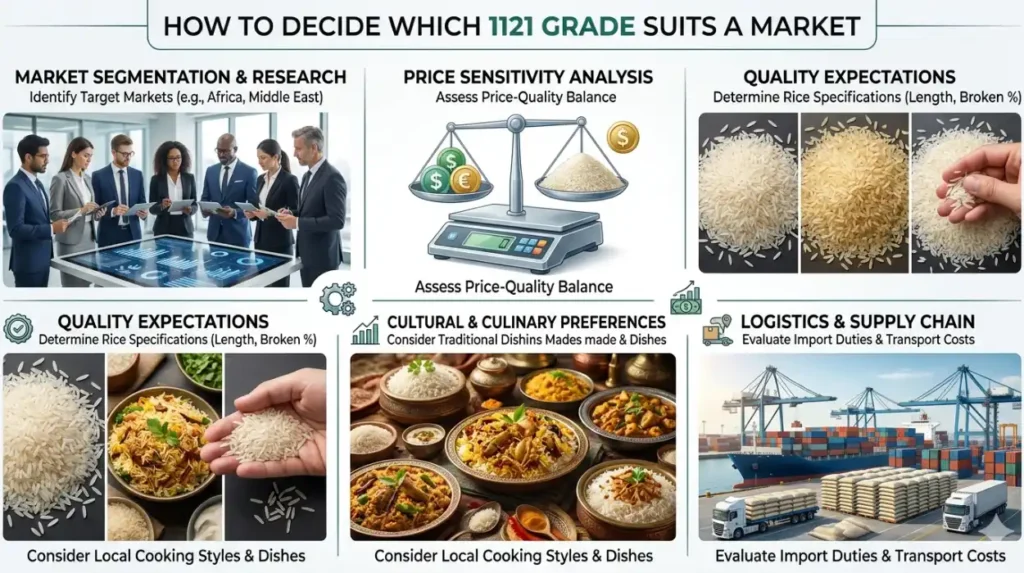
Deciding which 1121 grade suits a market depends on local cooking habits, health expectations, price sensitivity, and pack‑size strategy, with each grade serving a distinct combination of these factors.
A 5‑row decision‑framework table can help buyers compare at a glance:
| Decision factor | Brown 1121 | Standard white 1121 | Extra‑milled white 1121 | Parboiled 1121 | Aged white 1121 |
|---|
| Decision factor | Brown 1121 | Standard white 1121 | Extra‑milled white 1121 | Parboiled 1121 | Aged white 1121 |
|---|---|---|---|---|---|
| Cooking tradition | Whole‑grain, health‑focused | Everyday family meals | Premium, long‑grain claims | Catering, banquet | Gourmet, aged claims |
| Price sensitivity | Lower‑to‑mid | Mid‑range | Mid‑high | Mid‑high | High |
| Health positioning | High | Low‑medium | Low | Low‑medium | Low‑medium |
| Breakage / hardness | Low‑breakage, firm grain | Medium‑breakage, soft | Medium‑high breakage, very soft | Low‑breakage, very firm | Medium‑breakage, firm‑soft |
| Shelf role | Health‑food, bulk | Standard retail, value packs | Premium and own‑brand | Catering, bulk | Premium and aged‑basmati |
Buyers who want fibre‑ and health‑focused positioning often choose brown 1121. Those who want broad‑appeal or mid‑tier retail use standard white 1121. Buyers who can carry a higher price and need a premium look often choose extra‑milled or aged white 1121. Foodservice‑ and bulk‑oriented buyers usually prefer parboiled or spray‑coated 1121. The AHK Rice 1121 product line allows the same variety to move into these different grades, so the decision becomes a strategic fit rather than a search for a new basmati type.