Which Pakistani Basmati Grades Do Philippine Importers Buy and Why?
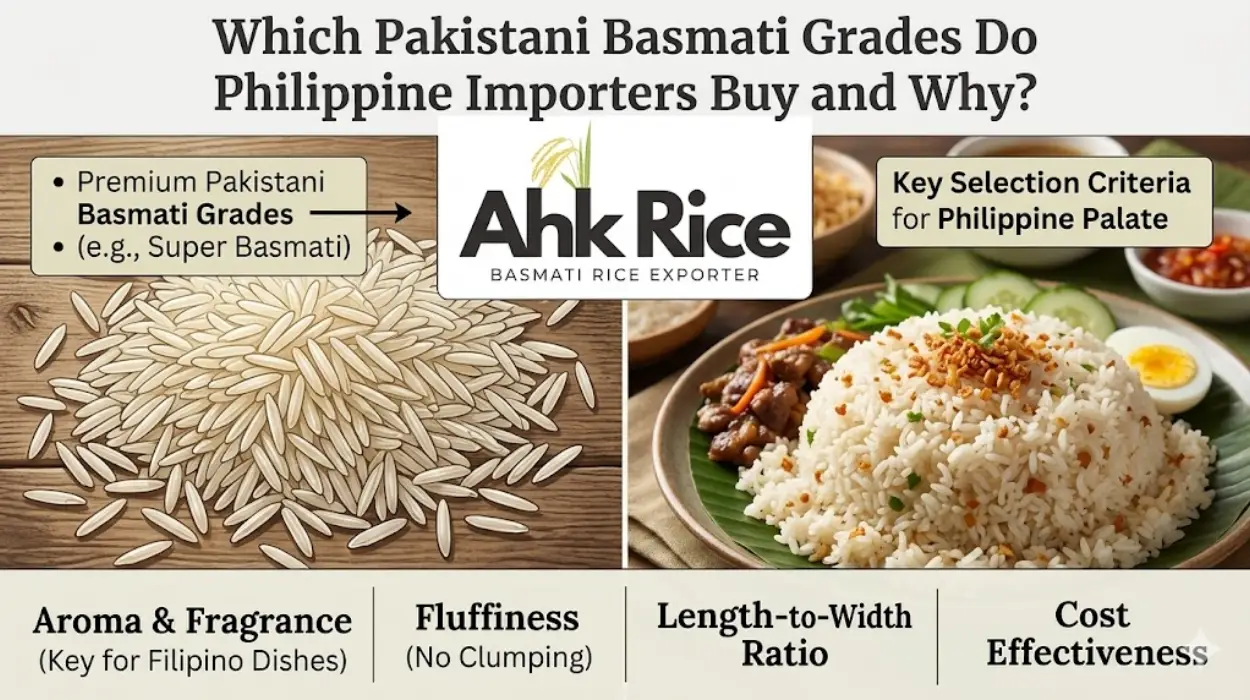
Pakistani Basmati grades that Philippine importers buy most often are 1509 Steam, 1121 Steam, and Super Kernel Basmati. Here is why: these grades balance grain length, cooking yield, shelf life, and landed cost better than premium Gulf-focused grades. Philippine importers prioritize stable pricing, medium aroma, and foodservice performance for retail and hospitality distribution.
Pakistani Basmati rice continues to expand in Southeast Asia because Philippine buyers need long-grain rice with consistent cooking results. Philippine importers also compare Indian and Pakistani origins based on break percentage, moisture level, and freight economics. Importers sourcing for supermarkets prefer visually uniform grains. Catering distributors prefer higher volume expansion after cooking.
AHK Rice supplies multiple Pakistani Basmati grades from Punjab with end-to-end milling, grading, sorting, and export processing. Buyers evaluating grade differences usually begin with educational resources about Pakistani Basmati processing and export classifications before moving into wholesale decisions. That evaluation process helps importers understand why grain length, parboiling method, and polishing level directly affect retail acceptance and warehouse shelf stability. Readers comparing rice processing categories can also explore broader Pakistani Basmati export specifications through related educational content before choosing a procurement strategy.
The Philippine market also separates rice procurement into retail packs, foodservice supply, and ethnic distribution channels. Each channel demands different specifications. Philippine importers rarely buy one universal grade for every use case. Instead, they source according to cooking style, packaging format, and consumer price sensitivity.
What Pakistani Basmati grades do Philippine importers buy most often?
1509 Steam, 1121 Steam, and Super Kernel Basmati dominate Philippine imports because they deliver long grain appearance, reliable cooking expansion, controlled aroma intensity, and lower landed costs than ultra-premium export grades. Philippine buyers prefer grades with stable moisture, lower breakage, and consistent retail presentation.
1509 Steam Basmati
1509 Steam Basmati has become one of the fastest-growing grades in Southeast Asia. Philippine importers buy this grade because it cooks quickly and maintains grain separation after cooking. The grain length usually reaches 8.20 mm to 8.40 mm before cooking.
1509 Steam also provides competitive pricing compared to 1121. Retail distributors targeting middle-income consumers often prioritize 1509 because it balances visual quality with affordable pricing. Foodservice distributors also prefer this grade because restaurants achieve high serving volume after cooking.
1509 Steam Basmati Specification Comparison
| Attribute | 1509 Steam Basmati |
|---|---|
| Average Grain Length | 8.20–8.40 mm |
| Broken Percentage | 2%–5% |
| Moisture Level | 12%–13% |
| Cooking Expansion | 2.2x |
| Aroma Level | Medium |
| Shelf Life | 12–18 months |
| Common Packaging | 5 kg, 25 kg, 40 kg PP bags |
Philippine supermarkets often choose 1509 Steam because consumers prefer softer texture and moderate aroma intensity. Filipino rice dishes usually pair better with medium aromatic profiles than heavily aged Gulf-style Basmati.
1121 Steam Basmati
1121 Steam Basmati targets premium retail and hospitality buyers. Philippine importers select this grade because it delivers extra-long grain appearance after cooking. Grain elongation remains one of the strongest purchase factors in luxury foodservice supply chains.
1121 Steam typically reaches 8.30 mm to 8.50 mm before cooking. After cooking, the grain elongates significantly while remaining separate. High-end restaurants in Manila and Cebu often prefer this specification for buffet service and plated rice dishes.
1121 Steam Basmati Specification Comparison
| Attribute | 1121 Steam Basmati |
|---|---|
| Average Grain Length | 8.30–8.50 mm |
| Broken Percentage | 1%–2% |
| Moisture Level | 12% max |
| Cooking Expansion | 2.5x |
| Aroma Level | High |
| Shelf Life | 18–24 months |
| Common Packaging | 5 kg premium retail bags |
1121 Steam costs more than 1509 because milling yield losses are higher and export demand remains strong across Gulf markets. Philippine importers using premium retail branding usually absorb the higher procurement cost.
Super Kernel Basmati
Super Kernel Basmati remains important for ethnic grocery distribution. Pakistani and Indian communities across the Philippines recognize this variety because of its traditional aroma and softer cooking texture.
Super Kernel usually measures 7.00 mm to 7.40 mm before cooking. The grain is shorter than 1121 and 1509, but the aroma profile is stronger.
Super Kernel Basmati Specification Comparison
| Attribute | Super Kernel Basmati |
|---|---|
| Average Grain Length | 7.00–7.40 mm |
| Broken Percentage | 2%–5% |
| Moisture Level | 13% max |
| Cooking Expansion | 2.0x |
| Aroma Level | High traditional aroma |
| Shelf Life | 12–18 months |
| Common Packaging | 1 kg, 5 kg retail packs |
Super Kernel performs best in ethnic retail stores rather than mainstream supermarket chains. Filipino consumers increasingly recognize long-grain Basmati, but traditional aromatic profiles still serve niche buyer groups.
With the leading grades established, the next question is how Philippine importers compare them commercially and operationally.
How do Philippine importers compare Pakistani Basmati grades?
Philippine importers compare Pakistani Basmati grades using grain length, cooking yield, landed cost, aroma strength, shelf life, retail positioning, and foodservice performance. Buyers evaluate grades differently for supermarkets, restaurants, and wholesale redistribution because each channel has different margin structures and consumer expectations.
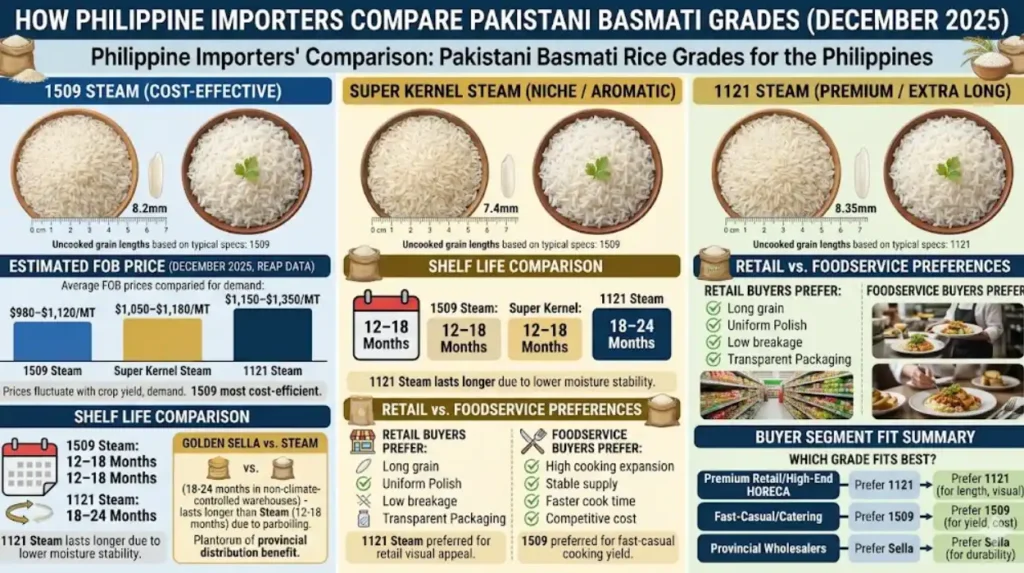
Price per metric ton comparison
Importers evaluate landed cost before choosing a grade. Philippine buyers calculate procurement cost together with freight, customs duties, warehouse storage, and retail packaging expenses.
Estimated Export Price Comparison
| Grade | Average FOB Price per MT |
|---|---|
| 1509 Steam | $980–$1,120 |
| Super Kernel Steam | $1,050–$1,180 |
| 1121 Steam | $1,150–$1,350 |
Prices fluctuate according to crop yield, freight rates, and export demand (source: REAP export data, December 2025).
1509 remains the most cost-efficient option for large-volume importers. 1121 generates higher retail margins because consumers associate extra-long grains with premium quality. Super Kernel maintains stable niche demand due to aroma recognition.
Shelf life comparison
Shelf life influences procurement decisions because Philippine humidity levels create storage risks. Importers prefer grades with stable moisture control and strong packaging durability.
Shelf Life Comparison
| Grade | Shelf Life |
|---|---|
| 1509 Steam | 12–18 months |
| Super Kernel | 12–18 months |
| 1121 Steam | 18–24 months |
1121 Steam lasts longer because lower moisture levels improve storage stability. In humid warehouse conditions near Manila ports, lower moisture helps reduce discoloration risk.
Golden Sella grades last longer than Steam grades. In non-climate-controlled warehouses, Golden Sella can maintain quality for 18–24 months. Steam rice performs best within 12–18 months. Philippine importers supplying provincial distribution networks often choose Sella grades for longer transit cycles.
Retail versus foodservice preference
Retail chains prioritize visual appearance and packaging consistency. Foodservice distributors prioritize cooking yield and price stability.
Retail buyers prefer:
- Long grain appearance
- Uniform polishing
- Low breakage
- Transparent packaging presentation
Foodservice buyers prefer:
- High cooking expansion
- Stable supply volume
- Faster cooking time
- Competitive procurement cost
Philippine hotel suppliers often choose 1121 Steam for plated service. Fast-casual restaurant suppliers usually prefer 1509 because cooking expansion improves profitability.
With comparison factors clarified, the next question becomes which Pakistani Basmati grade fits each Philippine buyer segment best.
Which Pakistani Basmati grade works best for different Philippine buyers?
1509 Steam works best for mass retail and foodservice distribution, 1121 Steam works best for premium hospitality supply, and Super Kernel works best for ethnic retail channels. Importers succeed when they match rice grade specifications to consumer expectations and operational storage conditions.
Best grade for supermarkets
1509 Steam performs best in mainstream supermarkets. Philippine consumers increasingly prefer long-grain rice with moderate aroma. 1509 delivers that balance without premium pricing pressure.
Supermarkets also prefer 1509 because packaging flexibility supports both economy and premium retail segments. Suppliers commonly use 1 kg, 5 kg, and 10 kg branded retail packs.
Best grade for restaurants
1121 Steam performs best in restaurants and hotels. The grain elongation creates premium plate presentation. Buffet operations also benefit from strong grain separation after holding.
Luxury catering companies often choose 1121 because customers visually associate extra-long grains with higher quality dining standards.
Best grade for ethnic stores
Super Kernel performs best in ethnic grocery stores. South Asian consumers recognize the traditional aroma profile immediately. Repeat purchase rates remain strong in diaspora-focused retail environments.
Best grade for long storage cycles
Golden Sella variants work best for long storage periods. The parboiling process improves grain hardness and warehouse stability.
The parboiling process includes:
- Soak the paddy
- Steam the grain
- Dry the kernels
- Mill the rice
- Polish the surface
- Grade the length
- Sort the defects
- Inspect the moisture
- Pack the export lots
Philippine distributors serving remote island regions often choose Sella because transit times are longer.
With buyer segmentation explained, the next question is how importers evaluate risks, advantages, and procurement trade-offs.
What are the pros and cons of each Pakistani Basmati grade?
1509 offers the strongest value pricing, 1121 delivers the best premium appearance, and Super Kernel provides the strongest traditional aroma. Each grade solves different import challenges, but each also creates specific cost, storage, or market-positioning limitations.
1509 Steam advantages and limitations
Advantages
- Lower landed cost
- Strong cooking expansion
- Fast cooking time
- Wide retail acceptance
Limitations
- Less premium appearance than 1121
- Medium aroma only
- Shorter shelf life than Sella
1509 works best for importers prioritizing price competitiveness and volume turnover.
1121 Steam advantages and limitations
Advantages
- Extra-long grain appearance
- Premium restaurant positioning
- Strong elongation after cooking
- Longer shelf stability
Limitations
- Higher procurement cost
- Lower affordability for budget retail
- Higher working capital requirements
1121 works best for premium hospitality and luxury supermarket positioning.
Super Kernel advantages and limitations
Advantages
- Traditional aroma profile
- Strong ethnic recognition
- Softer texture after cooking
- Stable diaspora demand
Limitations
- Shorter grain appearance
- Smaller mainstream retail appeal
- Lower visual differentiation
Super Kernel works best for specialty retail rather than mass supermarket distribution.
With advantages and limitations established, the next question is how Philippine buyers make final procurement decisions.
What decision factors matter most for Philippine Basmati importers?
Importers choose Pakistani Basmati grades based on target consumers, inventory turnover, warehouse conditions, retail positioning, and freight economics. Successful procurement depends on matching rice specifications with operational realities instead of choosing grades only by price or grain length.
Philippine Importer Decision Framework
| Decision Factor | Best Grade Choice | Reason |
|---|---|---|
| Budget retail | 1509 Steam | Lower landed cost |
| Premium restaurants | 1121 Steam | Longer grain presentation |
| Ethnic grocery stores | Super Kernel | Traditional aroma demand |
| Long warehouse storage | Golden Sella | Better humidity resistance |
| Fast turnover distribution | 1509 Steam | Higher cooking yield |
Importers also evaluate export processing standards before approving suppliers. Reliable exporters must complete:
- Moisture testing
- Length grading
- Colour sorting
- Metal detection
- Broken separation
- Fumigation
- Container inspection
Pakistan exported increasing rice volumes to Southeast Asia during FY2024-25 because regional buyers diversified sourcing strategies beyond traditional suppliers (source: Pakistan Bureau of Statistics, FY2024-25).
AHK Rice processes Pakistani Basmati grades through controlled milling, grading, sorting, and packaging systems in Punjab. Philippine importers comparing wholesale procurement models often move from specification research toward supplier evaluation after narrowing their preferred rice grades. Buyers reviewing direct procurement options for 1509 wholesale shipments can continue into decision-stage sourcing comparisons through the detailed wholesale export guide about Philippine 1509 supply solutions.
The Philippine Basmati market continues evolving toward value-driven premiumization. Buyers no longer choose rice only by price. They evaluate cooking performance, shelf life, grain consistency, and retail positioning together. Pakistani exporters supplying stable specifications and transparent grading standards continue gaining market share in Philippine retail and foodservice distribution.
Frequently Asked Questions
Which Pakistani Basmati grade is most popular in the Philippines?
1509 Steam Basmati is the most popular Pakistani Basmati grade in the Philippines. Importers prefer this grade because it offers long grain appearance, competitive pricing, and strong cooking expansion. Supermarkets and foodservice distributors also prefer 1509 because it suits both retail consumers and restaurant operations.
Why do Philippine importers buy 1121 Steam Basmati?
Philippine importers buy 1121 Steam Basmati for premium retail and hospitality supply. The grain reaches extra-long length after cooking and maintains strong separation on serving plates. Hotels and upscale restaurants use 1121 because consumers associate longer grains with higher-quality dining.
What is the difference between 1509 and Super Kernel Basmati?
1509 Basmati has longer grains and faster cooking performance than Super Kernel. Super Kernel offers stronger traditional aroma and softer texture after cooking. Philippine buyers usually choose 1509 for mainstream retail and Super Kernel for ethnic grocery distribution.
Which Pakistani Basmati grade has the longest shelf life?
Golden Sella and 1121 Steam Basmati usually provide the longest shelf life. Lower moisture levels and parboiling improve storage stability in humid environments. Philippine importers storing rice in warehouses for longer periods often choose Sella grades because the grains resist breakage and discoloration better.
What packaging sizes do Philippine rice importers prefer?
Philippine importers usually prefer 1 kg, 5 kg, 25 kg, and 40 kg packaging formats. Retail supermarkets commonly buy smaller branded packs for consumers. Foodservice distributors and wholesalers prefer larger PP bags because they reduce packaging costs and improve logistics efficiency.