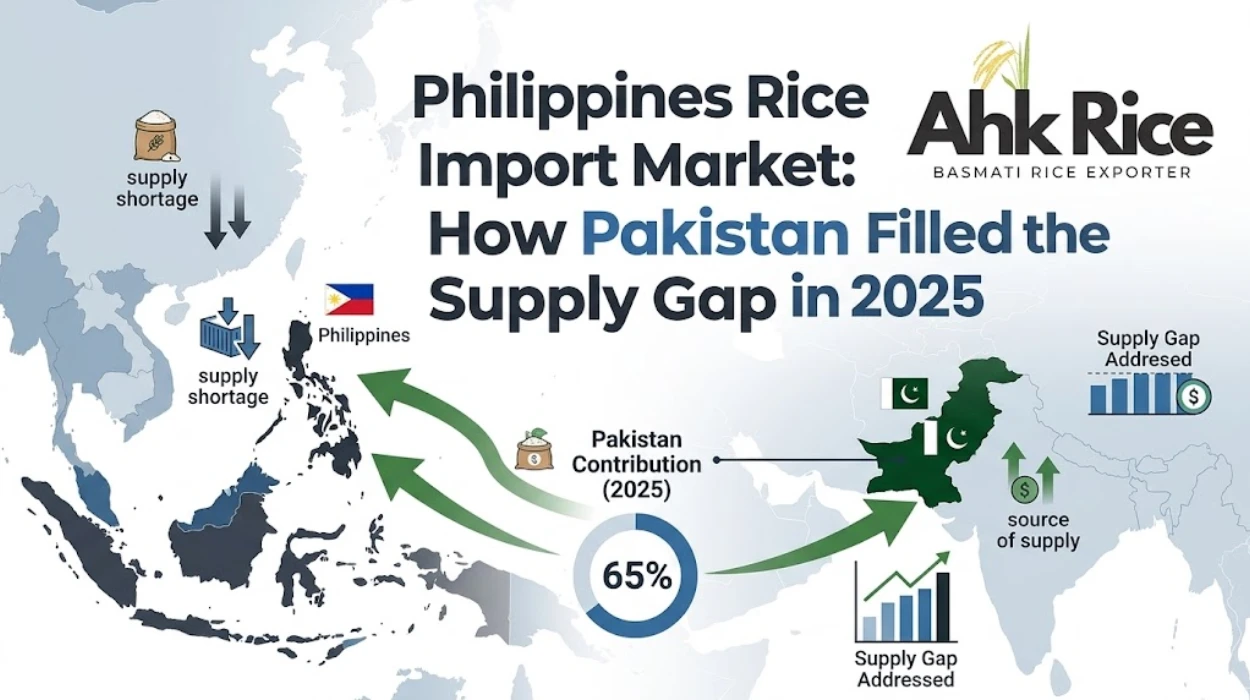
Philippines Rice Import Market: How Pakistan Filled the Supply Gap in 2025
Philippines rice import demand increased because domestic production failed to match consumption in 2025. Pakistan expanded rice exports to the Philippines through competitive pricing, higher milling capacity, and steady non-Basmati and Basmati shipments. Here is why: the Philippines imported more than 4 million metric tons of rice after weather disruptions reduced local harvest volumes and regional supply tightened (source: USDA Grain Report 2025).
What caused the Philippines rice shortage in 2025?
Lower domestic harvests, higher food inflation, and reduced regional supply created a rice deficit above 4 million metric tons in 2025.
The Philippines depends on rice as its primary food staple. Average annual rice consumption exceeds 15 million metric tons. Local farms produce less than total national demand during drought periods and typhoon seasons. Rice imports stabilize retail prices and maintain public food reserves.
Philippines rice shortage conditions intensified after El Niño reduced irrigation levels across Luzon and Visayas regions. Rice yields declined because reservoirs operated below normal capacity during planting cycles. Domestic production losses increased wholesale prices in Manila and Cebu markets (source: Philippine Statistics Authority, 2025).
Vietnam remained the largest rice supplier to the Philippines in 2025. However, Vietnamese export prices increased after supply pressure from Indonesia and China expanded regional demand. Thai rice prices also increased because freight and energy costs remained elevated during the first half of 2025 (source: FAO Rice Price Update, 2025).
Pakistan rice exporters increased shipments during this supply gap. Pakistani mills supplied long grain white rice, IRRI-6 rice, 386 rice, and selected Basmati varieties to Philippine importers. Competitive freight rates from Karachi supported this trade expansion.
Philippines rice import Pakistan supply gap 2025 became an important regional trade relationship because Pakistani exporters maintained shipment continuity while Southeast Asian supply tightened.
With the reasons behind the rice shortage established, the next question is how Pakistan increased exports into the Philippine market.
How did Pakistan fill the Philippines rice import gap in 2025?
Pakistan expanded exports through lower rice prices, stable milling output, and faster shipment scheduling from Karachi ports.
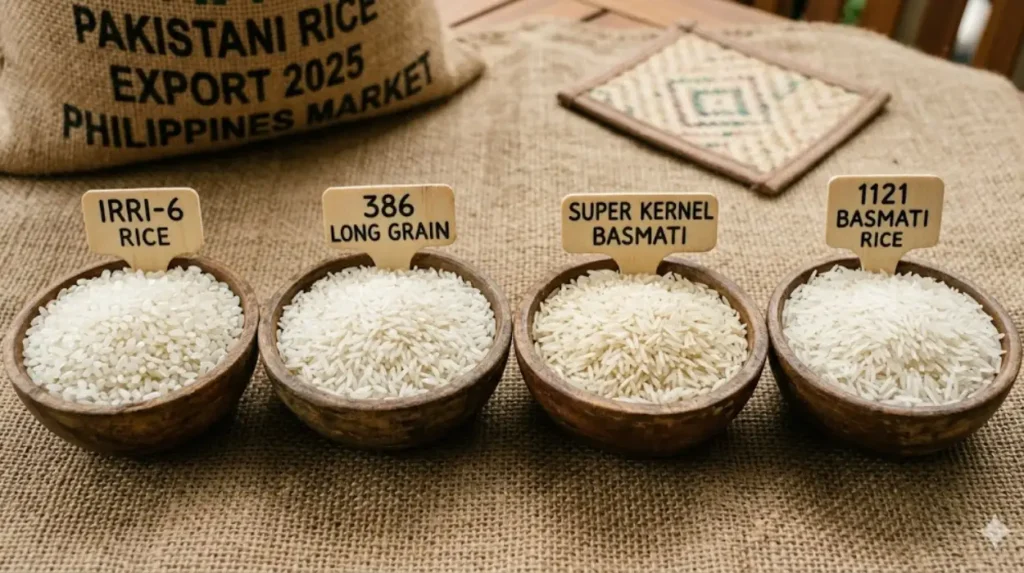
Pakistan cultivated large rice volumes during the 2024–25 crop cycle. Punjab and Sindh remained the main rice-producing regions. Farmers harvested IRRI-6, 386 long grain, Super Kernel Basmati, and 1121 Basmati varieties for export markets.
Pakistan rice Philippines trade increased because Pakistani exporters supplied both price-sensitive and premium segments. Philippine wholesalers imported non-Basmati rice for supermarkets, public distribution channels, and food service operations. Specialty importers sourced Basmati rice for restaurants and hospitality buyers.
Pakistan exported rice through a structured processing chain:
- Harvest the paddy from Punjab and Sindh farms.
- Dry the paddy to safe moisture levels.
- Clean the raw grain through pre-cleaning systems.
- De-husk the paddy in automated milling lines.
- Polish the rice for export appearance.
- Sort broken and defective grains through graders.
- Inspect moisture, purity, and grain length.
- Pack rice into PP, paper, or non-woven bags.
- Load containers at Karachi export terminals.
Pakistani mills increased operational efficiency because modern color sorters reduced rejection ratios during inspection stages. Exporters supplied rice with controlled moisture levels between 12% and 14%. Stable moisture reduced spoilage during ocean transit.
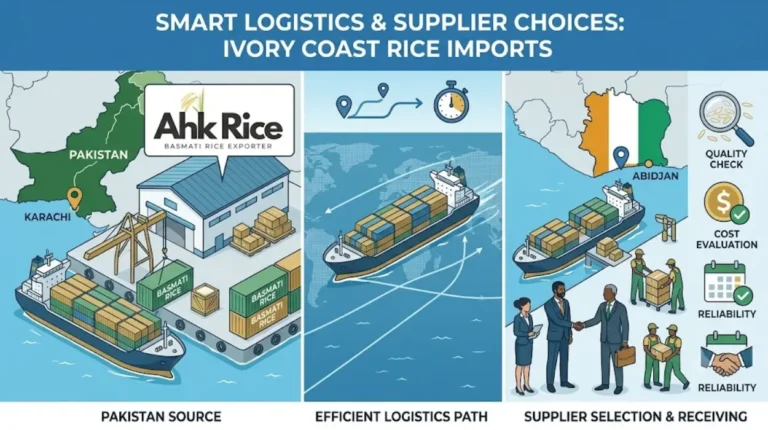
Karachi to Manila shipping schedules averaged 18 to 28 days depending on transshipment routes and vessel availability. Shorter lead times helped Philippine importers replenish inventories faster.
Pakistan also benefited from lower average export prices. Pakistani white rice remained cheaper than several competing origins during multiple quarters of 2025. Philippine importers purchased larger volumes because price-sensitive consumers shifted toward affordable long grain rice (source: REAP export data, 2025).
With the export flow explained, the next question is which Pakistani rice varieties Philippine buyers imported most frequently.
Which Pakistani rice varieties entered the Philippines market in 2025?
IRRI-6, 386 long grain, Super Kernel Basmati, and 1121 Basmati became the main Pakistani rice varieties imported into the Philippines.
Pakistan produces multiple rice categories for export markets. Each variety serves different consumption patterns and pricing levels.
What is IRRI-6 rice?
IRRI-6 rice provides affordable long grain supply for bulk food distribution and commercial retail markets.
IRRI-6 rice grows mainly in Sindh province. Farmers cultivate this variety because it delivers high yield per hectare and strong export volume. The grain length averages 6.2 mm to 6.8 mm after milling.
Philippine importers purchase IRRI-6 because the rice suits mass-market consumption. Food processors use this variety in packaged retail products and prepared meals. IRRI-6 also maintains stable cooking performance in humid storage environments.
What is 386 long grain rice?
386 long grain rice offers medium-cost pricing with better grain appearance than standard commodity rice.
386 rice grows in Punjab irrigation zones. Mills polish and sort this variety for retail distribution and food service buyers. The grain cooks soft and expands moderately after boiling.
Philippine distributors prefer 386 rice because it balances price and presentation. Supermarkets use this variety for private-label rice packaging.
What is Super Kernel Basmati rice?
Super Kernel Basmati delivers aromatic long grain rice for restaurants and premium retail shelves.
Super Kernel Basmati originates from Punjab basmati-growing districts near Gujranwala and Sheikhupura. The grain length reaches 7.0 mm to 7.4 mm before cooking. Cooked grain elongation increases significantly after steaming.
Restaurants import Super Kernel Basmati because aroma and grain separation improve biryani and grilled meat dishes. Filipino consumers increasingly purchased aromatic rice through urban supermarkets during 2025.
What is 1121 Basmati rice?
1121 Basmati provides extra-long grain length above 8 mm with premium cooking elongation.
1121 Basmati became one of Pakistan’s highest-value rice exports. The grain elongates up to double its uncooked size after cooking. Exporters supply this variety in steam, sella, and white processing grades.
Philippine hospitality buyers source 1121 Basmati for international cuisine restaurants. Middle Eastern restaurants in Manila also increased imports during 2025.
Readers exploring Philippine buyer preferences for aromatic rice specifications can naturally continue into the article about how importers compare Pakistani Basmati categories and processing styles.
With the main rice varieties explained, the next question is how Pakistani exporters process rice before shipment.
How does Pakistan process rice for export to the Philippines?
Pakistani exporters process rice through cleaning, milling, grading, polishing, sorting, testing, and packaging systems before shipment.
Rice processing determines export quality. Philippine buyers inspect grain purity, broken percentage, moisture content, and packaging standards before procurement.
Modern Pakistani rice mills operate automated processing lines. Large exporters process thousands of metric tons weekly during peak export seasons.
How is paddy cleaned and milled?
Pre-cleaning and de-husking remove impurities and convert raw paddy into edible rice grain.
Rice mills clean harvested paddy through vibrating screens and magnetic separators. Cleaning removes stones, straw, dust, and metal particles.
Milling systems then dehusk the paddy. Rubber roll shellers separate the outer husk from the rice kernel. Brown rice passes through whitening chambers to remove bran layers.
How is export rice graded and sorted?
Length grading and color sorting improve uniformity and reduce defective grain percentages.
Length graders separate head rice from broken kernels. Export contracts define maximum broken percentages such as 5%, 15%, or 25%.
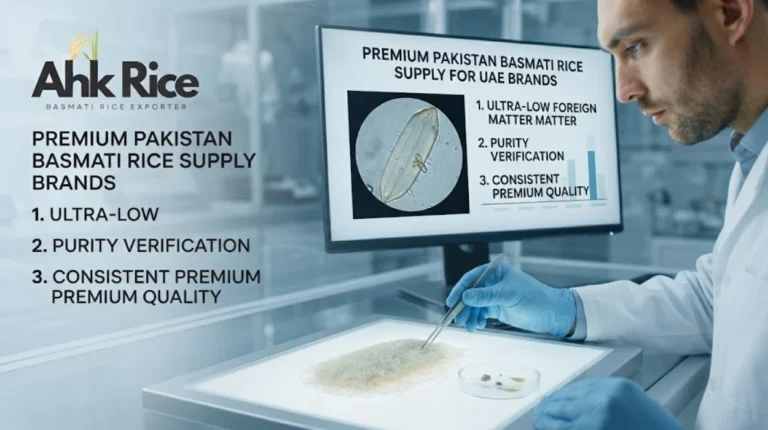
Color sorters inspect rice through optical sensors. Machines reject yellow grains, damaged kernels, and foreign material. Automated sorting improves export consistency for Philippine inspections.
How is rice tested before export?
Laboratory testing verifies moisture, purity, grain length, and food safety compliance.
Quality teams inspect export batches before container loading. Testing includes:
- Moisture verification
- Broken percentage analysis
- Chalky grain inspection
- Foreign matter detection
- Fragrance evaluation
- Pesticide residue testing
- Fumigation verification
Export documentation includes phytosanitary certificates, fumigation certificates, packing lists, and certificates of origin.
With processing standards clarified, the next question is which certifications Philippine importers require from Pakistani suppliers.
Which certifications apply to Pakistan rice exports for the Philippines?
Phytosanitary certification, fumigation verification, ISO compliance, and food safety inspections apply to Philippine rice imports from Pakistan.
Rice import Philippines regulations require compliance with food safety and quarantine procedures. Philippine authorities inspect imported agricultural products to prevent contamination and pest transmission.
Pakistani exporters follow international quality management systems for shipment approval.
Which export documents accompany rice shipments?
Phytosanitary certificates, certificates of origin, commercial invoices, and packing lists support customs clearance.
Exporters prepare shipping documentation before vessel departure. Customs authorities review these records during import clearance procedures.
Key export documents include:
- Phytosanitary certificate
- Fumigation certificate
- Certificate of origin
- Commercial invoice
- Packing list
- Bill of lading
- Quality inspection report
Philippine importers also verify container sealing and packaging integrity upon arrival.
Which quality standards matter most?
Low moisture, controlled broken percentage, and absence of contaminants determine export acceptance.
Moisture content above 14% increases spoilage risk during ocean transport. High broken percentages reduce market value for premium retail channels.
Food safety testing gained importance after Asian import regulators increased pesticide monitoring during 2025 (source: ASEAN food import monitoring updates, 2025).
With certifications explained, the next question is why Philippine buyers increased procurement from Pakistan instead of relying fully on other suppliers.
Why did Philippine importers choose Pakistan rice in 2025?
Competitive pricing, flexible grades, and stable export supply made Pakistani rice attractive for Philippine buyers.
Philippine rice buyers operate in different market segments. Budget retail distributors focus on low-cost rice supply. Premium supermarkets focus on aroma, grain length, and appearance.
Pakistan supplied both categories during the 2025 supply gap.
How did pricing influence imports?
Pakistani rice remained competitively priced against Thai and Vietnamese alternatives during several quarters of 2025.
Freight efficiency and large harvest volumes supported lower export pricing. Importers reduced procurement costs by diversifying suppliers across Pakistan and Vietnam.
Lower procurement costs helped Philippine distributors stabilize retail prices during inflation periods.
How did supply reliability affect procurement?
Consistent shipment scheduling reduced inventory shortages for Philippine wholesalers.
Importers prioritize exporters capable of meeting monthly shipment schedules. Pakistani exporters dispatched containers regularly from Karachi and Port Qasim.
Reliable shipment flow reduced warehouse shortages during peak consumption months such as Ramadan and year-end holiday seasons.
How did grade flexibility support imports?
Pakistan supplied commodity rice and premium Basmati categories within the same export network.
Philippine buyers sourced different grades for different channels. Budget retailers imported non-Basmati rice. Restaurants and premium stores imported aromatic Basmati varieties.
This flexibility expanded Pakistan rice Philippines trade relationships during 2025.
With buyer motivations clarified, the final question is how this trade relationship influences future rice imports.
What does the future of Philippines rice imports from Pakistan look like?
Pakistan is expected to remain a strategic rice supplier for the Philippines because demand growth continues above domestic production levels.
The Philippines population continues increasing annually. Urbanization also changes food consumption patterns. Rice remains the dominant staple food across income groups.
Climate variability continues affecting agricultural production in Southeast Asia. Drought conditions and typhoon disruptions create periodic supply shortages.
Pakistan maintains export advantages because Punjab and Sindh support large-scale rice cultivation. Irrigation systems from the Indus Basin support commercial farming across major rice districts.
Pakistani exporters also continue investing in:
- Automated milling systems
- Optical color sorting
- Export laboratory testing
- Branded packaging
- Containerized logistics
- Moisture control systems
Philippine importers increasingly seek suppliers capable of stable year-round shipments. Pakistan strengthened this role during the 2025 supply gap by supplying affordable long grain rice and premium aromatic varieties simultaneously.
The Philippines rice import market therefore became an important destination for Pakistani rice exporters in 2025, especially during periods of regional supply pressure and elevated food inflation.
Frequently Asked Questions
Why did the Philippines import more rice in 2025?
The Philippines imported more rice because domestic rice production declined during drought and typhoon periods. Local harvest volumes failed to meet national consumption demand. Higher food inflation also increased pressure on government and private import programs. Importers purchased additional rice to stabilize retail supply and market prices.
Which Pakistani rice varieties are popular in the Philippines?
Philippine importers commonly purchase IRRI-6, 386 long grain rice, Super Kernel Basmati, and 1121 Basmati rice from Pakistan. IRRI-6 supports budget retail markets. 386 rice serves supermarkets and food service channels. Super Kernel and 1121 Basmati target restaurants and premium retail shelves because of aroma and grain elongation.
How long does rice shipping from Pakistan to the Philippines take?
Rice shipments from Karachi to Philippine ports usually take 18 to 28 days depending on vessel schedules and transshipment routes. Container congestion and weather conditions influence transit time. Importers often schedule shipments monthly to maintain warehouse inventory and prevent retail shortages.
What quality checks apply to Pakistani rice exports?
Pakistani exporters inspect moisture levels, broken percentage, grain length, and foreign matter before shipment. Laboratories also test pesticide residues and food safety compliance. Exporters issue phytosanitary certificates and fumigation reports to support customs clearance and import approval in the Philippines.
Why did Philippine buyers choose Pakistan over other suppliers in 2025?
Philippine buyers selected Pakistani rice because pricing remained competitive during regional supply shortages. Pakistan also supplied multiple rice grades for different buyer categories. Consistent shipment schedules and stable milling output helped importers secure inventory faster during periods of increased rice demand.