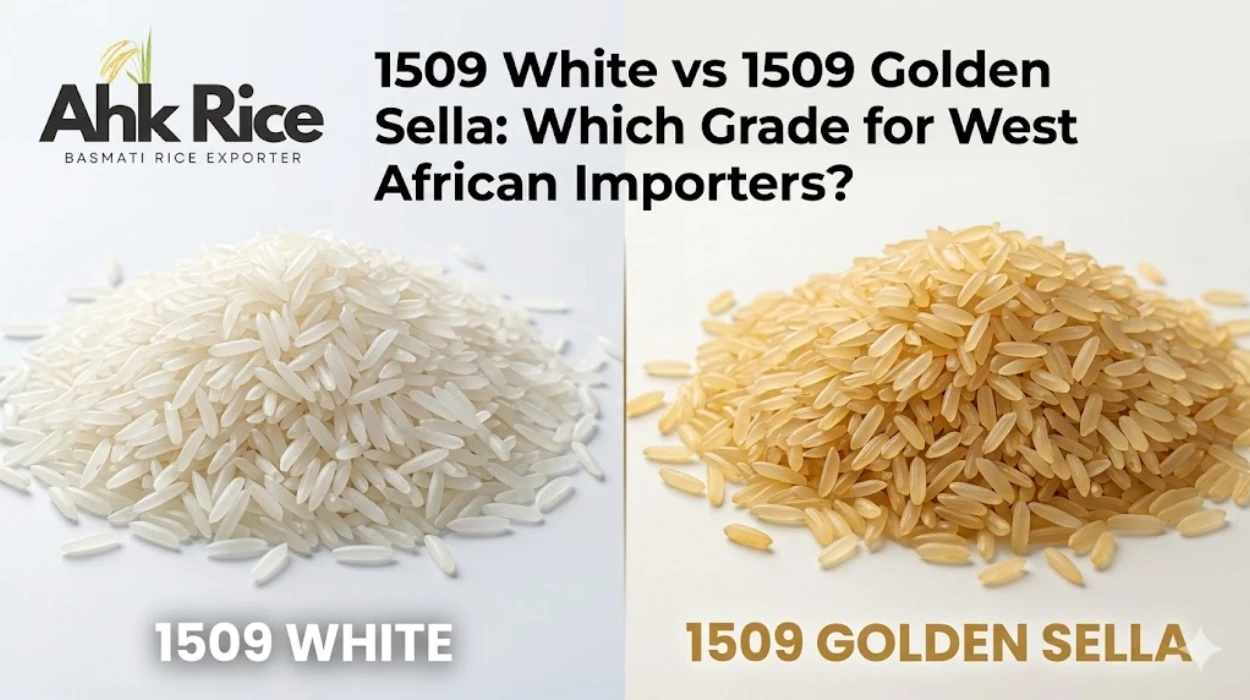
1509 White vs 1509 Golden Sella: Which Grade for West African Importers?
1509 Golden Sella is the preferred choice for most West African importers because it offers longer shelf life, better grain strength, higher cooking yield, and stronger resistance to tropical storage conditions. Here is why: West African distributors often store rice for extended periods in warm and humid environments, making durability and appearance critical purchasing factors.
West Africa continues to increase rice imports to satisfy growing consumer demand. Countries such as Ivory Coast, Ghana, Senegal, Benin, and Guinea import significant volumes of rice each year because local production does not fully meet consumption requirements (source: FAOSTAT 2025). Among imported premium rice categories, Pakistani 1509 Basmati has gained attention for its affordability and long-grain appearance.
Importers evaluating grades often compare 1509 White Rice and 1509 Golden Sella Rice before placing bulk orders. Understanding the differences helps buyers select the correct specification for their market segment. Buyers researching regional demand trends can also review our analysis of the evolving West African rice trade and importer preferences in the article about West Africa’s growing rice sourcing relationship with Pakistan.
AHK Rice exports both grades from Punjab, Pakistan. The company mills, grades, sorts, inspects, and ships rice according to buyer specifications while supporting custom packaging and export documentation requirements.
What Is the Difference Between 1509 White and 1509 Golden Sella Rice?
1509 White Rice offers a brighter appearance and faster cooking, while 1509 Golden Sella provides stronger grains, longer storage stability, and higher cooking yield. Most West African wholesale importers choose Golden Sella for distribution channels that require durability and longer inventory cycles.
What Is 1509 White Rice?
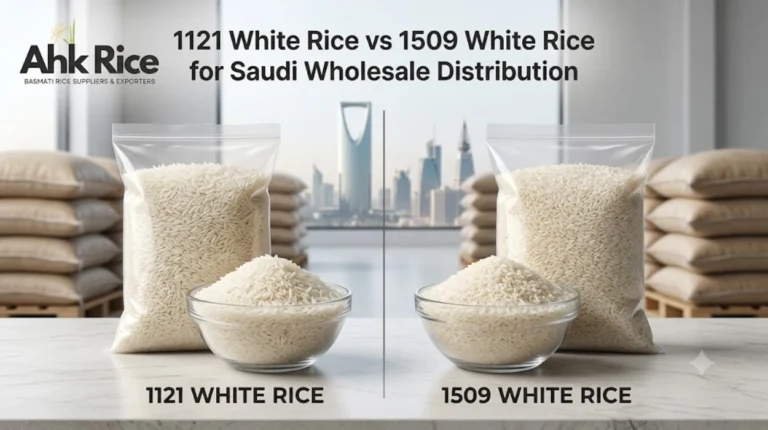
1509 White Rice is a fully milled and polished Basmati variety. The milling process removes the husk and bran layers before polishing creates a bright white appearance. The grain remains long and slender while maintaining the natural aroma associated with Basmati rice.
1509 White Rice cooks faster than parboiled grades. Retail consumers often prefer its soft texture and white appearance. Restaurants serving premium plated meals also select white rice because of its visual presentation.
What Is 1509 Golden Sella Rice?
1509 Golden Sella Rice undergoes a parboiling process before milling. Processors soak, steam, dry, mill, polish, and grade the rice. This treatment transfers nutrients into the grain and strengthens its structure.
1509 Golden Sella Rice develops a golden color and stronger texture. The grain remains separate after cooking and withstands transportation and storage more effectively.
Specification Comparison
Key Technical Differences
| Specification | 1509 White Rice | 1509 Golden Sella Rice |
|---|---|---|
| Processing Method | Milled and polished | Parboiled and polished |
| Grain Colour | Bright white | Golden yellow |
| Average Length | 8.0–8.3 mm | 8.0–8.3 mm |
| Cooking Expansion | 1.8–2.0 times | 2.0–2.3 times |
| Shelf Life | 12–18 months | 18–24 months |
| Grain Strength | Moderate | High |
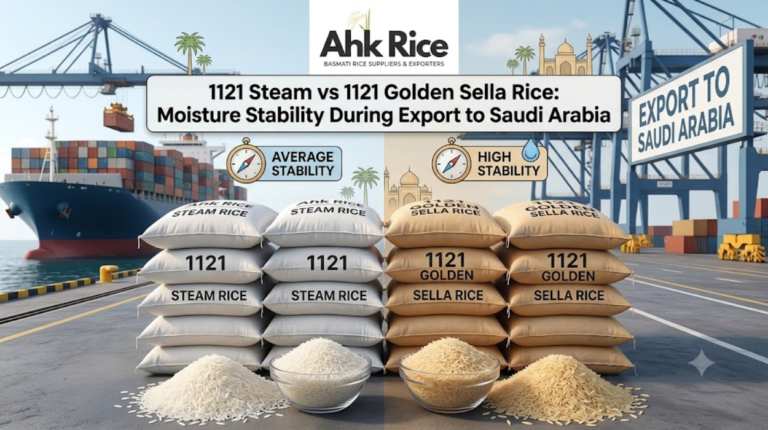
| Moisture Resistance | Moderate | High |
The processing difference creates most of the commercial advantages. Golden Sella maintains grain integrity during shipping and storage. White Rice provides stronger visual appeal in premium retail packaging.
With the technical differences established, the next question is how these grades perform in actual West African markets.
Which Grade Do West African Markets Prefer?
Golden Sella dominates wholesale and distribution channels, while White Rice serves premium retail and hospitality segments. Market preferences differ according to consumer habits, storage conditions, and distribution structures.
Ivory Coast Market Preferences
Ivory Coast remains one of the largest rice importers in West Africa (source: USDA Grain Reports 2025). Importers serving wholesalers and distributors generally prioritize grain durability.
1509 Golden Sella performs well in Ivory Coast because distributors often hold inventory for several months. The stronger grain structure reduces breakage and preserves quality throughout the supply chain.
Premium supermarkets and specialty stores also import 1509 White Rice. These buyers target consumers willing to pay higher prices for appearance and softer texture.
Ghana and Senegal Market Preferences
Ghanaian importers frequently source parboiled rice because consumers are familiar with non-sticky rice textures. Golden Sella fits this demand profile well.
Senegal has historically maintained strong demand for parboiled rice imports. Importers value rice that remains separate after cooking and performs consistently in institutional catering environments (source: USDA Foreign Agricultural Service 2025).
Regional Preference Summary
| Market Region | Preferred Grade | Main Reason |
| Ivory Coast Wholesale | Golden Sella | Storage stability |
| Ivory Coast Retail Premium | White Rice | Appearance |
| Ghana Distribution | Golden Sella | Consumer preference |
| Senegal Catering | Golden Sella | Grain separation |
| Premium Hospitality Sector | White Rice | Presentation |
Regional demand explains why many exporters allocate larger production volumes to Golden Sella grades. The next consideration involves pricing and profitability.

How Do Prices Compare for Importers?
1509 White Rice generally carries a lower processing cost, while Golden Sella often delivers better long-term value through reduced losses and stronger market acceptance. Total profitability depends on distribution strategy rather than purchase price alone.
Average Price Differences
Parboiling increases production costs. Golden Sella therefore trades at a premium compared with White Rice.
Typical export price differences range between USD 20–50 per metric ton, depending on crop quality, harvest season, freight rates, and destination market conditions (source: REAP Export Data 2025).
Cost Versus Value
Golden Sella commands a higher purchase price. However, importers often recover the additional cost through reduced breakage and higher customer acceptance.
Golden Sella lasts longer than White Rice. In tropical warehouse conditions, Golden Sella maintains quality for up to 24 months. White Rice generally performs best within 12–18 months.
Golden Sella experiences lower transit losses. During long shipping routes to West African ports, stronger grains reduce breakage percentages.
White Rice offers faster inventory turnover. Premium retailers often sell smaller quantities at higher margins.
Price Comparison Example
| Factor | 1509 White | 1509 Golden Sella |
| FOB Premium | Lower | Higher |
| Breakage Risk | Higher | Lower |
| Storage Duration | Shorter | Longer |
| Distribution Suitability | Retail | Wholesale |
| Catering Demand | Moderate | High |
Price differences lead directly into buyer decision factors, which determine the most suitable grade.
What Are the Pros and Cons of Each Grade?
White Rice delivers superior appearance and faster cooking, while Golden Sella offers durability, yield, and storage advantages. The correct choice depends on the target customer segment and inventory cycle.
Advantages of 1509 White Rice
- Bright white appearance
- Faster cooking time
- Softer texture
- Premium retail appeal
- Strong supermarket presentation
Disadvantages of 1509 White Rice
- Shorter shelf life
- Higher breakage risk
- Lower cooking yield
- Greater sensitivity to humidity
Advantages of 1509 Golden Sella Rice
- Longer shelf life
- Stronger grain structure
- Higher cooking expansion
- Better moisture resistance
- Lower transportation losses
Disadvantages of 1509 Golden Sella Rice
- Higher processing cost
- Longer cooking time
- Golden colour may not suit all retail markets
Golden Sella performs better than White Rice in humid coastal regions. In Abidjan warehouses without advanced climate control systems, Golden Sella retains grain integrity longer. In Dakar catering operations, Golden Sella maintains separation after bulk cooking. In contrast, White Rice delivers stronger visual appeal for premium packaged retail products.
These strengths and limitations create distinct use cases that help importers make purchasing decisions.
Which Grade Works Best for Different Importer Types?
Golden Sella suits distributors, wholesalers, and institutional buyers, while White Rice serves premium retailers and hospitality businesses focused on presentation and consumer appeal.
Decision Framework
| Buyer Type | Recommended Grade | Reason |
| National Distributor | Golden Sella | Long storage capability |
| Regional Wholesaler | Golden Sella | Lower breakage losses |
| Government Tender Supplier | Golden Sella | Bulk performance |
| Premium Supermarket | White Rice | Visual appeal |
| Fine Dining Restaurant | White Rice | Softer texture |
Importers Focused on Distribution
Distribution businesses require consistency. Golden Sella offers stable quality throughout transport, warehousing, and secondary distribution.
Buyers evaluating current CIF pricing, packaging options, and shipment specifications for Ivory Coast can review detailed procurement information in our guide to sourcing Pakistani Basmati for Abidjan import programs.
Importers Focused on Retail Branding
Retail brands compete on shelf presentation. White Rice creates stronger visual appeal in transparent packaging.
Importers Focused on Food Service
Food service operators prioritize yield. Golden Sella expands more during cooking and maintains grain separation in large-volume preparation environments.
Buyer objectives determine grade selection more effectively than price alone. The final consideration involves choosing the right specification strategy.
What Factors Should Buyers Evaluate Before Ordering?
Storage duration, customer segment, cooking expectations, distribution distance, and inventory turnover determine the correct grade selection. Buyers matching specifications to market realities achieve stronger commercial results.
Evaluate Storage Conditions
Assess warehouse conditions before procurement. Golden Sella performs better in humid environments and extended storage periods.
Evaluate Consumer Preferences
Study consumer cooking habits. Markets preferring separate grains generally favor Golden Sella. Markets prioritizing appearance often prefer White Rice.
Evaluate Distribution Length
Measure supply chain complexity. Longer transportation networks benefit from stronger grain structures.
Evaluate Packaging Strategy
Match packaging design with consumer expectations. Transparent retail bags often highlight White Rice effectively.
Evaluate Inventory Turnover
Estimate sales cycles accurately. Faster turnover supports White Rice. Longer turnover supports Golden Sella.
These factors create a practical framework that helps importers select the most profitable grade for their target market.
Conclusion
1509 Golden Sella remains the preferred specification for most West African importers because it combines longer shelf life, stronger grain integrity, higher cooking yield, and better performance in tropical storage conditions.
1509 White Rice remains valuable for premium retail and hospitality segments. Its bright appearance and softer texture create strong consumer appeal.
Importers serving wholesale networks, distributors, institutional buyers, and government tenders generally achieve better operational results with Golden Sella. Importers targeting premium supermarkets and branded retail shelves often benefit from White Rice.
The correct specification depends on the customer segment, storage environment, and distribution strategy rather than the lowest purchase price.
Frequently Asked Questions
Is 1509 Golden Sella better than 1509 White Rice for West African importers?
1509 Golden Sella is the preferred choice for most West African importers because it offers longer shelf life, stronger grains, and better resistance to humidity. Wholesale distributors and institutional buyers often select Golden Sella for its durability during storage and transportation.
Which rice grade is more popular in Ivory Coast?
1509 Golden Sella is more widely imported in Ivory Coast for wholesale distribution channels. Many importers prefer it because the grain remains intact during long storage periods and performs well in bulk cooking applications. Premium retail stores also import 1509 White Rice for consumers seeking a bright white appearance.
What is the shelf life difference between 1509 White and 1509 Golden Sella?
1509 White Rice typically maintains optimal quality for 12 to 18 months when stored correctly. 1509 Golden Sella generally offers a shelf life of 18 to 24 months because the parboiling process strengthens the grain and improves storage stability.
Why does 1509 Golden Sella cost more than 1509 White Rice?
1509 Golden Sella undergoes additional processing steps, including soaking, steaming, drying, milling, and polishing. These processes increase production costs. Many importers accept the higher price because Golden Sella reduces breakage losses and provides higher cooking yield.
Which rice grade is best for supermarkets and retail brands?
1509 White Rice is often the preferred option for supermarkets and premium retail brands. Its bright white colour and softer texture attract consumers looking for visually appealing packaged rice. Retailers targeting premium market segments frequently choose this specification.