How Does Foreign Matter Affect Pakistan Basmati Rice Quality in Indonesia?
Foreign matter directly reduces the purity, safety, appearance, and commercial value of Pakistan Basmati rice in Indonesia. Here is why: stones, husks, soil, straw, insects, and other non-rice materials indicate inadequate cleaning, sorting, handling, or storage.
What Is Foreign Matter in Pakistan Basmati Rice?
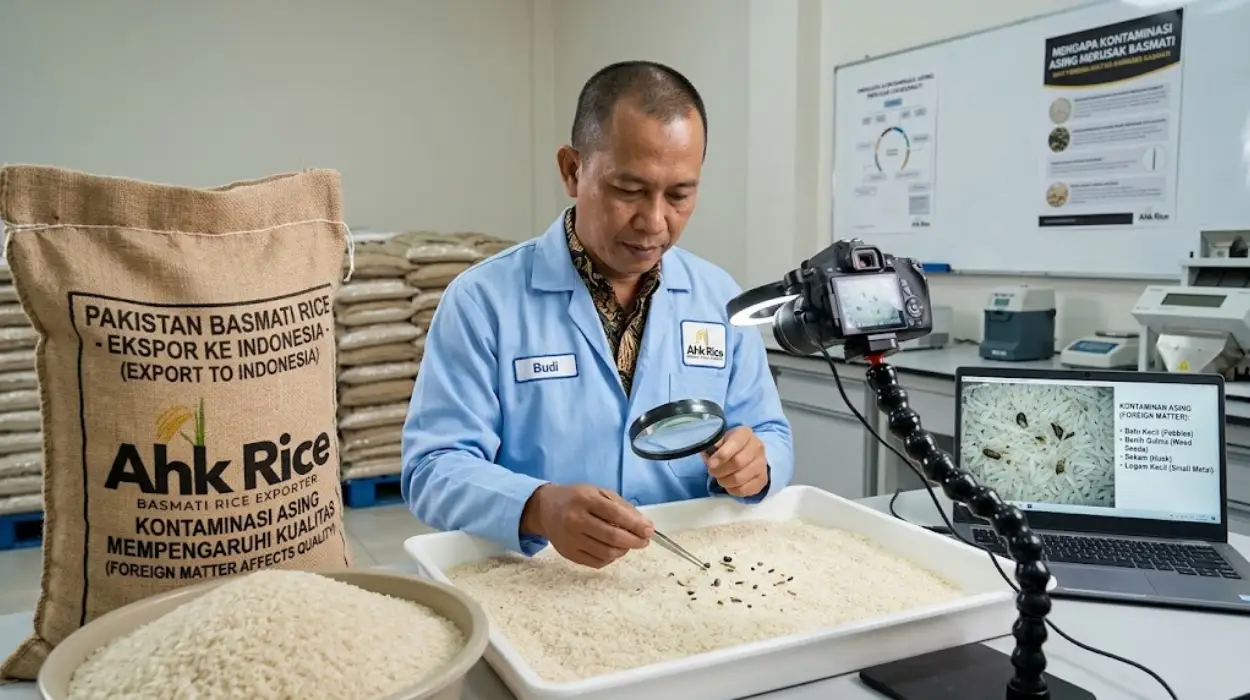
Foreign matter means non-rice material present among milled kernels, including stones, husks, soil, straw, insects, seeds, and packaging debris. Indonesian rice quality controls recognize foreign matter as a measurable physical quality parameter.
Foreign matter differs from broken rice, chalky grains, and damaged kernels. Broken rice remains part of the rice grain. Foreign matter comes from outside the intended rice product. Examples include small stones, rice husks, weed seeds, dust, insects, and fragments of plant material.
Indonesia treats rice quality through defined physical and chemical parameters. The Indonesian Ministry of Agriculture updated rice quality classifications through Regulation No. 22 of 2025. The regulation includes foreign matter, moisture, broken kernels, small fragments, and milling degree among quality parameters.
SNI 6128:2020 is the active Indonesian national standard titled “Beras,” meaning rice. The standard is administered through Indonesia’s National Standardization Agency, BSN.
Foreign matter therefore represents more than an appearance problem. It connects agricultural cleanliness, milling performance, optical sorting, packaging, storage, inspection, and import quality.
Which Materials Count as Foreign Matter?
Common foreign materials include:
- Stones
- Husk fragments
- Soil particles
- Straw pieces
- Weed seeds
- Insect fragments
- Plastic fragments
- Metal particles
- Other non-rice plant materials
A shipment containing visible stones creates a serious quality concern. A shipment containing small husk fragments creates a different cleaning issue. Both materials reduce product purity.
The exact acceptable level depends on the applicable Indonesian requirement, buyer specification, contract, and inspection method. Importers therefore specify measurable limits rather than using descriptions such as “clean rice.”
How Does Foreign Matter Enter Pakistan Basmati Rice?
Foreign matter enters Basmati rice during cultivation, harvesting, transportation, drying, storage, milling, grading, packaging, and loading. Each stage introduces specific contamination risks that controlled processing must remove before export.
Cultivation begins the quality chain. Paddy grows in agricultural fields where soil, weeds, stones, insects, and plant residues exist naturally. Harvesting equipment can collect some of these materials with the paddy.
Transportation creates another contamination point. Paddy moved in unclean vehicles can collect soil, dust, fibers, and other materials. Poorly maintained storage areas create similar risks.
Processing removes most foreign matter through multiple mechanical operations. Cleaning separates larger materials from paddy. Dehusking removes the outer husk. Milling removes bran layers. Grading separates kernels according to physical characteristics.
Colour sorting provides another control layer. Optical sorters identify colour differences between acceptable kernels and unwanted materials. Density and size-based systems also support physical separation.
Packaging protects the finished product from new contamination. Clean bags, controlled filling areas, and sealed containers reduce the risk of introducing foreign materials after final sorting.
Loading completes the export chain. Clean containers, dry cargo areas, and controlled handling protect the rice before shipment from Pakistan to Indonesia.
How Is Pakistan Basmati Rice Processed to Control Foreign Matter?
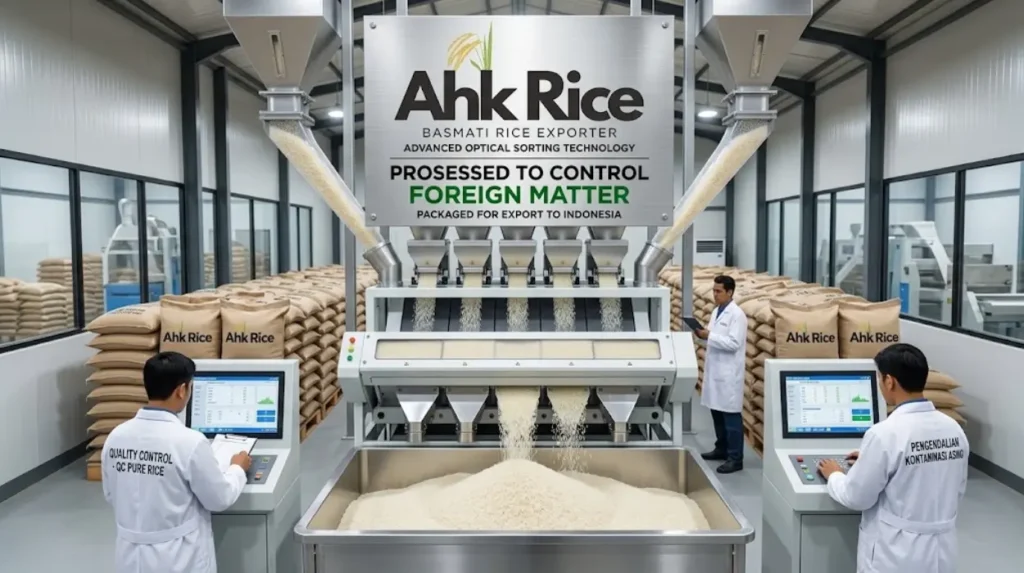
Foreign matter control follows a sequence of cleaning, dehusking, polishing, grading, sorting, inspection, and packaging. Each operation removes a different contamination type and protects the final Basmati specification.
Which Processing Steps Remove Foreign Matter?
The standard processing sequence can include:
- Clean the paddy using pre-cleaners to remove large and light impurities.
- De-stone the paddy using density differences to separate stones.
- De-husk the grain to remove rice husks.
- Separate the paddy from brown rice through controlled separation.
- Polish the grain to achieve the required surface appearance.
- Grade the rice by length and size.
- Sort the rice using optical colour-sorting equipment.
- Inspect the finished rice against contractual specifications.
- Pack the rice in clean, approved packaging.
Each stage serves a different purpose. De-stoning targets dense materials. Husk separation targets lightweight plant material. Optical sorting targets visually different grains and particles.
The final inspection checks the finished product against the agreed specification. A laboratory or inspection report can document physical quality parameters alongside moisture, broken percentage, and other characteristics.
Which Pakistan Basmati Grades Are Relevant to Indonesian Buyers?
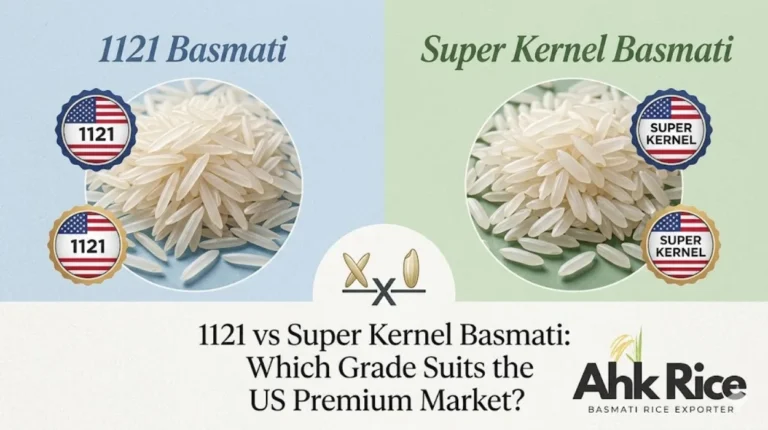
Indonesian buyers can source 1121, Super Kernel, and 1509 Basmati rice in white, steam, or parboiled forms, with foreign-matter control applied across the processing grades.
What Is 1121 Basmati?
1121 Basmati is an extra-long Pakistani Basmati variety associated with Punjab production. Commercial descriptions commonly place raw grain length around 8.3 millimeters. It is available in white, steam, and parboiled forms.
What Is Super Kernel Basmati?
Super Kernel is a traditional Pakistani aromatic Basmati variety cultivated in Punjab. Commercial grain specifications commonly place its raw length around 7.2 millimeters. It is processed as white, steam, or parboiled rice depending on the supplier specification.
What Is 1509 Basmati?
1509 is a long-grain Basmati variety used in Pakistani export programs. It is available in white, steam, and parboiled forms. Its long kernel structure supports premium presentation and cooked elongation.
What Are the Main Processing Grades?
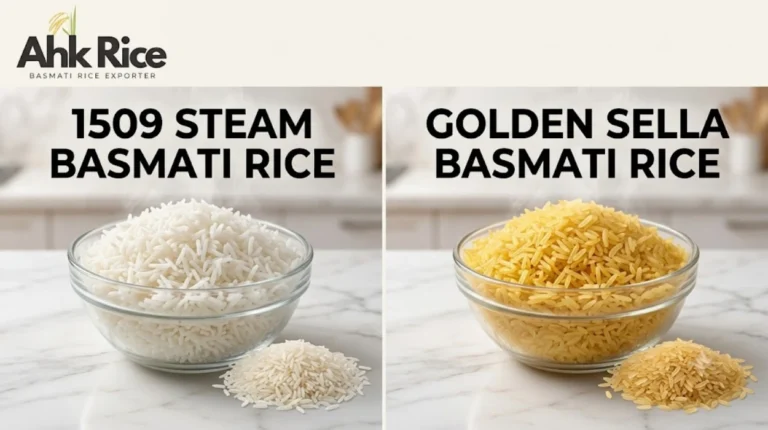
White rice is milled and polished for a clean appearance. Steam rice receives controlled steam treatment before final processing. Sella rice is parboiled before milling. Golden Sella develops its characteristic golden colour through the parboiling and drying process.
Foreign matter control applies to every processing form. The processing grade changes texture, colour, and cooking performance. It does not remove the need for effective cleaning and sorting.
Why Does Foreign Matter Matter for Indonesian Rice Buyers?
Low foreign matter protects food quality, consumer confidence, equipment, appearance, and contractual compliance. It also supports consistent cooking performance and reduces contamination risks during retail, foodservice, and industrial handling.
Food quality begins with physical purity. Consumers expect packaged Basmati rice to contain clean, uniform kernels. Visible stones, husks, insects, or other materials damage that expectation.
Foreign matter also creates operational risks. Stones can damage milling or food-processing equipment. Hard particles can create hazards during cooking and preparation. Plant fragments can reduce the visual quality of packaged rice.
Retail presentation creates another commercial factor. Indonesian retailers selling premium imported Basmati depend on consistent colour, kernel appearance, and cleanliness. Foreign matter creates visible defects that reduce perceived product quality.
Foodservice buyers apply similar standards. Restaurants and catering operators require predictable rice preparation. Clean kernels reduce the need for additional manual inspection before cooking.
Foreign matter also affects contract acceptance. Import contracts can define physical specifications and inspection procedures. Indonesian regulations also recognize foreign matter as part of rice quality assessment.
Which Indonesian Markets Import Pakistan Basmati Rice?
Pakistan Basmati serves specialized Indonesian demand where aromatic, long-grain rice fits restaurant, specialty retail, and South Asian food applications. Import requirements remain separate from product preference.
Basmati has a specialized position within Indonesia’s rice market. Indonesian import rules distinguish rice requirements according to purpose, importer category, and applicable permissions.
Historical Indonesian regulations specifically recognized Basmati as a specialized imported rice category. They also required varietal authenticity documentation and plant quarantine compliance for specified Basmati imports. Current importers must verify the rules applying to their shipment before procurement.
Specialty retail represents one use case. Retailers can sell imported Basmati in consumer packs where grain appearance and purity influence purchasing decisions.
Restaurants represent another use case. Indian, Pakistani, Middle Eastern, and South Asian restaurants use aromatic long-grain rice for dishes such as biryani, pulao, and pilaf.
Foodservice distributors also source different processing grades. Steam and parboiled rice provide firmer cooked kernels. White Basmati provides a lighter appearance and traditional aroma profile.
Indonesian buyers should separate three questions during procurement. The first concerns product specification. The second concerns foreign-matter limits. The third concerns import compliance and documentation.
Which Certifications and Documents Apply to Pakistan Basmati Rice?
Export documentation normally covers product identity, quality, origin, plant health, treatment, and shipment details. Indonesian importers must match each document to current Indonesian requirements and the purchase contract.
Which Quality Documents Support Foreign-Matter Verification?
A commercial shipment can use several documents depending on contract requirements:
- Certificate of Analysis
- Certificate of Quality
- Certificate of Origin
- Phytosanitary Certificate
- Fumigation Certificate
- Pre-shipment inspection report
- Packing list
- Commercial invoice
- Bill of lading
A Certificate of Analysis records laboratory-tested parameters. A Certificate of Quality confirms defined product characteristics. A phytosanitary certificate addresses plant-health requirements.
Certification requirements depend on the importing country’s rules and the product’s intended use. Indonesian regulations provide specific frameworks for rice quality classification and import controls.
Indonesian buyers should therefore request the current documentation list before shipment. The importer, exporter, inspection body, and relevant authorities must align the documents with the shipment.
What Are the Common Problems and Misconceptions About Foreign Matter?
Foreign matter is not the same as broken rice, discoloured kernels, or moisture. Each parameter measures a different quality characteristic and requires a separate inspection method.
One common misconception treats broken rice as foreign matter. Broken kernels remain rice. Foreign matter consists of non-rice materials.
Another misconception treats optical sorting as the only control. Optical sorting works after earlier cleaning stages. Stones and heavy particles require physical separation before final sorting.
A third misconception assumes attractive packaging proves product purity. Packaging protects finished rice but does not replace processing controls. The quality specification must describe measurable parameters.
A fourth misconception treats every rice variety identically. 1121, Super Kernel, and 1509 have different grain profiles and processing options. Foreign-matter control remains necessary across each grade.
A fifth misconception treats one inspection as sufficient for every market. Indonesian requirements, buyer contracts, and inspection procedures can define different documentation and acceptance criteria. Current rules should always guide the shipment.
Foreign matter therefore belongs within a complete quality-control system rather than a single visual check.
Frequently Asked Questions
What is foreign matter in Basmati rice?
Foreign matter is non-rice material found within rice. Examples include stones, husks, soil, straw, insects, seeds, plastic, and other unwanted particles.
Does foreign matter affect Basmati rice quality?
Yes. Foreign matter reduces physical purity and can affect food safety, appearance, processing performance, equipment protection, and contractual acceptance.
How is foreign matter removed from Pakistan Basmati rice?
Processing removes foreign matter through cleaning, de-stoning, dehusking, separation, polishing, grading, optical sorting, inspection, and controlled packaging.
Which Pakistan Basmati varieties can Indonesian buyers source?
Pakistan supplies Basmati varieties including 1121, Super Kernel, and 1509. Processing options include white, steam, and parboiled forms.
Which standard covers rice quality in Indonesia?
SNI 6128:2020 is the active Indonesian national standard for rice. Indonesia also regulates rice quality through Ministry of Agriculture rules.
Why should Indonesian importers check foreign matter before shipment?
Pre-shipment verification confirms that the rice matches the agreed physical specification before loading. It also creates documented evidence for commercial quality control.
What documents can verify rice quality?
A Certificate of Analysis, Certificate of Quality, inspection report, phytosanitary certificate, fumigation certificate, and origin documents can support shipment verification.
What should Indonesian importers check first?
Importers should first confirm the applicable Indonesian import rules, buyer specification, foreign-matter limit, inspection method, required certificates, packaging requirements, and shipment documentation.