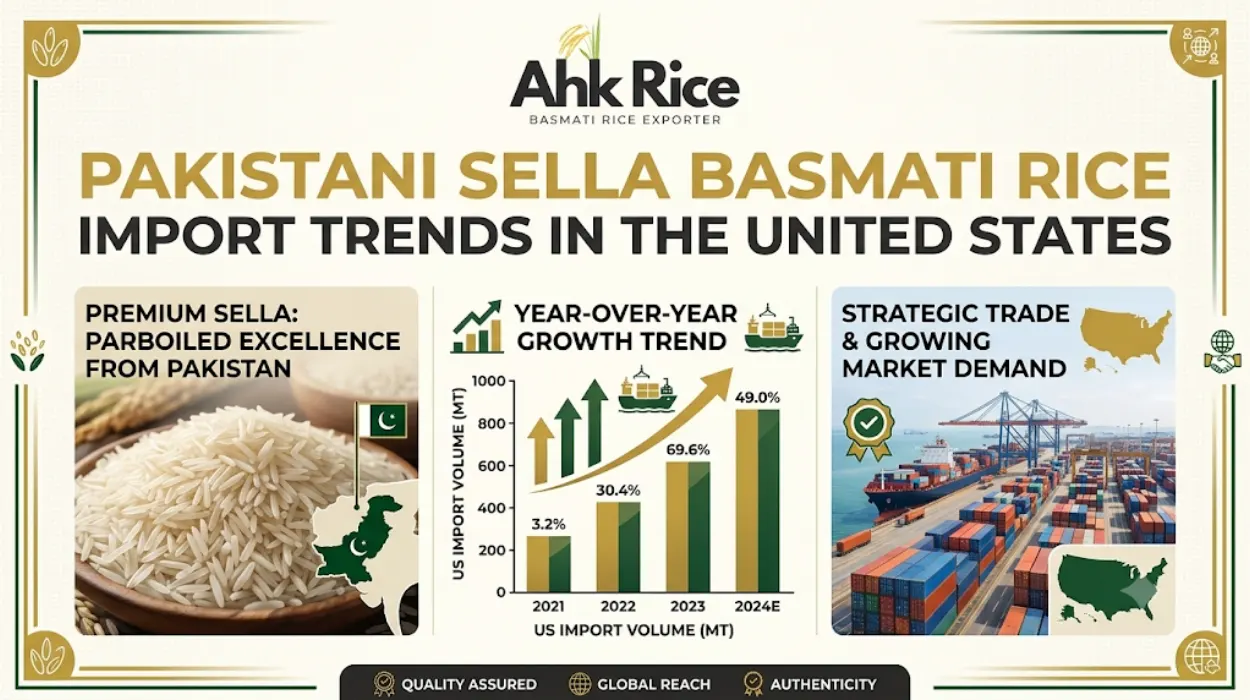
Pakistani Sella Basmati Rice Import Trends in the United States
Pakistani Sella Basmati Rice imports into the United States continue to grow because consumers demand long-grain aromatic rice with strong cooking performance, consistent quality, and competitive pricing. Here is why: Pakistani exporters supply multiple Sella grades, maintain international food safety standards, and serve a large South Asian population across the US market.
The United States remains one of the most important destinations for imported Basmati rice. Pakistani Sella Basmati Rice enters retail, foodservice, catering, ethnic grocery, and private-label channels. Importers source different grades based on consumer preferences, packaging requirements, and distribution models.
Understanding import trends requires understanding the rice itself, the processing method, available grades, market demand, certifications, and purchasing specifications.
What Is Pakistani Sella Basmati Rice?
Pakistani Sella Basmati Rice is parboiled aromatic long-grain rice processed from premium Basmati varieties including 1121, Super Kernel, and 1509. The parboiling process strengthens grain structure, improves cooking performance, and increases shelf stability during international distribution.
Pakistani Sella Basmati Rice originates from the fertile Basmati-growing belt of Punjab. Farmers cultivate Basmati rice using canal irrigation systems and harvest the crop during the autumn season.
Sella rice differs from white rice because processors parboil the paddy before milling. Parboiling transfers nutrients from the bran layer into the grain. This process improves grain strength and reduces breakage during transport.
US consumers purchase Sella Basmati Rice for home cooking, restaurant meals, catering operations, and meal preparation businesses. Examples include biryani restaurants, Indian food chains, Pakistani grocery stores, and private-label distributors.
Pakistani Sella Basmati Rice competes directly with Indian Basmati imports in the United States. Importers evaluate grain length, aroma, cooking expansion, moisture level, purity percentage, and packaging quality before procurement.
With the product definition established, the next question is how the Sella processing method works.
How Does the Sella Basmati Rice Processing Method Work?
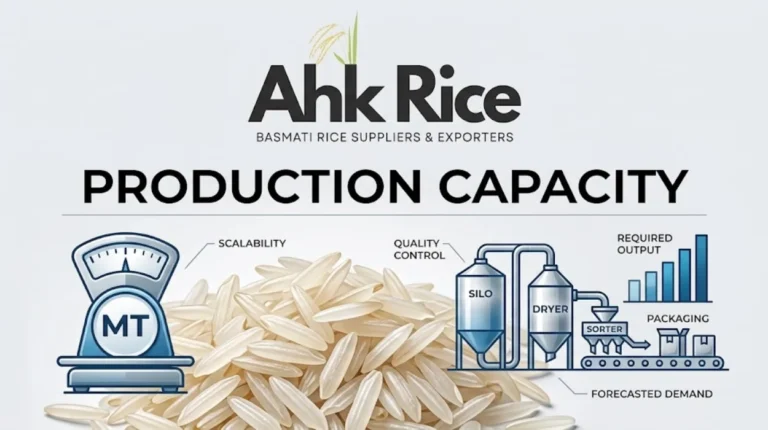
The Sella process includes 9 key steps: cleaning, soaking, steaming, drying, tempering, dehusking, milling, grading, and packaging. Each step improves grain durability and export suitability.
Sella processing begins after harvesting. Processing facilities inspect incoming paddy for moisture, foreign matter, and grain uniformity.
Clean the Paddy
Processors remove stones, dust, straw, and foreign materials using cleaning equipment. Clean paddy improves processing efficiency.
Soak the Paddy
Processors soak paddy in controlled water tanks. Water absorption prepares the grain for heat treatment.
Steam the Paddy
Processors steam soaked paddy under controlled conditions. Heat moves nutrients into the grain and strengthens the kernel structure.
Dry the Paddy
Processors dry steamed paddy to safe moisture levels. Moisture control prevents storage damage and maintains grain quality.
Temper the Grain
Processors rest dried paddy to stabilize internal moisture distribution. Uniform moisture improves milling results.
Dehusk the Grain
Processors remove the outer husk layer using specialized machinery. Dehusking reveals brown rice.
Mill the Rice
Processors mill the grain to remove bran layers. Milling creates the finished Sella appearance.
Grade the Rice
Processors sort grains according to length, purity, color, and broken percentage. Grading creates export-specific specifications.
Package the Rice
Processors package finished rice in retail and bulk formats. Common examples include 1 kg, 5 kg, 10 kg, 20 kg, 25 kg, and 40 kg bags.
This processing sequence creates the characteristics that drive US import demand, leading directly to the different grades available in the market.
What Grades of Pakistani Sella Basmati Rice Enter the US Market?
1121 Golden Sella, 1121 Creamy Sella, Super Kernel Sella, and 1509 Sella represent the primary Pakistani grades imported into the United States. Each grade serves different consumer and commercial requirements.
1121 Golden Sella Basmati Rice
Grain length: 8.30–8.40 mm. Cooked elongation: up to 22 mm.
1121 Golden Sella remains the most recognized premium grade. Importers prefer this grade because of exceptional grain length and visual appearance.
US ethnic supermarkets often stock 1121 Golden Sella under premium packaging brands. Foodservice buyers select this grade for biryani and rice-based dishes.
1121 Creamy Sella Basmati Rice
Grain length: 8.30–8.40 mm. Color: light cream appearance.
1121 Creamy Sella undergoes a different parboiling profile. The grain maintains a lighter color while retaining strong cooking performance.
Private-label importers frequently select this grade because it appeals to consumers seeking lighter-colored rice.
Super Kernel Sella Basmati Rice
Grain length: 7.20–7.50 mm. Strong aroma and traditional Basmati profile.
Super Kernel Sella serves consumers who prioritize aroma over extreme grain length.
Pakistani and Middle Eastern households often purchase Super Kernel Sella because of its traditional cooking characteristics.
1509 Sella Basmati Rice
Grain length: 8.10–8.30 mm. Early maturity variety.
1509 Sella provides long grains and competitive pricing. Importers often select this grade for value-oriented market segments.
Grade selection influences import volumes, which explains current US market trends.
What Import Trends Are Shaping the United States Market?
Growing ethnic populations, increased demand for premium rice, expansion of international cuisine, and private-label retail growth are driving Pakistani Sella Basmati Rice imports into the United States.
The United States imports significant volumes of Basmati rice each year through ports serving major metropolitan regions. Large consumer concentrations exist in New York, New Jersey, Texas, California, Illinois, and Georgia.
South Asian populations continue expanding across the United States. Increased household consumption supports consistent demand for imported Basmati rice.
Restaurant growth also contributes to import expansion. Indian, Pakistani, Bangladeshi, Afghan, and Middle Eastern restaurants require high-quality long-grain rice for traditional recipes.
Private-label retail programs represent another important trend. Grocery chains increasingly source imported rice under store-owned brands.
Premiumization influences purchasing behavior. Consumers increasingly prefer premium aromatic rice instead of commodity long-grain alternatives.
According to trade data, Pakistan remains one of the leading global Basmati exporters supplying major international markets (source: Pakistan Bureau of Statistics, FY2024-25).
These trends highlight why importers evaluate specific product characteristics before purchasing.
What Key Components Influence Import Decisions?
Grain length, purity, moisture content, cooking expansion, aroma, packaging quality, and certification compliance determine importer purchasing decisions.
Grain Length
Longer grains command premium positioning. Importers often specify minimum grain lengths during procurement.
Purity Percentage
High purity levels reduce foreign matter and mixed varieties. Premium import contracts often require purity above 95%.
Moisture Control
Moisture affects storage performance. Export shipments typically maintain moisture levels around 12–14%.
Cooking Performance
Cooking expansion directly affects consumer satisfaction. Long grain elongation improves perceived value.
Packaging Standards
Strong packaging protects rice during transport. Importers frequently request multilayer laminated bags or woven polypropylene packaging.
Certification Compliance
Certification documentation supports regulatory and retailer requirements.
The importance of specifications leads naturally to the benefits that drive US demand.
What Benefits Make Pakistani Sella Basmati Rice Popular?
Long grain appearance, reduced breakage, superior cooking performance, extended shelf life, and strong aroma create the primary benefits of Pakistani Sella Basmati Rice.
Sella rice resists breakage better than many non-parboiled alternatives. Stronger grain structure improves handling during transportation.
Sella rice cooks into separate grains. Restaurants value this characteristic because presentation quality remains consistent.
Sella rice maintains storage stability. In warm warehouse environments, parboiled rice generally performs better than many white rice alternatives.
Sella rice delivers attractive visual presentation. Long grain elongation creates premium appearance on retail shelves and restaurant plates.
Sella rice supports large-scale catering operations. Bulk foodservice kitchens benefit from consistent cooking results across high-volume production.
These benefits explain why different industries rely on Pakistani Sella Basmati Rice.
Where Is Pakistani Sella Basmati Rice Used in the United States?
Retail grocery, foodservice distribution, catering operations, restaurant chains, and private-label programs represent the main use cases for imported Pakistani Sella Basmati Rice.
Retail grocery stores sell packaged Basmati rice directly to consumers. Examples include ethnic supermarkets, specialty food stores, and mainstream grocery chains.
Restaurants purchase rice in bulk packaging formats. Examples include Indian restaurants, Pakistani restaurants, and Middle Eastern dining establishments.
Catering businesses require large quantities for weddings, festivals, and corporate events. Long grain appearance supports premium meal presentation.
Food manufacturers incorporate Basmati rice into ready-to-cook meals and packaged food products.
Private-label distributors source rice for supermarket brands. This segment continues expanding across the US retail sector.
Understanding these applications helps clarify several common misconceptions.
What Common Misconceptions Exist About Pakistani Sella Basmati Rice?
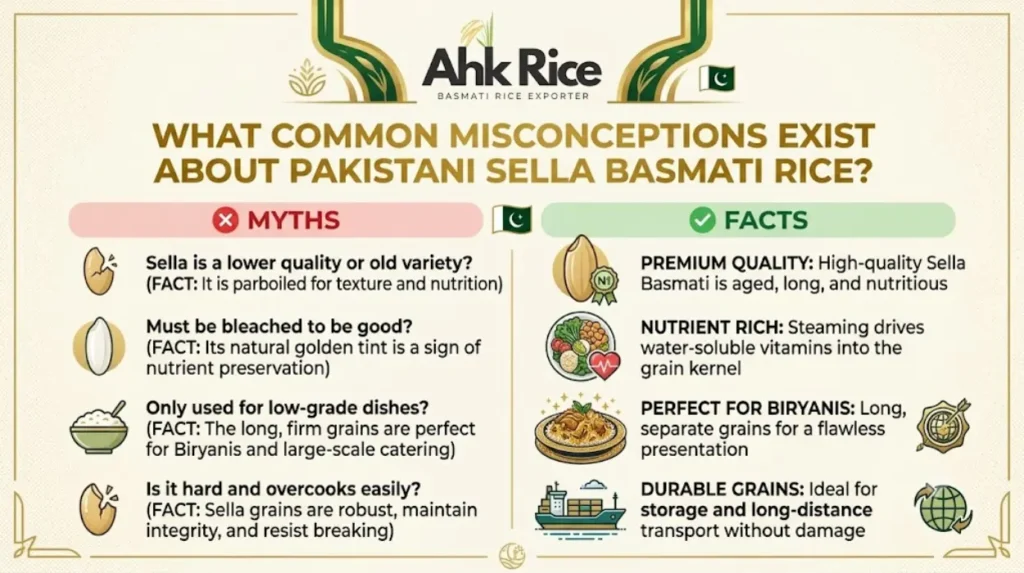
Sella rice is not artificial rice, not lower-quality rice, and not nutritionally empty rice. The parboiling process creates these misconceptions.
Many consumers assume the golden color results from additives. Golden Sella obtains its color from controlled steaming and drying processes.
Many buyers believe white rice is always superior. White rice and Sella rice serve different culinary requirements. Restaurants often prefer Sella rice because of grain stability.
Many consumers assume all Basmati rice grades perform identically. Grade specifications directly influence aroma, grain length, cooking expansion, and market positioning.
Many importers focus only on price. Quality specifications strongly influence long-term customer satisfaction and product consistency.
Understanding these misconceptions creates a clearer picture of the broader US import landscape.
What Certifications Apply to Pakistani Sella Basmati Rice Exports?
Food safety, quality assurance, and regulatory certifications support export compliance for United States imports.
Common certifications include:
- ISO 22000 Certification
- HACCP Certification
- FDA Registration
- Phytosanitary Certification
- Certificate of Origin
- Fumigation Certificate
- Quality Inspection Reports
Importers use these documents to verify product safety, traceability, and compliance requirements.
Certification verification supports customs clearance and retailer acceptance. US buyers often review documentation before shipment approval.
Pakistani Sella Basmati Rice continues expanding its presence in the United States because the product aligns with consumer demand for premium aromatic rice, reliable cooking performance, and consistent quality standards.
Frequently Asked Questions
Why is Pakistani Sella Basmati Rice popular in the United States?
Pakistani Sella Basmati Rice offers long grains, strong aroma, and reliable cooking performance. Restaurants value its grain separation after cooking. Retail consumers prefer its premium appearance. The parboiling process improves grain strength. These features support growing demand across US markets.
Which Pakistani Sella Basmati Rice grade is most imported into the USA?
1121 Golden Sella remains the most recognized premium grade. Importers prefer its extra-long grain length. The variety provides strong elongation after cooking. Ethnic grocery chains frequently stock this grade. Foodservice buyers also use it extensively.
What makes Sella Basmati Rice different from white Basmati Rice?
Sella rice undergoes a parboiling process before milling. This process strengthens the grain structure. Sella rice experiences less breakage during handling. The grain remains separate after cooking. Storage performance also improves compared to many white rice products.
What certifications are required for exporting Pakistani rice to the USA?
Exporters commonly provide FDA registration documentation. HACCP and ISO 22000 certifications support food safety compliance. Phytosanitary certificates verify plant health requirements. Certificates of Origin confirm product origin. Importers often request quality inspection reports before shipment.
Which industries use Pakistani Sella Basmati Rice in the USA?
Retail grocery stores sell packaged rice directly to consumers. Restaurants purchase bulk quantities for traditional dishes. Catering companies use rice for large events. Food manufacturers include it in packaged meals. Private-label brands also import significant volumes.