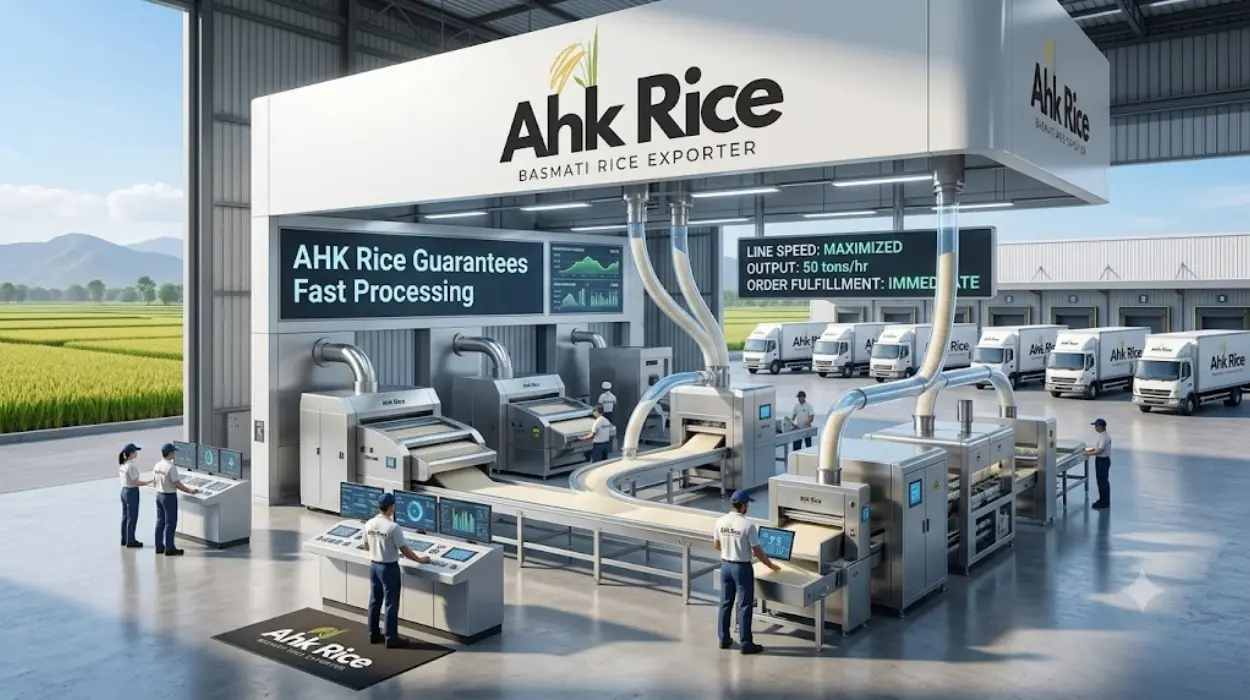
AHK Rice Guarantees Fast Processing and Export Container Readiness
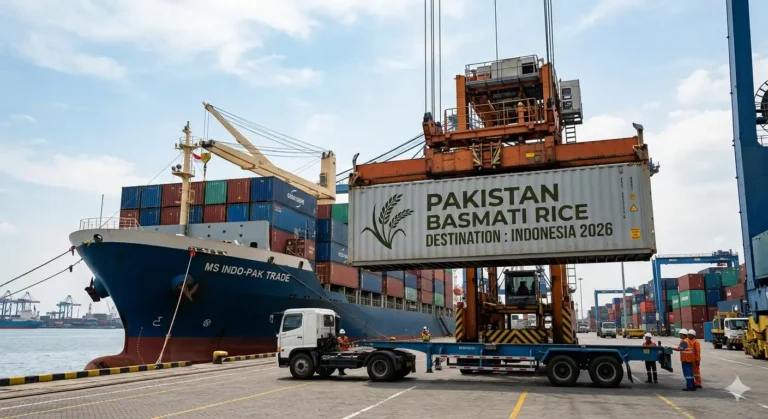
AHK Rice delivers export-ready Basmati rice containers quickly and consistently. Here is why: AHK Rice controls processing, quality inspection, documentation, container loading, and export coordination under one workflow, reducing delays and improving shipment readiness for international buyers.
International rice buyers often lose time because suppliers delay processing, miss documentation deadlines, or fail to prepare containers on schedule. AHK Rice solves this challenge with structured production planning, verified quality control, and fast export execution.
Buyers seeking insights into Pakistan’s export timelines can first explore Pakistan’s bulk Basmati rice export process to the UAE to understand the complete export environment before choosing a supplier.
What is the best solution for fast processing and export container readiness?
AHK Rice prepares export containers within standard production windows of 7–21 days depending on grade, quantity, packaging, and destination market.
Export buyers need predictable lead times. AHK Rice manages production schedules from procurement to container dispatch. This approach reduces uncertainty and supports supply chain planning.
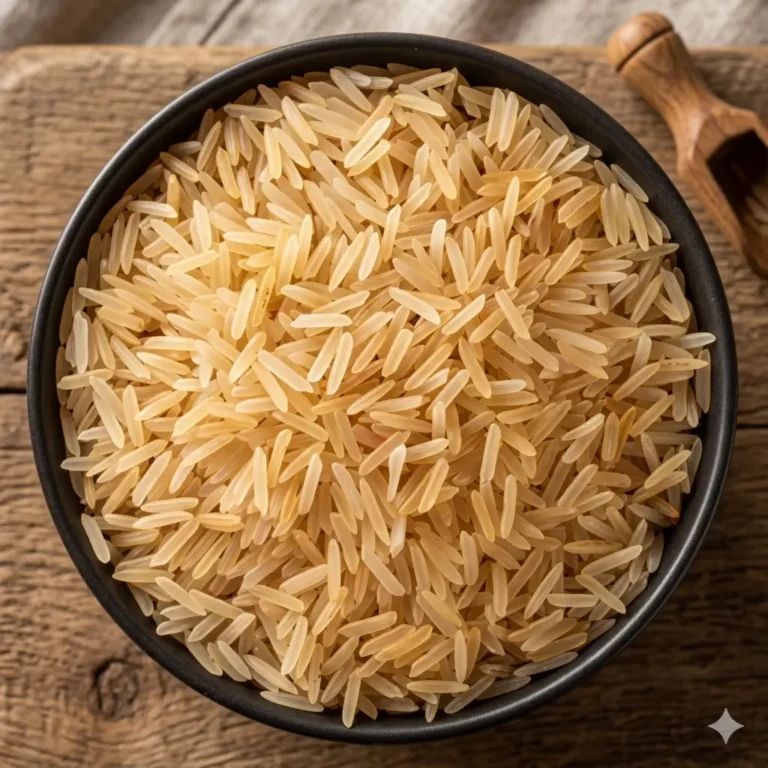
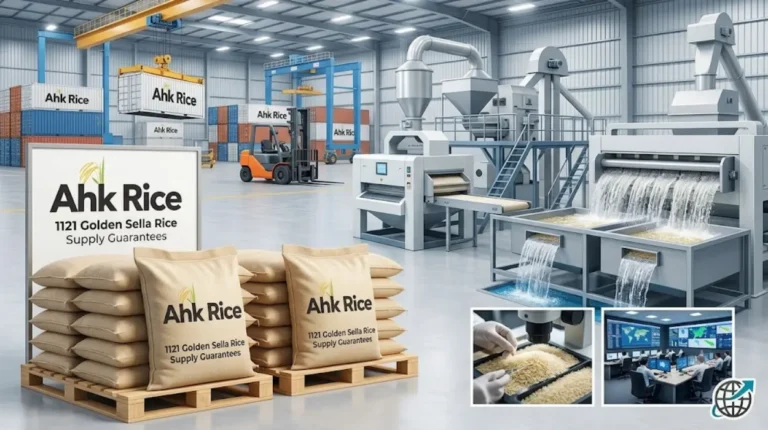
AHK Rice processes multiple Basmati grades for global buyers. The company mills, polishes, grades, sorts, inspects, and packs rice according to customer specifications before loading containers.
Export Processing Steps at AHK Rice
- Clean the paddy.
- De-husk the grain.
- Dry the rice.
- Polish the kernels.
- Grade by specification.
- Sort through color sorters.
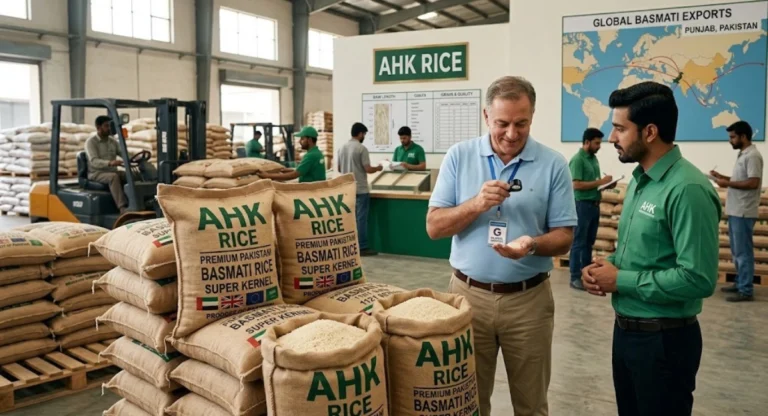
- Inspect quality parameters.
- Pack according to buyer requirements.
- Load export containers.
Each stage follows documented procedures. AHK Rice verifies quality before the container reaches the port.
Container Readiness Timeline
| Activity | Typical Days |
|---|---|
| Order Confirmation | 1 Day |
| Production Planning | 1–2 Days |
| Milling & Processing | 4–10 Days |
| Quality Inspection | 1–2 Days |
| Packaging | 1–3 Days |
| Documentation | 1–2 Days |
| Container Loading | 1 Day |
Large orders require additional production scheduling. Multiple container bookings may extend preparation timelines slightly.
With export readiness established, the next question is why buyers select AHK Rice instead of alternative suppliers.
Why choose AHK Rice for Basmati rice exports?
AHK Rice combines processing control, export experience, documentation support, and shipment reliability for international buyers.
Global importers evaluate suppliers based on consistency. AHK Rice focuses on predictable execution rather than promises.
AHK Rice manages production internally. This structure helps maintain quality specifications across repeated orders.
The company supplies various export grades, including 1121 Basmati, Super Basmati, PK-385, Basmati Steam, Basmati Sella, and Basmati White Rice.
Buyers can learn more about production planning by reviewing <a href=”/understanding-production-lead-times-before-basmati-rice-export-shipments/”>how production lead times influence export shipments</a>. Understanding these factors helps procurement teams compare suppliers accurately.
Key Advantages
- Quality verification
- Export documentation support
- Flexible packaging options
- Multiple rice specifications
- Container loading coordination
- Shipment tracking assistance
- Market-specific requirements
AHK Rice also supports private-label requirements. Many distributors require custom packaging for retail markets.
Major Export Markets and Shipping Days
| Market | Average Transit Time |
|---|---|
| UAE | 10–18 Days |
| Saudi Arabia | 15–25 Days |
| Oman | 12–20 Days |
| Qatar | 12–20 Days |
| Kuwait | 15–25 Days |
| Iraq | 18–30 Days |
| United Kingdom | 25–40 Days |
| Germany | 28–42 Days |
| Canada | 35–50 Days |
| United States | 35–55 Days |
Transit times vary according to vessel schedules, port congestion, and customs processing.
AHK Rice coordinates shipment schedules to help buyers maintain inventory continuity.
With supplier selection clarified, buyers naturally ask about measurable business outcomes.
What results can be expected from faster export readiness?
Faster container preparation improves inventory planning, reduces stock shortages, and supports stable market supply.
Importers depend on predictable delivery schedules. Delayed shipments can affect wholesale contracts, retail promotions, and food service operations.
AHK Rice minimizes these risks through organized processing workflows and shipment preparation.
Business Outcomes
| Benefit | Commercial Impact |
|---|---|
| Faster Processing | Reduced waiting time |
| Reliable Scheduling | Better procurement planning |
| Consistent Quality | Lower claim risk |
| Documentation Accuracy | Faster customs clearance |
| Export Readiness | Improved inventory control |
Rice distributors frequently schedule repeat shipments. Consistency becomes more important than isolated low pricing.
AHK Rice supports repeat procurement cycles through standardized export procedures.
Example Scenario
A UAE wholesaler orders two containers of 1121 Steam Basmati Rice. AHK Rice confirms specifications, processes the rice, completes inspections, and prepares shipping documents within the agreed production schedule.
The buyer receives shipment updates throughout the export process. This visibility improves inventory forecasting.
Pakistan remains one of the world’s leading Basmati exporters, supplying major Gulf markets annually (source: Pakistan Bureau of Statistics, FY2024-25).
With expected results explained, buyers usually evaluate pricing factors before placing orders.
What factors affect pricing and export costs?
Rice grade, packaging type, quantity, certification requirements, destination market, and freight rates determine final export costs.
Rice pricing changes according to specifications. Premium grades require additional processing and stricter quality controls.
Main Cost Factors
| Factor | Impact on Price |
|---|---|
| Rice Grade | High |
| Broken Percentage | Medium |
| Packaging Type | Medium |
| Private Labeling | Medium |
| Certifications | Medium |
| Freight Charges | High |
| Container Quantity | High |
AHK Rice provides quotations based on buyer specifications rather than generic pricing.
Sample Process and Costs
Many importers request samples before placing container orders.
Sample Workflow
- Request the desired rice grade.
- Confirm sample quantity.
- Verify delivery address.
- Dispatch sample package.
- Evaluate quality internally.
- Confirm commercial order.
Typical Sample Costs
| Sample Type | Approximate Cost |
|---|---|
| Small Evaluation Sample | Courier Cost Only |
| Detailed Commercial Sample | Product + Courier Cost |
| Multiple Grade Comparison | Product + Courier Cost |
Courier charges vary by destination country and service provider.
AHK Rice shares available specifications before sample dispatch. This process reduces mismatched expectations.
Common Export Documents
- Commercial Invoice
- Packing List
- Certificate of Origin
- Phytosanitary Certificate
- Fumigation Certificate
- Bill of Lading
- Quality Certificate
Proper documentation reduces customs delays and supports smooth clearance procedures.
With pricing considerations covered, the final decision focuses on beginning the procurement process.
How can buyers get started with AHK Rice?
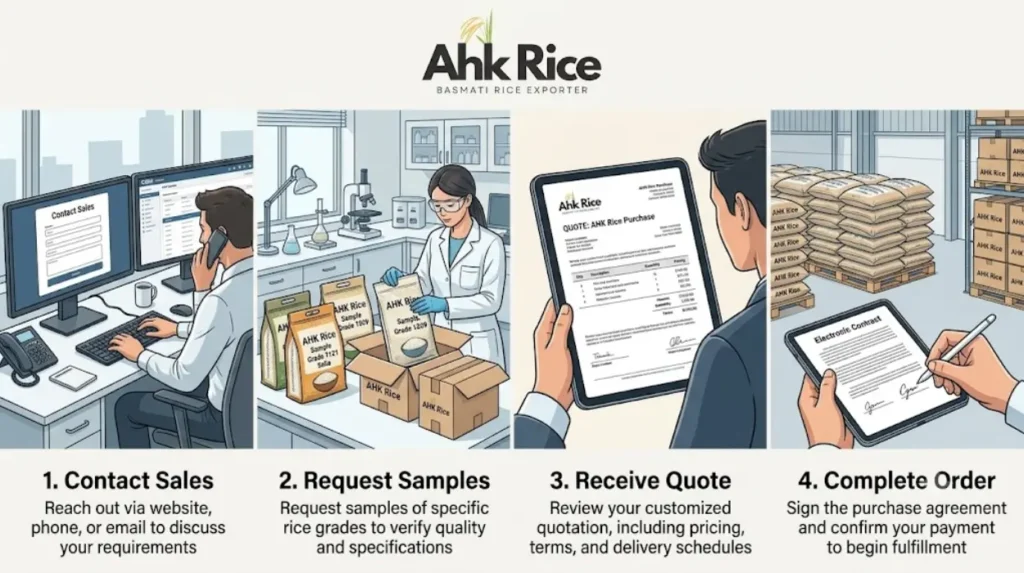
Buyers can begin with specification confirmation, sample approval, quotation review, and container booking.
AHK Rice starts by understanding the buyer’s requirements. Product specifications influence production planning and export scheduling.
Step-by-Step Procurement Process
- Define rice grade requirements.
- Request specifications.
- Review available packaging options.
- Approve samples.
- Confirm commercial quotation.
- Finalize purchase agreement.
- Begin production scheduling.
- Complete export documentation.
- Load and dispatch containers.
AHK Rice communicates throughout each stage. Buyers receive visibility from production through shipment readiness.
Why International Buyers Continue Working with AHK Rice
AHK Rice focuses on long-term export relationships. Consistent quality and predictable shipment preparation help buyers maintain customer confidence.
AHK Rice supports wholesalers, distributors, retailers, importers, and food service suppliers across multiple regions.
AHK Rice understands that delayed shipments create operational problems. Fast processing and container readiness help buyers maintain market commitments.
AHK Rice continues investing in efficient processing systems to support growing international demand.
Export buyers seeking dependable production schedules, verified quality, and efficient shipment preparation can review specifications and submit requirements through the request a quote page.
Frequently Asked Questions
How quickly can AHK Rice prepare an export container?
AHK Rice typically prepares export containers within 7–21 days. Production schedules depend on rice grade, quantity, packaging requirements, and destination market. Documentation preparation also affects timelines. Large orders may require additional planning. Buyers receive estimated schedules before production begins.
Does AHK Rice provide samples before export orders?
Yes. AHK Rice provides samples for quality evaluation before commercial orders. Buyers can request specific grades and packaging formats. Sample dispatch occurs after confirming destination details. Courier charges vary by market. Sample approval helps reduce procurement risks.
Which countries import Basmati rice from Pakistan?
Major markets include the UAE, Saudi Arabia, Oman, Qatar, Kuwait, Iraq, the United Kingdom, Germany, Canada, and the United States. Demand varies by region and grade preference. Gulf countries remain major Basmati importers. European buyers often require additional certifications. Market requirements influence specifications.
What documents are required for rice exports?
Export shipments generally require a commercial invoice, packing list, certificate of origin, phytosanitary certificate, fumigation certificate, bill of lading, and quality certificate. Requirements vary by destination country. Accurate documentation helps customs clearance. Import regulations should be reviewed before shipment.
What affects the final export price?
Rice grade, packaging specifications, certifications, freight costs, container quantity, and destination market influence pricing. Premium grades generally cost more because additional processing is required. Shipping costs change according to global freight conditions. Buyers should request current quotations. Specification accuracy improves pricing precision.