Key Features of Pakistani Super Kernel Basmati Preferred by German Buyers
Pakistani Super Kernel Basmati is preferred by German buyers because it combines extra-long grain length, strong aroma, excellent cooking performance, consistent grading, and internationally recognized food safety standards. German importers value rice that delivers uniform quality, meets regulatory requirements, and satisfies consumer expectations for authentic Basmati rice.
German demand for premium rice continues to focus on products that offer traceability, quality consistency, and authentic origin. Pakistani Super Kernel Basmati fulfills these requirements through specialized cultivation, controlled milling, and rigorous export inspection procedures.
What Is Pakistani Super Kernel Basmati Rice?
Pakistani Super Kernel Basmati is an aromatic long-grain rice variety with an average grain length of 7.0–7.4 mm before cooking and significant grain elongation after cooking.
Super Kernel Basmati belongs to the Basmati rice family cultivated primarily in Punjab, Pakistan. The variety is known for its natural fragrance, slender grain shape, and soft texture after cooking.
German importers classify Super Kernel Basmati as a premium rice category because it delivers authentic Basmati characteristics while maintaining competitive pricing compared to several newer premium varieties.
The rice develops its aroma through cultivation in the fertile regions surrounding the Punjab rice belt. Climate conditions, irrigation systems, soil composition, and traditional farming practices contribute directly to grain quality.
Super Kernel Basmati serves multiple market segments in Germany. Examples include ethnic grocery retailers, mainstream supermarkets, food service distributors, and restaurant suppliers.
German consumers often recognize Super Kernel Basmati through its fragrance, cooking expansion, and suitability for dishes such as biryani, pilaf, and everyday rice meals.
With the definition of Super Kernel Basmati established, the next question is how the rice moves from cultivation to export quality.
How Does Pakistani Super Kernel Basmati Reach German Import Standards?
The rice passes through 9 major processing stages: cultivation, harvesting, drying, storage, cleaning, dehusking, polishing, grading, and export inspection.
Quality begins in the field. Farmers cultivate Super Kernel Basmati during the Kharif season across Punjab’s rice-producing districts.
How Is Super Kernel Basmati Cultivated?
Farmers cultivate the crop using controlled irrigation systems and scheduled nutrient management. The crop generally requires approximately 120–140 days from transplanting to harvest.
Harvest timing directly affects grain quality. Farmers harvest mature paddy when moisture levels support efficient drying and storage.
How Is Super Kernel Basmati Processed?
The processing sequence follows a structured path:
- Harvest the mature paddy.
- Dry the harvested crop.
- Store the paddy under controlled conditions.
- Clean foreign materials.
- Dehusk the grain.
- Polish the rice surface.
- Sort by grain size.
- Grade by quality category.
- Inspect and certify export lots.
Each stage affects final quality. Cleaning removes impurities. Dehusking separates the husk from the grain. Polishing improves appearance. Grading creates consistency across export shipments.
German buyers often require strict uniformity. Consistent processing ensures every container maintains the same quality specifications.
Processing explains quality consistency. The next section examines the physical features German buyers evaluate before purchasing.
What Key Features Make Super Kernel Basmati Attractive to German Buyers?
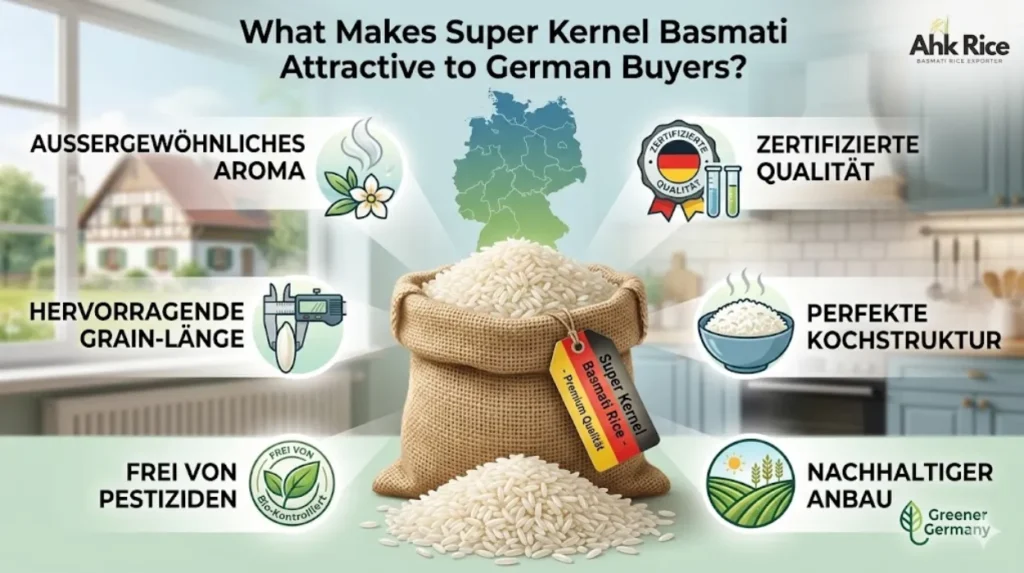
German buyers prioritize grain length, aroma, cooking elongation, purity levels, moisture control, and appearance consistency.
Importers evaluate multiple quality indicators before approving suppliers.
Grain Length
Super Kernel Basmati typically measures 7.0–7.4 mm before cooking.
Long grains create premium shelf appeal. German retailers frequently use grain length as a quality benchmark when selecting Basmati products.
Natural Aroma
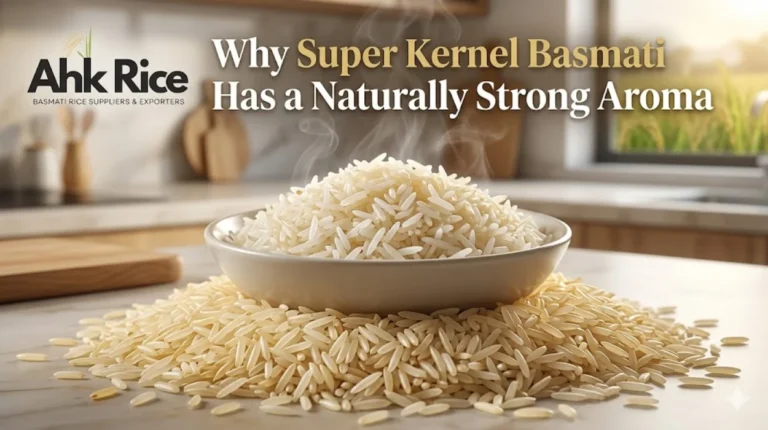
Super Kernel Basmati develops a distinctive fragrance naturally during cultivation and aging.
Aroma remains one of the strongest differentiators between authentic Basmati and ordinary long-grain rice.
Cooking Elongation
Cooked grains expand significantly in length.
Elongation improves presentation quality in restaurants and food service operations. German food distributors often consider elongation an important purchasing criterion.
Purity Levels
Export-grade rice undergoes sorting and grading procedures to achieve specified purity standards.
Higher purity reduces broken grains, discolored kernels, and foreign matter.
Moisture Control
Export rice generally maintains moisture levels within approved specifications.
Proper moisture management supports longer shelf life and reduces storage risks during international shipping.
Appearance Consistency
Uniform grain shape creates a premium visual presentation.
German consumers associate consistency with product quality and reliability.
These features explain buyer preferences. The next section examines the available grades within the Super Kernel Basmati category.
What Grades of Pakistani Super Kernel Basmati Are Available?
The most common grades include Super Kernel Basmati White Rice, Steam Rice, Sella Rice, Golden Sella Rice, and various broken percentages.
Different markets require different processing grades.
Super Kernel White Rice
White Rice undergoes standard milling and polishing.
The grade offers a clean appearance and soft cooking characteristics.
Super Kernel Steam Rice
Steam Rice receives controlled steaming before milling.
Steaming strengthens grain structure and improves cooking stability.
Super Kernel Sella Rice
Sella Rice undergoes parboiling treatment before milling.
The process enhances grain durability and nutrient retention.
Super Kernel Golden Sella Rice
Golden Sella receives an advanced parboiling process that creates a golden appearance.
Golden Sella lasts longer than standard white rice. In high-temperature storage environments, Golden Sella maintains quality for extended periods. Food service operators often select this specification for large inventory programs.
Broken Rice Grades
Exporters also supply:
- 5% Broken
- 10% Broken
- 15% Broken
- 25% Broken
- 100% Broken
Different buyers select different specifications according to budget and application requirements.
Grade selection affects performance and pricing. The next section explains why these specifications create value for German importers.
What Benefits Does Pakistani Super Kernel Basmati Offer German Buyers?
The main benefits include authentic aroma, premium presentation, cooking performance, consumer acceptance, and supply chain consistency.
German distributors seek products that generate repeat purchases. Super Kernel Basmati achieves this through recognizable product characteristics.
Premium Consumer Experience
Long grains and natural fragrance create a premium eating experience.
Consumers often associate these characteristics with authentic South Asian cuisine.
Strong Retail Presentation
Uniform grains improve packaging appearance.
Retail buyers value products that stand out visually on store shelves.
Reliable Cooking Results
Super Kernel Basmati cooks into separate grains rather than sticky clusters.
Restaurants and catering operations prefer rice that maintains consistent texture.
Broad Market Acceptance
The variety appeals to multiple consumer groups.
Examples include South Asian households, Middle Eastern communities, food enthusiasts, and mainstream consumers.
Established Export Supply
Pakistan maintains a long history of Basmati cultivation and export. Established export infrastructure supports regular international shipments. Benefits explain demand. The next section explores where German buyers use Super Kernel Basmati.
Where Is Super Kernel Basmati Commonly Used in Germany?
German buyers use Super Kernel Basmati in retail stores, restaurants, catering businesses, ethnic food markets, and private-label programs.
Different sectors require different specifications.
Retail Distribution
Retailers package Super Kernel Basmati in consumer-friendly formats.
Examples include 1 kg, 5 kg, and 10 kg packs.
Restaurant Supply
Restaurants use premium grades for biryani, pilaf, and specialty rice dishes.
Long grain appearance improves final presentation.
Catering Operations
Catering businesses prioritize consistency and volume availability.
Steam and Sella grades often support large-scale food preparation.
Ethnic Food Markets
Ethnic grocery stores represent a major distribution channel for authentic Basmati rice.
Consumers actively seek traditional rice varieties with recognizable aroma profiles.
Private Label Programs
German importers frequently source rice under private-label brands.
Consistent grading simplifies private-label quality management.
Use cases demonstrate market demand. The next question concerns certifications and compliance standards.
Which Certifications Apply to Pakistani Super Kernel Basmati Exports?
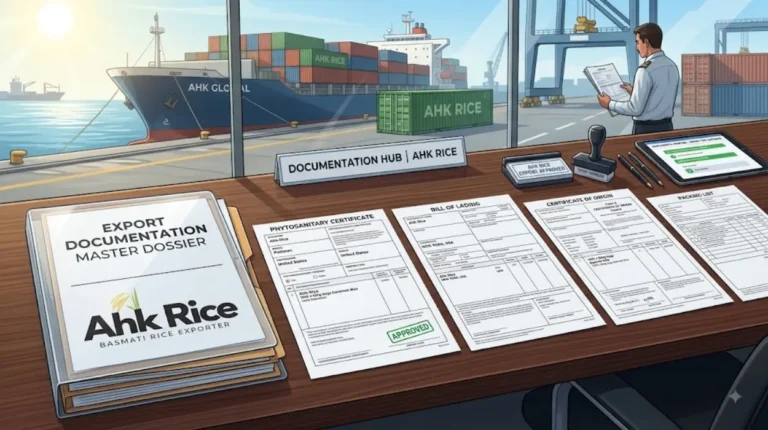
German importers commonly require food safety certifications, phytosanitary documentation, laboratory testing, and export compliance records.
Food safety documentation supports international trade.
Common Export Documents
- Phytosanitary Certificate
- Certificate of Origin
- Packing List
- Commercial Invoice
- Bill of Lading
- Quality Inspection Report
Common Food Safety Standards
Exporters frequently maintain certifications such as:
- ISO 22000
- HACCP
- GMP
- BRC Food Safety
- Halal Certification
Certification requirements vary according to importer specifications and destination regulations.
German buyers often request laboratory verification for pesticide residues, heavy metals, and microbiological compliance before shipment approval.
Certification demonstrates compliance. The next section addresses common misconceptions surrounding Super Kernel Basmati.
What Common Misconceptions Exist About Super Kernel Basmati?
The most common misconceptions involve grain length, aroma intensity, grade differences, and product authenticity.
Misunderstandings often affect purchasing decisions.
Misconception: All Basmati Rice Is Identical
Different Basmati varieties possess different characteristics.
Examples include 1121 Basmati, Super Kernel Basmati, and 1509 Basmati.
Each variety offers distinct grain length, cooking performance, and market positioning.
Misconception: Longer Grain Always Means Better Quality
Quality depends on multiple specifications.
Grain length, purity, aroma, moisture levels, and processing standards all influence final performance.
Misconception: White Rice and Golden Sella Perform the Same
Processing creates meaningful differences.
Golden Sella provides greater storage durability. White Rice delivers a softer texture. Food service buyers often select Golden Sella for inventory stability.
Misconception: Aroma Comes From Artificial Additives
Authentic Super Kernel Basmati develops fragrance naturally.
Cultivation conditions and grain aging create the characteristic aroma.
Understanding these misconceptions helps buyers evaluate products accurately. The final step is understanding how German buyers assess suppliers and specifications before sourcing.
Pakistani Super Kernel Basmati remains a preferred choice for German buyers because it combines long grain appearance, authentic aroma, strong cooking performance, multiple processing grades, and internationally recognized quality standards.
The variety originates from Pakistan’s Punjab region, passes through structured processing stages, and reaches export markets in several specifications including White, Steam, Sella, and Golden Sella grades. German importers value these characteristics because they support retail sales, food service operations, and private-label programs while meeting strict quality expectations.
Frequently Asked Questions
What is the average grain length of Super Kernel Basmati?
Super Kernel Basmati generally measures 7.0–7.4 mm before cooking and elongates significantly after cooking.
Why do German buyers prefer Super Kernel Basmati?
German buyers prefer the variety because of its aroma, long grains, cooking performance, and consistent export quality.
Which Pakistani region grows most Super Kernel Basmati?
Punjab is the primary cultivation region for Super Kernel Basmati rice.
What is the difference between White Rice and Golden Sella Rice?
White Rice undergoes standard milling. Golden Sella undergoes parboiling before milling, creating stronger grains and longer storage stability.
Which certifications do German importers commonly request?
German importers commonly request HACCP, ISO 22000, GMP, phytosanitary certificates, and laboratory testing reports.
Where is Super Kernel Basmati sold in Germany?
The rice is commonly sold through supermarkets, ethnic grocery stores, food distributors, restaurants, catering companies, and private-label brands.