Why Parboiled Basmati Rice Has a Lower Glycaemic Index Than White Rice
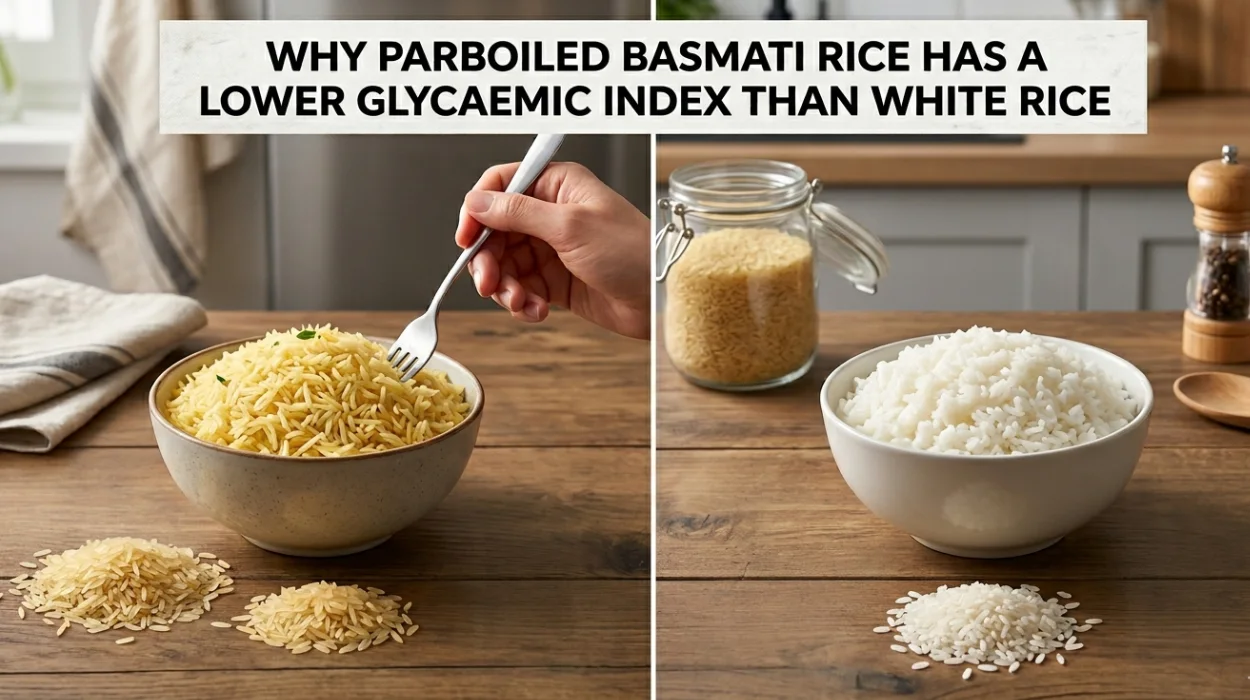
Parboiled basmati rice has a lower glycaemic index than white rice because steaming and drying alter the starch structure before milling, which slows digestion and glucose release. This makes it a common low GI rice choice in markets that value steadier energy, better meal planning, and export-grade grain quality.
What is parboiled basmati rice?
Parboiled basmati rice is paddy rice that is soaked, steamed, and dried before milling, which moves nutrients into the grain and changes how the starch behaves during cooking and digestion. This process produces firmer cooked grains and a slower rise in blood sugar than standard white rice. The term basmati refers to aromatic long-grain rice, while parboiled describes the pre-milling heat treatment.
Parboiled rice is not a separate botanical species. It is a processing category applied to paddy rice after harvest. In basmati supply chains, this category is used to produce export formats such as golden sella and steam rice. These formats are widely traded because they offer better grain integrity, reduced breakage, and more controlled cooking performance.
White rice is usually milled directly after drying, with the bran and germ removed before any heat treatment. That removes fibre, changes the starch profile, and increases digestibility speed. Parboiled basmati preserves a different internal structure, so the grain behaves differently in the pot and in the body.
Parboiled rice often has a lower glycaemic index than comparable white rice, although the result depends on variety, processing severity, milling and cooking because parboiling causes starch gelatinisation and retrogradation patterns that slow enzyme access during digestion. The grain becomes denser, less porous, and more resistant to rapid breakdown. White rice, by contrast, absorbs water quickly and releases glucose faster after cooking.
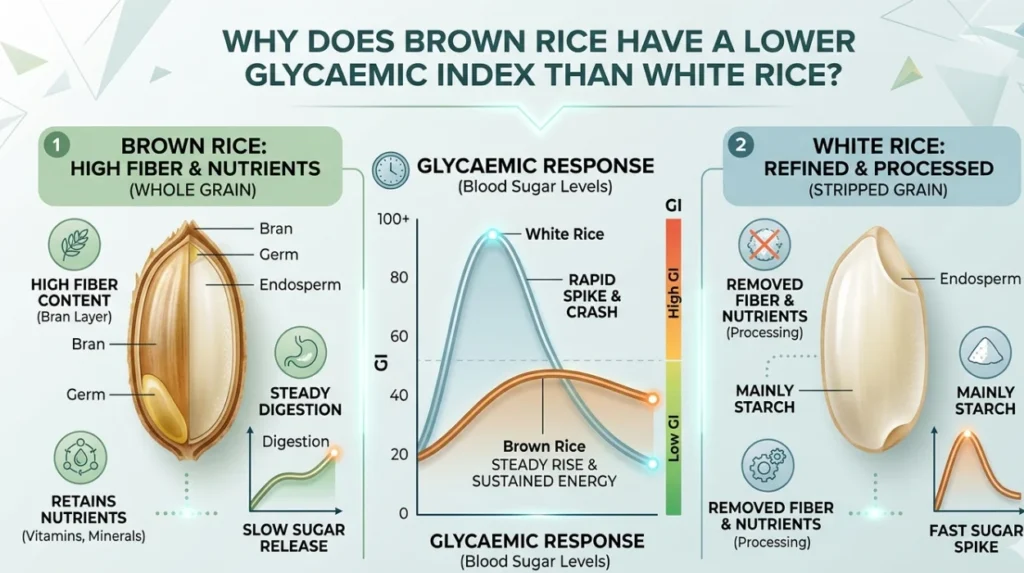
The glycaemic index, or GI, measures how quickly carbohydrate-containing food raises blood glucose compared with a reference food. Foods with lower GI values produce a slower and flatter glucose response. In rice, GI changes with variety, milling level, cooking method, and cooling time. Basmati already tends to sit lower than many short-grain rices, and parboiling pushes that effect further.
The mechanism is mostly structural. During parboiling, starch granules partially gelatinise while the grain is still in the husk. Some nutrients migrate from the bran layer into the endosperm. After drying and milling, the grain retains a harder internal structure than raw-milled white rice. That structure slows digestive enzyme access, which lowers the parboiled glycaemic index relative to standard white rice.
How does parboiling change the grain structure?
Parboiling changes grain structure by moving moisture and heat through the paddy, which modifies starch, strengthens the kernel, and reduces rapid digestion after cooking. The process gives the finished grain a firmer texture, improved head rice yield, and a more stable cooking profile. These traits are part of why parboiled basmati is preferred in export trade.
The process starts with cleaned paddy rice. It is soaked in water, then heated with steam under controlled conditions. The heat causes the starch inside the grain to partially gelatinise. At this stage, vitamins and minerals move from the outer layers inward. Once dried, the paddy is milled and polished, creating a finished grain that is stronger than conventional white rice.
This structural change affects digestion. A grain that is harder and less porous takes longer to break down in the mouth and small intestine. That slower breakdown reduces the speed at which glucose enters the bloodstream. For that reason, parboiled basmati is often positioned as a lower GI rice option in nutrition discussions and export specifications.
What are the key components that affect GI in basmati rice?
The key components are amylose content, milling degree, parboiling intensity, cooking time, and grain length, all of which influence how fast the rice digests. Each factor affects the final basmati GI comparison, especially when parboiled rice is measured against fully milled white rice. The result is a spectrum rather than a single fixed number.
Amylose is important because higher-amylose rice usually digests more slowly than lower-amylose rice. Basmati varieties tend to have a favourable amylose profile compared with sticky or short-grain rice. Parboiling adds another layer by tightening the grain structure. That combination explains why parboiled basmati often produces a lower glycaemic response than white rice of similar aromatic type.
Milling degree also matters. White rice that is heavily polished loses outer layers that slow digestion. Parboiled rice keeps a more resistant internal structure even after polishing. Cooking method also changes GI. Overcooked rice usually digests faster than rice cooked to a firm, separate texture. Cooling after cooking can increase resistant starch, which further reduces the glucose response.
What are the benefits of parboiled basmati rice?
Parboiled basmati rice offers slower digestion, firmer cooked texture, better grain separation, and stronger performance in export handling and retail packaging. These benefits make it practical for households, foodservice operators, and importers who need reliable cooking results. It also supports low GI rice export categories in markets that value nutritional positioning.
The nutritional benefit is the most discussed one. A lower glycaemic response supports steadier post-meal glucose levels than many white rice types. This does not turn rice into a medical product, but it gives consumers a better carbohydrate option when compared with faster-digesting white rice. The GI advantage is most relevant when rice forms a regular part of the diet.
The processing and trade benefits are also important. Parboiled grains are less likely to break during milling, transport, and retail handling. That improves head rice recovery and market appearance. In export markets, buyers often prefer rice that stays separate after cooking and tolerates repeated logistics steps. That combination supports both nutrition-led demand and commercial consistency.
Where is parboiled basmati rice used?
Parboiled basmati rice is used in households, restaurants, institutional catering, and export markets that prioritise texture, storage stability, and a lower glycaemic response. It fits meals where the rice needs to remain separate and firm after cooking. It also suits buyers who want an aromatic rice with a better GI profile than regular white rice.
Households use it for everyday meals such as rice with curry, pilaf, and mixed dishes. Restaurants use it because it maintains plate presentation and resists over-softening. Institutional kitchens use it because the grains stay stable during batch cooking. Importers use it because parboiled basmati rice is easier to standardise across large supply contracts.
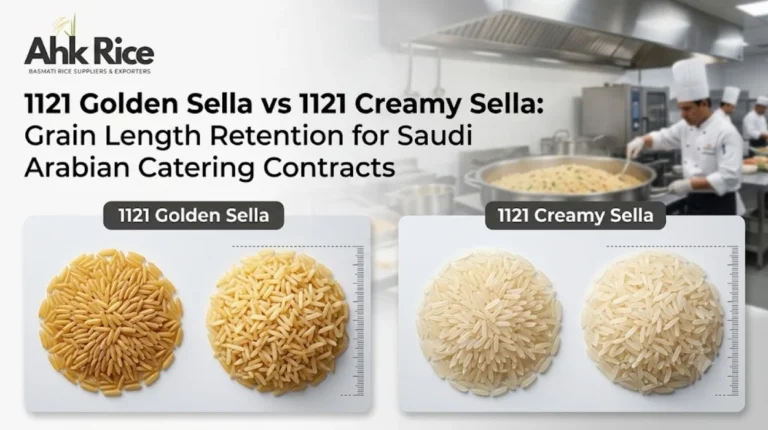
Different markets apply different naming conventions. Golden sella is a common export term for parboiled basmati with a golden appearance after processing. Steam rice is another related category. Buyers compare these formats against white basmati, depending on the target market, pricing, and required GI or texture profile. In trade terms, this is where low GI rice export demand becomes relevant.
What does the Saudi Arabia rice market demand from basmati suppliers?
The Saudi Arabia rice market is strongly centred on long-grain rice, especially basmati, with both white and parboiled sella formats serving household and foodservice demand. Rice is a staple part of lunch and dinner in Saudi Arabia, while dishes such as kabsa support demand for long, separate grains with consistent cooking performance. The market also includes other long-grain categories, but basmati remains an important product type for importers.
For parboiled basmati, the main commercial distinction is between white and sella-style products. Sella rice is valued for firm grains, separation after cooking, and handling stability, making it suitable for large-volume foodservice and retail distribution. White basmati serves buyers who prefer the lighter appearance and traditional cooking profile of milled aromatic rice.
For exporters, Saudi procurement therefore connects grain length, cooking behaviour, appearance, packaging, and consistency. Product specifications need to match the intended channel rather than relying on the variety name alone. The market’s established use of basmati and parboiled rice also makes processing format an important part of supplier selection.
What are the common misconceptions about GI and parboiled rice?
The main misconception is that all rice behaves the same in the body, when GI changes with variety, processing, cooking, and serving conditions. Another misconception is that parboiled rice is identical to white rice with a different colour. In reality, the processing sequence changes starch behaviour, density, and final digestion speed.
A common example is the belief that basmati always has a low GI. Basmati often performs better than many non-basmati types, but the final GI still depends on milling and cooking. White basmati can still rise faster than parboiled basmati. That is why a proper basmati GI comparison must include processing category, not just botanical name.
Another misconception is that a lower GI automatically means lower calories. GI measures blood glucose response, not energy density. Parboiled basmati can still be calorie-dense because it is a starch food. The advantage lies in digestion speed, not in eliminating carbohydrates. Clear product understanding matters for buyers, consumers, and nutrition labelling.
How is parboiled basmati processed step by step?
Parboiled basmati is processed through cleaning, soaking, steaming, drying, husking, polishing, grading, and packing, with each stage affecting grain quality and GI behaviour. The process is tightly controlled because water temperature, steaming duration, and drying levels all influence the final result. Export buyers often require consistency across each lot.
The first stage is paddy cleaning. Foreign matter, broken husk, and immature grains are removed before treatment. The second stage is soaking. The paddy absorbs moisture and prepares the starch for steam penetration. The third stage is steaming. Heat partially gelatinises the grain and shifts nutrients inward. The fourth stage is drying. Moisture is reduced to a safe storage level before milling.
After drying, the rice is husked, polished, and sorted into grades. Grading is important because buyers distinguish between full-grain, head rice, broken rice, and colour variation. Packaging then follows export specifications, which can include bulk sacks, retail packs, or private-label formats. Each step affects final texture, appearance, shelf stability, and the parboiled glycaemic index indirectly through structure.
Which grades and export formats are most relevant?
The most relevant export formats are golden sella, steam parboiled, and different basmati grades sorted by grain length, head rice percentage, and breakage level. These grades matter because they influence cooking quality, pricing, and shipment acceptance. Importers usually compare them on consistency, colour, and how well they hold shape after cooking.

Golden sella is the best-known parboiled format in many export markets. It has a golden hue caused by the parboiling process and is valued for strong grain separation. Steam rice is another category, usually lighter in colour and processed through a different heat profile. Both fall under the wider parboiled basmati family, but they are not interchangeable in all contracts.
Grade selection also depends on the end market. Retail packs often require uniform grain length and visual appeal. Foodservice buyers focus on yield and cooking consistency. Industrial and bulk buyers focus on price, moisture control, and container stability. These distinctions matter for trade because the same rice variety can move through different commercial grades depending on the target buyer.
What does kernel mean in rice?
A rice kernel is an individual rice grain, while a whole or head kernel refers to a grain that remains intact after milling and is therefore different from broken rice. The term describes the physical grain rather than a separate rice variety, processing method, or quality grade.
Rice specifications use kernel-related terms to describe the condition of grains after milling and grading. A whole kernel has its full grain structure intact, while broken kernels are pieces of rice produced during milling. Head rice refers to whole kernels of milled rice. This distinction matters because the percentage of whole kernels affects appearance, cooking presentation, yield, and commercial value.
In basmati exports, buyers often assess kernel length and the proportion of whole grains when comparing grades such as 1121, Super Kernel, and 1509. Longer, more uniform whole grains create a different visual and cooking profile from shorter or heavily broken rice. Kernel quality therefore connects the variety, milling process, grading system, and final export specification.
The word kernel should not be treated as another name for basmati rice. It is a grain-level term used within rice processing, grading, and trade specifications.
Why does this matter for importers and consumers?
This matters because parboiled basmati rice combines nutritional positioning, reliable cooking behaviour, and export-grade consistency in one product category. Importers use that combination to serve markets that want lower GI rice without losing aroma or grain quality. Consumers benefit from firmer texture and a slower glucose response than standard white rice.
For consumers, the biggest practical point is meal behaviour. Rice that digests more slowly fits better in diets where glucose control matters. For importers, the key point is product reliability. A consistent parboiled basmati specification reduces complaints about mushiness, breakage, and uneven cooking. That reduces commercial risk and improves shelf performance.
The broader trade implication is that parboiled basmati sits between nutrition and commerce. It is not just a healthier cooking choice. It is also a well-defined export format shaped by processing control, grading, and market demand. That makes it one of the most important rice categories in the South Asian export chain.