Which Pakistani Rice Grades Are Most Popular Across Germany and European Markets
German and European buyers import 1121 Basmati, Super Kernel Basmati, and 1509 Basmati more than any other Pakistani rice grades. These varieties deliver long grain length, consistent cooking performance, and compliance with European food safety standards. Here is why: European importers prioritize grain appearance, aroma, traceability, and certification requirements that align with retail and foodservice demand.
Germany represents one of Europe’s largest markets for premium Basmati rice imports. Pakistani rice enters Germany through wholesalers, ethnic food distributors, retail chains, and foodservice suppliers. European buyers evaluate rice grades based on grain length, purity, moisture content, broken percentage, and certification status.
Understanding the grades preferred across Europe requires understanding the rice itself, the production process, the grading system, and the import requirements that influence buying decisions.
What Are Pakistani Rice Grades and Why Do European Buyers Focus on Them?
Pakistani rice grades classify rice according to variety, grain length, processing method, purity level, and broken percentage. These specifications determine cooking performance, appearance, pricing, and market suitability across Germany and Europe.
Rice grading is the process of sorting rice into standardized categories. Exporters inspect grain dimensions, moisture levels, broken grain percentages, and foreign matter content before shipment.
Pakistani Basmati rice originates primarily from Punjab. Farmers cultivate rice in fertile plains supported by river irrigation systems. Climatic conditions create the aroma and grain characteristics associated with Basmati varieties.
European buyers purchase rice according to specifications rather than generic names. A buyer sourcing for supermarkets requires different specifications than a buyer supplying restaurants.
Key factors evaluated during grading include:
- Grain length
- Grain width
- Broken percentage
- Moisture content
- Purity percentage
- Processing type
- Aroma retention
European regulations require importers to maintain traceability and food safety compliance. Grading creates consistency across shipments and simplifies quality verification.
With rice grades defined, the next question is which specific varieties dominate German and European imports.
Which Pakistani Rice Grades Are Most Popular Across Germany and European Markets?
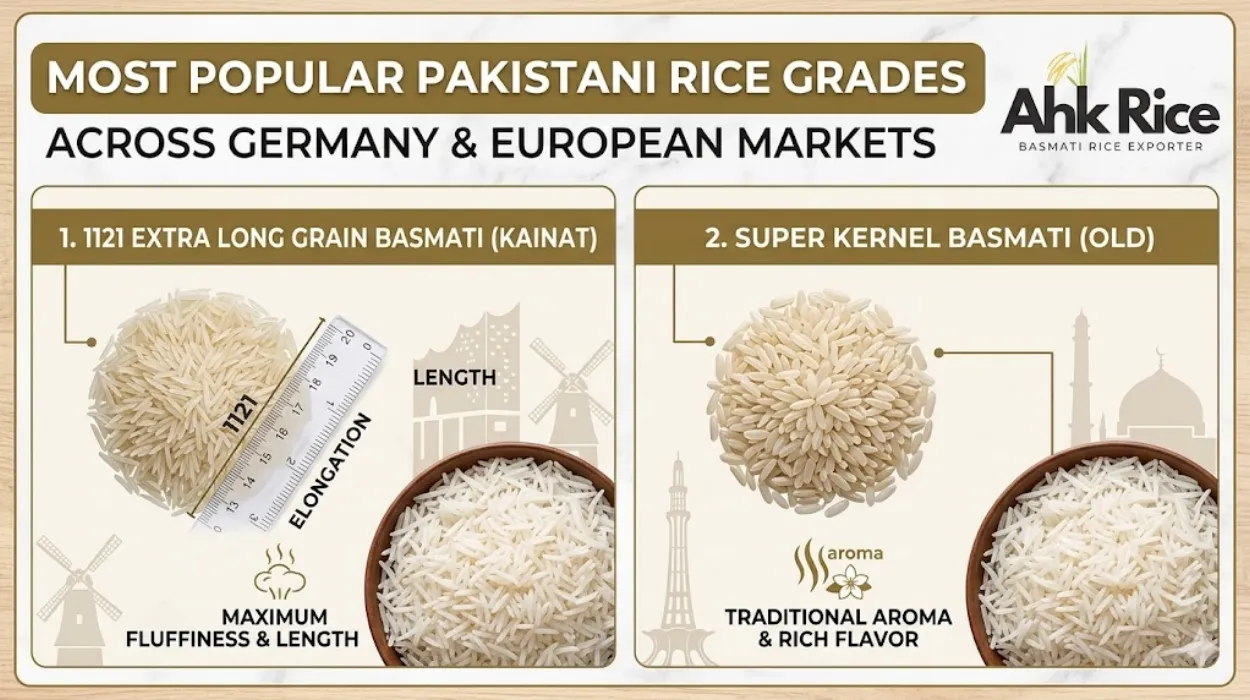
1121 Basmati, Super Kernel Basmati, and 1509 Basmati account for the majority of premium Pakistani rice demand across Germany and Europe because they combine long grain appearance, aroma, and reliable cooking performance.
European consumers often associate Basmati rice with premium quality. Retail buyers therefore focus on varieties that maintain visual appeal after cooking.
1121 Basmati Rice
1121 Basmati offers grain lengths of approximately 8.30 mm before cooking and exceptional elongation after cooking.
1121 Basmati remains the most recognized premium Pakistani rice variety in Europe. The grain elongates significantly during cooking while maintaining a separate texture.
German retailers often stock 1121 Basmati in branded retail packaging because consumers recognize its premium characteristics.
Super Kernel Basmati Rice
Super Kernel Basmati combines strong aroma, long grain structure, and traditional Basmati characteristics valued across European ethnic food markets.
Super Kernel Basmati has remained a leading export variety for decades. Importers serving South Asian, Middle Eastern, and specialty food retailers frequently source this grade.
European consumers seeking traditional Basmati characteristics often select Super Kernel Basmati products.
1509 Basmati Rice
1509 Basmati provides long grains and competitive pricing while maintaining premium Basmati characteristics.
1509 Basmati gained popularity because it delivers high yields and attractive grain appearance. Importers seeking value-oriented premium rice frequently choose this variety.
European foodservice buyers often evaluate 1509 Basmati for restaurants and catering operations.
Popular Rice Grades by Market Segment
| Market Segment | Preferred Grade | Main Reason |
|---|---|---|
| Premium Retail | 1121 Basmati | Maximum grain elongation |
| Ethnic Retail | Super Kernel | Traditional aroma |
| Foodservice | 1509 Basmati | Cost efficiency |
| Specialty Stores | 1121 Basmati | Premium positioning |
| Wholesale Distribution | Mixed Portfolio | Market flexibility |
These varieties dominate imports because they satisfy distinct buyer requirements. Understanding their popularity requires examining how rice moves from farm to export shipment.
How Does Pakistani Rice Move from Cultivation to European Import Markets?
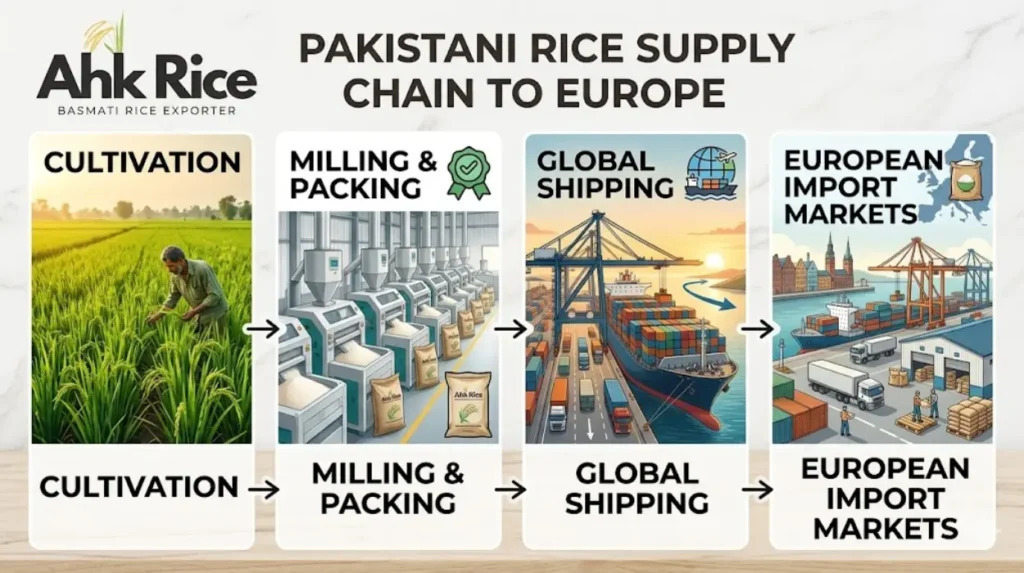
Rice moves through cultivation, harvesting, milling, grading, testing, packaging, and export procedures before reaching German and European distributors.
Rice production begins in Punjab’s agricultural regions. Farmers cultivate Basmati varieties during the growing season and harvest mature paddy according to moisture specifications.
Export-quality rice follows a structured processing sequence.
Rice Processing Steps
- Cultivate the rice crop.
- Harvest mature paddy.
- Clean the harvested paddy.
- De-husk the grain.
- Mill the rice.
- Polish the kernels.
- Grade by size.
- Sort by color.
- Test for quality compliance.
- Package for export.
- Load export containers.
- Ship to destination ports.
Each stage influences final product quality. Color sorting removes discolored grains. Grading separates kernels according to specification requirements. Laboratory testing verifies compliance with buyer specifications.
European buyers require consistency across shipments. Standardized processing helps exporters achieve repeatable quality results.
With the process established, the next question concerns the processing grades available to European importers.
What Processing Grades of Pakistani Rice Are Available for European Buyers?
White Rice, Steam Rice, Golden Sella Rice, and Parboiled Rice represent the primary processing grades supplied to European importers.
Processing grades describe how rice is treated after harvesting and before packaging.
White Basmati Rice
White Rice delivers a clean appearance, bright color, and soft cooking texture.
Millers remove husk and bran layers before polishing the grain. White Basmati remains popular among retail consumers throughout Europe.
Steam Basmati Rice
Steam Rice retains grain strength while preserving natural color characteristics.
Processors apply controlled steam treatment before milling. Steam processing strengthens kernels and improves handling characteristics.
Golden Sella Basmati Rice
Golden Sella offers extended shelf stability and stronger grain structure.
Processors parboil rice before milling. The process transfers nutrients into the grain and creates a golden appearance.
Golden Sella lasts longer than Steam Rice. In high-temperature storage environments, Golden Sella maintains grain integrity more effectively. Foodservice buyers often select Golden Sella because large inventories remain stable during storage.
Parboiled Rice
Parboiled Rice combines durability, cooking consistency, and reduced grain breakage.
European catering operations frequently evaluate parboiled products because large-scale cooking demands consistency.
Processing grades explain product differences. The next consideration involves the benefits driving European demand.
What Benefits Make Pakistani Rice Popular in Germany and Europe?
Long grain length, aroma, cooking performance, certification compliance, and broad application across retail and foodservice sectors drive demand for Pakistani rice grades.
European consumers value visual quality. Long grains create a premium appearance on retail shelves and dining tables.
Key benefits include:
- Grain elongation
- Aromatic profile
- Cooking consistency
- Product traceability
- International certification
- Multiple packaging formats
Basmati rice also supports diverse cuisines. Consumers use it for biryani, pilaf, grilled meat dishes, and vegetable-based meals.
Foodservice operators appreciate predictable cooking performance because consistency reduces waste and improves operational efficiency.
These benefits explain demand patterns. Import requirements provide the next important area of understanding.
Which Certifications and Standards Apply to Pakistani Rice Exports to Europe?
European buyers require food safety certifications, phytosanitary compliance, quality testing, and traceability documentation before importing rice shipments.
Certification verifies compliance with international food safety expectations.
Common certifications include:
- ISO 22000 Certification
- HACCP Certification
- BRCGS Certification
- Halal Certification
- Phytosanitary Certification
- Certificate of Origin
- Laboratory Test Reports
Exporters inspect and test rice before shipment. Laboratories verify moisture content, purity, and contaminant limits.
European regulations place significant emphasis on traceability. Importers therefore maintain documentation covering cultivation, processing, testing, and shipment stages.
Compliance requirements influence buying decisions. Understanding misconceptions helps explain why some grades outperform others in European markets.
What Common Misconceptions Exist About Pakistani Rice Grades?
European buyers often assume all Basmati grades perform identically, but each variety and processing grade serves different commercial and culinary requirements.
One misconception involves grain length. Longer grain length does not automatically mean better suitability for every application.
1121 Basmati delivers maximum elongation. Foodservice buyers seeking cost efficiency often evaluate 1509 Basmati instead.
Another misconception involves processing methods. Some buyers assume Golden Sella and Steam Rice are interchangeable.
Golden Sella maintains stronger grain integrity during storage and large-scale cooking. Steam Rice offers a lighter appearance and different texture profile.
A third misconception concerns certification. Certification demonstrates compliance with standards. Certification does not replace physical quality inspection.
Importers inspect product samples, verify specifications, and review documentation before procurement decisions.
Understanding these distinctions helps buyers evaluate grades accurately. The final consideration involves future demand patterns across Europe.
How Is Demand for Pakistani Rice Evolving Across European Markets?
Demand continues growing for premium Basmati varieties, certified supply chains, traceable sourcing, and value-added packaging solutions across Germany and Europe.
European consumers increasingly prioritize product origin and food safety transparency. Importers therefore seek suppliers capable of documenting production and processing stages.
Premium rice categories continue expanding in retail environments. Long-grain aromatic rice remains a preferred choice among multicultural consumer groups.
Germany functions as a major distribution hub for European rice imports. Products entering German distribution networks frequently move onward to neighboring European markets.
Growth in ethnic food consumption also supports demand for premium Pakistani Basmati varieties.
Pakistani rice grades continue succeeding because they align with consumer preferences for aroma, grain length, and consistent cooking performance.
Frequently Asked Questions
Which Pakistani rice grade is most popular in Germany?
1121 Basmati Rice is the most popular premium Pakistani rice grade in Germany because of its long grain length and excellent cooking elongation.
What is the difference between 1121 and Super Kernel Basmati?
1121 Basmati offers greater grain elongation, while Super Kernel Basmati emphasizes traditional aroma and classic Basmati characteristics.
Why do European buyers prefer Basmati rice?
European buyers prefer Basmati rice because of its aroma, long grain structure, cooking performance, and premium market positioning.
Which processing grade lasts longest in storage?
Golden Sella Basmati generally provides longer storage stability because parboiling strengthens the grain structure.
What certifications do European rice importers require?
European importers commonly require ISO 22000, HACCP, phytosanitary certificates, origin documentation, and laboratory testing reports.
Is 1509 Basmati popular in Europe?
1509 Basmati is popular among wholesalers and foodservice buyers because it combines long grain appearance with competitive pricing.