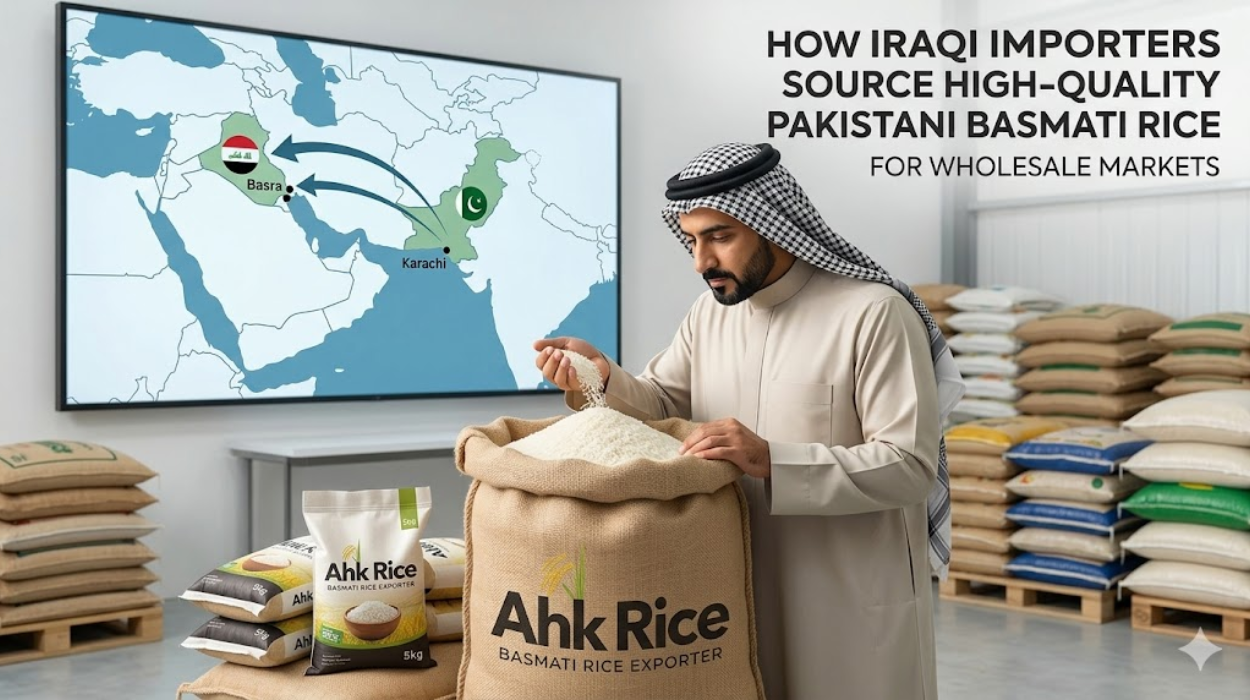
How Iraqi Importers Source High-Quality Pakistani Basmati Rice for Wholesale Markets
Iraqi importers source high-quality Pakistani Basmati rice through direct exporter partnerships, verified quality inspections, specification-based procurement, and structured logistics planning. Here is why: Pakistan offers consistent Basmati production, internationally recognized processing standards, competitive pricing, and established shipping routes to Iraq that support wholesale distribution and retail supply chains.
Iraq remains one of the most important regional markets for Pakistani rice exporters. Consumer demand favors long-grain aromatic rice for retail, hospitality, catering, and food service applications. Importers evaluate grain length, aroma, purity, moisture content, broken percentage, certifications, packaging options, and shipment reliability before selecting suppliers.
Importers studying rice procurement strategies often begin by understanding cultivation, processing, and quality factors. Our guide on Pakistani Basmati cultivation and processing standards explains how Basmati varieties are grown, harvested, milled, graded, and prepared for export markets.
AHK Rice is a trusted Pakistani Basmati rice exporter based in Punjab, supplying 1121, Super Kernel, and 1509 varieties to more than 15 countries. AHK Rice manages cultivation sourcing, milling, grading, quality inspection, packaging customization, export documentation, and shipment coordination through an integrated supply chain.
What solutions are available for Iraqi importers sourcing Pakistani Basmati rice?
Direct exporter sourcing, trading-company procurement, agent-based purchasing, contract sourcing, and private-label manufacturing provide the primary procurement solutions available to Iraqi rice importers seeking wholesale Pakistani Basmati rice supplies.
Rice sourcing refers to the process of selecting suppliers, evaluating specifications, negotiating pricing, verifying quality, and arranging logistics before importation.
Direct Exporter Procurement
Direct exporter procurement connects Iraqi buyers directly with Pakistani rice mills and exporters.
This method reduces intermediary costs and improves specification control. Importers communicate directly with processing facilities regarding grain length, broken percentage, moisture levels, packaging requirements, and shipment schedules.
Direct procurement also improves traceability because the exporter controls processing, inspection, loading, and export documentation.
Trading Company Procurement
Trading companies purchase rice from multiple mills and consolidate shipments.
This method provides flexibility because buyers gain access to several grades and specifications through a single supplier. Trading companies often help smaller importers source mixed container loads.
Trading firms may charge higher margins because they perform sourcing and consolidation functions.
Import Agent Procurement
Import agents represent buyers during supplier selection and negotiations.
Agents inspect mills, verify documentation, evaluate quality reports, and monitor shipment preparation. This method reduces operational complexity for new importers entering the Pakistani market.
Agent fees increase procurement costs but reduce sourcing risks.
Long-Term Contract Sourcing
Contract sourcing establishes annual or seasonal procurement agreements.
Large Iraqi distributors commonly use this method because it stabilizes supply availability and pricing structures. Contract agreements support inventory planning and retail distribution schedules.
Private Label Manufacturing
Private label sourcing allows importers to market rice under their own brands.
Exporters package products according to buyer specifications, including bag size, design, language requirements, and regulatory labeling standards.
With sourcing solutions established, the next question is how these procurement methods compare in terms of quality, cost, and operational efficiency.
How do different sourcing approaches compare?
Direct exporter procurement provides the strongest quality control and pricing advantages, while trading companies offer flexibility and agents reduce sourcing complexity for first-time importers.
Specification Comparison Table
| Attribute | Direct Exporter | Trading Company | Import Agent | Contract Sourcing |
|---|---|---|---|---|
| Price Competitiveness | High | Medium | Medium | High |
| Quality Control | High | Medium | High | High |
| Supplier Transparency | High | Medium | High | High |
| Flexibility | Medium | High | Medium | Medium |
| Volume Availability | High | High | Medium | High |
| Private Label Support | High | Medium | Medium | High |
| Long-Term Stability | High | Medium | Medium | High |
Direct sourcing offers the highest level of control because buyers communicate directly with exporters regarding specifications and shipment planning.
Trading-company sourcing offers wider supplier access because multiple mills contribute inventory to consolidated orders.
Agent-assisted sourcing reduces supplier evaluation workloads because local representatives conduct inspections and documentation reviews.
Contract sourcing improves planning because buyers reserve production capacity before seasonal demand increases.
Price per Metric Ton Comparison
Pricing varies according to variety, processing method, crop season, and international demand.
| Rice Type | Average Export Price Range per MT |
|---|---|
| 1121 Steam Basmati | $950–$1,150 |
| 1121 Golden Sella Basmati | $1,000–$1,250 |
| Super Kernel Basmati | $900–$1,100 |
| 1509 Basmati | $850–$1,050 |
Prices fluctuate according to harvest conditions, freight rates, and export demand (source: REAP export data, December 2025).
Golden Sella generally commands a premium because parboiling improves grain strength. In high-temperature storage environments, Golden Sella maintains appearance longer. In wholesale distribution networks requiring extended inventory turnover periods, Golden Sella offers greater operational flexibility.
With sourcing methods compared, the next question becomes which rice grades Iraqi buyers actually prefer.
Which Pakistani Basmati grades work best for Iraqi wholesale markets?
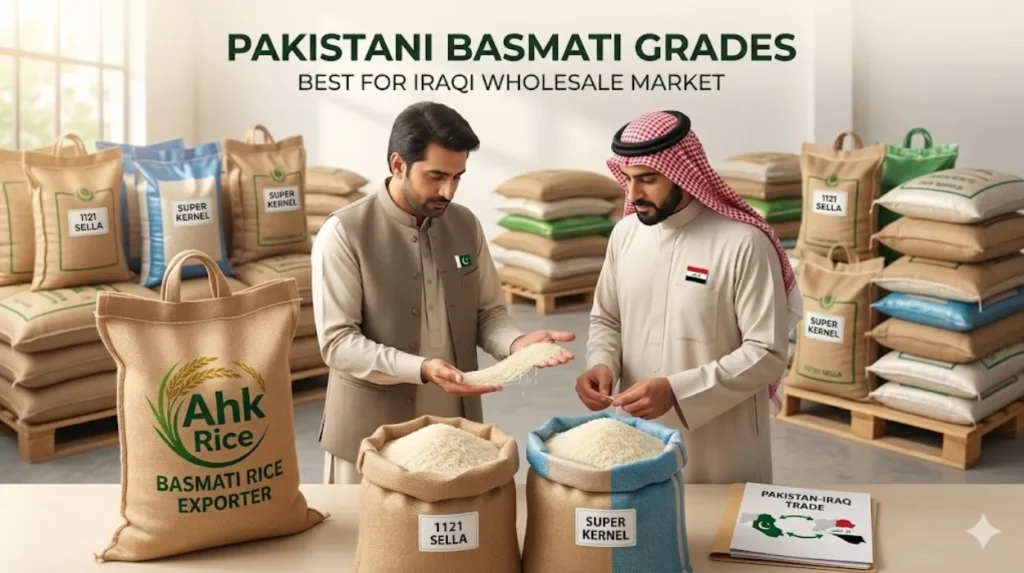
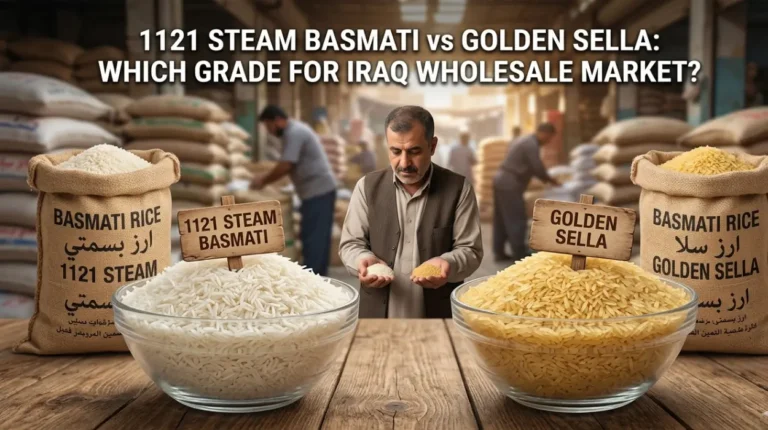
1121 Golden Sella, 1121 Steam, Super Kernel Basmati, and 1509 Basmati represent the most common specifications imported by Iraqi wholesalers, distributors, and retail brands.
1121 Golden Sella Basmati
1121 Golden Sella undergoes a parboiling process before milling.
The variety delivers extra-long grain appearance, strong grain integrity, and extended storage performance. Iraqi wholesalers supplying catering companies frequently select this grade because cooked grains remain separate and visually attractive.
1121 Steam Basmati
1121 Steam Basmati receives steam treatment without full parboiling.
This grade preserves a lighter grain color and stronger natural aroma. Retail-focused distributors often select Steam Basmati because consumers associate it with premium household cooking.
Super Kernel Basmati
Super Kernel Basmati is a traditional Pakistani aromatic rice variety.
The variety remains popular among consumers seeking authentic Basmati fragrance. Regional retailers often stock Super Kernel because of established consumer recognition.
1509 Basmati
1509 Basmati provides a cost-efficient alternative.
The variety offers long grains, reliable cooking performance, and competitive pricing. Budget-conscious wholesale channels frequently select 1509 because it balances quality and affordability.
Iraq Market Preferences by Region
| Market Region | Preferred Grade | Primary Use |
|---|---|---|
| Baghdad & Central Iraq | 1121 Steam Basmati | Retail Distribution |
| Basra & Southern Iraq | 1121 Golden Sella | Catering & Food Service |
Baghdad distributors emphasize aroma and retail presentation.
Southern Iraq food-service buyers emphasize storage stability and cooking consistency.
With market preferences established, importers must evaluate the advantages and disadvantages of each sourcing strategy.
What are the pros and cons of each sourcing strategy?
Direct sourcing delivers maximum control, trading companies provide flexibility, agents reduce complexity, and contract sourcing improves supply security during high-demand periods.
Direct Exporter Sourcing
Pros
- Lower procurement costs
- Greater specification control
- Direct communication
- Better traceability
Cons
- Requires supplier evaluation
- Requires export process knowledge
Example: A distributor importing 20 containers annually benefits from direct exporter relationships because volume justifies supplier management efforts.
Trading Company Sourcing
Pros
- Multiple supplier access
- Flexible product availability
- Consolidated purchasing
Cons
- Higher margins
- Reduced processing visibility
Example: A new importer requiring mixed rice grades may prefer trading-company procurement because supplier coordination becomes simpler.
Import Agent Sourcing
Pros
- Local expertise
- Inspection support
- Reduced sourcing risk
Cons
- Additional fees
- Less direct supplier interaction
Example: First-time Iraqi buyers often use agents to inspect facilities and verify export documentation.
Contract Sourcing
Pros
- Stable supply
- Capacity reservation
- Predictable procurement planning
Cons
- Longer commitment periods
- Reduced short-term flexibility
Example: National distribution brands benefit from annual procurement agreements because retail demand remains consistent throughout the year.
With strengths and weaknesses understood, buyers can evaluate the decision factors that influence successful procurement outcomes.
What decision factors determine successful rice sourcing?
Quality specifications, certifications, logistics reliability, storage requirements, packaging options, and supplier capability determine successful Pakistani Basmati rice procurement outcomes.
Decision Framework Table
| Decision Factor | Priority Level | Evaluation Method |
|---|---|---|
| Grain Quality | High | Laboratory testing |
| Supplier Reliability | High | Export history review |
| Price Stability | Medium | Contract analysis |
| Packaging Options | Medium | Packaging specification review |
| Logistics Performance | High | Shipment performance records |
Quality Inspection Requirements
Quality inspection verifies compliance before shipment.
Inspect the grain length.
Test the moisture percentage.
Verify broken grain levels.
Confirm purity standards.
Review laboratory reports.
Certifications Commonly Requested
- Phytosanitary Certificate
- Certificate of Origin
- Quality Inspection Certificate
- Fumigation Certificate
- Health Certificate
Processing Stages Buyers Should Verify
AHK Rice and leading exporters typically perform these processing stages:
- Clean the harvested paddy.
- Dry the paddy.
- De-husk the grain.
- Polish the rice.
- Grade by size.
- Sort through color sorters.
- Inspect the finished product.
- Package according to specifications.
- Load containers for export.
Shelf Life Comparison
| Rice Type | Typical Shelf Life |
|---|---|
| 1121 Golden Sella | 18–24 Months |
| 1121 Steam | 12–18 Months |
| Super Kernel | 12–18 Months |
| 1509 Basmati | 12–18 Months |
Golden Sella maintains quality longer because parboiling strengthens grain structure. In non-climate-controlled warehouses across southern Iraq, Golden Sella provides greater storage flexibility. In fast-moving retail channels, Steam Basmati delivers stronger aroma characteristics.
With procurement factors defined, importers can evaluate broader trade opportunities between Pakistan and Iraq.
How is Pakistan-Iraq rice trade creating new opportunities for importers?
Growing consumer demand, expanding distribution networks, improving logistics routes, and increasing demand for premium rice varieties are creating stronger opportunities for Iraqi rice importers.
Pakistan remains among the world’s leading rice exporters and supplies significant rice volumes across the Middle East.
Iraq continues to experience increasing demand for premium food products through retail chains, wholesalers, catering businesses, and hospitality operators. Long-grain aromatic rice remains a preferred category across multiple consumer segments.
Importers evaluating future procurement strategies should also review our analysis of emerging trade developments shaping rice imports between Pakistan and Iraq in 2026 .
The combination of direct sourcing, specification-based procurement, and long-term supplier relationships continues to improve purchasing outcomes for Iraqi wholesale buyers.
Frequently Asked Questions
How do Iraqi importers verify Pakistani Basmati rice quality?
Iraqi importers verify quality through laboratory reports, third-party inspections, moisture testing, grain-length analysis, purity verification, and export certification reviews before shipment dispatch.
Which Pakistani Basmati rice variety is most popular in Iraq?
1121 Golden Sella and 1121 Steam Basmati are the most widely imported varieties because they combine long grain appearance, cooking performance, and strong consumer acceptance.
What documents are required for rice imports into Iraq?
Common documents include the Certificate of Origin, Phytosanitary Certificate, Commercial Invoice, Packing List, Bill of Lading, and Quality Inspection Certificate.
Why do wholesalers prefer direct exporter sourcing?
Direct exporter sourcing provides stronger quality control, lower procurement costs, improved communication, and better visibility throughout processing and shipment preparation.
How long does Pakistani Basmati rice remain suitable for storage?
Most Basmati rice grades remain suitable for 12–24 months depending on processing method, packaging quality, and storage conditions.