How Do Saudi Arabian Importers Evaluate Purity When Selecting Pakistan Rice Suppliers?
Saudi Arabian importers evaluate Pakistan rice purity through a combination of variety identity, physical cleanliness, kernel uniformity, broken percentage, moisture, contaminants, pesticide residues, microbial safety, documentation, and laboratory verification. Purity is therefore a measurable quality attribute, not simply a claim that rice is “100% pure.” Saudi food controls examine documents, product identity, physical condition, labeling, and laboratory compliance when required.
Pakistan is an established rice-exporting country, with Punjab serving as a major production region for Basmati rice. Pakistani export varieties used in international trade include 1121 Basmati, 1509 Basmati, and Super Kernel. Saudi Arabia is also a significant destination for Pakistani Basmati rice. Pakistan Bureau of Statistics recorded 101,909 metric tons of Basmati exports to Saudi Arabia in FY2024, valued at US$112 million.
What Is Rice Purity Evaluation in Saudi Arabia?
Rice purity evaluation is the process of verifying that a shipment contains the declared rice variety and meets defined limits for foreign matter, damaged kernels, broken grains, contaminants, pesticides, microorganisms, moisture, and labeling before market release.
For Saudi Arabian importers, purity begins with identity. A shipment sold as Basmati must correspond to its declared variety and specification. GSO 1003:2022 defines Basmati as rice with characteristic length, aroma, taste, fluffiness, and separate grains, and identifies approved Basmati varieties including Kernel (Pak Basmati) and Super Basmati.
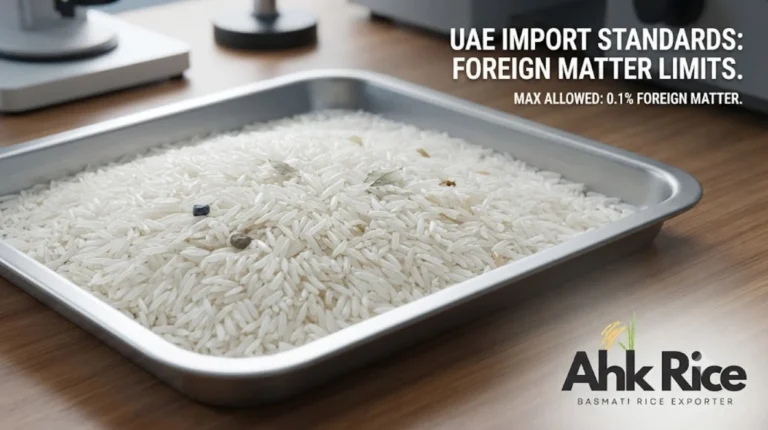
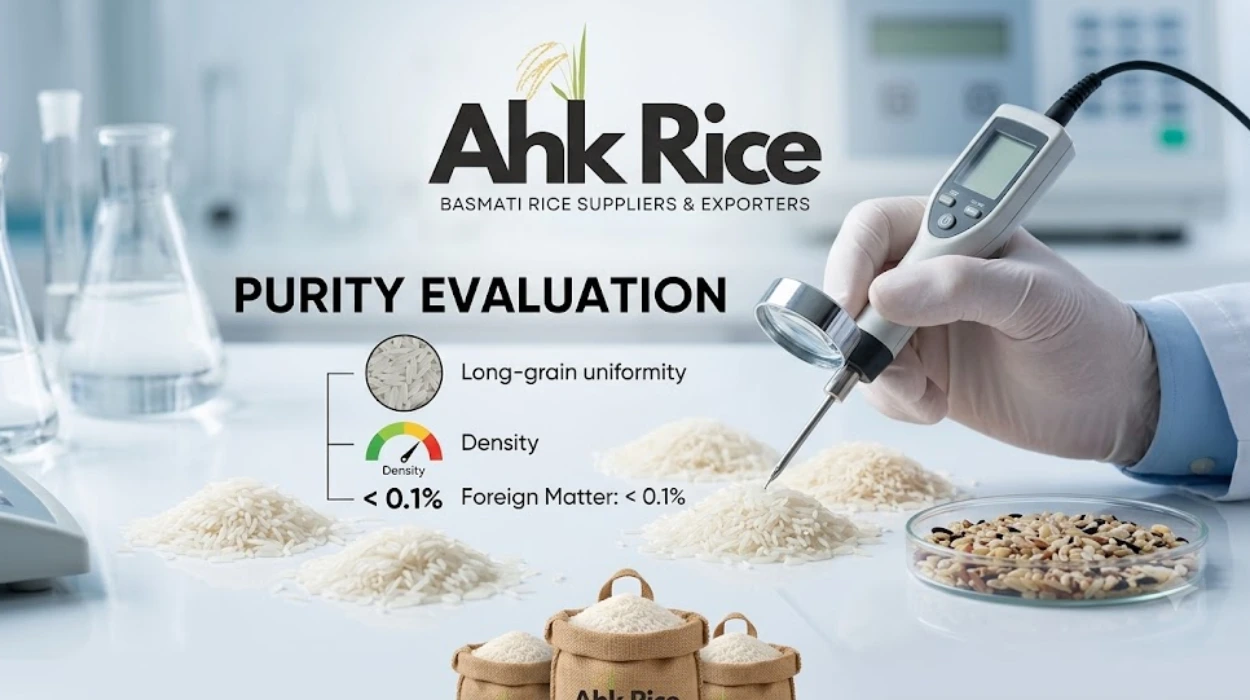
Physical purity is the second layer. It concerns the proportion of acceptable rice kernels compared with foreign materials and defective grains. Foreign matter includes materials that are not rice kernels, such as stones, sand, plastic, glass, metals, husk, straw, paper, wood, foreign seeds, and animal-origin impurities.
Saudi controls also distinguish defects such as damaged kernels, heat-damaged kernels, chalky kernels, red kernels, red-streaked kernels, pecks, and immature kernels. These terms are important because two consignments can contain the same rice variety but have different commercial quality because of different defect levels.
How Does the Purity Evaluation Process Work?
Importers start with the purchase specification, compare supplier samples against declared characteristics, review laboratory documents, inspect shipment samples, and verify compliance with Saudi technical regulations before accepting the rice for distribution.
The process starts before cultivation and continues through shipment arrival. Rice is grown, harvested, dried, cleaned, husked, milled, graded, sorted, tested, packed, and shipped. Each stage affects final purity because foreign material, damaged kernels, moisture, insects, contamination, and varietal mixing can enter the supply chain at different points.
How is rice processed before purity testing?
Paddy rice is harvested with its husk intact. After drying, cleaning removes field debris and other foreign material. Dehusking removes the outer husk and produces brown or cargo rice. Milling then removes some or all of the bran and germ to produce white rice.
For Sella rice, paddy or husked rice undergoes soaking, heat treatment, starch gelatinization, and drying before milling. Steam rice follows a heat-based processing method that changes the grain structure and cooking behavior. White rice follows conventional milling without parboiling.
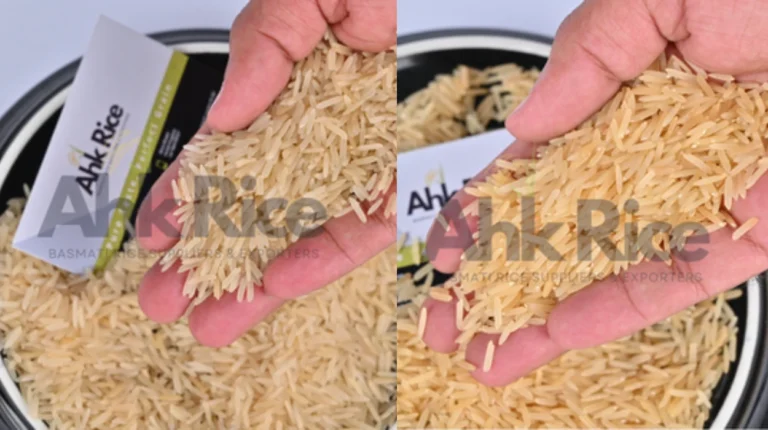
After milling, graders separate whole kernels, broken kernels, immature grains, discolored grains, and other defects. Optical sorting, cleaning, sieving, aspiration, and metal detection support the removal of unwanted materials. The final batch is then sampled for laboratory and physical inspection.
What happens when the shipment reaches Saudi Arabia?
Saudi Arabian food import control operates through several inspection stages. These include documentary checks, identity checks, physical examination, and laboratory testing when required. Inspectors verify whether the food matches its accompanying documents and applicable technical regulations. A non-compliant consignment can be rejected at the entry point.
The importer therefore needs more than a supplier quotation. The shipment must correspond with the declared product, packaging, labeling, certificates, and applicable Saudi requirements. SFDA states that imported food must comply with Saudi regulations, technical regulations, and standards.
What Are the Key Components of Pakistan Rice Purity?
The main components are varietal identity, whole-kernel ratio, broken percentage, foreign matter, damaged grains, moisture, color, odor, pesticide residues, contaminants, microbial safety, packaging integrity, traceability, and supporting laboratory or regulatory documentation.
Which rice varieties and grades are evaluated?
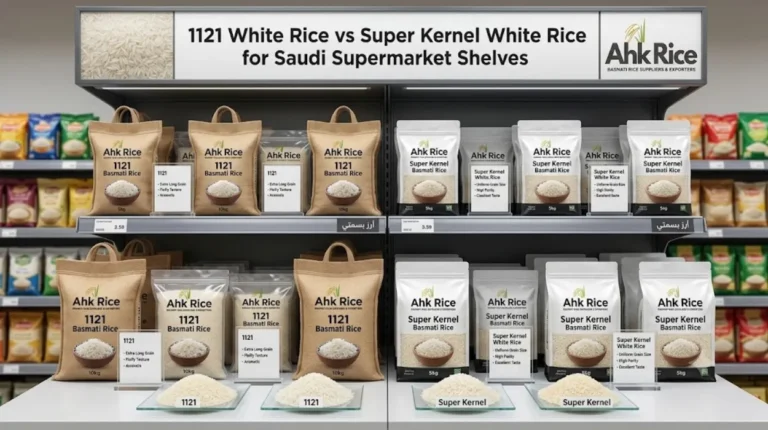
Pakistan rice sold into Saudi Arabia is evaluated against the specific variety and commercial specification written in the purchase contract. Common Pakistani Basmati products include 1121, 1509, and Super Kernel, while processing forms include White, Steam, and Sella.
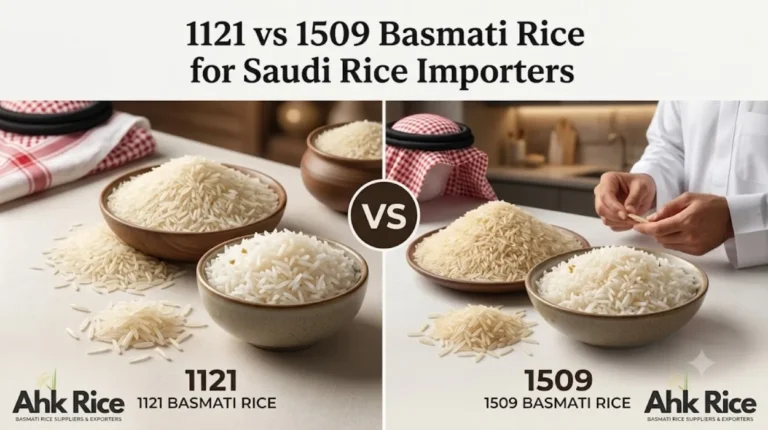
1121 Basmati is recognized for its extra-long kernel and strong elongation after cooking. 1509 Basmati is another long-grain variety used in export markets. Super Kernel represents a traditional Pakistani Basmati profile associated with aroma, grain separation, and long kernels.
Commercial grades are normally differentiated through specifications such as 0–2% broken, 5% broken, moisture limits, grain length, milling degree, color, and defect tolerances. These figures are contract specifications rather than a universal single grading system for every Pakistani rice product.
A buyer requesting 1121 Steam with 1% maximum broken is therefore evaluating a different specification from a buyer purchasing 1121 White with 5% broken. The product name alone does not establish the complete purity requirement.
How are physical purity and grain defects checked?
Physical inspection examines whether the sample contains the correct type and condition of kernels. Inspectors look for foreign matter, damaged kernels, discoloration, immature grains, chalkiness, red kernels, and other defects defined by the applicable rice standard.
Broken percentage is another important commercial measurement. A buyer can compare a contractual limit with the measured laboratory or inspection result. For example, a specification of 2% maximum broken requires the tested shipment to remain within that contractual threshold.
Grain length also matters for Basmati. Saudi regulations recognize Basmati characteristics including length, aroma, taste, fluffiness, and separate grains. Purity therefore includes both the absence of unwanted materials and consistency with the declared rice identity.
Which chemical and microbiological checks matter?
Chemical safety covers hazards such as pesticide residues, heavy metals, mycotoxins, and other contaminants. GSO 1003:2022 references Gulf requirements for pesticide residues, contaminants and toxins, and microbiological criteria.
Microbiological controls address food-safety hazards rather than grain appearance. SFDA identifies biological hazards such as Salmonella and E. coli and chemical hazards such as pesticides, heavy metals, and mycotoxins as food-safety concerns across the supply chain.
This is why a visually clean sample does not automatically prove full compliance. Laboratory testing provides evidence for parameters that cannot be reliably confirmed through visual inspection alone.
Which certificates and systems support purity verification?
Import documentation depends on the product and Saudi requirements. SFDA identifies documents such as certificates of origin, health certificates, halal certificates where applicable, and other required certificates or documents.
A phytosanitary certificate is relevant to plant products and confirms compliance with the importing country’s plant-health requirements. Pakistan’s Department of Plant Protection states that exporters must meet the importing country’s phytosanitary requirements and obtain certification according to ISPM 12. Pakistan’s export process also includes inspection, sampling, treatment when required, and documentation.
Food-safety systems such as HACCP and ISO 22000 support controlled production and hazard management. HACCP identifies biological, chemical, and physical hazards and controls critical points in the production process. Saudi food-safety guidance applies HACCP principles across food operations, while SFDA has also emphasized effective HACCP systems and traceability.
A certificate is not a replacement for product testing. The strongest verification chain connects the certificate, batch, laboratory result, production record, packing record, and shipment documentation.
What Are the Benefits of Measuring Rice Purity?
Purity measurement protects product identity, reduces contamination risk, supports Saudi regulatory compliance, improves consistency between shipments, protects retail and food-service performance, and gives importers measurable evidence for comparing Pakistan rice suppliers and specifications.
The first benefit is regulatory compliance. Saudi food consignments undergo documentary and physical checks, with laboratory testing used when necessary. In the first quarter of 2026, SFDA reported preventing 1,057 metric tons of non-compliant food products from entering Saudi Arabia.
The second benefit is commercial consistency. A distributor selling premium Basmati needs repeatable grain appearance, aroma, cooking performance, and broken percentage. A shipment that differs from the approved sample creates inventory, pricing, and customer-service problems.
The third benefit is traceability. If a laboratory result identifies a problem, the importer needs to trace the product back to the supplier, batch, processing stage, packaging lot, and export documents. Traceability helps isolate affected stock rather than treating an entire product range as defective.
The fourth benefit is supplier comparison. A specification-based evaluation allows importers to compare suppliers using measurable attributes instead of relying on claims such as “premium,” “best quality,” or “100% pure.”
Where Do Saudi Arabian Importers Use Purity Evaluation?
Saudi Arabian importers use purity evaluation for retail rice, wholesale distribution, food-service supply, private-label products, restaurant procurement, institutional purchasing, and premium Basmati programs where consistent product identity and food safety affect commercial performance.
How is purity used for retail rice?
Retail buyers focus on consistent appearance, variety identity, grain length, broken percentage, packaging, labeling, and shelf performance. A supermarket private-label product needs every shipment to match its approved specification closely enough to maintain consumer expectations.
Saudi labeling requirements also form part of the compliance process. SFDA identifies GSO 9 for prepackaged food labeling among the applicable food-labeling regulations.
How is purity used for food-service rice?
Restaurants and catering operators place greater emphasis on cooking behavior. They evaluate grain separation, elongation, aroma, water absorption, breakage after cooking, and consistency between batches.
A Saudi food-service distributor purchasing 1121 Steam Basmati therefore evaluates both raw-grain purity and cooked performance. A visually attractive grain that fails the agreed cooking specification does not satisfy the commercial requirement.
How is purity used for private-label rice?
Private-label importers require stronger traceability because the rice is sold under the buyer’s own brand. Product identity, batch records, laboratory reports, packaging information, and supplier documentation need to remain aligned throughout the shipment cycle.
What Common Problems and Misconceptions Affect Purity Evaluation?
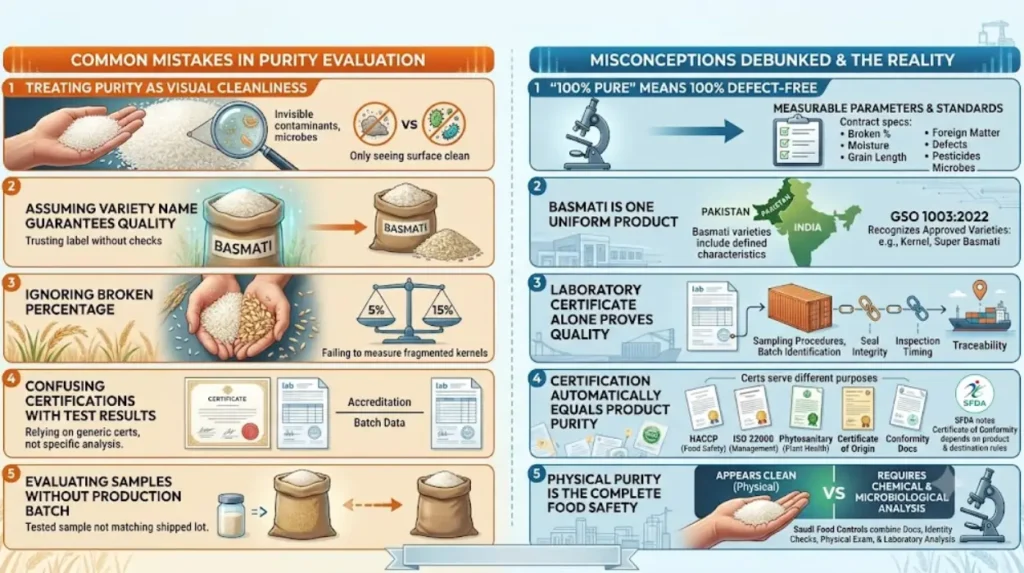
The most common mistakes are treating purity as visual cleanliness, assuming a variety name guarantees quality, ignoring broken percentage, confusing certifications with test results, and evaluating samples without connecting them to the exact production batch shipped.
One misconception is that “100% pure” means 100% free from every defect or contaminant. In commercial rice trade, purity needs measurable parameters. A contract can specify variety, broken percentage, moisture, grain length, foreign matter, defect limits, pesticide residues, and microbiological requirements.
Another misconception is that Basmati is one uniform product. Basmati includes defined varieties and characteristics. GSO 1003:2022 specifically recognizes Basmati characteristics and lists approved varieties, including Kernel and Super Basmati.
A third misconception is that a laboratory certificate alone proves shipment quality. The tested sample must represent the actual shipment. Sampling procedures, batch identification, seal integrity, inspection timing, and traceability determine whether the result can be connected to the cargo.
A fourth misconception is that certification automatically equals product purity. HACCP, ISO 22000, phytosanitary documents, certificates of origin, and conformity documents serve different purposes. The applicable requirement depends on the product, destination rules, and shipment circumstances. SFDA also states that certificate-of-conformity requirements depend on the applicable product and country conditions.
A fifth misconception is that physical purity is the complete definition of food safety. Rice can appear clean while still requiring chemical or microbiological analysis. Saudi food controls therefore combine documentation, identity checks, physical examination, and laboratory analysis when required.
For readers moving from basic purity concepts to detailed supplier specifications, the next logical resource is:
Purity specifications that separate premium Pakistan rice exporters from standard suppliers. This contextual placement connects the educational discussion of purity with the next-stage comparison of measurable exporter specifications.
In 2026, the most reliable approach is to treat Pakistan rice purity as a complete verification chain: correct variety → controlled processing → defined grade → physical inspection → laboratory testing → traceable documentation → Saudi compliance. Saudi importers can then evaluate suppliers using evidence that connects the rice specification to the actual shipment rather than relying on a product label alone.
Frequently Asked Questions
How do Saudi Arabian importers evaluate Pakistan rice purity?
Saudi Arabian importers evaluate rice purity through variety identity, grain quality, broken percentage, foreign matter, moisture, contaminants, pesticide residues, microbiological safety, and supporting documentation.
What purity factors matter most for Pakistan Basmati rice?
The main factors include varietal identity, grain length, whole-kernel percentage, broken grains, foreign matter, damaged kernels, moisture, color, aroma, contaminants, and pesticide-residue compliance.
Which Pakistan rice varieties are commonly evaluated by Saudi importers?
Common Pakistani Basmati varieties include 1121 Basmati, 1509 Basmati, and Super Kernel. Importers evaluate each variety against its agreed specifications rather than treating all Basmati rice as identical.
How is broken percentage measured in Pakistan rice?
Broken percentage is determined by separating broken kernels from whole kernels in a representative sample. Importers compare the measured percentage with the maximum limit stated in the purchase specification.
Why does grain purity matter when importing Pakistan rice?
Grain purity affects product identity, cooking performance, consumer expectations, retail presentation, and compliance with the agreed quality specification. It also helps importers maintain consistency between shipments.
What foreign materials are checked in Pakistan rice?
Inspectors can check for stones, sand, husk, straw, plastic, glass, metal, wood, paper, foreign seeds, and other materials that are not part of the declared rice product.
Do Saudi importers test Pakistan rice for pesticide residues?
Yes. Pesticide residues are part of food-safety controls applicable to imported food. The relevant maximum residue limits and testing requirements depend on Saudi and Gulf standards applicable to the product.
What certificates support Pakistan rice purity verification?
Depending on the shipment and applicable requirements, documentation can include certificates of origin, health certificates, phytosanitary certificates, halal certificates where applicable, laboratory reports, and conformity-related documents.
Is a laboratory report enough to prove rice purity?
No. A laboratory report is one part of verification. Importers also need representative sampling, product identity, physical inspection, traceability, documentation, and compliance with applicable Saudi requirements.
What is the difference between rice purity and rice quality?
Purity focuses primarily on product identity, unwanted materials, defects, and contamination. Quality covers a wider set of characteristics, including grain length, appearance, aroma, cooking performance, moisture, milling quality, and broken percentage.
Why do Saudi food-service buyers check rice purity?
Food-service buyers need consistent cooking results. Purity and specification checks help them control grain separation, elongation, aroma, breakage, appearance, and batch-to-batch consistency.
How does rice processing affect purity?
Cleaning, drying, dehusking, milling, grading, sorting, optical separation, and metal detection reduce unwanted materials and defects. Poor control at any stage can affect the purity and consistency of the finished rice.
What happens if imported rice does not meet Saudi requirements?
Saudi authorities can subject imported food to documentary checks, identity checks, physical examination, and laboratory testing when required. Non-compliant consignments can be prevented from entering the Saudi market.
Why is traceability important for Pakistan rice exporters?
Traceability connects the finished rice to its production batch, processing records, laboratory results, packaging lot, certificates, and shipment documents. It helps importers identify and manage quality or safety issues efficiently.