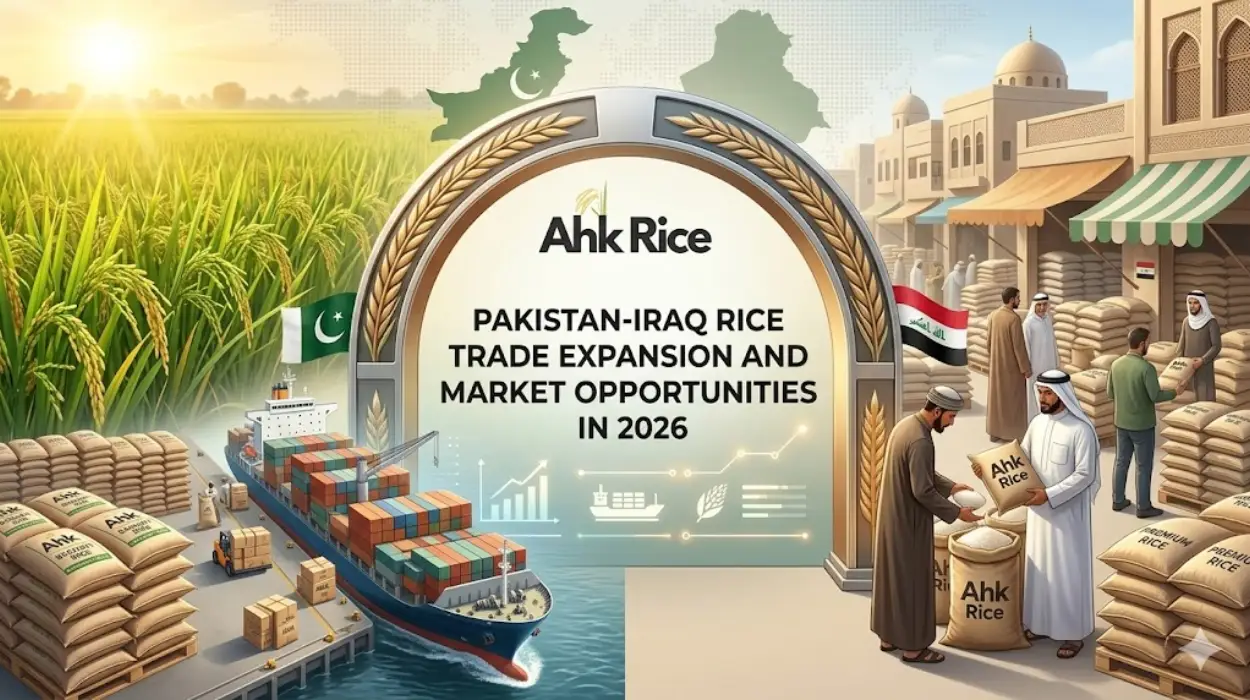
Pakistan-Iraq Rice Trade Expansion and Market Opportunities in 2026
Pakistan-Iraq rice trade expansion presents one of the strongest growth opportunities for rice importers in 2026. Iraqi demand for premium Pakistani Basmati continues to increase because consumers prefer long-grain aromatic rice and wholesalers seek reliable suppliers with consistent quality. Here is why: Pakistan offers competitive pricing, established logistics routes, export certifications, and scalable production capacity that matches Iraq’s growing food distribution sector. Buyers researching Iraqi market demand can first explore insights on the most preferred Pakistani rice grades in Iraq before evaluating suppliers and procurement strategies.
What is the best solution for Iraqi importers seeking growth opportunities in Pakistan-Iraq rice trade?
Partnering with a certified Pakistani exporter, sourcing market-specific grades, securing quality verification, and establishing long-term supply agreements creates the strongest competitive advantage for Iraqi rice businesses in 2026.
Iraq remains one of the most important destinations for Pakistani Basmati rice exports. Iraqi consumers recognize the value of long-grain rice varieties because they provide superior cooking performance, aroma, and presentation. Importers that secure dependable sourcing channels gain pricing stability and product consistency throughout the year.
Pakistani exporters supply multiple rice specifications to Iraq. Common grades include 1121 Steam Basmati, 1121 Golden Sella Basmati, Super Kernel Basmati, PK 386 Long Grain Rice, and IRRI varieties. Each grade serves different retail and wholesale market segments.
Market demand continues to support expansion opportunities. Iraq’s population growth and food consumption trends increase the need for imported rice products because local production cannot fully satisfy national demand.
Which rice grades create the best opportunities in Iraq?
Grade Specifications Comparison
| Rice Grade | Grain Length | Market Segment | Aroma Level | Price Position | Preferred Buyers | Storage Performance |
|---|---|---|---|---|---|---|
| 1121 Steam | 8.30+ mm | Premium Retail | High | Premium | Retail Chains | Good |
| 1121 Golden Sella | 8.30+ mm | Wholesale & Catering | Medium-High | Premium | Food Service | Excellent |
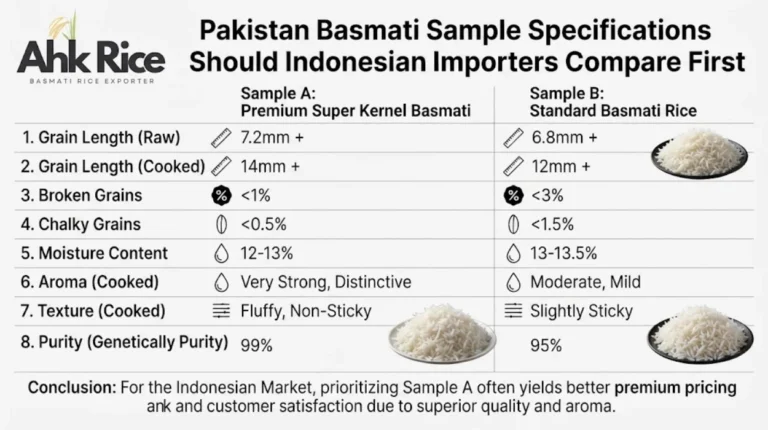
| Super Kernel | 7.40–7.60 mm | Traditional Retail | High | Mid-Premium | Distributors | Good |
| PK 386 | 7.00+ mm | Value Retail | Medium | Competitive | Wholesalers | Good |
| IRRI Rice | 6.60+ mm | Budget Segment | Low | Economy | Institutional Buyers | Moderate |
1121 Golden Sella performs particularly well in Iraq because the parboiling process improves grain strength. In high-temperature storage conditions, Golden Sella maintains appearance longer than Steam rice. For Iraqi wholesalers operating non-climate-controlled warehouses, Golden Sella often becomes the preferred specification.
Rice grade selection directly influences profitability, which leads to the next decision point: choosing the right export partner.
Why choose AHK Rice for Iraq market expansion?
AHK Rice provides export-grade processing, market-specific rice specifications, documentation support, quality verification, scalable supply capacity, and dedicated logistics coordination for Iraqi importers.
<a href=”https://ahkrice.com/”>AHK Rice</a> supplies Pakistani Basmati rice from Punjab and serves international buyers seeking reliable long-term procurement partnerships. AHK Rice focuses on quality consistency because importers require predictable results across multiple shipments.
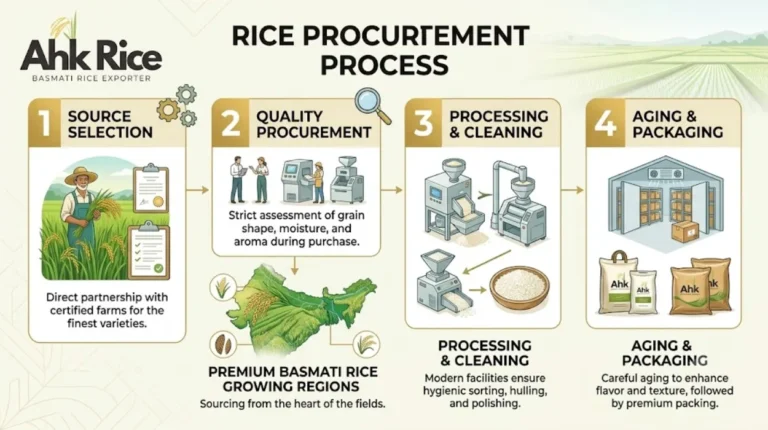
AHK Rice processes rice through a structured production system:
- Harvest the paddy
- Clean the raw material
- Dry the harvested grain
- Dehusk the paddy
- Polish the rice
- Grade by specification
- Sort by length
- Inspect for quality
- Load for export
Each step supports quality consistency. Buyers receive rice that matches agreed specifications and market requirements.
What certifications support Iraqi imports?
Export Documentation
| Document | Purpose |
|---|---|
| Phytosanitary Certificate | Plant health compliance |
| Certificate of Origin | Trade verification |
| Fumigation Certificate | Pest control confirmation |
| Commercial Invoice | Transaction documentation |
| Packing List | Shipment verification |
| Bill of Lading | Freight documentation |
| Quality Inspection Report | Product verification |
AHK Rice helps buyers coordinate export documentation and shipment preparation. Documentation accuracy reduces customs clearance delays and supports smoother import operations.
Importers comparing sourcing options should also revie how experienced Iraqi wholesalers evaluate supplier quality and procurement standards before making purchasing decisions.
Supplier selection determines supply reliability. The next question focuses on measurable business outcomes.
What results can importers expect from Pakistan-Iraq rice trade expansion in 2026?
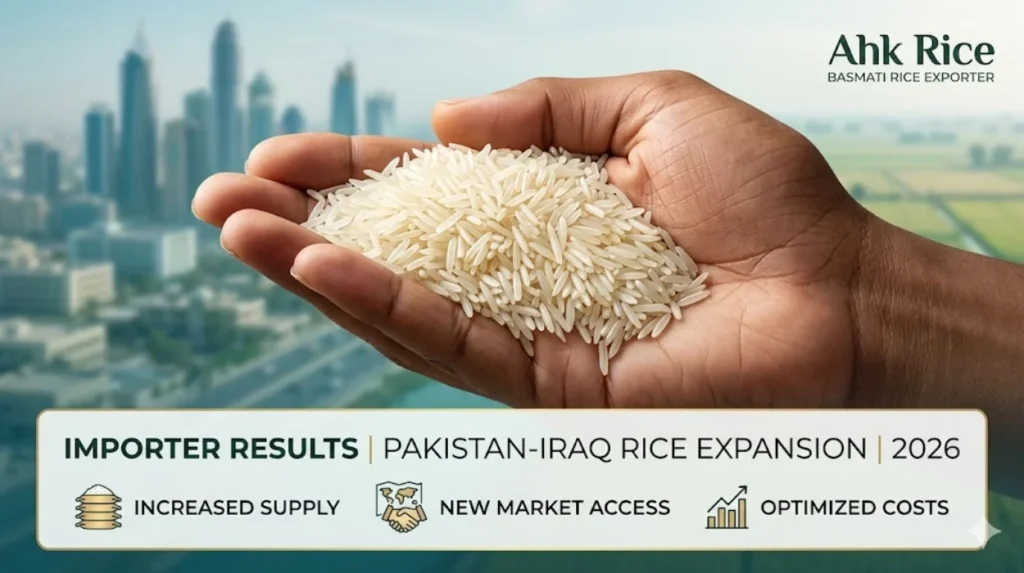
Importers can expect stronger product differentiation, broader market coverage, improved customer retention, stable supply access, and higher profitability through premium rice positioning.
Premium Basmati rice attracts consumers seeking quality and consistency. Retailers often use Pakistani Basmati products to strengthen their premium product categories.
Wholesale distributors benefit from diversified product portfolios. Offering multiple grades allows distributors to serve premium retailers, traditional markets, food-service operators, and institutional buyers simultaneously.
Which Iraqi market segments offer the highest growth?
Opportunity Analysis
| Market Segment | Demand Growth Potential | Preferred Grade |
|---|---|---|
| Retail Chains | High | 1121 Steam |
| Supermarkets | High | Super Kernel |
| Catering Companies | Very High | 1121 Golden Sella |
| Restaurants | High | 1121 Steam |
| Government Tenders | Moderate | IRRI & PK 386 |
Food-service demand continues expanding because restaurants and catering businesses require reliable bulk supplies. Long-grain rice enhances presentation and customer satisfaction.
Premium retail demand also grows because consumers increasingly recognize Pakistani Basmati as a premium product category.
Market opportunity creates value only when costs remain competitive. Understanding pricing factors becomes essential.
What factors affect pricing and overall import costs?
Rice grade, processing method, packaging specification, freight rates, seasonal availability, order volume, and inspection requirements are the primary pricing variables.
Rice pricing changes according to specification. Premium grades command higher prices because they deliver superior grain length, appearance, and cooking characteristics.
Indicative Price Comparison
| Product | Estimated Export Range (USD/MT) |
|---|---|
| 1121 Steam Basmati | $1,050–1,300 |
| 1121 Golden Sella | $1,000–1,250 |
| Super Kernel Basmati | $900–1,100 |
| PK 386 Rice | $700–900 |
| IRRI Rice | $550–750 |
Prices vary according to harvest conditions, currency movements, freight costs, and market demand.
Packaging specifications also affect cost. Retail-ready packaging requires additional material, printing, and handling processes. Bulk packaging generally reduces per-ton expenses.
Sample Process and Costs
AHK Rice supports buyers who require product verification before placing commercial orders.
Sample Procedure
- Request the desired rice grade.
- Confirm specification requirements.
- Receive quality photographs and videos.
- Approve sample preparation.
- Dispatch physical samples.
- Inspect cooking performance.
- Confirm commercial order.
Typical Sample Costs
| Item | Estimated Cost |
|---|---|
| Sample Product | Usually Free |
| Courier Charges | $40–$120 |
| Laboratory Testing | Optional |
| Custom Packaging | Based on Requirement |
Sample verification reduces procurement risk because buyers evaluate actual product quality before committing to larger purchases.
After understanding costs, buyers need clarity regarding delivery timelines.
How long does shipping take from Pakistan to Iraq?
Most Iraq-bound shipments arrive within 15–35 days depending on destination, shipping method, customs processing, and port congestion conditions.
Shipping efficiency affects inventory planning. Importers should schedule procurement based on expected transit times and warehouse requirements.
Shipping Time by Market
| Destination | Estimated Shipping Days |
|---|---|
| Basra | 15–20 Days |
| Umm Qasr | 15–22 Days |
| Baghdad Distribution via Port | 20–30 Days |
| Erbil Distribution Network | 25–35 Days |
| Sulaymaniyah Distribution Network | 25–35 Days |
Container availability influences shipment schedules. Early procurement planning helps secure preferred vessel bookings and predictable delivery windows.
Transit efficiency supports inventory management. The final step is understanding how to begin the sourcing process.
How can Iraqi importers get started with AHK Rice?
Define specifications, review samples, verify documentation, confirm pricing, approve shipment terms, and establish a structured procurement schedule for long-term supply security.
Successful sourcing begins with specification clarity. Buyers should define rice variety, grain length requirements, packaging preferences, target market, and monthly volume expectations.
AHK Rice reviews buyer requirements and recommends suitable grades based on market objectives. This consultation process helps importers select products aligned with customer demand.
Quality verification follows specification approval. Sample testing confirms grain performance, aroma, cooking results, and presentation standards before commercial production begins.
Commercial negotiations then establish shipment schedules, packaging specifications, payment terms, and logistics requirements. Clear agreements reduce operational uncertainty and improve long-term planning.
AHK Rice continues supporting buyers throughout production, inspection, loading, and export preparation. This structured approach helps Iraqi importers build reliable supply chains and capitalize on Pakistan-Iraq rice trade expansion opportunities in 2026. Contact AHK Rice today and submit your requirements through the quotation request form to receive a tailored export proposal.
Frequently Asked Questions
Why is Pakistani Basmati rice popular in Iraq?
Pakistani Basmati rice offers long grains, strong aroma, and excellent cooking performance. Iraqi consumers recognize these characteristics as premium quality indicators. Retailers prefer products that generate repeat purchases. Food-service businesses value consistency during large-scale preparation. These factors continue supporting strong demand across Iraq.
Which Pakistani rice grade sells best in Iraq?
1121 Golden Sella and 1121 Steam Basmati remain among the most demanded grades. Golden Sella performs well in wholesale and catering markets. Steam rice attracts premium retail buyers. Super Kernel Basmati also maintains strong demand. The ideal choice depends on customer preferences and pricing strategy.
How much does it cost to import rice from Pakistan?
Import costs depend on rice grade, packaging, order volume, freight rates, and destination. Premium Basmati grades cost more than commodity rice varieties. Shipping expenses fluctuate throughout the year. Documentation and inspection requirements may add costs. Accurate quotations require specification details.
How long does rice shipping take from Pakistan to Iraq?
Most shipments arrive within 15 to 35 days. Port destination influences transit time. Customs clearance efficiency also affects delivery schedules. Basra and Umm Qasr generally receive shipments faster. Inland distribution networks require additional transportation time.
What documents are required for Iraqi rice imports?
Importers typically require a Certificate of Origin, Phytosanitary Certificate, Commercial Invoice, Packing List, Bill of Lading, and Fumigation Certificate. Authorities may request additional documentation depending on regulations. Accurate paperwork supports smooth customs clearance. Documentation should match shipment specifications. Exporters usually assist with preparation and verification.