How Does UK Export Experience Reduce Risks in Rice Procurement?
UK export experience significantly reduces rice procurement risks. Here is why: exporters with proven UK trade history understand food safety regulations, documentation requirements, logistics planning, quality consistency, and customs compliance. This experience lowers the chances of shipment delays, rejected consignments, specification disputes, and unexpected import costs.
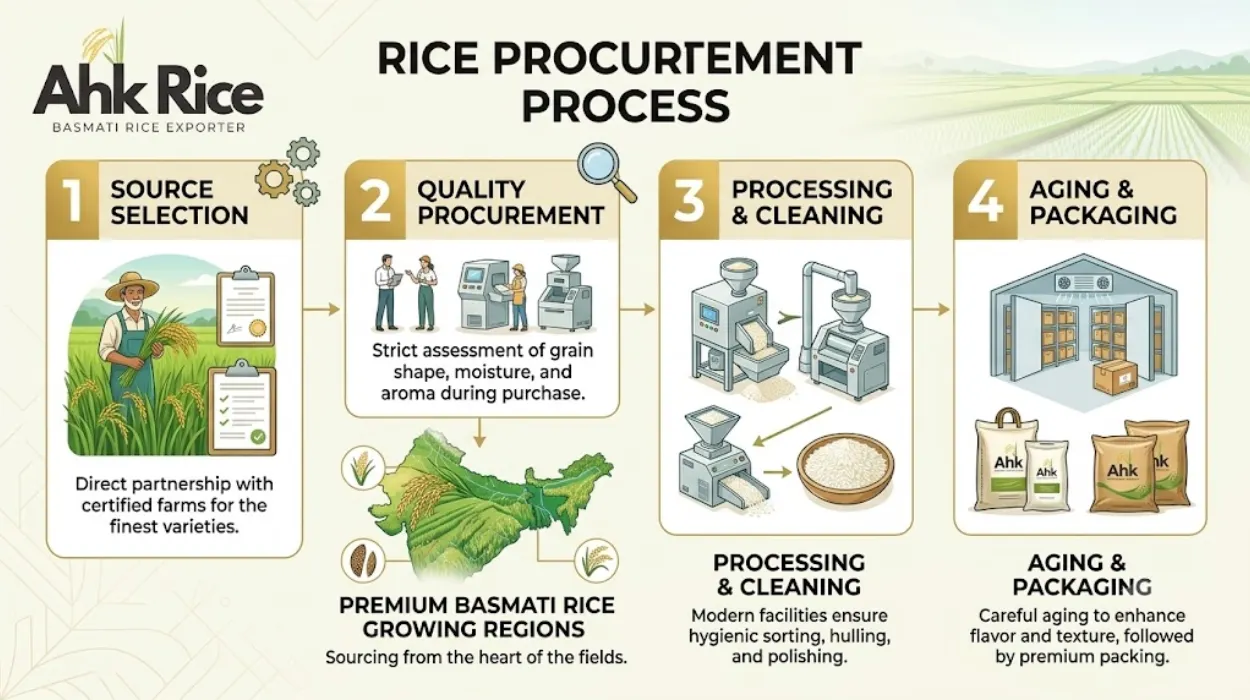
Rice procurement involves more than selecting a supplier. Buyers must evaluate product quality, regulatory compliance, packaging standards, shipping performance, and supply continuity. UK importers operate under strict requirements for food safety, traceability, labeling, and quality verification. Exporters who regularly supply the UK market build systems that reduce operational and financial risks throughout the procurement cycle.
Businesses sourcing Pakistani Basmati rice often study procurement risks before selecting a supplier. Understanding factors such as crop quality, export documentation, and logistics performance helps buyers make informed decisions. A useful starting point is learning how production and quality factors influence rice exports through this guide on understanding crop age, grading standards, and rice quality in export markets.
AHK Rice supplies premium Pakistani Basmati varieties and has developed export procedures designed for demanding international markets. Buyers evaluating suppliers often review experience, certifications, processing controls, and shipment records before making procurement decisions.
What Risks Exist in International Rice Procurement?
Quality inconsistency, shipment delays, documentation errors, customs issues, and supplier reliability problems represent the five largest procurement risks for rice importers worldwide.
Rice procurement starts long before a container leaves Pakistan. Buyers commit capital, plan inventory, negotiate contracts, and schedule distribution activities. Any disruption affects profitability and customer relationships.
Quality inconsistency remains a major concern. One shipment may meet specifications while another arrives with different grain length, moisture levels, or broken percentages. Such variation creates operational problems for wholesalers and retailers.
Documentation errors create another common risk. Missing certificates, inaccurate invoices, or incorrect labeling can delay customs clearance. Delays increase storage costs and disrupt supply chains.
Logistics disruptions also impact procurement performance. Port congestion, vessel schedule changes, and poor shipment planning can extend lead times significantly.
Supplier reliability affects long-term procurement success. Buyers require partners capable of delivering agreed specifications repeatedly across multiple shipments.
Understanding these risks provides the foundation for evaluating solutions and comparing procurement approaches.
What Are the Available Solutions for Reducing Rice Procurement Risks?
Supplier qualification, third-party inspections, contract specifications, export certifications, and market-specific compliance systems provide the most effective risk reduction solutions.
Importers generally use several approaches to manage procurement risk.
Supplier Qualification
Supplier qualification evaluates export experience, processing capabilities, certifications, and shipment history. Buyers verify whether exporters consistently supply target markets.
Third-Party Inspection
Third-party inspection companies independently inspect rice before shipment. Inspection reports confirm specifications and reduce disputes after delivery.
Contract-Based Procurement
Contract procurement defines grain length, moisture content, broken percentage, packaging requirements, and delivery schedules. Detailed specifications improve accountability.
Certification-Based Procurement
Certification systems verify quality and compliance standards.
Key certifications include:
- ISO certifications
- HACCP compliance
- Phytosanitary certification
- Fumigation certification
- Health certification
- Certificate of Origin
Market-Specific Export Systems
Exporters serving regulated markets develop specialized procedures. UK-focused exporters often implement stronger traceability, testing, and documentation controls.
These solutions vary in effectiveness, which makes comparison essential before selecting a procurement strategy.
How Do Different Procurement Approaches Compare?
UK-focused export systems deliver the lowest compliance risk, while price-only sourcing creates the highest operational risk.
Specification Comparison Table
| Attribute | UK Export Experienced Supplier | General Export Supplier |
|---|---|---|
| Documentation Accuracy | Very High | Moderate |
| Regulatory Knowledge | Advanced | Basic |
| Quality Consistency | High | Variable |
| Traceability Systems | Comprehensive | Limited |
| Customs Compliance | Strong | Moderate |
| Packaging Compliance | Market-Specific | Generic |
| Shipment Reliability | High | Variable |
A supplier with UK export experience usually maintains stricter controls. Documentation follows established procedures. Product testing occurs before dispatch. Packaging specifications match importer requirements.
A general exporter may offer competitive pricing but often lacks detailed market knowledge. Buyers then assume additional responsibility for compliance verification.
Documentation performance illustrates the difference clearly. Experienced UK exporters understand required certificates and labeling standards. General exporters often require additional guidance from importers.
This comparison leads naturally to examining regional market preferences and procurement requirements.
How Do Market Requirements Differ Between the UK and Middle East?
UK buyers prioritize compliance and traceability, while Middle Eastern buyers often prioritize grain appearance, cooking performance, and bulk supply efficiency.
Different markets evaluate rice differently.
United Kingdom Market
UK importers generally prioritize:
- Food safety compliance
- Traceability systems
- Consistent specifications
- Retail-ready packaging
- Regulatory documentation
Preferred grades commonly include:
- 1121 Steam Basmati
- 1121 White Basmati
- Super Kernel Basmati
Middle East Market
Middle Eastern buyers often prioritize:
- Long grain appearance
- Aroma retention
- Bulk availability
- Extended storage performance
- Catering suitability
Preferred grades commonly include:
- 1121 Golden Sella
- 1509 Golden Sella
- Super Kernel Sella
Price Comparison Per MT
| Rice Grade | UK Market Preference | Average Export Range (USD/MT) |
|---|---|---|
| 1121 White | High | 1,050–1,350 |
| 1121 Steam | High | 1,000–1,300 |
| Super Kernel | Medium | 900–1,200 |
| 1121 Golden Sella | Medium | 950–1,250 |
Prices vary according to crop year, processing level, destination, and freight conditions.
Shelf Life Comparison
| Rice Type | Typical Shelf Life |
|---|---|
| White Basmati | 12–18 months |
| Steam Basmati | 18–24 months |
| Golden Sella Basmati | 24 months+ |
Golden Sella lasts longer than White Rice. In high-temperature storage environments, Golden Sella maintains quality for longer periods. For catering buyers holding inventory for extended periods, Golden Sella often provides better storage performance.
Market differences influence procurement strategy selection, making buyer requirements the next decision factor.
Which Procurement Method Works Best for Different Cases?
The best procurement method depends on buyer size, compliance requirements, inventory strategy, and destination market regulations.
Large Importers
Large importers benefit from long-term supplier agreements. These arrangements improve planning and stabilize quality expectations.
Retail Distributors
Retail distributors require traceability and packaging compliance. UK export experience becomes particularly valuable in this category.
Foodservice Buyers
Foodservice operators prioritize consistency and supply continuity. Multi-shipment procurement agreements reduce operational disruptions.
Ethnic Food Wholesalers
Ethnic wholesalers often focus on authentic Basmati varieties and stable product specifications. Experienced exporters simplify replenishment planning.
Private Label Buyers
Private label buyers require packaging customization and labeling accuracy. Market-specific export experience significantly reduces execution risk.
Different procurement methods offer advantages and limitations that buyers should evaluate carefully.
What Are the Pros and Cons of Working With UK-Experienced Rice Exporters?
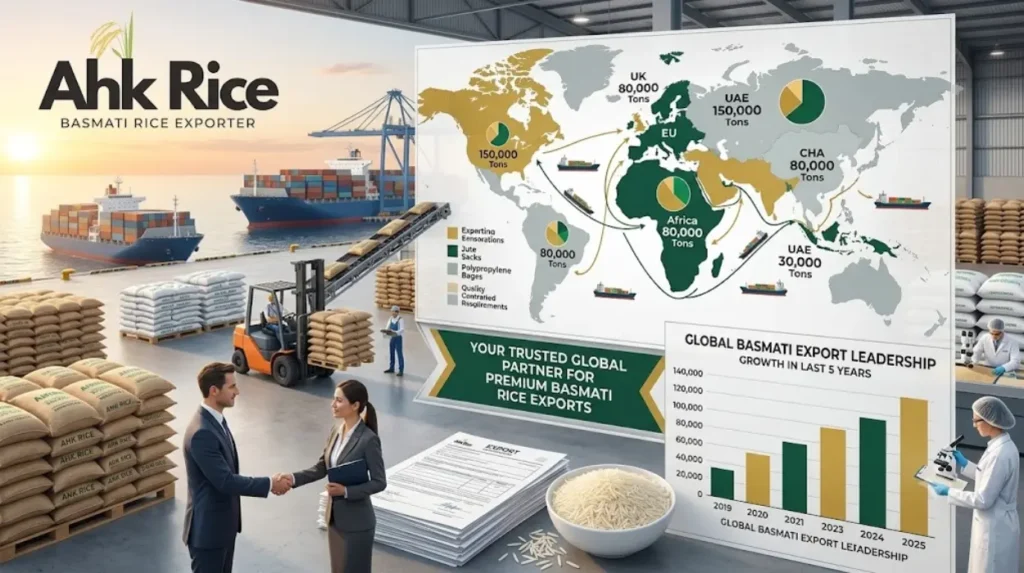
Higher compliance performance and lower procurement risk represent the primary advantages, while slightly higher operational costs may be the main trade-off.
Advantages
- Strong documentation systems
- Better regulatory understanding
- Consistent quality controls
- Lower customs clearance risk
- Better shipment predictability
Example: A UK-focused exporter usually verifies labeling requirements before production. This process reduces relabeling costs after arrival.
Example: Experienced exporters often inspect rice multiple times during processing. Multiple inspections improve specification consistency.
Limitations
- Additional compliance processes
- More extensive documentation requirements
- Higher operational standards
Example: Additional testing increases preparation time before shipment. However, testing reduces rejection risk after arrival.
The benefits generally outweigh the costs because procurement disruptions create larger financial consequences than preventive compliance measures.
Understanding advantages and limitations helps buyers evaluate final decision criteria.
What Decision Factors Should Buyers Evaluate Before Selecting a Supplier?
Export experience, quality systems, certifications, logistics performance, and market specialization should guide supplier selection decisions.
Procurement Decision Framework
| Decision Factor | Low Priority Buyer | High Priority Buyer |
|---|---|---|
| Price | Important | Moderate |
| Compliance | Moderate | Critical |
| Traceability | Moderate | Critical |
| Shipment Reliability | Important | Critical |
| Market Experience | Important | Critical |
Buyers should assess suppliers using measurable criteria.
Export history demonstrates operational capability. Market specialization indicates familiarity with destination requirements.
Quality management systems provide consistency. Certifications verify structured processes.
Logistics performance affects inventory planning. Shipment reliability often determines long-term procurement success more than marginal price differences.
Documentation accuracy remains essential because customs delays increase costs throughout the supply chain.
These decision factors help buyers identify suppliers capable of supporting sustainable procurement programs.
Conclusion
UK export experience reduces procurement risk through stronger compliance systems, better documentation management, higher quality consistency, and improved logistics performance. Buyers sourcing Pakistani Basmati rice benefit from suppliers that understand destination-market requirements and maintain structured export procedures.
Procurement decisions should balance price, quality, compliance, reliability, and long-term supply security. Exporters with established UK market experience generally provide stronger risk management across every stage of the procurement process, from processing and inspection to shipment and delivery.
FAQs
How does UK export experience improve rice quality consistency?
UK-focused exporters typically implement stricter inspection and testing procedures. Multiple quality checks help maintain consistent grain length, moisture content, and broken percentage across shipments.
Why are documentation errors a major procurement risk?
Documentation errors can delay customs clearance, increase storage costs, and disrupt inventory planning. Accurate export documents support faster import processing.
Which Pakistani Basmati grades are most popular in the UK?
1121 White Basmati, 1121 Steam Basmati, and Super Kernel Basmati are commonly imported because of their aroma, grain length, and cooking performance.
Does export experience affect shipping reliability?
Yes. Experienced exporters usually maintain established freight relationships and shipment planning procedures, which improve delivery predictability.
What certifications should rice buyers verify?
Buyers should verify certifications such as HACCP, ISO standards, phytosanitary certificates, fumigation certificates, health certificates, and Certificates of Origin.
How can buyers reduce procurement risks immediately?
Buyers should evaluate supplier export history, request inspection reports, verify certifications, review shipment records, and establish detailed product specifications before placing orders.