Rice Import Demand Grows Across Middle Eastern Markets
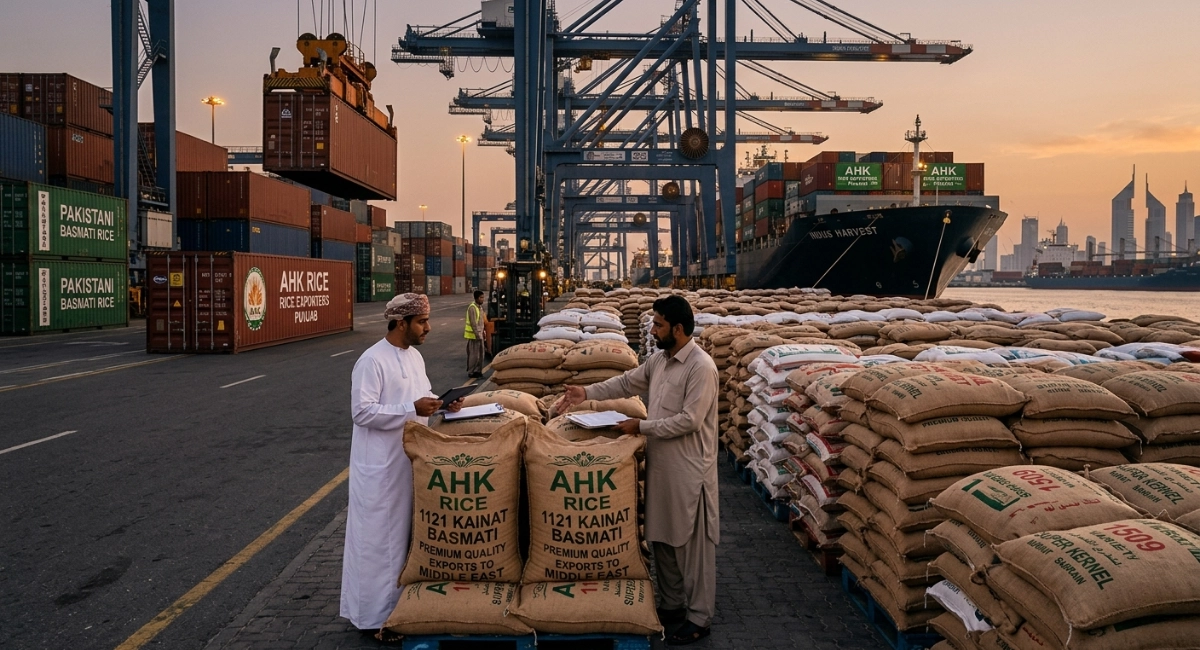
Middle Eastern nations face severe geographic limitations for cereal crop cultivation due to low annual rainfall, which averages less than 100 millimeters in regions like Riyadh. Consequently, countries across the Gulf Cooperation Council import 90 percent of their grain requirements to feed a growing population. Long-grain aromatic rice, specifically Basmati rice from the Punjab region of Pakistan, serves as the primary dietary staple across these markets. Understanding the botanical profile, regional cultivation parameters, industrial processing methodologies, and international trade compliance structures reveals why this specific grain dominates Middle Eastern food security strategies.
What Is Basmati Rice and What Are Its Defining Characteristics?
Basmati rice is a distinct variety of long-grain aromatic rice characterized by a length-to-width ratio greater than 3.5, a high amylose content of 22 percent, and a high concentration of the aroma compound 2-acetyl-1-pyrroline.
Botanical Classification and Unique Attributes
Basmati belongs to the Oryza sativa species. It possesses genetic traits that cause the grain to elongate to twice its original length during cooking without increasing its width. This unique elongation trait prevents the grains from sticking together, resulting in a distinctively fluffy texture.
The presence of the volatile compound 2-acetyl-1-pyrroline gives the grain its characteristic nutty fragrance. This compound occurs naturally in Basmati at levels twelve times higher than in standard non-aromatic rice varieties. The high amylose content ensures a low glycemic index, meaning the rice digests slowly and provides sustained energy.
Definitive Grain Dimensions
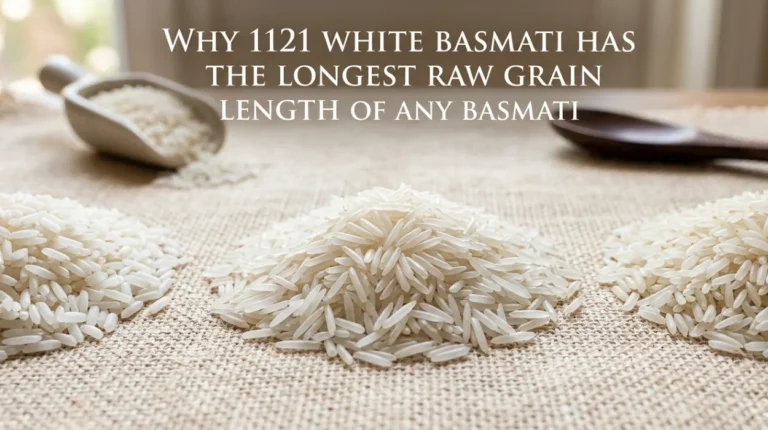
The international standard for pure Basmati dictates specific physical metrics before cooking. The average pre-cooked grain length must measure a minimum of 6.61 millimeters. Varieties like 1121 Kainat Basmati set benchmarks with an average uncooked length of 8.35 millimeters.
Super Kernel Basmati averages 7.20 millimeters in its raw state. The newer 1509 Basmati variety yields an uncooked grain length of 8.20 millimeters. These dimensions directly influence the market value and classification of the export shipments.
Where Is Basmati Rice Grown and Cultivated Globally?
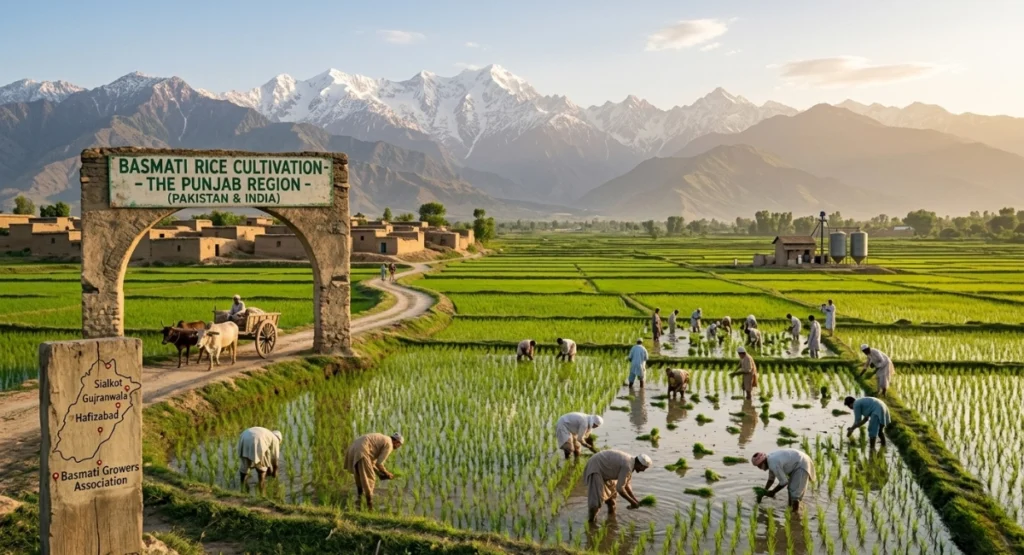
Basmati rice grows exclusively in the fertile, alluvial soils of the Punjab region, split between Pakistan and India, where specific climate conditions like high humidity and mineral-rich glacier water feed the Indus River basin.
Geographic Boundaries of Cultivation
The cultivation of authentic Basmati is protected by Geographical Indication status. This legal designation restricts the use of the term “Basmati” to rice grown within defined districts of the Punjab plain. In Pakistan, this includes prime agricultural zones such as Gujranwala, Sialkot, Sheikhupura, Nankana Sahib, and Hafizabad.
These districts feature deep, fine-textured alluvial soils deposited by the Indus River system. The soil contains high concentrations of potassium and iron, which feed the rice stalk and enhance the grain’s nutrient profile.
Climate and Hydrological Requirements
The Punjab region provides a specific microclimate necessary for the synthesis of the aromatic compound 2-acetyl-1-pyrroline. The crop requires daytime temperatures between 30 degrees Celsius and 35 degrees Celsius during the vegetative phase.
During the critical ripening phase, the temperature must drop to a range of 20 degrees Celsius to 25 degrees Celsius, accompanied by cool night winds. The fields rely on the canal irrigation system fed by melting glaciers from the Himalayan mountain range. This water carries mineral sediments that act as natural fertilizers for the paddy fields.
How Does the End-to-End Rice Processing Flow Work Step by Step?
The end-to-end processing flow transforms raw paddy into export-ready polished grains through six successive industrial steps: cleaning, de-husking, milling, polishing, color sorting, and grading under controlled temperature environments.
Step 1: Pre-Cleaning and Moisture Standardization
Raw paddy arrives from the farm with a moisture level of roughly 22 percent. Industrial pre-cleaners remove coarse impurities, such as straw, stones, and weed seeds. The cleaned paddy passes through mechanical continuous-flow dryers. These dryers reduce the internal moisture content down to a stable 12 percent to 14 percent over a 24-hour cycle. This precise moisture level prevents the grain from cracking during subsequent mechanical milling stages.
Step 2: De-Husking and Separation
The dried paddy enters rubber-roll husking machines. These machines apply pneumatic pressure to strip the outer protective hull from the grain. The process yields brown rice and separated husks. The mixture passes through a paddy separator, which utilizes gravity and friction plates to separate un-hulled paddy from brown rice. The un-hulled paddy returns to the husker, while the brown rice proceeds to the whitening stage.
Step 3: Mechanical Milling and Whitening
The brown rice passes through abrasive and friction milling machines. These units remove the outer bran layer and the germ through gentle abrasion. This removal transforms the brown rice into white rice. The milling process must be strictly monitored to minimize grain breakage. The removed rice bran undergoes oil extraction processes elsewhere, while the white kernel advances to the polishing phase.
Step 4: Friction Polishing and Mist Glazing
The white rice enters mist polishers where a microscopic film of water mist injects into the polishing chamber. Rotating rollers friction-polish the grains, removing any remaining loose bran particles. This step gives the grain a translucent, glassy appearance. For specific markets, the rice undergoes a dual-polishing process to maximize the aesthetic shine required by premium consumer brands.
Step 5: Optical Color Sorting
The polished rice flows down high-speed vertical chutes into optical color sorters. High-resolution charge-coupled device cameras scan the individual grains at a rate of 10,000 grains per second. The sensors detect subtle color variations caused by heat damage, immature harvesting, or fungal infections. Computer-controlled air valves eject discolored grains, such as yellow, chalky, or speckled red kernels, from the main product stream.
Step 6: Sifting, Length Grading, and Packaging
The sorted rice enters rotary sifters and length graders, known as indented cylinders. These cylinders separate broken grains from whole grains based on precise length metrics. Broken grains go into separate silos for pet food or flour processing. The whole grains proceed to automatic weighing and packaging lines. The rice is packed into designated materials, such as non-woven polypropylene bags, jute sacks, or multi-layer laminate pouches, before container loading.
What Component Parts and Varieties Comport with Basmati Standards?
The primary components of the export-ready Basmati category consist of specific genetic cultivars, including 1121 Kainat, Super Kernel, and 1509, alongside defined physical parts like whole kernels, head rice, and broken fragments.
Cultivar Classifications
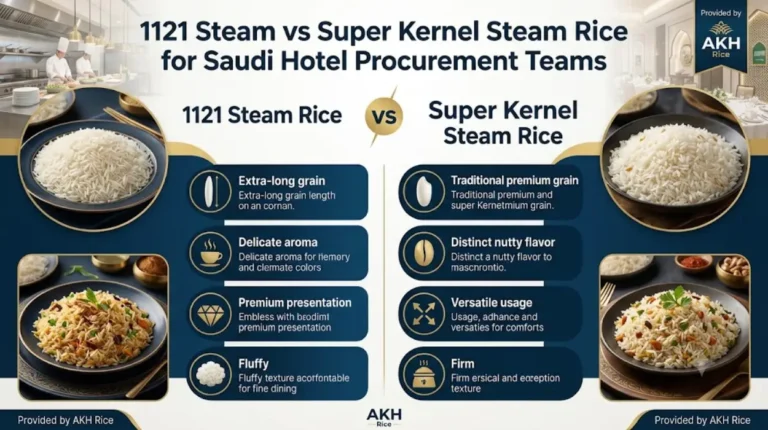
Market demand centers around three main varieties. The 1121 Kainat variety represents the premium tier, valued for its extreme elongation properties. Super Kernel Basmati remains the traditional standard, offering intense aroma profiles and excellent cooking texture. The 1509 variety provides a higher crop yield per acre and features a broader grain shape, making it an economical option for mass-catering establishments.
Physical Composition Ratios
An export shipment contains distinct physical fractions that dictate its commercial grade. Head rice constitutes the primary component, defined as grains that retain 75 percent or more of their original average length. Large brokens measure between 50 percent and 75 percent of the grain length. Small brokens measure less than 50 percent of the length. Premium export contracts restrict the allowable broken percentage to a maximum threshold of 2 percent.
What Are the Key Benefits of Importing Pakistani Basmati Rice?
The benefits of importing Pakistani Basmati rice include excellent grain elongation, high nutritional value, a long shelf life when aged properly, and structural cost advantages driven by regional production efficiencies.
Culinary and Cooking Superiority
Pakistani Basmati provides exceptional volume expansion during preparation. A single cup of raw 1121 Basmati yields four cups of cooked rice. The low sticky factor ensures that individual grains remain separate and intact during large-scale commercial cooking processes, such as the preparation of traditional dishes like Biryani, Mandi, and Kabsa. This structural integrity prevents the rice from turning into mush under holding lights in restaurant buffets.
Nutritional Integrity and Structural Value
Basmati offers superior health metrics compared to standard white long-grain rice varieties. It is completely gluten-free and contains zero cholesterol. The grain contains essential nutrients, including thiamine, niacin, and iron. The slow-release carbohydrates help maintain stable blood glucose levels, making it a preferred option for health-conscious consumer segments across urban centers like Dubai and Doha.
Storage Stability and Aging Advantages
Properly processed Basmati undergoes an aging process in ventilated warehouses for a period of nine months to twelve months. This aging decreases the moisture content further and alters the starch structure. The modification strengthens the cell walls of the grain, preventing starch leaching during boiling. Aged rice exhibits a longer shelf life, resisting insect infestations and rancidity over extended shipping and storage periods.
How Is Basmati Rice Utilized Across Different Industry Use Cases?
Basmati rice serves three distinct industry use cases: premium consumer retail packaging, large-scale commercial catering, and strategic national food security reserves managed by government procurement agencies.
Premium Consumer Retail Brands
High-grade 1121 and Super Kernel varieties fill the shelves of major supermarket chains across the globe. Retailers pack these grains in small, consumer-friendly units, such as 1-kilogram, 2-kilogram, and 5-kilogram handle bags. These products target upper-middle-class households that demand high aroma profiles and long grain lengths for daily domestic consumption. The packaging often features window cut-outs to showcase the clean, optical-sorted grains.
Commercial Foodservice and Catering
The hospitality and catering sector utilizes Basmati as its foundational carbohydrate base. Catering companies operating in industrial zones, oil fields, and corporate offices buy Basmati in bulk units, such as 20-kilogram and 40-kilogram polypropylene sacks. They select varieties like 1509 or specific head-rice blends that balance price with volume yield. This ensures profitability while meeting the cultural dietary preferences of South Asian and Middle Eastern workforces.
Government Strategic Reserves
Middle Eastern food ministries engage in bulk state-tendering processes to maintain national buffer stocks. These reserves protect local populations against maritime supply chain disruptions, geopolitical conflicts, and global food inflation. Government buyers procure thousands of metric tons of well-milled Basmati directly from verified processing plants. They store these volumes in climate-controlled silos for up to 24 months, rotating stocks systematically to ensure freshness.
What Are Common Misconceptions and Problems in the Rice Trade?
Common misconceptions in the rice trade involve confusing grain length with authentic Basmati genetics, while actual problems include moisture-driven fungal growth, insect infestations, and intentional adulteration with non-aromatic lookalikes.
The Misconception of Length vs. Genetics
A prevalent mistake among novice importers is assuming that any exceptionally long grain qualifies as Basmati rice. Non-Basmati hybrid long grains, such as certain varieties grown in East Asia, can reach lengths of 7.0 millimeters through genetic modification or specific fertilization schedules. However, these varieties lack the mandatory amylose structure and the 2-acetyl-1-pyrroline compound. They stick together when boiled and lack the characteristic fragrance, failing to meet consumer expectations in the Middle East.
Adulteration with Hybrid Lookalikes
The significant price premium commanded by authentic Basmati incentives fraudulent practices in the supply chain. Unscrupulous traders sometimes blend genuine 1121 Basmati with cheaper, non-aromatic long-grain varieties like PK-386 or coarse white rice. This adulteration compromises the cooking quality of the entire batch. Importers protect themselves by demanding DNA map testing reports, which verify the genetic purity of the shipment before vessel departure.
Logistics Damage from Moisture and Insects
Improper container management during cross-border sea freight leads to severe cargo degradation. If rice is packed with an internal moisture level exceeding 14 percent, condensation forms on the inside of the shipping container during transit through hot tropical waters. This condensation causes container sweat, leading to mold growth, grain discoloration, and cake formation. Furthermore, inadequate fumigation using phosphine gas allows the multiplication of weevils, rendering the shipment unfit for human consumption upon arrival.
Which International Markets Import This Product Most Frequently?
The primary import markets for Basmati rice are concentrated within the Middle East, led by Saudi Arabia, the United Arab Emirates, Oman, Qatar, Kuwait, and Bahrain, alongside major European and North American buyers.
| Importing Nation | Primary Variety Choice | Preferred Packaging Type |
| Saudi Arabia | 1121 Kainat Parboiled | 40 kg Jute Sacks |
| United Arab Emirates | Super Kernel White | 10 kg Non-Woven PP Bags |
| Oman | 1121 Steam Basmati | 20 kg Laminate Pouches |
| Qatar | 1509 / 1121 Blends | 25 kg Polypropylene Bags |
The Kingdom of Saudi Arabia
Saudi Arabia stands as the largest global consumer of premium Pakistani Basmati rice. The market displays a strong preference for parboiled, or sella, rice, which undergoes a hydrothermal treatment before milling. This process gelatinizes the starch inside the grain, making it virtually impossible to overcook or break during the preparation of mass-scale festive meals. The Kingdom imports hundreds of thousands of metric tons annually through ports like Jeddah Islamic Port and King Abdulaziz Port in Dammam.
The United Arab Emirates and Gulf Neighbors
The United Arab Emirates functions as both a massive consumer market and a major re-export hub for the broader region. Dubai handles large volumes of white and steam-processed Basmati through Jebel Ali Port. From here, traders redistribute the cargo to smaller regional markets like Oman, Bahrain, and Kuwait. The demographic profile of the UAE, which includes millions of South Asian expatriates and Arab nationals, drives a steady, year-round demand for diverse grades of Basmati.
What Certifications and Regulatory Compliances Apply to Exports?
Exporting Basmati requires strict compliance with international food safety standards, including ISO 22000, HACCP, Halal certification, Phytosanitary inspection certificates, and specific regional import authority regulations.
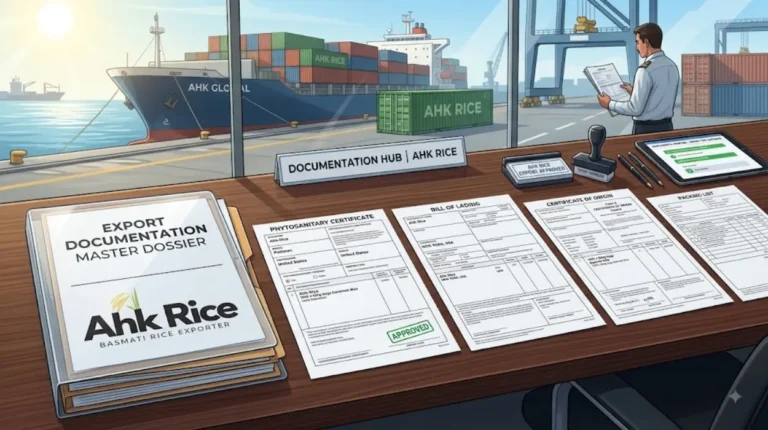
Regulatory Compliance Directive: Every food shipment entering the GCC customs zone must possess a valid Phytosanitary Certificate issued by the originating nation’s Ministry of Agriculture to verify the absence of quarantine pests.