Which Rice Varieties Pakistani Exporters Ship to Ivory Coast in 2026
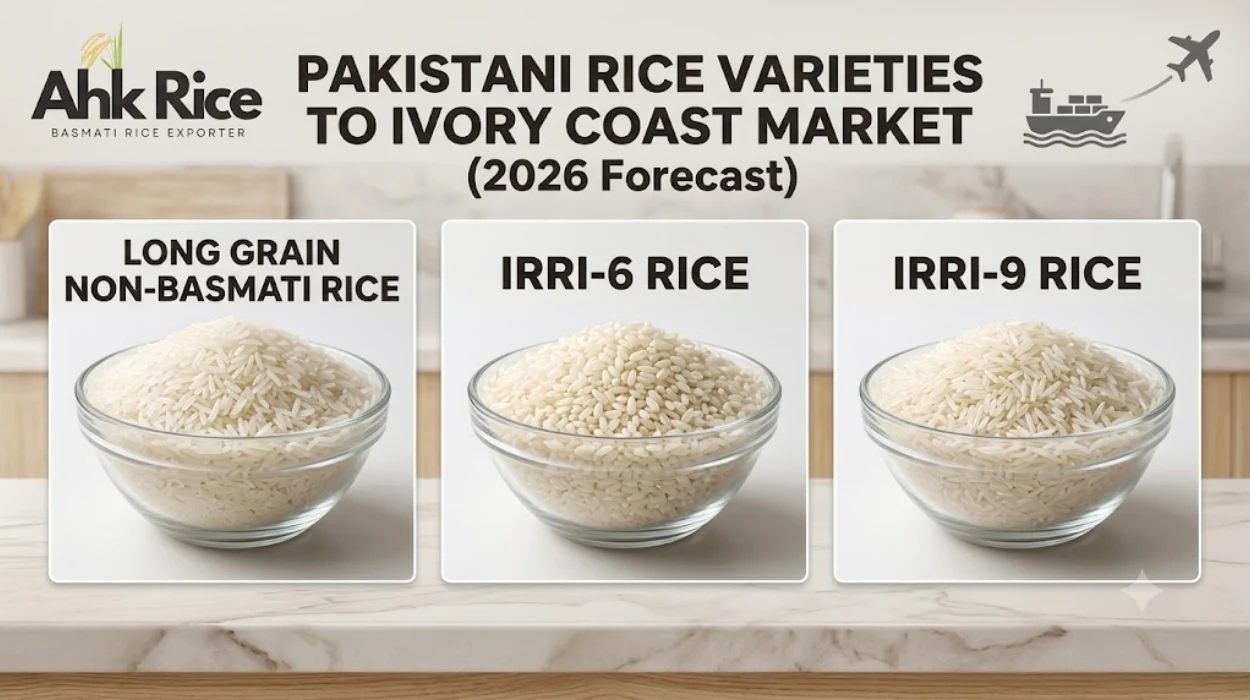
Ivory Coast imports several Pakistani rice varieties in 2026, including long grain white rice, IRRI rice, 1121 Basmati rice, Super Kernel Basmati rice, and broken rice grades. These varieties serve different consumer segments, from household consumption to food processing and wholesale distribution.
Rice is one of the most consumed staple foods in Ivory Coast. Domestic production covers only part of national demand. Importers therefore source large volumes from major rice-exporting countries, including Pakistan. Pakistani exporters supply both premium aromatic rice and economical non-aromatic rice categories.
Understanding which rice varieties move from Pakistan to Ivory Coast requires examining production regions, processing methods, grading systems, export specifications, and end-use applications.
What Rice Varieties Do Pakistani Exporters Ship to Ivory Coast in 2026?
Pakistani exporters ship five major rice categories to Ivory Coast: 1121 Basmati rice, Super Kernel Basmati rice, IRRI-6 rice, long grain white rice, and broken rice grades. Each category serves different price levels, consumer preferences, and distribution channels.
Pakistan produces both aromatic and non-aromatic rice varieties. The export portfolio shipped to Ivory Coast reflects demand across retail, wholesale, food service, and industrial sectors.
Basmati Rice Varieties
Basmati rice is a long-grain aromatic rice grown primarily in Punjab.
Common exported Basmati varieties include:
- 1121 Steam Basmati Rice
- 1121 Sella Basmati Rice
- 1121 White Basmati Rice
- Super Kernel Basmati Rice
- Super Kernel Sella Rice
These varieties feature grain lengths ranging from 7.4 mm to 8.5 mm before cooking. After cooking, grain elongation often exceeds 14 mm.
Non-Basmati Rice Varieties
Non-Basmati rice represents a larger volume segment.
Common exports include:
- IRRI-6 White Rice
- IRRI-6 Parboiled Rice
- Long Grain White Rice
- Broken Rice 5%
- Broken Rice 25%
- 100% Broken Rice
These varieties focus on affordability, high availability, and consistent cooking performance.
Where Are These Rice Varieties Grown in Pakistan?
Most rice exported to Ivory Coast is grown in Punjab and Sindh provinces. Punjab produces aromatic Basmati rice, while Sindh specializes in IRRI and long-grain non-Basmati varieties intended for large-volume export markets.
Pakistan’s rice-growing belt covers millions of hectares.
Punjab Rice Production Areas
Punjab is the center of Basmati cultivation.
Major districts include:
- Gujranwala
- Hafizabad
- Sheikhupura
- Narowal
- Sialkot
- Mandi Bahauddin
These regions benefit from fertile alluvial soil and irrigation systems connected to the Indus River network.
Sindh Rice Production Areas
Sindh focuses heavily on non-Basmati production.
Major rice-producing districts include:
- Larkana
- Jacobabad
- Dadu
- Shikarpur
- Badin
Large-scale cultivation supports export programs targeting African and Middle Eastern markets.
How Are Rice Varieties Processed Before Export?
Export rice passes through harvesting, drying, cleaning, dehusking, polishing, grading, color sorting, packaging, and container loading. Each stage removes defects and ensures compliance with international quality specifications.
Rice processing transforms harvested paddy into export-ready products.
Harvesting and Drying
Farmers harvest rice when grain moisture reaches suitable levels.
Freshly harvested paddy is dried to approximately 12% to 14% moisture. Controlled drying reduces storage risks and preserves grain quality.
Cleaning and Dehusking
Processing facilities remove:
- Dust
- Stones
- Straw
- Foreign materials
Machines then remove the outer husk layer.
The result is brown rice.
Whitening and Polishing
Polishing machines remove bran layers.
This process produces white rice with a uniform appearance suitable for export markets.
Grading and Sorting
Modern processing plants use:
- Length graders
- Thickness graders
- Color sorters
- Metal detectors
These systems separate broken grains, damaged kernels, and discolored rice.
Packaging and Containerization
Rice is packed in:
- 1 kg bags
- 5 kg bags
- 10 kg bags
- 25 kg bags
- 50 kg bags
Containers are sealed before shipment through Pakistani ports.
What Grades of Rice Are Available for Ivory Coast Importers?
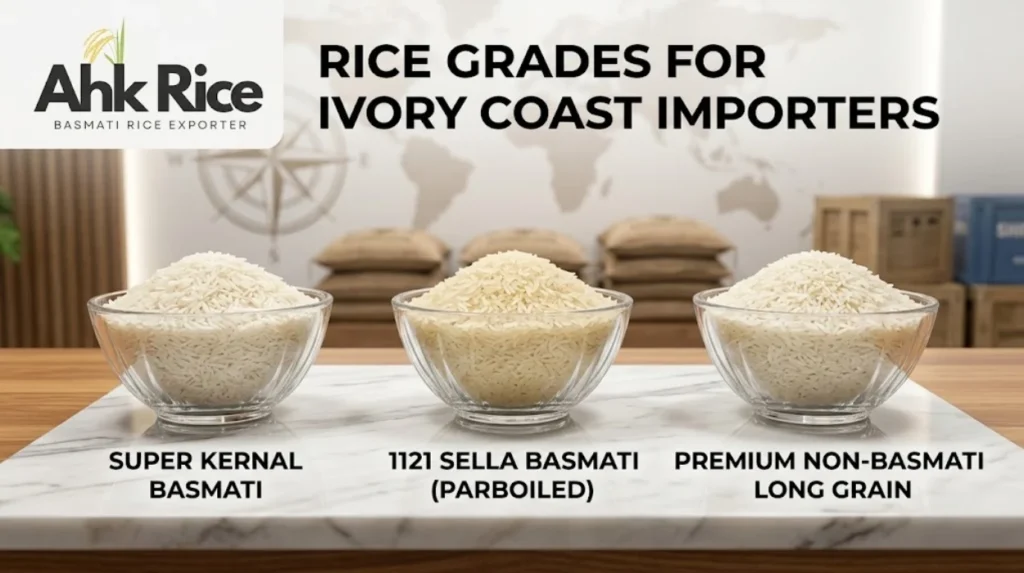
Rice grades differ according to grain length, broken percentage, processing method, and quality specifications. Export contracts define exact grade requirements to maintain consistency across shipments.
Rice grading creates standardized products.
Basmati Grades
Basmati categories include:
- White Rice
- Steam Rice
- Sella Rice
- Golden Sella Rice
Sella rice undergoes parboiling before milling. This process strengthens grain structure and reduces breakage.
Non-Basmati Grades
Common grades include:
- 5% Broken Rice
- 10% Broken Rice
- 15% Broken Rice
- 25% Broken Rice
- 100% Broken Rice
The percentage indicates the proportion of broken kernels in the shipment.
Quality Specifications
Typical specifications include:
| Parameter | Range |
|---|---|
| Moisture | 12%–14% |
| Purity | Up to 95%–100% |
| Broken Percentage | 5%–100% |
| Grain Length | 6.0–8.5 mm |
| Foreign Matter | Minimal |
Importers select specifications based on target consumer segments.
Why Does Ivory Coast Import Rice from Pakistan?
Pakistan supplies diverse rice varieties, large production volumes, competitive pricing, and established export infrastructure. These factors support continuous rice availability for Ivory Coast’s growing population and food distribution networks.
Rice consumption remains high throughout Ivory Coast.
Importers require reliable supply sources that can fulfill container and bulk orders.
Pakistan contributes by offering:
- Multiple rice categories
- Year-round export capability
- Standardized quality systems
- Large milling capacity
- International shipping access
These factors support stable trade relationships between exporters and importers.
What Are the Main Uses of Pakistani Rice in Ivory Coast?
Pakistani rice serves household consumption, restaurants, catering operations, food manufacturing, and wholesale distribution. Different varieties meet different cooking styles, budget requirements, and consumer preferences.
Rice usage varies according to product type.
Household Consumption
Families commonly purchase:
- Long grain white rice
- IRRI rice
- Broken rice
These products provide affordable daily nutrition.
Food Service Sector
Restaurants often select:
- 1121 Basmati Rice
- Super Kernel Rice
Long grain expansion and aroma support premium meal preparation.
Food Processing Industry
Industrial users frequently utilize:
- Broken rice
- Lower-grade long grain rice
Applications include:
- Rice flour
- Rice snacks
- Processed foods
What Certifications Apply to Pakistani Rice Exports?
Rice exporters follow quality management, food safety, phytosanitary, and inspection requirements. Certifications verify compliance with international trade regulations and importer specifications.
Export documentation supports product traceability and market access.
Common certifications include:
Food Safety Certifications
- HACCP
- ISO 22000
- Food Safety Management Systems
These systems document production controls and risk management procedures.
Export Compliance Documents
Export shipments commonly include:
- Phytosanitary Certificate
- Certificate of Origin
- Fumigation Certificate
- Packing List
- Commercial Invoice
Government agencies and inspection authorities verify these documents before shipment.
Quality Inspection Reports
Independent inspection organizations verify:
- Moisture levels
- Broken percentage
- Purity
- Grain length
Inspection reports reduce disputes between buyers and sellers.
What Benefits Do Different Pakistani Rice Varieties Offer?
Different rice varieties provide distinct advantages in aroma, grain length, cooking performance, affordability, and industrial suitability. Importers select varieties according to customer demand and market positioning.
Each variety serves a specific purpose.
Benefits of 1121 Basmati Rice
Key advantages include:
- Extra-long grain length
- Strong grain elongation
- Distinct aroma
- Premium market positioning
Benefits of Super Kernel Basmati Rice
Key advantages include:
- Traditional Basmati characteristics
- Consistent cooking quality
- Good appearance
- Strong export recognition
Benefits of IRRI Rice
Key advantages include:
- Competitive pricing
- High availability
- Stable quality
- Broad consumer acceptance
Benefits of Broken Rice
Key advantages include:
- Lower cost
- Industrial usability
- Large-volume supply
What Misconceptions Exist About Rice Exports to Ivory Coast?
Many buyers assume Ivory Coast imports only low-cost rice from Pakistan. In reality, the market imports both premium Basmati and economical non-Basmati varieties depending on consumer requirements and distribution channels.
Several misconceptions influence purchasing decisions.
Misconception 1: Only Basmati Rice Is Exported
Pakistan exports both Basmati and non-Basmati rice.
Non-Basmati varieties often account for larger shipment volumes.
Misconception 2: All Rice Grades Are Identical
Each grade differs in:
- Grain length
- Processing method
- Broken percentage
- Appearance
- End-use suitability
These differences affect pricing and consumer preference.
Misconception 3: Rice Quality Depends Only on Variety
Quality depends on multiple factors:
- Cultivation practices
- Harvest timing
- Processing technology
- Storage conditions
- Packaging standards
A high-quality processing system improves the final export product.
How Does the Pakistan–Ivory Coast Rice Trade Function in 2026?
The trade operates through exporters, inspection agencies, shipping companies, customs authorities, and importers. Each participant performs a defined role to move rice from Pakistani farms to Ivory Coast distribution networks.
The supply chain begins with cultivation.
Rice moves through:
- Farming
- Procurement
- Milling
- Grading
- Quality inspection
- Packaging
- Export documentation
- Ocean freight
- Customs clearance
- Wholesale distribution
Businesses seeking deeper knowledge about supplier relationships, procurement processes, and partnership development can continue learning through our article discussing how importers build long-term sourcing relationships with Pakistani exporters.
Rice remains a strategically important commodity for Ivory Coast. Pakistani exporters contribute through a diverse portfolio that includes premium Basmati rice, economical IRRI rice, long-grain white rice, and broken rice grades. Understanding the varieties, grades, processing methods, certifications, and use cases provides a complete picture of which rice products move from Pakistan to Ivory Coast in 2026.
Frequently Asked Questions
Which Pakistani rice variety is most commonly exported to Ivory Coast?
IRRI rice and long-grain non-Basmati rice account for significant shipment volumes because they meet affordability requirements and support mass-market consumption.
Does Ivory Coast import Basmati rice from Pakistan?
Yes. Ivory Coast imports 1121 Basmati Rice and Super Kernel Basmati Rice for premium retail and food service segments.
What is the difference between 1121 Basmati and Super Kernel Basmati?
1121 Basmati offers longer grain length and greater elongation after cooking, while Super Kernel Basmati is known for traditional aroma and established market recognition.
What packaging sizes are used for rice exports?
Common export packaging includes 1 kg, 5 kg, 10 kg, 25 kg, and 50 kg bags depending on importer requirements.
Which Pakistani province produces most Basmati rice?
Punjab produces the majority of Pakistan’s Basmati rice, especially in districts such as Gujranwala, Hafizabad, Narowal, and Sheikhupura.
What certifications are commonly required for rice exports?
Export shipments commonly require HACCP compliance, ISO-based food safety systems, phytosanitary certificates, certificates of origin, and inspection reports.