Which Pakistani Basmati Rice Is Best for Traditional Saudi Kabsa?
Pakistani Basmati rice for Saudi Kabsa is a long-grain aromatic rice grown in Punjab plains, known for its elongation, aroma, and fluffy texture after cooking. The best types for Kabsa include 1121 Basmati Sella, Super Kernel Basmati, and 1509 Basmati, selected based on grain length, firmness, and absorption behavior.
Pakistani Basmati rice is a genetically distinct aromatic rice type cultivated in the fertile irrigation belt of Punjab, Pakistan. The crop depends on Himalayan-fed river systems including Chenab, Ravi, and Sutlej. This geography creates high starch uniformity and fragrance compounds such as 2-acetyl-1-pyrroline.
Kabsa, a traditional Saudi Arabian rice dish, demands rice that holds structure under long cooking with meat broth and spices. This requirement eliminates short-grain and low-amylose rice types. Pakistani Basmati varieties match Kabsa because they maintain separation and elongation after hydration.
The three dominant export varieties include 1121 Basmati, Super Kernel Basmati, and 1509 Basmati. Each variety differs in grain length, parboiling response, and cooking absorption rate. Exporters like Pakistan-based AHK Rice process these varieties for Middle Eastern, African, and Southeast Asian markets.
How does Pakistani Basmati rice work in Kabsa cooking?
Pakistani Basmati rice works in Kabsa by absorbing spiced broth while maintaining grain separation through high amylose content and long slender grain structure. Parboiled versions like Sella rice stabilize starch, prevent breakage, and ensure each grain expands lengthwise instead of collapsing during slow cooking.
Kabsa preparation involves slow cooking rice with meat stock, whole spices, dried lime, and oil. The rice must withstand boiling, steaming, and absorption phases without turning sticky. Pakistani Basmati rice contains 20% to 25% amylose content, which prevents excessive gelatinization.
Detailed performance differences between 1121 Golden Sella and Super Kernel Sella rice in Kabsa cooking behavior are explained in this comparison guide on 1121 Golden Sella vs Super Kernel Sella Rice for Kabsa Preparation.
1509 Basmati has shorter maturity time and lighter grain structure. It absorbs liquid faster and produces softer texture. In Kabsa systems requiring quick preparation, 1509 provides efficiency while maintaining aroma integrity.
Processing systems include cleaning, soaking, parboiling (for Sella variants), drying, husking, polishing, and grading. Export-ready rice undergoes color sorting to remove broken grains and ensure uniform cooking performance across international markets.
What are the key components that define Kabsa-ready Basmati rice?
Kabsa-ready Basmati rice is defined by five components: grain length above 7.0 mm, elongation ratio above 1.8x, amylose content between 20–25%, low broken percentage under 5%, and controlled moisture level near 12%. These parameters determine cooking stability in Saudi-style rice preparations.
Grain length directly influences Kabsa presentation. Long grains separate visually after cooking, creating a layered rice structure essential in Saudi cuisine plating traditions. 1121 Basmati reaches the highest raw grain length among Pakistani varieties, often exceeding 8.0 mm.
Elongation ratio determines how much a grain stretches after cooking. Super Kernel Basmati exhibits balanced elongation with uniform thickness. This prevents clumping during high-oil Kabsa cooking methods.
Amylose content regulates stickiness. Higher amylose ensures firmness. This is critical when rice is cooked with lamb, chicken, or beef broth, where fat content interacts with starch. Pakistani Basmati maintains structural integrity under these conditions.
Moisture control at 12% ensures storage stability during export logistics. Pakistan’s rice processing hubs in Punjab use controlled drying systems to maintain consistency for shipments to Saudi Arabia, UAE, and other Gulf Cooperation Council countries.
Color sorting and polishing define export grades. Premium grades remove chalky kernels and broken fractions, ensuring uniform hydration during cooking.
What are the benefits of Pakistani Basmati rice for Kabsa preparation?
Pakistani Basmati rice provides five major benefits for Kabsa: long grain separation, high aroma retention, oil absorption balance, consistent texture under slow cooking, and compatibility with spice-heavy broth systems used in Saudi culinary traditions. These properties ensure restaurant-grade Kabsa output.
The first benefit is grain separation. Each grain remains distinct after cooking, which is a visual requirement in Kabsa plating. This is achieved through natural starch composition and parboiling techniques in Sella rice.
Aroma retention is another advantage. Compounds formed in Punjab-grown Basmati remain stable during boiling. This produces a distinct fragrance that complements Kabsa spices such as cardamom, cinnamon, and cloves.
Oil absorption balance allows rice to integrate with Kabsa fat content without becoming greasy. Super Kernel Basmati performs strongly in this category due to its moderate starch release profile.
Consistency under slow cooking ensures uniform texture from top to bottom of the pot. 1121 Basmati Sella maintains structural integrity even during extended steaming cycles used in traditional Saudi cooking methods.
Export consistency is also a benefit. Processors in Pakistan supply standardized grades to over 15 international markets including Saudi Arabia, UAE, Oman, and Qatar through structured grading systems and quality control protocols.
What are the main use cases of 1121, Super Kernel, and 1509 Basmati in Kabsa?
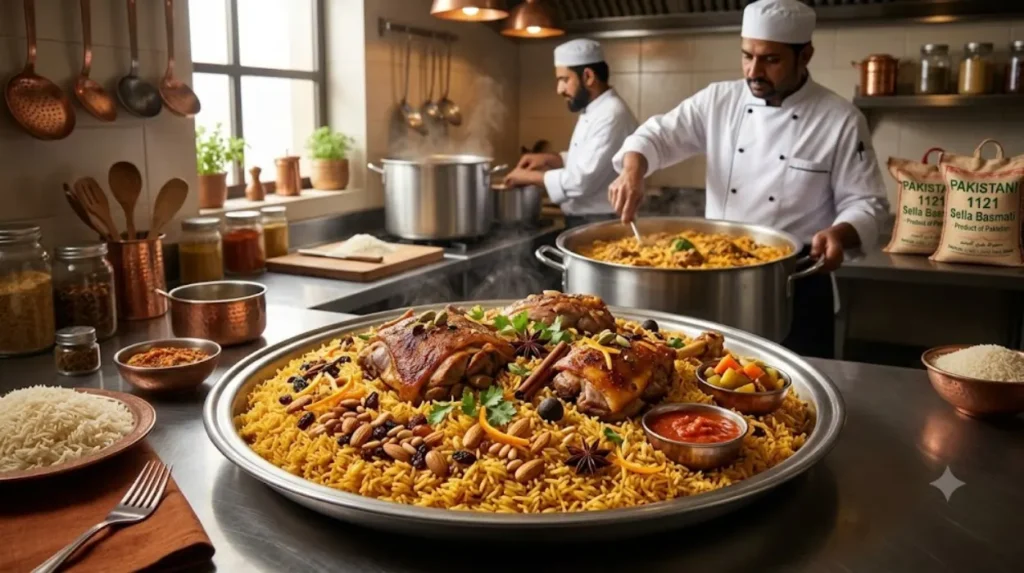
1121 Basmati Sella is used for premium restaurant Kabsa due to maximum grain length and firmness. Super Kernel Basmati is used for balanced aroma and softness. 1509 Basmati is used for fast-cook Kabsa systems requiring shorter preparation time with consistent texture output.
1121 Basmati Sella dominates high-end catering and banquet Kabsa. Its long grain structure remains intact during large-batch cooking. It performs well in lamb Kabsa where cooking duration exceeds 45 minutes.
Super Kernel Basmati is used in household and mid-range restaurant applications. It balances elongation and softness, producing a texture preferred in chicken Kabsa preparations where broth absorption is moderate.
1509 Basmati is widely used in fast food and institutional kitchens. Its shorter cooking time reduces operational cost. It absorbs liquid quickly and reaches full texture in reduced steaming cycles.
Export markets classify these varieties based on customer demand. Saudi Arabia imports large volumes of 1121 Sella for premium dining sectors, while 1509 is used in cost-sensitive supply chains.
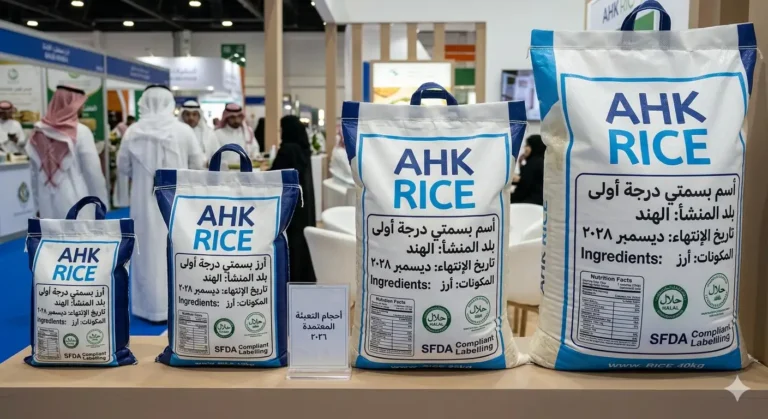
Processing exporters such as AHK Rice in Punjab segment these varieties into customized packaging sizes including 1 kg retail packs, 5 kg household packs, and 25–50 kg bulk sacks for commercial kitchens.
What are the common problems and misconceptions about Kabsa rice selection?
Common problems include selecting low-amylose rice, using non-parboiled varieties for long cooking, confusing aroma with texture performance, and assuming all Basmati types behave identically. These mistakes produce sticky, broken, or uneven Kabsa rice structures in final preparation.
One misconception is that aroma alone defines quality. Aroma contributes to sensory experience, but structural integrity defines Kabsa success. Rice with high fragrance but low amylose collapses under broth cooking.
Another issue is using non-parboiled rice for extended cooking. Raw white rice absorbs water too quickly and breaks under pressure. Sella rice eliminates this issue by stabilizing starch before milling.
Many users assume all Basmati varieties cook the same. In reality, 1121, Super Kernel, and 1509 differ in absorption speed, elongation, and firmness. These differences directly affect Kabsa texture outcomes.
Storage errors also impact performance. Exposure to humidity increases moisture above 14%, leading to uneven cooking. Proper export-grade packaging maintains controlled moisture levels.
Incorrect rice-to-water ratios also create problems. Kabsa requires broth-based hydration control rather than standard boiling ratios. Precision measurement ensures uniform grain expansion across the cooking vessel.
The Saudi import market applies strict grading standards for broken percentage and grain uniformity. Certified exporters from Punjab follow these specifications to maintain compliance with Gulf quality requirements.
Frequently Asked Questions
What type of rice is best for Saudi Kabsa?
Pakistani long grain Basmati rice is best for Saudi Kabsa because it maintains grain separation during slow cooking. 1121 Basmati Sella is widely used for premium Kabsa due to its extra-long grain structure and firm texture after cooking.
Why is 1121 Basmati Sella preferred for Kabsa?
1121 Basmati Sella is preferred because it has the longest grain length among Pakistani varieties and a strong parboiled structure. It absorbs meat broth slowly while keeping grains separate, which is essential for traditional Kabsa presentation and texture.
How is Super Kernel Basmati different from 1121 Basmati?
Super Kernel Basmati has a slightly softer texture and balanced aroma compared to 1121. It cooks faster and produces a more tender grain, making it suitable for household Kabsa and chicken-based recipes where extreme firmness is not required.
Is 1509 Basmati suitable for Kabsa preparation?
1509 Basmati is suitable for quick Kabsa preparation because it cooks faster and absorbs water efficiently. However, it produces a softer grain compared to 1121 and Super Kernel, making it better for fast service kitchens and budget use.
Do Pakistani Basmati rice varieties need soaking before Kabsa cooking?
Soaking Pakistani Basmati rice for 20 to 30 minutes is standard practice. It improves grain elongation, reduces breakage, and ensures even cooking when combined with Kabsa broth and spices.