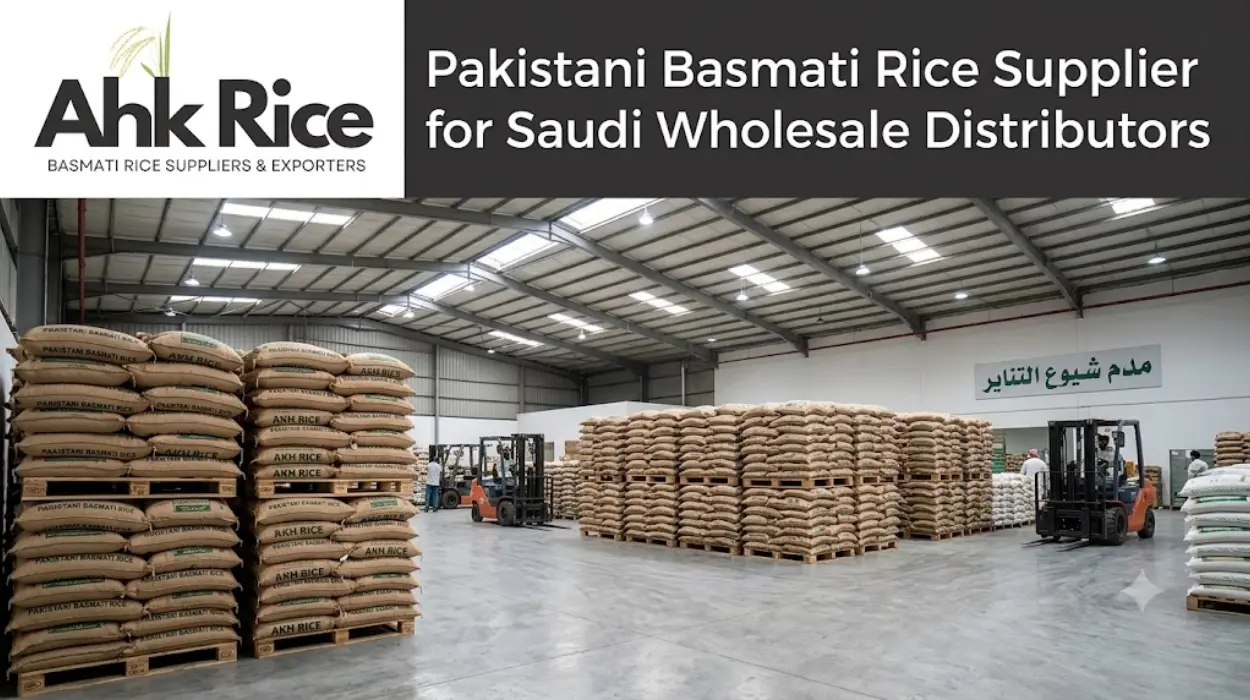
Pakistani Basmati Rice Supplier for Saudi Wholesale Distributors
Saudi wholesale distributors operate in a market where consistency, compliance, and reliable logistics directly affect profitability. Before selecting a supplier, buyers need confidence in grain quality, shipment schedules, specifications, and long-term supply stability. For a deeper understanding of procurement requirements, review the key quality factors Saudi distributors evaluate in Pakistani Basmati rice.
As Saudi Arabia continues to maintain strong demand for premium Pakistani Basmati rice in 2026, distributors are increasingly focused on suppliers that can deliver stable quality, competitive pricing, and predictable lead times. AHK Rice works with wholesale distributors, importers, foodservice suppliers, and retail brands seeking dependable Pakistani Basmati rice exports backed by documented specifications and professional export management.
What is the best solution for Saudi wholesale distributors sourcing Pakistani Basmati rice?
The best solution is partnering with an export-focused supplier that offers verified specifications, consistent milling quality, documented quality control, flexible packaging, dependable shipping schedules, and the capacity to support repeat wholesale orders without disruptions across multiple Saudi distribution channels.
Many Saudi distributors face the same challenge. They can find rice suppliers, but not all suppliers can maintain consistent grain quality across multiple shipments.
A single container that fails to meet agreed specifications can create inventory problems, customer complaints, and unnecessary costs. Wholesale distribution depends on consistency more than one-time pricing advantages.
The most effective solution is selecting a supplier that combines product quality with export execution.
For example, Saudi distributors purchasing Pakistani Basmati rice export services for supermarket chains often require stable grain length, moisture control, purity standards, and reliable packaging performance. These requirements become even more important when shipments are sold under private-label brands.
AHK Rice supports wholesale distributors with structured procurement processes designed for repeat business rather than one-time transactions. This includes specification confirmation, sample approval, production monitoring, quality inspection, container loading supervision, and export documentation.
Distributors evaluating different rice varieties should also compare grain characteristics before placing large-volume orders. The differences explained in our comparison of 1121 and 1509 white rice for wholesale distribution can help buyers match the correct variety to their market segment.
When procurement teams focus on supplier capability instead of only FOB price, they typically reduce supply-chain risk and improve customer retention.
Why choose AHK Rice as a Pakistani Basmati rice supplier for Saudi wholesale distribution?
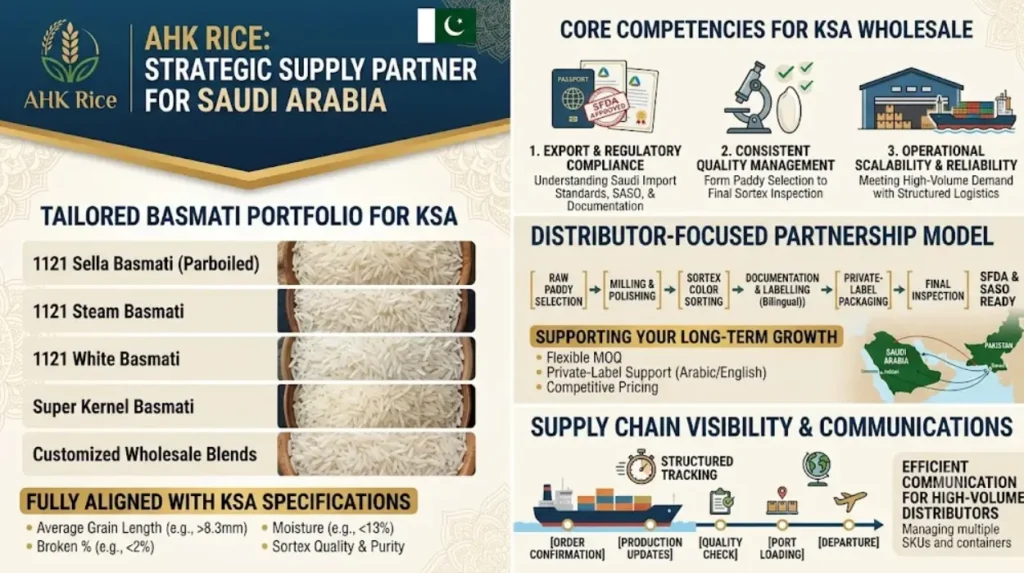
AHK Rice provides wholesale buyers with export experience, documented quality standards, scalable production capacity, customized packaging solutions, transparent communication, and structured shipment management designed specifically for international distributors serving competitive Saudi Arabian rice markets.
Saudi distributors need more than a rice mill.
They need a supplier that understands import requirements, commercial documentation, labeling expectations, and market-specific product positioning.
AHK Rice operates with a distributor-focused approach. The objective is not merely selling containers. The objective is supporting long-term wholesale growth.
Quality management begins with raw paddy selection and continues through processing, grading, sorting, milling, polishing, packaging, and final inspection.
Every shipment can be aligned with agreed specifications, including:
- Grain length requirements
- Broken percentage
- Moisture limits
- Purity standards
- Sortex quality
- Packaging configuration
- Private-label requirements
AHK Rice also supports multiple product categories commonly imported into Saudi Arabia, including:
- 1121 White Basmati Rice
- 1121 Steam Basmati Rice
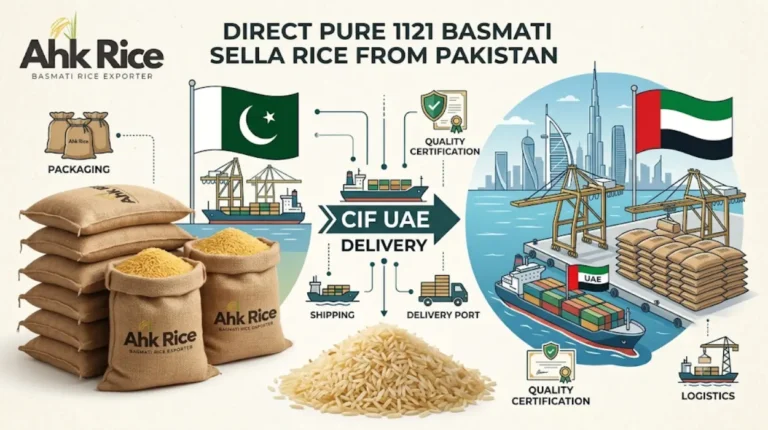
- 1121 Sella Basmati Rice
- 1509 White Rice
- Super Kernel Basmati Rice
- Customized wholesale blends
This flexibility helps distributors serve diverse customer groups ranging from traditional retail stores to hospitality buyers and institutional food suppliers.
Another advantage is communication efficiency. Importers often lose valuable time when suppliers respond slowly during production or shipment stages.
AHK Rice maintains structured order tracking so buyers can follow progress from confirmation through vessel departure.
For Saudi distributors managing multiple SKUs and multiple containers annually, this operational visibility becomes a significant advantage.
What sample process should Saudi wholesale distributors expect before ordering?
Professional exporters follow a structured sampling process that allows distributors to verify grain characteristics, cooking performance, packaging suitability, and market acceptance before committing to container-scale purchases, reducing procurement risk and improving purchasing confidence.
A professional sample process is essential before placing wholesale orders.
In 2026, experienced Saudi buyers rarely commit to container purchases without technical evaluation.
The standard process typically follows these stages:
Stage 1: Specification Discussion
The distributor shares required specifications.
This may include variety, grain length, broken percentage, moisture requirements, packaging preferences, and target market positioning.
Stage 2: Sample Preparation
AHK Rice prepares representative samples according to the requested product category.
Samples typically reflect actual production standards rather than specially selected promotional material.
Stage 3: Courier Dispatch
Samples are shipped internationally through recognized courier services.
Typical sample shipping costs range between USD 50 and USD 150 depending on package weight, destination, and courier selection.
Stage 4: Product Evaluation
The distributor evaluates:
- Grain appearance
- Aroma
- Cooking performance
- Texture
- Elongation
- Packaging suitability
Stage 5: Commercial Confirmation
After approval, final specifications are documented before production begins.
This process minimizes misunderstandings and ensures both parties operate with the same quality expectations.
AHK Rice recommends completing sample approval before negotiating final shipment schedules because specification clarity helps streamline production planning.
What shipping times can Saudi wholesale distributors expect in 2026?
Most Saudi-bound Pakistani Basmati shipments reach major Saudi ports within practical commercial transit windows, although exact delivery times depend on vessel schedules, port operations, customs processing, destination city, and seasonal logistics conditions.
Shipping reliability remains a major purchasing factor.
For Saudi distributors, transit planning directly affects inventory management.
Typical 2026 commercial transit expectations include:
| Destination Market | Estimated Sea Transit Time |
|---|---|
| Jeddah | 10–16 days |
| Dammam | 12–18 days |
| Riyadh (via port and inland logistics) | 15–24 days |
| Medina | 15–24 days |
| Mecca Region Distribution Networks | 15–24 days |
| Eastern Province Distribution Centers | 12–20 days |
These timelines represent common commercial ranges rather than guaranteed delivery commitments.
Several factors influence actual arrival dates:
- Vessel availability
- Port congestion
- Customs clearance
- Religious-season demand spikes
- Documentation accuracy
- Inland transportation scheduling
AHK Rice supports shipment planning by coordinating documentation and export procedures before vessel departure, helping reduce avoidable delays.
For distributors managing promotional campaigns or seasonal inventory, advance procurement planning remains the most effective strategy.
What results can distributors expect from working with AHK Rice?
Distributors can expect greater supply consistency, stronger customer satisfaction, reduced procurement uncertainty, improved inventory planning, and a more scalable sourcing model that supports long-term growth within Saudi Arabia’s competitive wholesale rice sector.
The primary outcome is consistency.
Consistency drives customer retention.
When wholesalers receive predictable quality across multiple shipments, they gain confidence in maintaining long-term sales relationships.
For example, a Saudi distributor supplying supermarkets may face significant pressure if grain appearance changes from one shipment to another.
Consistent specifications reduce these risks.
AHK Rice focuses on maintaining agreed product standards so distributors can market their products with greater confidence.
Additional benefits include:
- Reduced quality disputes
- Improved brand reputation
- More predictable purchasing cycles
- Better inventory forecasting
- Stronger retail relationships
- Easier expansion into new regions
Many distributors also benefit from packaging flexibility.
Private-label growth continues to expand across Saudi Arabia in 2026.
AHK Rice supports packaging customization that helps distributors strengthen brand recognition while maintaining product consistency.
The result is a sourcing relationship designed to support long-term commercial objectives rather than short-term transactions.
What factors affect pricing for Pakistani Basmati rice exports?
Wholesale pricing depends on rice variety, crop conditions, quality specifications, packaging requirements, order volume, freight costs, currency movements, and seasonal market demand, making accurate quotations dependent on clearly defined purchasing requirements.
Rice pricing is not determined by a single factor.
Several variables influence export quotations.
The most important factors include:
Rice Variety
Different varieties command different market values.
1121 Basmati typically occupies a premium position due to its grain length and cooking characteristics.
1509 varieties may serve different commercial segments depending on customer preferences.
Quality Specifications
Higher purity levels and stricter grading standards generally require additional processing.
This can influence final pricing.
Packaging Requirements
Bulk packaging, retail packs, and private-label packaging all have different production costs.
Customized packaging typically requires additional planning and materials.
Order Volume
Container quantity influences production efficiency.
Larger orders often create opportunities for more competitive commercial structures.
Freight Costs
Ocean freight continues to influence total landed cost calculations.
Shipping rates can fluctuate throughout the year.
Market Conditions
Crop availability, international demand, and currency movements affect pricing throughout the procurement cycle.
AHK Rice provides quotations based on confirmed specifications to ensure pricing reflects actual commercial requirements.
How does AHK Rice reduce procurement risk for Saudi distributors?
Procurement risk decreases when suppliers maintain documented processes, transparent communication, specification control, production monitoring, and shipment management systems that create visibility throughout the purchasing and export cycle from inquiry through delivery.
Risk management is one of the most overlooked aspects of rice sourcing.
Many procurement issues occur because expectations were not documented clearly.
AHK Rice addresses this challenge through structured procedures.
The process begins with specification confirmation.
Sample approval follows.
Production planning is then aligned with documented requirements.
Quality checks are performed before shipment.
Documentation is prepared before export.
This structured workflow helps reduce uncertainty.
For Saudi distributors managing large inventories, predictable sourcing often provides greater value than marginal price differences.
When supply chains remain stable, distributors can focus on sales growth rather than operational troubleshooting.
How can Saudi wholesale distributors get started?
The fastest path to successful procurement is defining product specifications, requesting samples, reviewing commercial terms, confirming packaging requirements, and establishing a shipment schedule that aligns with inventory planning and market demand forecasts.
The procurement process should begin with clarity.
Distributors should identify:
- Required rice variety
- Target quality level
- Packaging format
- Expected volume
- Destination market
- Delivery schedule
Once these requirements are defined, the supplier can recommend suitable product options and prepare representative samples.
AHK Rice works with buyers throughout the evaluation process, helping align specifications with commercial objectives and market requirements.
For Saudi wholesale distributors seeking a reliable Pakistani Basmati rice supplier in 2026, AHK Rice provides the combination of product quality, export capability, structured quality control, shipment management, and commercial support needed to build long-term supply relationships. Contact AHK Rice today through request-a-quote.
Frequently Asked Questions
How do Saudi wholesale distributors verify Pakistani Basmati rice quality before ordering?
Most distributors request product samples before placing a container order. The evaluation process typically includes checking grain length, purity, moisture levels, aroma, cooking performance, and packaging suitability. This helps buyers confirm that the rice meets their market requirements before production begins.
What is the minimum order quantity for wholesale Pakistani Basmati rice exports?
Minimum order quantities vary depending on the rice variety, packaging requirements, and export arrangements. Most wholesale buyers order by full container loads because this provides better freight efficiency and more competitive pricing for Saudi distribution operations.
Which Pakistani Basmati rice variety is most popular in Saudi Arabia?
1121 Basmati rice remains one of the most popular choices due to its extra-long grain length, strong cooking performance, and premium market positioning. However, 1509 Basmati rice is also widely used by distributors targeting value-focused retail and foodservice segments.
How long does it take to ship Pakistani Basmati rice to Saudi Arabia?
Transit times depend on the destination port and shipping schedule. Most shipments to Jeddah arrive within 10–16 days, while Dammam shipments typically take 12–18 days. Additional time may be required for customs clearance and inland transportation.
Can AHK Rice provide private-label packaging for Saudi distributors?
Yes. AHK Rice supports private-label and customized packaging solutions for wholesale distributors. This includes different bag sizes, branding requirements, label designs, and packaging specifications that help distributors build stronger market recognition in Saudi Arabia.