Importing Pakistani Sella Basmati Rice into Germany: Supplier Evaluation Criteria
German importers achieve better procurement outcomes by selecting suppliers with verified quality systems, transparent grading standards, documented certifications, and reliable export logistics. Here is why: supplier selection directly affects product consistency, customs clearance, customer satisfaction, and long-term profitability.
German distributors increasingly source Pakistani Sella Basmati Rice because Pakistan produces some of the world’s most recognized long-grain Basmati varieties. Buyers evaluating suppliers must look beyond price. Product consistency, shipment reliability, laboratory testing, documentation accuracy, and market experience determine the success of an import program.
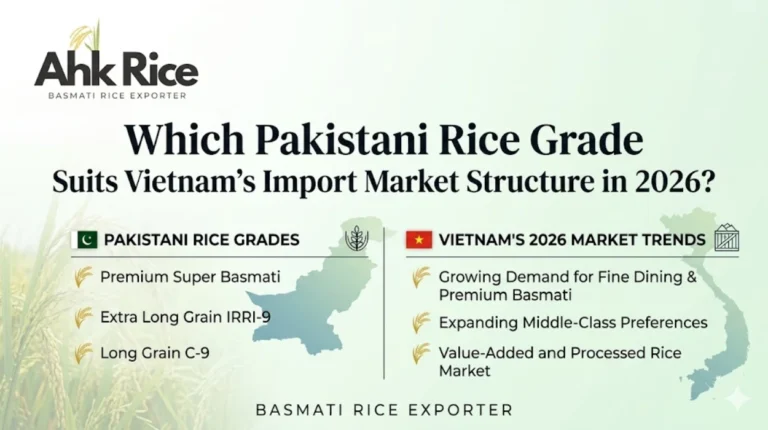
Before comparing suppliers, many importers first study how Pakistani Basmati varieties differ and which grades fit their target market. A useful resource is our guide explaining Pakistani Basmati rice varieties and export specifications.
German wholesalers comparing different parboiled grades should also review the detailed analysis in Comparing Sella Basmati Rice Grades for German Distributors and Wholesalers before making supplier decisions.
AHK Rice supplies Pakistani Basmati rice to international buyers through controlled processing, export documentation support, and customized packaging solutions. Throughout this guide, you will learn how German importers evaluate suppliers and why these criteria influence commercial success.
What Is the Best Solution for Importing Pakistani Sella Basmati Rice into Germany?
The best solution is selecting a supplier with verified quality control, export experience, complete certifications, transparent grading standards, and reliable logistics performance.
German buyers often focus on price first. Product consistency creates greater long-term value than minor price differences.
Pakistani Sella Basmati Rice undergoes parboiling before milling. This process improves grain strength, cooking performance, and storage stability. German wholesalers frequently choose Sella grades because they perform well in retail, foodservice, and ethnic distribution channels.
A supplier evaluation process should include:
- Verify export history to Germany
- Inspect processing facilities
- Review laboratory reports
- Examine certifications
- Check packaging capabilities
- Confirm shipment schedules
- Evaluate communication quality
AHK Rice follows a structured export process that helps buyers reduce procurement risk. Every shipment passes through inspection, grading, testing, packaging, and documentation procedures before dispatch.
How Should German Buyers Evaluate Rice Quality?
Quality evaluation should focus on grain length, purity, moisture content, damage percentage, cooking performance, and consistency across production lots.
German distributors often request detailed specifications before placing orders.
Supplier Evaluation Specification Table
| Specification | Recommended Range |
|---|---|
| Grain Length | 8.20 mm+ |
| Moisture | 12%–14% |
| Purity | 95%–100% |
| Broken Grains | 2%–5% |
| Foreign Matter | Near Zero |
| Color Consistency | Uniform |
| Cooking Elongation | Up to 2x Length |
Laboratory testing verifies these specifications before shipment.
Quality evaluation establishes supplier capability. The next step is understanding why a specialized exporter provides additional value.
Why Choose AHK Rice as Your Pakistani Sella Basmati Supplier?
AHK Rice combines export expertise, multiple processing grades, documented quality control, customized packaging, and responsive commercial support for German importers.
German buyers require more than a rice producer. They need a supplier capable of supporting international trade requirements.
AHK Rice manages the complete export workflow.
Processing Capabilities
AHK Rice processes multiple export grades including:
- 1121 Golden Sella
- 1121 Creamy Sella
- 1121 Steam Rice
- Super Kernel Golden Sella
- Super Kernel White Rice
- 1509 Golden Sella
- 1509 Steam Rice
Quality Control System
AHK Rice follows a detailed processing sequence:
- Clean the paddy
- Parboil the grain
- Dry the rice
- Mill the kernels
- Polish the surface
- Sort by size
- Grade by specification
- Inspect the batches
- Load for export
Each stage contributes to consistency and traceability.
Export Documentation Support
German importers commonly require:
- Commercial Invoice
- Packing List
- Certificate of Origin
- Phytosanitary Certificate
- Fumigation Certificate
- Bill of Lading
- Quality Inspection Report
Documentation accuracy reduces customs delays and import complications.
AHK Rice supports buyers through each documentation stage, making procurement easier for first-time and experienced importers alike.
Supplier capability matters, but buyers also need measurable business outcomes. The next section explains expected results.
What Results Can German Importers Expect?
Importers can expect consistent quality, reduced claims, improved customer satisfaction, predictable lead times, and stronger retail performance when supplier standards are maintained.
Reliable sourcing improves profitability across the supply chain.
Consistent Product Performance
Uniform grain specifications help distributors maintain customer confidence.
Retail chains prefer suppliers that deliver the same specification across multiple shipments.
Foodservice buyers benefit from predictable cooking characteristics.
Ethnic wholesalers reduce complaints when grain appearance remains consistent.
Improved Inventory Management
Sella Basmati offers strong storage performance.
Typical shelf-life expectations include:
| Product Type | Typical Shelf Life |
|---|---|
| Golden Sella | 18–24 Months |
| Creamy Sella | 18–24 Months |
| Steam Rice | 12–18 Months |
Golden Sella performs particularly well in warm storage environments.
For distributors managing large inventories, longer shelf life supports inventory planning and reduces waste.
Reduced Supply Chain Risk
Experienced exporters maintain stronger control over:
- Production scheduling
- Container loading
- Documentation preparation
- Export compliance
- Shipment tracking
AHK Rice emphasizes consistency because recurring orders depend on predictable performance.
Business outcomes depend partly on cost structures. The next section explains pricing and supplier evaluation factors.
What Factors Affect the Cost of Pakistani Sella Basmati Rice?
Rice grade, grain quality, packaging specifications, certifications, shipping costs, and order volume have the greatest impact on final import pricing.
German buyers should compare total landed cost rather than FOB price alone.
Major Pricing Variables
Rice Grade
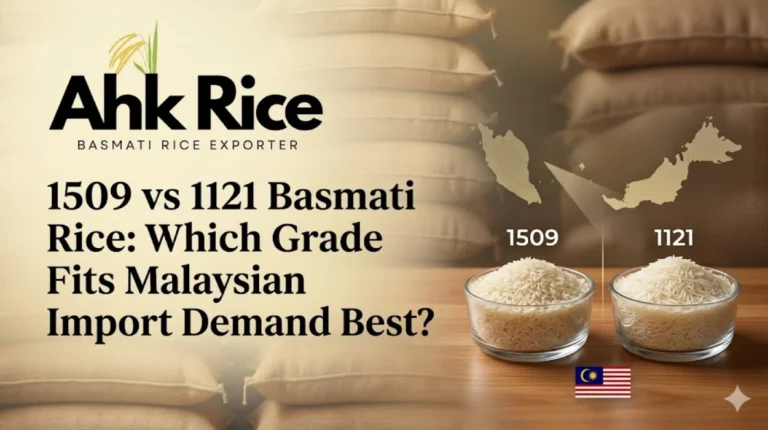
1121 Golden Sella generally commands higher prices because of grain length and market demand.
1509 grades may offer competitive pricing for value-focused segments.
Super Kernel grades occupy a different commercial position depending on customer preferences.
Packaging Requirements
Common packaging formats include:
- 1 kg retail bags
- 5 kg retail bags
- 10 kg retail bags
- 20 kg PP bags
- 25 kg PP bags
- 40 kg PP bags
- 50 kg PP bags
Customized packaging increases production complexity and affects pricing.
Certifications
Certification costs influence export pricing.
Common requirements include:
- HACCP
- ISO Standards
- SGS Inspection
- Phytosanitary Compliance
Shipping Costs
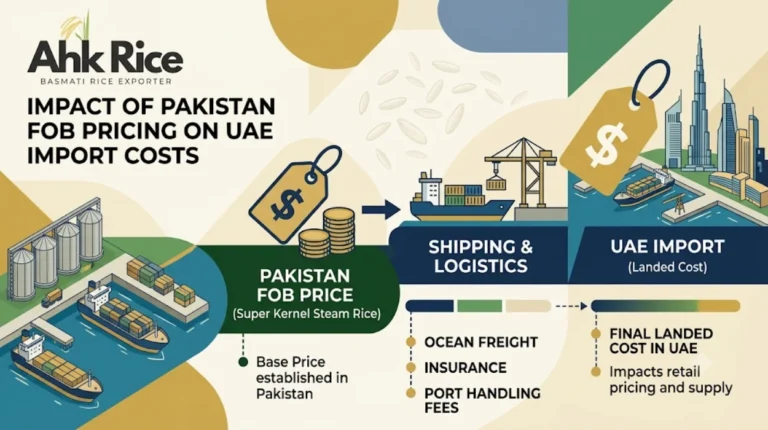
Ocean freight remains a major pricing factor.
Transit times from Pakistan to Germany generally range between:
| Port Destination | Average Transit Time |
|---|---|
| Hamburg | 25–35 Days |
| Bremerhaven | 25–35 Days |
| Rotterdam (for onward distribution) | 22–32 Days |
Actual schedules vary by carrier and season.
Sample Process and Associated Costs
German buyers should always evaluate samples before placing container orders.
A typical sample procedure includes:
- Request the target specification
- Receive available grade options
- Review laboratory reports
- Approve physical samples
- Confirm packaging requirements
- Negotiate commercial terms
- Place trial order
Typical sample costs include:
| Sample Type | Typical Cost |
|---|---|
| Small Courier Sample | USD 30–80 |
| Multiple Grade Samples | USD 80–150 |
| Laboratory Analysis | Variable |
| Courier Freight | Destination Dependent |
Many importers treat sample evaluation as an investment because container purchases involve significantly larger values.
With pricing factors understood, the final decision stage is learning how to begin the sourcing process.
How Can German Importers Get Started?
Start by defining specifications, requesting samples, verifying certifications, reviewing logistics capabilities, and conducting a structured supplier assessment before placing trial orders.
Successful sourcing follows a systematic process.
Step 1: Define Product Requirements
Specify:
- Rice variety
- Grade preference
- Packaging format
- Label requirements
- Target market segment
Clear specifications improve quotation accuracy.
Step 2: Request Samples
Sample evaluation should include:
- Visual inspection
- Cooking tests
- Moisture testing
- Grain measurement
- Packaging review
Document findings before moving forward.
Step 3: Verify Supplier Credentials
Review:
- Export experience
- Certifications
- Inspection reports
- Production capabilities
- Customer references
Verification reduces procurement risk.
Step 4: Review Logistics Planning
Confirm:
- Production lead times
- Container availability
- Port schedules
- Documentation timelines
Logistics planning prevents delays.
Step 5: Place a Trial Shipment
Trial orders provide real-world validation.
Buyers can evaluate:
- Product consistency
- Packaging quality
- Documentation accuracy
- Shipment performance
AHK Rice recommends trial shipments for buyers establishing new supplier relationships.
A structured trial order provides the evidence needed for long-term procurement decisions and prepares buyers for larger commercial contracts.
Businesses seeking reliable Pakistani Sella Basmati Rice sourcing can begin by discussing specifications, sample requirements, and shipment plans through the official AHK Rice website and submit their inquiry through the dedicated quote request page at request a quote.
Frequently Asked Questions
How do German importers verify Pakistani rice quality?
German importers verify quality through laboratory testing, sample evaluation, inspection reports, and supplier audits. Buyers review grain length, moisture, purity, and cooking performance. Independent inspections add additional confidence. Trial shipments often confirm consistency before larger orders. Quality verification reduces commercial risk.
Which Pakistani Sella Basmati grade is most popular in Germany?
1121 Golden Sella is commonly preferred because of its extra-long grain and strong cooking performance. Many distributors supply it to retail and foodservice markets. Premium positioning supports higher customer demand. Importers often compare it against Steam and Creamy Sella grades. Market positioning determines the best option.
How long does shipping from Pakistan to Germany take?
Transit times generally range from 25 to 35 days depending on destination port and carrier schedules. Seasonal congestion can influence delivery times. Documentation preparation also affects shipment readiness. Buyers should confirm schedules before purchase. Advance planning improves supply chain reliability.
What certifications should a Pakistani rice supplier provide?
Most importers request phytosanitary certificates, certificates of origin, fumigation certificates, and quality reports. Additional certifications may include HACCP, ISO, and SGS inspection documents. Requirements vary by buyer and market segment. Verification should occur before shipment. Documentation supports smooth customs clearance.
Why do importers request samples before ordering containers?
Samples allow buyers to verify grain quality, cooking results, and specification compliance. Physical evaluation prevents misunderstandings. Laboratory testing may accompany sample reviews. Buyers compare grades and packaging options during this stage. Sample approval supports confident purchasing decisions.