How Moroccan Rice Importers Select and Contract Pakistani Export Suppliers
Moroccan rice importers achieve the best outcomes by selecting verified Pakistani exporters with documented quality systems, transparent pricing, export experience, and proven shipment performance. Here is why: supplier verification reduces commercial risk, improves product consistency, and ensures reliable delivery schedules across Morocco’s growing rice market.
Importers entering the Moroccan rice market face a simple challenge. Multiple exporters offer similar specifications, yet shipment quality, documentation accuracy, and delivery performance vary significantly. Decision-makers need a structured procurement process.
Many buyers begin by reviewing market trends and demand patterns. Understanding the broader trade environment helps procurement teams evaluate suppliers more effectively. A useful starting point is the analysis of Pakistan’s expanding exports to North Africa in the article, Pakistan Rice Export Growth in North Africa Morocco Focus .
Professional importers move beyond price comparisons. They assess processing capabilities, quality controls, logistics performance, and contractual protections before placing commercial orders.
This approach explains why leading Moroccan buyers increasingly partner with experienced exporters such as AHK Rice, where export operations, quality assurance, and shipment execution follow structured procedures.
What is the best solution for Moroccan importers selecting Pakistani rice suppliers?
The most effective solution combines supplier verification, sample approval, contract protection, quality inspection, and shipment monitoring before committing to long-term procurement agreements.
Moroccan importers reduce procurement risk by evaluating suppliers through measurable criteria. Price alone rarely predicts shipment success.
Professional buyers inspect processing facilities before placing annual contracts. Exporters should demonstrate milling capacity, grading systems, sorting technology, packaging capabilities, and export documentation expertise.
Supplier Verification Checklist
- Verify export registration
- Verify quality certifications
- Verify processing capacity
- Verify shipment history
- Verify banking references
- Verify inspection procedures
- Verify packaging standards
Moroccan buyers often review supplier performance records before negotiations. Exporters with established North African shipments provide stronger confidence.
Quality Assessment Process
Rice quality directly affects customer satisfaction and repeat purchases. Importers therefore request product specifications before discussing volume commitments.
Key evaluation factors include:
- Grain length
- Broken percentage
- Moisture content
- Purity level
- Color consistency
- Foreign matter limits
- Packaging quality
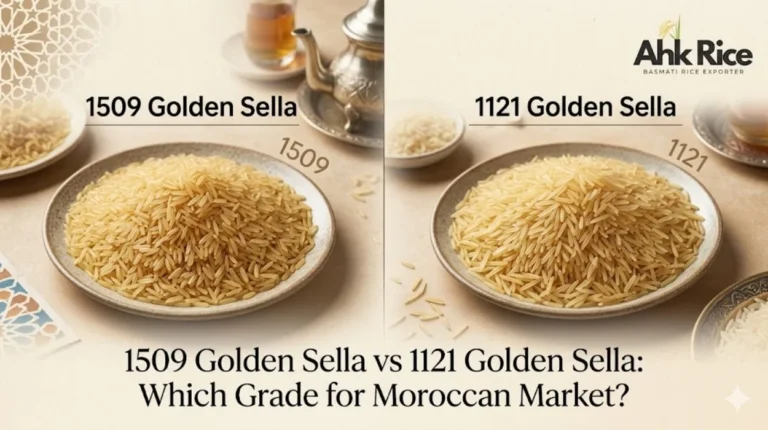
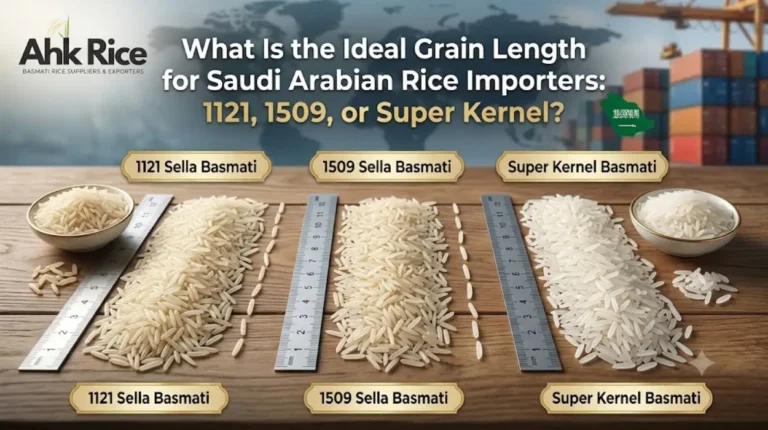
Many procurement teams also compare available grades before selecting a supplier. Buyers evaluating commercial specifications often review market comparisons such as Which Pakistani Rice Grades Are Gaining Traction in the Moroccan Market in 2026 to determine the most suitable grade for retail, wholesale, or foodservice distribution.
AHK Rice supports this process through detailed specifications, laboratory reports, and shipment documentation that help buyers make informed purchasing decisions.
With supplier verification established, the next question concerns why a specific exporter should receive a contract award.
Why choose AHK Rice?
AHK Rice offers export experience, structured quality control, transparent documentation, competitive pricing, and reliable logistics support for Moroccan rice importers.
Supplier selection depends on consistency. Importers need confidence that every shipment matches approved specifications.
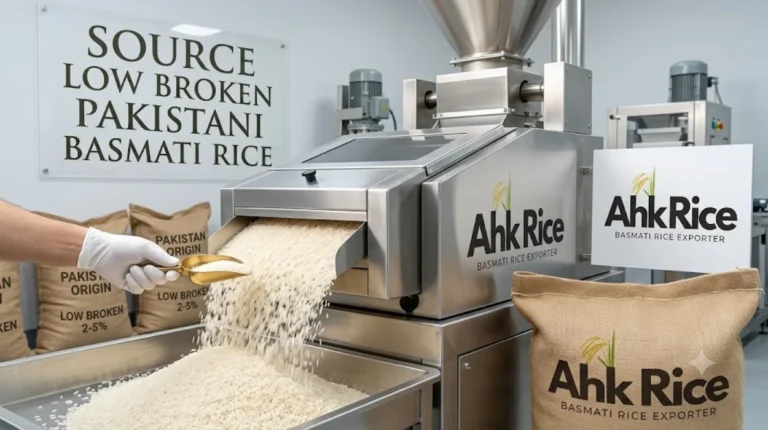
AHK Rice follows a systematic processing workflow.
Processing Stages
- Clean the paddy
- Dehusk the grain
- Dry the rice
- Polish the kernels
- Grade by size
- Sort by color
- Inspect quality
- Package securely
- Dispatch for export
Each stage contributes to shipment consistency.
AHK Rice provides several export-oriented quality measures:
- Moisture control
- Color sorting
- Length grading
- Purity verification
- Fumigation management
- Laboratory testing
- Container inspection
Moroccan importers benefit from reduced variability between shipments.
Documentation Support
Export contracts require accurate documentation. Missing or inaccurate paperwork can delay customs clearance.
AHK Rice assists buyers through preparation of:
- Commercial Invoice
- Packing List
- Certificate of Origin
- Phytosanitary Certificate
- Fumigation Certificate
- Bill of Lading
- Inspection Reports
Documentation accuracy improves customs efficiency and reduces clearance delays.
Market Experience
Pakistan remains one of the world’s leading rice exporters (source: Pakistan Bureau of Statistics, FY2024-25). North African demand continues to support export growth across premium and commercial rice categories (source: REAP export data, December 2025).
AHK Rice aligns production, processing, and export operations with the requirements of international buyers. This experience helps Moroccan importers manage procurement risk.
With supplier selection clarified, buyers naturally want to understand expected commercial outcomes.
What results can be expected after contracting a Pakistani exporter?
Importers typically achieve consistent quality, predictable supply, competitive procurement costs, and improved inventory planning through structured supplier agreements.
Contracting a verified exporter creates operational advantages beyond product sourcing.
Supply Consistency
Long-term contracts stabilize procurement planning.
AHK Rice schedules production against contracted volumes. This approach helps buyers maintain inventory availability throughout the year.
Supply consistency becomes especially important during seasonal demand fluctuations.
Quality Stability
Approved specifications become contractual benchmarks.
AHK Rice uses inspection procedures before shipment release. These controls help ensure product consistency between containers.
Importers benefit from fewer quality disputes and stronger customer satisfaction.
Commercial Predictability
Contracted procurement simplifies budgeting.
Buyers gain visibility regarding:
- Product specifications
- Delivery schedules
- Packaging requirements
- Inspection procedures
- Payment milestones
Predictability improves purchasing decisions.
Shipping Performance
Shipping timelines influence inventory management.
Typical transit schedules include:
| Origin Pakistan | Destination Morocco | Transit Days |
|---|---|---|
| Karachi | Casablanca | 25–35 Days |
| Karachi | Tangier Med | 28–38 Days |
| Port Qasim | Casablanca | 25–35 Days |
| Port Qasim | Tangier Med | 28–40 Days |
Transit times vary according to vessel schedules, seasonal congestion, and transshipment routes.
AHK Rice coordinates shipment planning to support buyer inventory requirements.
With expected outcomes defined, procurement teams usually evaluate commercial costs before making a final decision.
What factors affect pricing and sample costs?
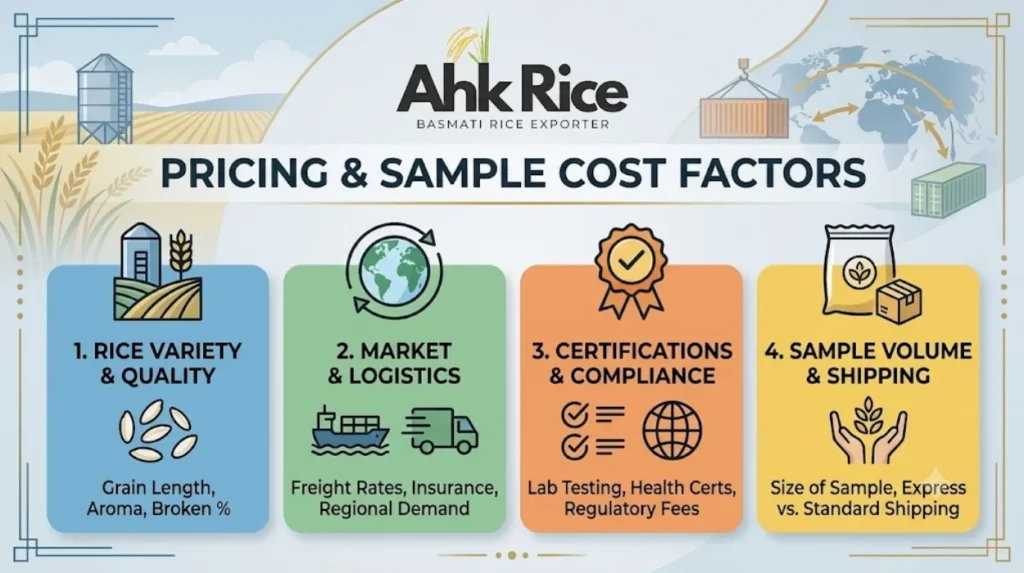
Rice pricing depends on grade selection, order volume, packaging requirements, quality specifications, freight rates, and payment terms.
Importers should understand the components that influence export pricing.
Product Grade
Premium grades command higher prices.
Examples include:
- Super Basmati
- 1121 Basmati
- 1509 Basmati
- IRRI-6
- PK-386
Higher grain length and stricter specifications generally increase cost.
Packaging Requirements
Packaging affects total procurement expense.
Common options include:
- 1 kg retail bags
- 5 kg retail bags
- 10 kg retail bags
- 25 kg PP bags
- 50 kg PP bags
Custom branding increases packaging costs.
Order Volume
Larger orders often reduce per-ton costs.
Container optimization improves freight efficiency and production planning.
Freight Conditions
Ocean freight remains a major cost variable.
Fuel prices, vessel availability, and seasonal demand influence shipping rates.
Sample Process and Costs
Moroccan importers should approve samples before contracting.
Standard sample process:
- Request product specifications
- Receive laboratory reports
- Approve sample shipment
- Evaluate cooking performance
- Confirm commercial specifications
- Finalize contract terms
Typical sample costs include:
| Sample Type | Typical Cost |
|---|---|
| Small courier sample | USD 50–100 |
| Multiple grade samples | USD 100–250 |
| Laboratory testing | USD 50–150 |
| Independent inspection | Variable |
AHK Rice supports sample evaluation to ensure specification alignment before commercial production begins.
With pricing considerations understood, buyers can proceed confidently toward supplier engagement.
How do Moroccan importers get started with a Pakistani rice export contract?
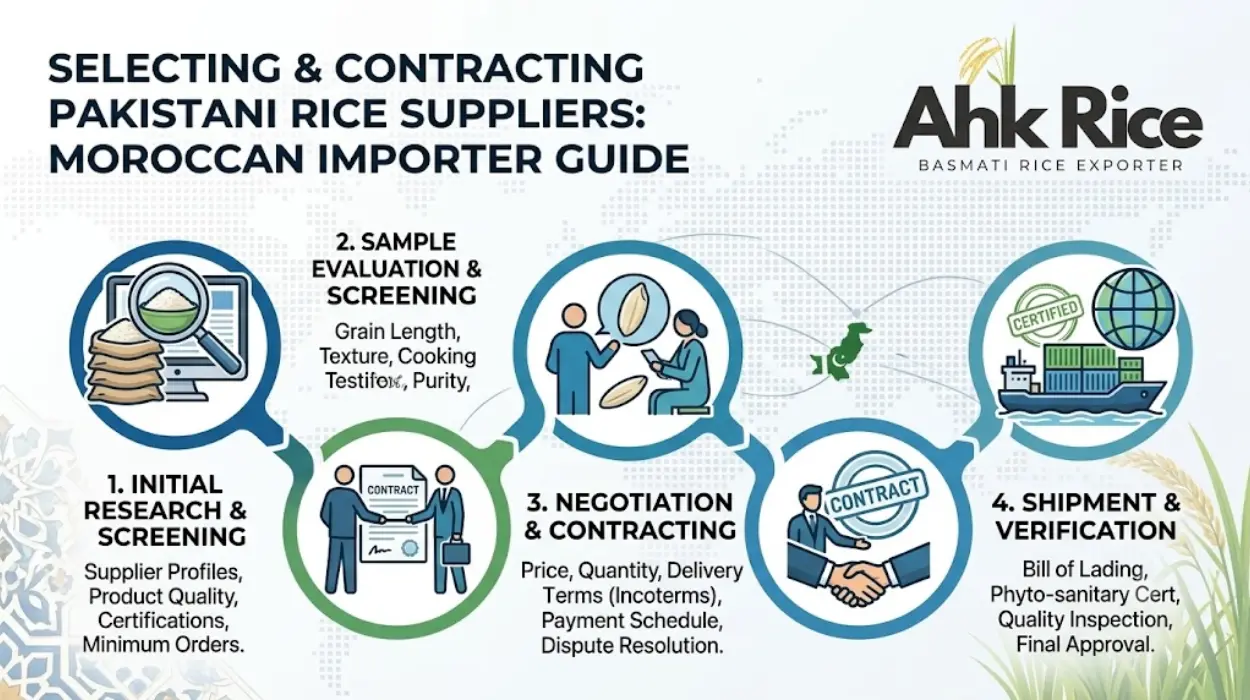
The fastest approach is defining specifications, approving samples, completing supplier verification, negotiating terms, and executing a formal export agreement.
Procurement success begins with clear requirements.
Step 1: Define Product Specifications
Specify:
- Rice grade
- Grain length
- Moisture limits
- Broken percentage
- Packaging format
- Target quantity
Detailed specifications reduce misunderstandings.
Step 2: Request Samples
Sample approval establishes quality expectations before production begins.
AHK Rice provides representative samples matching shipment specifications.
Step 3: Review Commercial Terms
Key contract elements include:
- Product description
- Quantity
- Delivery schedule
- Payment terms
- Inspection procedures
- Packaging requirements
Clear contracts protect both parties.
Step 4: Confirm Production Schedule
Production planning should align with inventory requirements.
AHK Rice coordinates manufacturing schedules with shipment commitments.
Step 5: Conduct Final Inspection
Inspection verifies compliance before loading.
Quality verification minimizes disputes after arrival.
Step 6: Load and Ship
Containers are loaded, sealed, and dispatched according to agreed schedules.
Shipping documentation accompanies the cargo for customs processing.
AHK Rice supports buyers throughout each stage of the export cycle.
A structured onboarding process transforms supplier selection into long-term procurement success.
Moroccan importers seeking reliable Pakistani export partners should evaluate quality systems, processing standards, shipment performance, and contractual transparency carefully. AHK Rice provides structured support across sourcing, quality verification, documentation, production, and logistics management. Contact AHK Rice today through Request a Quote to begin the supplier evaluation process.
Frequently Asked Questions
How do Moroccan importers verify Pakistani rice exporters?
Importers review export registrations, certifications, shipment history, processing capabilities, and banking references. Facility inspections provide additional confidence. Sample approval confirms product quality. Documentation audits verify export readiness. This process reduces procurement risk significantly.
Which rice grades are most commonly imported into Morocco?
Moroccan buyers typically source Basmati and selected non-Basmati grades. Demand varies by retail, wholesale, and foodservice sectors. Premium grades serve higher-value markets. Commercial grades support volume distribution. Market positioning determines the appropriate specification.
How long does rice shipping take from Pakistan to Morocco?
Transit times generally range between 25 and 40 days. Vessel schedules affect delivery windows. Port congestion may extend transit periods. Early planning improves inventory management. Shipment tracking supports operational visibility.
Why is sample approval important before signing contracts?
Samples establish quality expectations before commercial production. Buyers evaluate appearance, aroma, cooking performance, and consistency. Laboratory reports validate technical specifications. Sample approval reduces disputes. Contract specifications become easier to enforce.
What payment terms are common in rice export contracts?
Letters of Credit and agreed documentary payment structures remain common. Payment arrangements vary according to buyer relationships. Transaction size also influences terms. Contract clarity protects both parties. Financial security remains a priority throughout procurement.