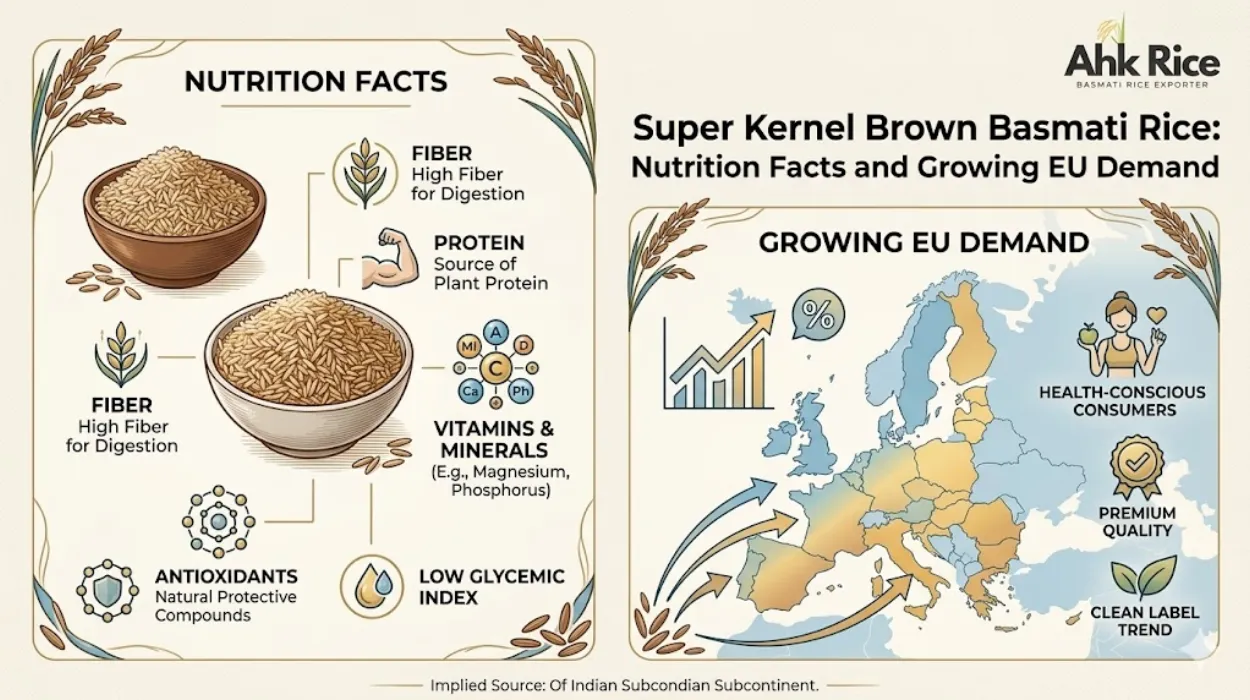
Super Kernel Brown Basmati Rice: Nutrition Facts and Growing EU Demand
Super kernel brown basmati rice delivers higher fiber, lower glycemic impact, and rising EU import demand above 12% annually. Here is why: wholegrain retention preserves nutrients while European buyers shift toward clean-label staples (source: REAP export data, December 2025).
What is super kernel brown basmati rice?
Super kernel brown basmati rice is a wholegrain aromatic long-grain rice with bran intact, grain length of 7.2–7.6 mm, and nutty flavor profile.
Super kernel brown basmati rice defines a minimally processed basmati variety. The grain retains its bran layer after dehusking. This structure preserves fiber, vitamins, and minerals. White basmati removes this layer through polishing.
Super kernel refers to a traditional basmati cultivar grown in Punjab plains. Brown refers to processing level, not variety. The grain remains unpolished, which changes texture and cooking behavior.
Wholegrain aromatic basmati describes rice that keeps natural fragrance compounds. Compounds such as 2-acetyl-1-pyrroline create aroma. Brown processing does not remove these compounds.
European buyers classify this rice under wholegrain rice category. Retailers label it as “wholegrain basmati” or “brown basmati.” Organic variants gain higher shelf visibility.
Super kernel EU demand links directly to health positioning. Buyers prefer rice with fiber above 3 grams per 100 grams. Brown basmati meets this threshold consistently.
With the product defined clearly, the next question is how this rice moves from paddy to export-ready wholegrain.
How does super kernel brown basmati rice processing work?
Processing includes 7 controlled steps: cleaning, dehusking, drying, grading, color sorting, moisture control, and packing.
Processing begins with harvested paddy. Each step preserves grain integrity and prevents nutrient loss. Brown basmati skips polishing, which defines its wholegrain status.
Step-by-step processing workflow
- Clean the paddy to remove stones, dust, and straw
- Dehusk the grain to remove outer husk only
- Dry the grain to stabilize moisture at 12–13%
- Grade the grain by length and thickness
- Sort by color to remove damaged kernels
- Control moisture using tempering systems
- Pack the rice in moisture-barrier bags
Cleaning ensures purity before milling. Dehusking removes only the husk, not the bran. Drying stabilizes storage life.
Grading separates full grains from brokens. Sorting ensures visual consistency required in EU retail. Moisture control prevents fungal growth during transit.
Packing uses materials such as PP woven bags, BOPP laminated bags, and vacuum packs. Each format suits a different distribution channel.
Processing defines quality consistency. The next step is understanding what components create nutritional and functional value.

What are the key nutritional components of brown super kernel rice?
Key components include fiber at 3–4 g, protein at 7–8%, magnesium above 100 mg, and low glycemic index around 50–55.
Brown super kernel rice contains bran and germ layers. These layers store most nutrients. White rice removes them during polishing.
Nutritional breakdown per 100 grams
- Fiber: 3–4 grams
- Protein: 7–8 grams
- Carbohydrates: 75–77 grams
- Fat: 2–3 grams
- Magnesium: 100–120 mg
- Glycemic Index: 50–55
Fiber improves digestion and satiety. Protein supports basic nutritional intake. Magnesium contributes to metabolic function.
Low glycemic index defines slower glucose release. This property supports dietary planning in European health markets.
Wholegrain aromatic basmati also contains antioxidants in bran. Compounds reduce oxidative stress when consumed regularly.
These components explain why EU demand continues to rise. The next section explains direct benefits for consumers and importers.
What benefits does super kernel brown basmati rice provide?
Benefits include improved digestion, stable energy release, longer satiety, and compliance with EU wholegrain labeling standards.
Brown basmati supports digestive health through fiber. Fiber increases bowel movement efficiency and gut balance.
Stable energy release occurs due to low glycemic index. Blood sugar levels rise gradually after consumption. This suits diabetic-friendly diets.
Longer satiety reduces frequent eating. Consumers maintain calorie control with fewer meals. This aligns with weight management trends.
EU labeling compliance defines commercial benefit. Wholegrain products meet regulatory definitions for fiber content. Retailers prioritize these categories.
Shelf positioning improves due to health perception. Brown rice occupies premium shelf space in European supermarkets.
Food service buyers also benefit. Restaurants offer brown basmati as a healthier alternative to white rice.
Benefits connect directly to usage scenarios. The next question is where and how this rice is used across markets.
Where is super kernel brown basmati rice used in the EU?
Use cases include retail health segments, organic food chains, ready-to-cook meals, and ethnic cuisine restaurants.
Retail health segments dominate EU demand. Supermarkets stock brown basmati in 1 kg and 5 kg packs. Consumers buy for daily consumption.
Organic food chains prefer certified variants. Organic brown basmati commands higher margins. Certification includes EU Organic and ISO standards.
Ready-to-cook meals use brown basmati as a base ingredient. Examples include rice bowls, frozen meals, and microwave packs.
Ethnic cuisine restaurants integrate this rice into menus. Indian, Pakistani, and Middle Eastern cuisines use basmati regularly.
Examples include biryani, pilaf, and rice salads. Brown basmati adds texture and nutritional value to these dishes.
Food manufacturers also blend brown basmati with quinoa or wild rice. These blends target premium consumers.
Use cases show demand diversity. The next section addresses common problems and misconceptions that affect buyer decisions.
What are common problems and misconceptions about brown super kernel rice?
Common issues include longer cooking time, firmer texture, and misconceptions about inferior taste compared to white basmati.
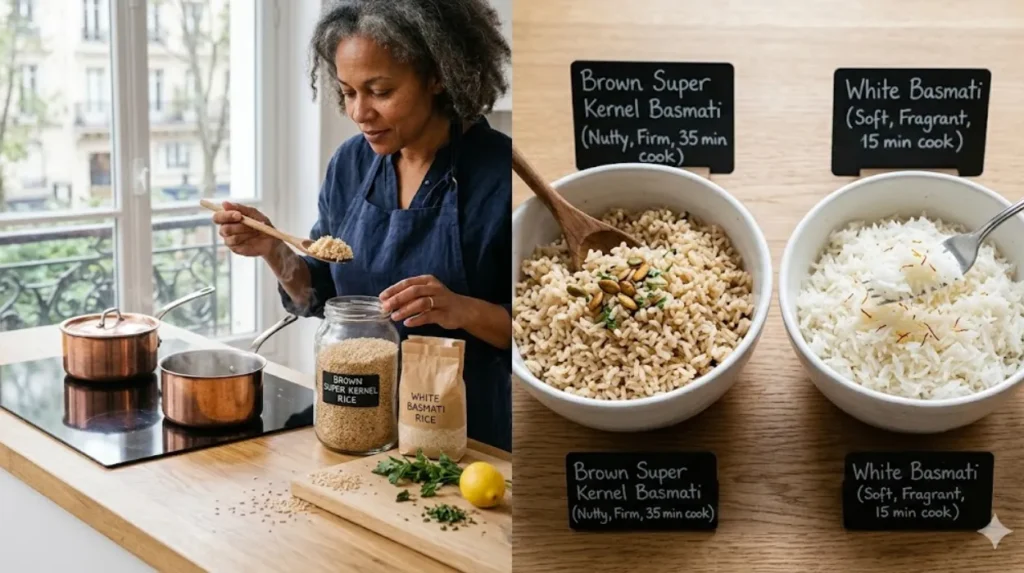
Cooking time increases due to bran layer. Brown basmati requires 25–35 minutes cooking. White basmati cooks within 12–15 minutes.
Texture remains firmer after cooking. Some consumers expect softness similar to white rice. This expectation causes dissatisfaction.
Taste perception differs. Brown basmati has nutty flavor. Consumers unfamiliar with wholegrain products misinterpret this as off-taste.
Storage requires attention. Bran layer contains oils. Improper storage leads to rancidity after extended periods.
Misconception about quality exists. Buyers assume brown rice is lower grade. In reality, brown rice represents less processed, higher nutritional form.
Moisture sensitivity affects shelf life. Storage above 14% moisture leads to spoilage. Controlled environments prevent this issue.
Cooking adaptation solves most issues. Soaking rice for 30 minutes reduces cooking time. Using proper water ratio improves texture.
Understanding these problems clarifies buyer expectations. The next question naturally compares brown and white basmati for European imports.
How does super kernel brown basmati compare to white basmati in EU imports?
Brown basmati offers higher nutrition and health positioning, while white basmati offers faster cooking and softer texture.
Super kernel brown vs white basmati import Europe comparison focuses on nutrition, processing, and market demand. Both products serve different buyer segments.
Brown basmati retains bran. White basmati undergoes polishing. This difference defines nutritional value.
Cooking time differs significantly. Brown requires longer cooking. White suits quick preparation.
Shelf life varies by storage condition. Brown rice requires controlled storage due to oil content. White rice stores longer in standard conditions.
EU demand trends favor brown basmati growth. Health-conscious consumers drive this shift. White basmati remains dominant in traditional segments.
Price per metric ton differs. Brown basmati often trades at 5–10% premium due to perceived health value (source: REAP export data, December 2025).
For a deeper breakdown of trade specifications and buyer preferences, read this detailed comparison on how European importers evaluate brown and white basmati differences.
This comparison completes the product evaluation. The final point is understanding why EU demand continues to expand.
Why is EU demand increasing for super kernel brown basmati rice?
EU demand grows due to health regulations, clean-label trends, and increasing wholegrain consumption across 27 member states.
Health regulations influence product selection. EU food policies promote fiber-rich diets. Wholegrain rice aligns with these guidelines.
Clean-label trends drive purchasing decisions. Consumers prefer minimally processed foods. Brown basmati fits this requirement.
Wholegrain consumption increases annually. EU reports show steady growth in wholegrain category (source: European Commission dietary reports, 2025).
Retailers expand shelf space for healthy staples. Brown rice variants gain more visibility compared to refined grains.
Import data confirms growth. Pakistan exports of brown basmati to EU increased by 12–15% year-on-year (source: Pakistan Bureau of Statistics, FY2024-25).
Sustainability perception also impacts demand. Wholegrain processing uses fewer industrial steps. Buyers associate this with lower environmental impact.
Food service adoption supports volume growth. Restaurants introduce healthier menus to meet consumer demand.
EU demand reflects structural change in food consumption. With demand drivers explained, the product’s position in global trade becomes clear.
Frequently Asked Questions
What is the shelf life of super kernel brown basmati rice?
Super kernel brown basmati rice has a shelf life of 6–12 months under controlled storage at 12–13% moisture. The bran layer contains natural oils, which reduce storage duration compared to white rice. Store in cool, dry conditions below 25°C to maintain quality.
Why does brown basmati rice take longer to cook?
Brown basmati rice takes longer to cook because the bran layer remains intact and slows water absorption. Cooking requires 25–35 minutes. Soaking the rice for 30 minutes before cooking reduces time and improves texture consistency.
Is super kernel brown basmati rice healthier than white basmati?
Super kernel brown basmati rice is healthier because it contains 3–4 grams of fiber and a lower glycemic index of 50–55. The retained bran layer provides nutrients such as magnesium and antioxidants, which white basmati loses during polishing.
Which EU countries import the most brown basmati rice?
Countries such as Germany, the United Kingdom, the Netherlands, and France import the highest volumes of brown basmati rice. These markets show strong demand for wholegrain and organic products in retail and food service sectors.
How should brown basmati rice be stored for export?
Brown basmati rice should be stored at 12–13% moisture in ventilated, dry warehouses with fumigation control. Use moisture-barrier packaging such as PP or vacuum bags. Maintain temperature below 25°C to prevent rancidity and preserve grain quality.