Which Pakistani Rice Varieties Dominate GCC Import Demand Including Qatar
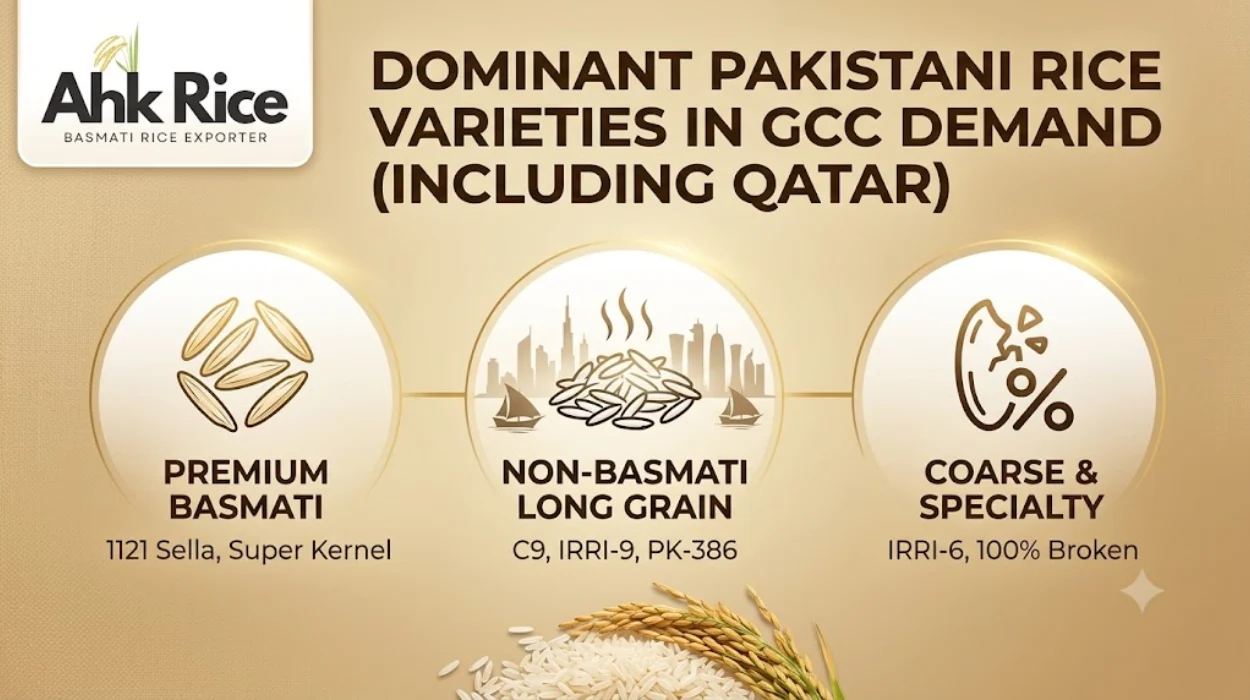
Pakistani 1121 Basmati, Super Kernel Basmati, and 1509 Basmati are important products in the GCC Basmati rice market because they deliver long grain length, reliable cooking performance, competitive pricing, and consistent export quality. Here is why: Gulf buyers prioritize appearance, aroma, grain elongation, and dependable supply over low-cost commodity rice, making these Pakistani varieties the preferred specifications for retail, hospitality, and foodservice imports.
GCC importers evaluate rice based on grain specifications, processing methods, packaging options, and supply consistency before selecting an exporter. Buyers comparing different grades should first understand how each variety serves a specific commercial purpose. Our guide on understanding Pakistani Basmati varieties and export specifications explains the production process, processing grades, and export standards that influence purchasing decisions.
What Pakistani rice varieties are imported most by GCC countries?
The GCC imports mainly 1121 Steam Basmati, 1121 Golden Sella, Super Kernel Basmati, and 1509 Basmati because these grades combine premium grain length, attractive appearance, reliable cooking quality, and competitive pricing. Each variety serves different retail, catering, wholesale, and food manufacturing requirements across Gulf markets.
Pakistani rice varieties are commercial classifications developed according to genetics, grain dimensions, processing methods, and cooking characteristics. Each variety satisfies different purchasing priorities across GCC countries.
1121 Basmati
1121 Basmati is the flagship export variety from Pakistan. The grain measures 8.30–8.40 mm before cooking and elongates to almost twice its original length after cooking. This characteristic makes it the preferred premium rice throughout Qatar, UAE, Saudi Arabia, Kuwait, Bahrain, and Oman.
Super Kernel Basmati
Super Kernel Basmati delivers traditional aroma and consistent texture. Buyers targeting premium ethnic retail channels frequently select this variety because consumers recognize its authentic fragrance and cooking performance.
1509 Basmati
1509 Basmati matures earlier than traditional Basmati varieties. Exporters supply it when buyers require competitive pricing without sacrificing grain appearance or cooking consistency.
Non-Basmati Rice
Pakistani exporters also supply IRRI-6, IRRI-9, KS-282, and C9 varieties. These products mainly serve industrial processing and institutional catering rather than premium retail shelves.
Every variety addresses different buyer priorities. The next comparison explains how processing grades influence purchasing decisions.
How do Pakistani rice grades compare for GCC buyers?
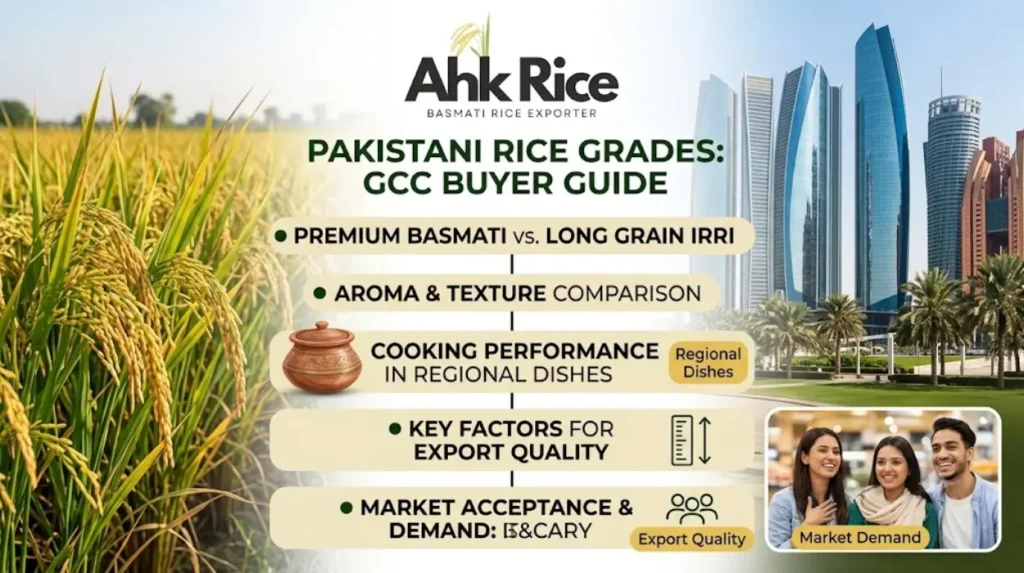
1121 Golden Sella provides maximum storage stability, Steam Basmati delivers premium appearance, White Basmati offers bright presentation, and Super Kernel maintains traditional aroma. Each processing grade solves different commercial requirements depending on distribution channels and inventory management.
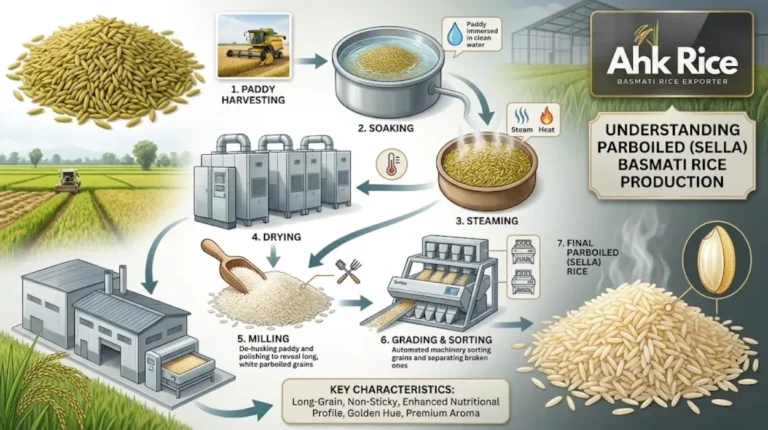
Processing grade refers to the milling and heat-treatment method applied after harvesting. Different processing methods influence colour, shelf life, texture, cooking performance, and storage durability.
Specification Comparison
| Specification | 1121 Steam | 1121 Golden Sella | Super Kernel Steam | 1509 Steam |
|---|---|---|---|---|
| Grain Length | 8.3–8.4 mm | 8.3–8.4 mm | 7.4–7.6 mm | 8.2 mm |
| Aroma | High | High | Very High | Medium |
| Cooked Elongation | 2.0–2.3× | 2.2× | 1.9× | 2.0× |
| Shelf Life | 18 months | 24 months | 18 months | 18 months |
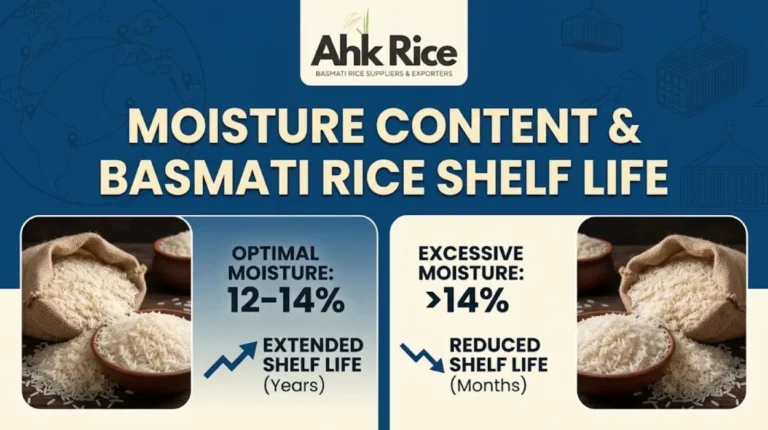
| Moisture Standard | ≤13% | ≤13% | ≤13% | ≤13% |
| Typical Export Price (USD/MT)* | Higher | Highest | Premium | Competitive |
| Primary Market | Retail | Catering & Wholesale | Premium Retail | Value Retail |
*Indicative pricing varies by harvest season and international freight conditions (Source: REAP Export Data, 2025).
Golden Sella remains stable during long warehouse storage because parboiling strengthens the grain structure before milling. Steam rice provides brighter colour because it undergoes lighter processing. Super Kernel appeals to premium consumers because its natural aroma remains distinctive after cooking.
How is the GCC Basmati rice market structured for Pakistani exporters?
The GCC Basmati rice market is structured around different buyer channels, product specifications, and storage requirements, with Pakistani rice serving retail, wholesale, hospitality, catering, and foodservice demand. Importers do not purchase one uniform rice specification across the region. They match grain variety and processing grade with the needs of supermarkets, distributors, hotels, restaurants, and institutional buyers
Retail buyers focus on grain appearance, aroma, cooking performance, packaging, and consumer recognition. Wholesale distributors place greater emphasis on consistent specifications, container supply, storage stability, and landed cost. Hotels and catering companies often require grades that deliver reliable cooking results across large-volume preparation. This creates distinct demand for 1121 Steam, 1121 Golden Sella, Super Kernel, and 1509 Basmati.
The wider GCC rice market also includes non-Basmati varieties such as IRRI-6 and IRRI-9 for institutional and industrial applications. This creates a clear separation between premium Basmati demand and price-focused commodity demand.
Country-level purchasing patterns reinforce this structure. Qatar and Kuwait have strong premium Basmati requirements, while UAE trade includes wholesale and re-export activity. Saudi Arabia combines substantial retail, catering, and foodservice demand. Oman and Bahrain also require a balance between quality and procurement cost. For exporters, understanding these channel differences helps align the variety, processing grade, packaging, and supply programme with the buyer’s commercial purpose.
Which Pakistani rice varieties perform best in Qatar compared with the wider GCC?
Qatar imports mainly premium 1121 Basmati grades because consumers prefer long grains, exceptional aroma, and elegant presentation. Other GCC markets balance premium quality with price efficiency, creating stronger demand for Golden Sella, Steam, and value-oriented 1509 Basmati across wholesale and catering sectors.
Qatar represents one of the GCC’s most quality-focused rice markets. Hotels, restaurants, supermarkets, and catering companies prioritize premium Basmati rice because presentation directly influences customer satisfaction. Long, slender grains and consistent elongation after cooking remain the primary purchasing criteria.
The wider GCC market includes different buying patterns. The United Arab Emirates serves as a regional trading hub, Saudi Arabia imports large volumes for retail and hospitality, Oman and Bahrain purchase balanced premium grades, while Kuwait maintains steady demand for aromatic Basmati varieties. Each market selects specifications according to local consumer preferences and commercial applications.
GCC Market Preference Comparison
| Market | Preferred Variety | Main Buyers | Primary Purchase Factor |
|---|---|---|---|
| Qatar | 1121 Steam Basmati | Retail, Hotels | Premium appearance |
| UAE | 1121 Golden Sella | Wholesale, Re-export | Storage stability |
| Saudi Arabia | 1121 Steam & Golden Sella | Retail & Catering | Volume and consistency |
| Kuwait | Super Kernel Basmati | Premium Retail | Traditional aroma |
| Bahrain | 1121 Steam | Supermarkets | Grain elongation |
| Oman | 1509 & 1121 Steam | Retail & Foodservice | Price-performance balance |
Qatar consistently favors premium-quality specifications because consumers associate long-grain Basmati with superior dining experiences. Importers therefore emphasize uniform grading, colour sorting, moisture control, and reliable packaging before placing long-term purchase orders.
Saudi Arabia purchases larger annual volumes than Qatar. Buyers therefore evaluate both product quality and production capacity. Exporters capable of supplying multiple container shipments with consistent specifications gain stronger commercial relationships.
The UAE demonstrates another purchasing pattern. Many importers distribute rice throughout Africa and the Middle East. They therefore prioritize grades capable of maintaining quality during extended warehousing periods. Golden Sella frequently satisfies this requirement because the parboiling process strengthens grain integrity during transportation and storage.
How do Pakistani rice varieties compare by export price?
1121 Golden Sella commands the highest average export price, followed closely by 1121 Steam and Super Kernel. 1509 Basmati offers the strongest value proposition because it balances attractive grain quality with lower procurement costs for large-volume buyers.
Export pricing depends on harvest quality, grain length, broken percentage, processing method, packaging specifications, container availability, and international freight costs. Buyers compare total landed cost rather than product price alone.
Indicative Export Price Comparison
| Variety | Average Export Price (USD/MT)* | Typical Buyer |
|---|---|---|
| 1121 Golden Sella | $1,250–1,450 | Catering & Wholesale |
| 1121 Steam Basmati | $1,150–1,350 | Premium Retail |
| Super Kernel Steam | $1,100–1,300 | Premium Grocery Chains |
| 1509 Steam Basmati | $900–1,100 | Value Retail |
| IRRI-6 | $550–750 | Institutional Buyers |
*Indicative export values vary by crop season and destination market (Source: REAP Export Data, December 2025).
Price differences reflect more than grain variety. Processing standards, colour sorting technology, laboratory testing, fumigation, packaging materials, and quality certifications also influence export quotations.
For example, Golden Sella generally costs more than Steam Basmati because parboiling requires additional processing. That investment benefits buyers storing inventory for extended periods. In Gulf warehouses where temperatures regularly exceed 40°C, Golden Sella maintains grain integrity for longer than conventional white rice. For wholesale distributors managing seasonal demand, this specification reduces inventory risk.
Conversely, retailers emphasizing shelf presentation frequently select Steam Basmati because its lighter colour appeals to consumers purchasing premium packaged rice.
Price alone never determines the best purchasing decision. Storage performance and shelf life also influence overall value, especially for importers managing large inventories across multiple distribution channels.
Frequently Asked Questions
Which Pakistani rice variety has the highest demand in GCC countries?
1121 Basmati rice has the highest demand across GCC countries because it offers extra-long grains, excellent aroma, superior elongation after cooking, and consistent quality. Qatar, the UAE, and Saudi Arabia import large volumes of 1121 Steam and 1121 Golden Sella for retail, hospitality, and catering sectors due to their premium appearance and cooking performance.
Why do Qatar importers prefer 1121 Basmati rice?
Qatar importers prefer 1121 Basmati because it delivers premium presentation, long grain length, and authentic Basmati aroma. Hotels, supermarkets, and restaurants value rice that remains separate after cooking and enhances the dining experience. These characteristics make 1121 Steam Basmati the leading choice in the Qatari market.
What is the difference between 1121 Steam and 1121 Golden Sella rice?
1121 Steam Basmati offers a brighter white appearance, while 1121 Golden Sella provides longer shelf life and greater grain strength. Steam rice is ideal for premium retail packaging because of its natural color. Golden Sella undergoes parboiling before milling, making it more resistant to breakage and better suited for catering businesses and long-term storage.
Which Pakistani rice variety is the most cost-effective for bulk importers?
1509 Basmati is the most cost-effective option for bulk importers seeking premium appearance at a competitive price. It provides long grains, reliable cooking quality, and lower procurement costs than 1121 Basmati. This makes it suitable for wholesalers, supermarkets, and foodservice distributors that prioritize value.
How long can Pakistani Basmati rice be stored?
Properly processed and packaged Pakistani Basmati rice typically has a shelf life of 18–24 months. Steam Basmati generally maintains quality for up to 18 months, while Golden Sella can remain stable for approximately 24 months when stored in a cool, dry warehouse with controlled moisture levels.