How GCC Importers Structure Long-Term Supply Contracts with Pakistani Exporters
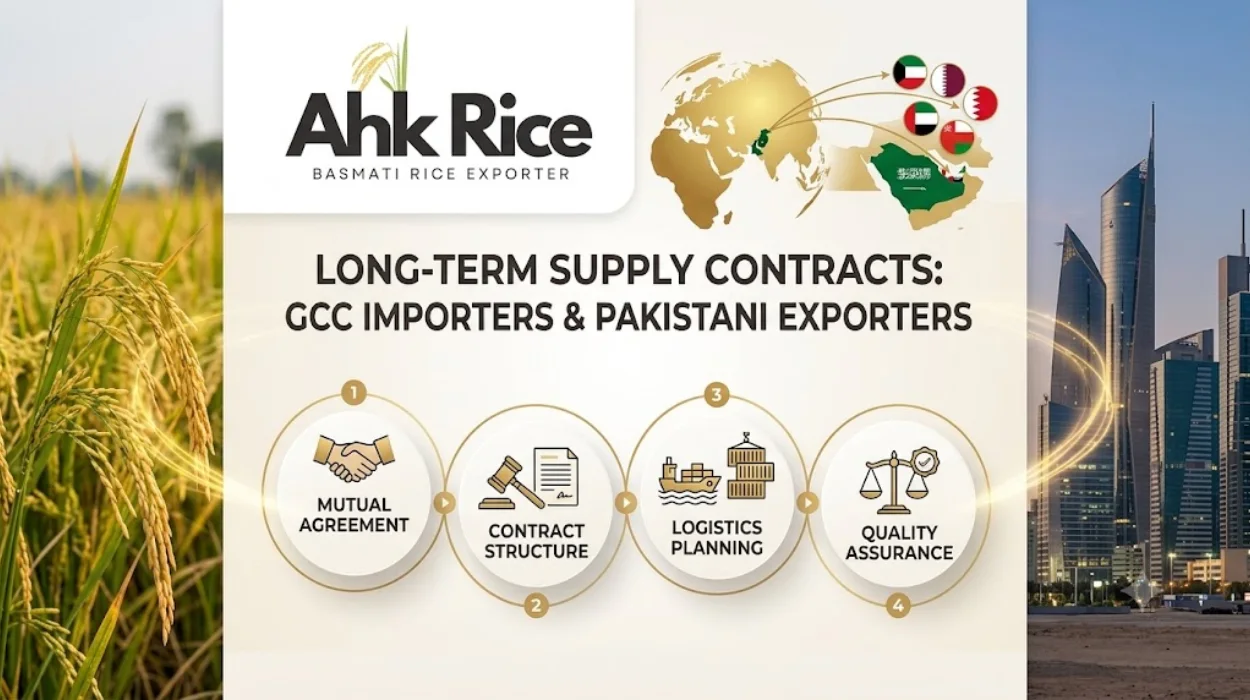
Long-term contracts reduce procurement risk, stabilize pricing, improve inventory planning, and secure consistent rice quality throughout the year. Here is why: GCC buyers depend on reliable Pakistani exporters with verified processing systems, documented quality standards, and predictable shipping performance.
GCC food distributors rarely purchase rice through one-time transactions. Instead, they establish structured supply agreements with reliable exporters that can deliver consistent quality over many months. Before negotiating commercial terms, many buyers first review the educational overview in Pakistan’s rice export value across GCC markets to understand regional demand and import trends.
Pakistani exporters play an important role because Pakistan produces multiple premium Basmati varieties with competitive pricing and dependable export capacity. AHK Rice helps GCC importers build long-term procurement strategies through standardized production, export documentation, quality verification, and scheduled shipments.
Businesses that import rice regularly need predictable suppliers rather than occasional exporters. AHK Rice supports that objective by combining production planning, quality inspection, logistics coordination, and customer support under one export process.
Importers evaluating different sourcing options should also compare market preferences through our guide to Pakistani rice varieties preferred across GCC markets before selecting a contract specification.
What is the best solution for securing a long-term rice supply from Pakistan?
The best solution is establishing an annual supply agreement with fixed specifications, scheduled production, documented quality inspections, flexible shipment planning, and transparent communication. This approach minimizes procurement risks while maintaining stable product quality across multiple deliveries throughout the contract period.
Long-term procurement succeeds because every shipment follows identical specifications. Buyers avoid unnecessary quality variation between containers while maintaining customer satisfaction.
The most effective contracts define measurable specifications before production begins.
Contract specifications commonly include
| Specification | Typical Agreement |
|---|---|
| Rice variety | 1121, Super Kernel, 1509 |
| Processing type | Steam, Sella, Golden Sella, White |
| Grain length | 8.30 mm+ |
| Broken percentage | 2–5% |
| Moisture | 12–14% |
| Packaging | 5kg–50kg |
| Contract duration | 6–24 months |
Every specification should remain identical unless both parties approve changes.
AHK Rice develops contracts around production planning instead of spot availability. This approach improves consistency because milling schedules match customer demand rather than warehouse surplus.
Benefits of long-term agreements
- Reduce annual purchasing uncertainty
- Maintain consistent product quality
- Secure production capacity
- Improve inventory planning
- Reduce emergency purchasing costs
- Simplify documentation
- Strengthen supplier relationships
Many GCC wholesalers renew contracts annually because stable supply often produces greater profitability than chasing temporary market discounts.
With contract structure established, the next question becomes selecting the exporter capable of delivering those commitments.
Why choose AHK Rice for long-term GCC supply contracts?
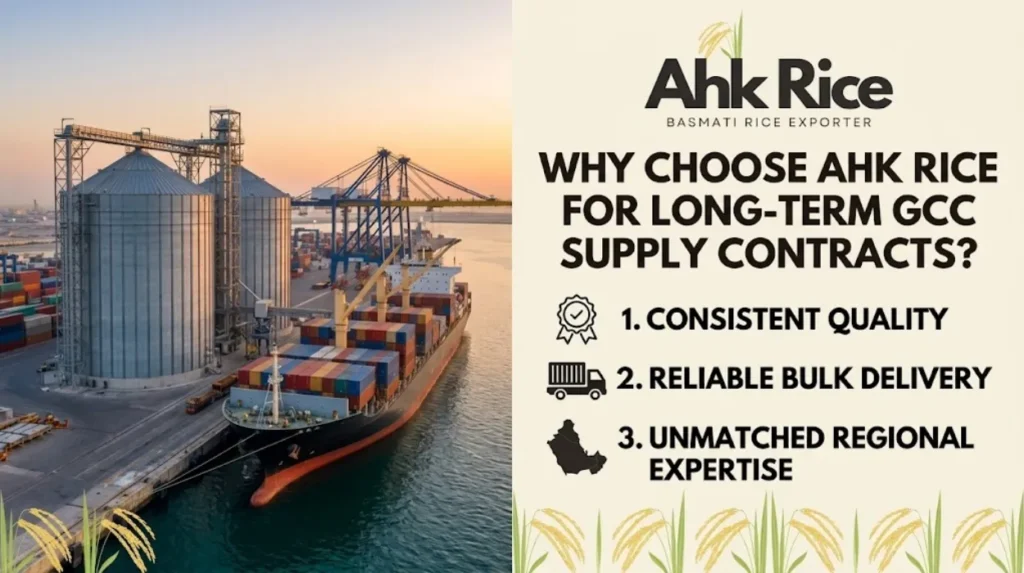
Reliable exporters combine production capacity, inspection systems, export experience, responsive communication, and consistent documentation. These capabilities reduce operational risk while ensuring every shipment meets agreed specifications and delivery schedules across GCC destinations.
Choosing an exporter involves much more than comparing FOB prices.
AHK Rice provides a complete export solution beginning with procurement and ending with delivery documentation.
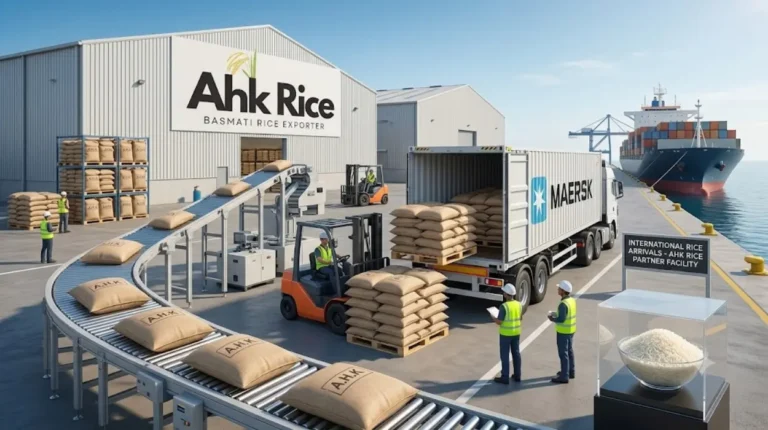
The company follows structured processing operations that include:
- Clean the harvested paddy.
- De-husk the grain.
- Polish the rice.
- Grade by length.
- Sort using optical color sorters.
- Test moisture levels.
- Inspect final quality.
- Pack according to buyer requirements.
- Load containers for export.
Listing every processing stage creates transparency for commercial buyers.
The first commercial discussion usually begins after buyers review the AHK Rice export services and determine which rice specifications align with their market requirements.
Quality controls
| Inspection Item | Standard |
|---|---|
| Moisture | 12–14% |
| Broken grains | Customer specification |
| Chalkiness | Export grade |
| Foreign matter | Near zero |
| Packaging inspection | 100% |
| Fumigation | Before dispatch |
| Laboratory testing | Available upon request |
Every shipment undergoes inspection before loading.
Export documents generally include:
- Commercial Invoice
- Packing List
- Certificate of Origin
- Phytosanitary Certificate
- Fumigation Certificate
- Bill of Lading
- Quality Certificate
These documents simplify customs clearance across GCC countries.
AHK Rice also provides production updates before shipment, allowing buyers to coordinate warehouse planning more effectively.
Understanding supplier capability naturally leads to evaluating the commercial results buyers can expect.
What results can importers expect from long-term contracts?
Long-term supply contracts deliver greater pricing stability, consistent inventory availability, predictable production scheduling, fewer quality disputes, and improved customer retention. Buyers benefit because standardized specifications reduce operational disruptions across multiple purchasing cycles.
Importers often experience better forecasting accuracy after moving from spot purchases to annual agreements.
Instead of renegotiating every shipment, procurement teams can focus on sales growth.
Typical outcomes include:
| Business Area | Expected Improvement |
|---|---|
| Supply stability | High |
| Price predictability | Improved |
| Customer complaints | Lower |
| Inventory planning | Easier |
| Procurement workload | Reduced |
Restaurants, supermarket chains, wholesalers, and catering companies benefit most because consistent rice quality strengthens brand reputation.
For example, a supermarket chain in Qatar receiving identical 1121 Steam Basmati Rice throughout twelve months avoids customer complaints caused by changing grain length or cooking performance.
Similarly, a distributor serving Saudi Arabia can maintain stable retail packaging because every shipment follows identical specifications.
Industry reports consistently show that GCC countries remain among the largest destinations for Pakistani rice exports due to growing food demand and long-term supplier relationships (Source: Pakistan Bureau of Statistics FY2024–25; REAP Export Data 2025).
AHK Rice supports these outcomes through planned production rather than opportunistic exports. Buyers receive greater consistency because production schedules are aligned with contractual commitments instead of fluctuating market availability.
With expected results established, the next section examines the commercial factors that influence contract pricing. Contact AHK Rice today and submit your requirements through the quotation request form to receive a tailored export proposal.
Frequently Asked Questions
How long does a typical GCC rice supply contract last?
Most GCC importers sign contracts ranging from 6 to 24 months, depending on their annual purchasing volume and inventory requirements. Longer agreements provide better production planning and more stable pricing. AHK Rice works with buyers to establish flexible delivery schedules within the agreed contract period. Contract terms can also include renewal options based on performance and market conditions.
What is the sample process before placing a bulk rice order?
AHK Rice begins by understanding the buyer’s required rice variety, processing grade, and packaging specifications. A representative sample is prepared and dispatched for evaluation. Sample courier charges typically range from USD 40–80, depending on the destination and package weight, while larger commercial samples may incur additional costs. After sample approval, both parties finalize the commercial contract before production begins.
Which documents are required for exporting rice to GCC countries?
A standard rice export shipment includes a Commercial Invoice, Packing List, Bill of Lading, Certificate of Origin, Phytosanitary Certificate, Fumigation Certificate, and Quality Certificate. Additional documents such as laboratory analysis reports or halal certifications can also be provided if required by the importing country. Accurate documentation helps speed up customs clearance and minimizes delays at GCC ports.
What factors affect the price of a long-term rice supply contract?
Contract pricing depends on several commercial factors, including the rice variety, processing type, grain length, broken percentage, packaging material, order quantity, Incoterms (FOB or CIF), and freight costs. Seasonal harvest conditions and international shipping rates may also influence pricing. Long-term agreements often provide greater price stability than purchasing through spot-market transactions.
Why should GCC importers choose AHK Rice for long-term supply?
AHK Rice offers structured production planning, consistent quality control, transparent communication, and reliable export documentation for every shipment. Buyers benefit from standardized specifications, scheduled deliveries, and responsive customer support throughout the contract period. This approach reduces procurement risks and helps distributors, wholesalers, retailers, and food service companies maintain a dependable rice supply across GCC markets.