Why Do Saudi Arabian Importers Prefer Pakistan’s 1121 Extra Long Grain Basmati Rice?
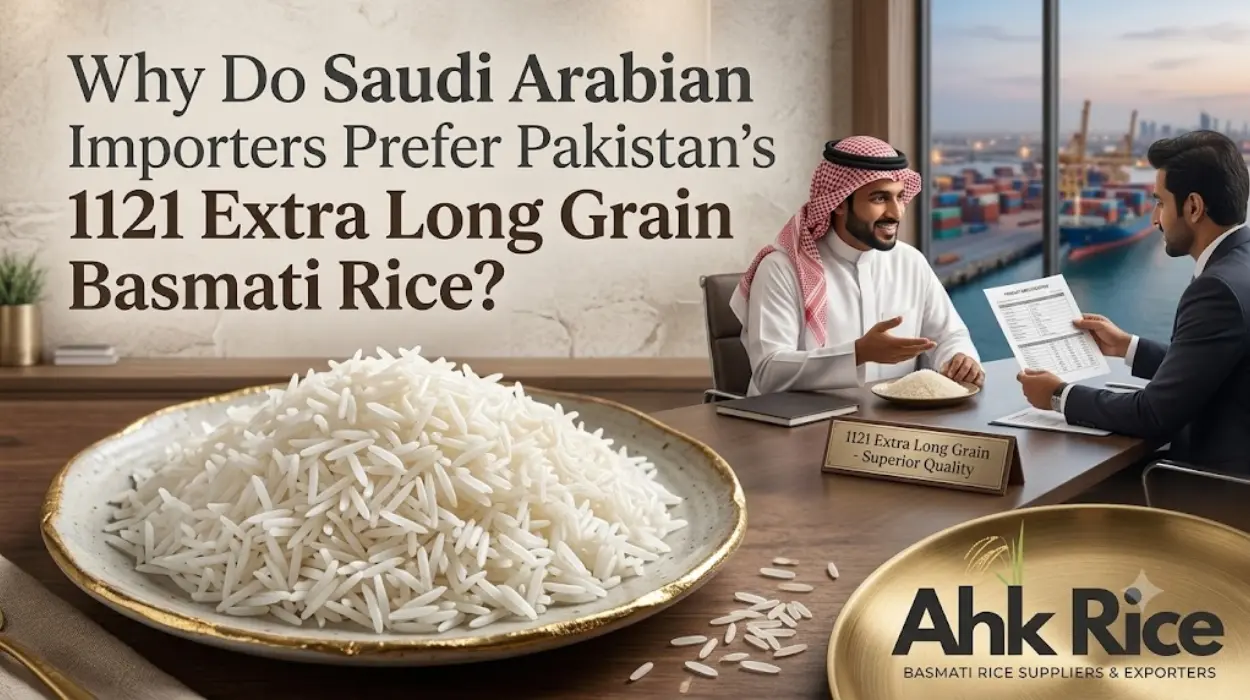
Saudi Arabian importers prefer Pakistan’s 1121 Extra Long Grain Basmati Rice because it delivers 8.30–8.50 mm raw grain length, strong post-cooking elongation, premium aroma, high volume yield, and suitability for traditional Gulf rice dishes. Here is why: Pakistani Punjab produces the world’s most recognized 1121 Basmati under specific climatic conditions, while modern processing preserves grain integrity and export quality standards.
Pakistan’s 1121 Basmati Rice has become one of the most imported premium rice varieties across Saudi Arabia. Restaurants, catering companies, supermarkets, wholesalers, and food distributors choose this variety because consumers associate long grains, aroma, and visual presentation with quality.
Saudi Arabia remains one of the largest destinations for Pakistani Basmati exports (source: Pakistan Bureau of Statistics, FY2024-25). Demand continues to grow because 1121 Basmati aligns closely with Gulf culinary preferences.
What Is Pakistan’s 1121 Extra Long Grain Basmati Rice?
1121 Basmati Rice is an aromatic long-grain rice variety with raw grain length of 8.30–8.50 mm and cooked elongation reaching nearly twice its original size.
1121 Basmati Rice is a premium rice cultivar developed from traditional Basmati breeding programs in Pakistan and India. The variety belongs to the Basmati family, which is known for fragrance, slender grains, and exceptional cooking performance.
Punjab serves as the primary cultivation region for Pakistani 1121 Basmati. The province provides fertile alluvial soil, irrigation from the Indus Basin, and seasonal temperature variations that support grain development.
The variety differs from ordinary long-grain rice because it combines aroma with elongation. Many non-Basmati varieties become wider during cooking. Pakistani 1121 Basmati grows significantly longer while maintaining a slender shape.
Saudi consumers often prefer visually appealing rice dishes. Examples include Kabsa, Mandi, Bukhari Rice, and Madghout. Longer grains improve presentation and create a premium dining experience.
With the definition of 1121 Basmati established, the next question is how this rice moves from farm fields to export markets.
How Is Pakistan’s 1121 Basmati Rice Produced and Processed?
1121 Basmati reaches export quality through a structured chain of cultivation, harvesting, milling, grading, testing, packaging, and shipping operations.
Rice quality depends on every stage of production. Pakistani exporters follow standardized procedures to preserve grain length and aroma.
How Is 1121 Basmati Cultivated?
Punjab farmers cultivate 1121 Basmati during the Kharif season. Sowing generally begins between May and July. Harvesting occurs from October to November.
The crop receives controlled irrigation throughout its growth cycle. Field inspections monitor plant health, pest control, and grain maturity.
Climate contributes directly to grain quality. Warm days encourage growth while cooler nights support aroma development.
What Processing Steps Create Export-Grade 1121 Rice?
Export-quality rice follows a defined processing sequence:
- Clean the harvested paddy.
- Dry the paddy to export moisture levels.
- De-husk the grain.
- Mill the rice.
- Polish the kernels.
- Grade by size and quality.
- Sort through color sorting machines.
- Test laboratory parameters.
- Package according to buyer specifications.
Each stage removes defects and improves consistency.
What Quality Controls Are Applied?
Quality control includes:
- Moisture testing
- Grain length verification
- Purity inspection
- Broken grain analysis
- Color sorting
- Foreign matter detection
- Fumigation verification
- Laboratory certification
Exporters inspect every batch before shipment. Quality verification reduces claims and ensures compliance with destination market regulations.
With processing explained, the next question focuses on the specific characteristics Saudi importers value most.
What Key Characteristics Make 1121 Basmati Popular in Saudi Arabia?
Saudi buyers prioritize grain length, aroma, elongation, visual appearance, cooking yield, and consistency across commercial shipments.
Rice serves as a central ingredient in many Saudi meals. Buyers therefore evaluate specifications carefully.
Why Does Grain Length Matter?
Raw grain length represents one of the most important purchasing criteria.
Pakistani 1121 Basmati typically measures 8.30–8.50 mm before cooking. Cooked grains can exceed 18 mm depending on preparation methods.
Long grains create premium presentation. Restaurants prefer elongated rice because serving plates appear fuller and more attractive.
Why Is Aroma Important?
Basmati aroma originates from naturally occurring aromatic compounds. The fragrance remains one of the strongest differentiators between Basmati and ordinary long-grain rice.
Saudi consumers often associate aromatic rice with authenticity and premium quality.
Why Does Cooking Yield Influence Imports?
Higher elongation increases serving volume.
A catering company preparing Kabsa for 1,000 guests benefits from rice that expands efficiently during cooking. Greater yield improves operational planning and consistency.
Why Is Consistency Essential?
Importers purchase rice in container quantities rather than retail volumes.
Consistency across shipments allows distributors to maintain product standards. Uniform grain length and purity reduce customer complaints.
With the core characteristics explained, the next question examines available processing grades.
What Grades of Pakistani 1121 Basmati Rice Are Exported to Saudi Arabia?
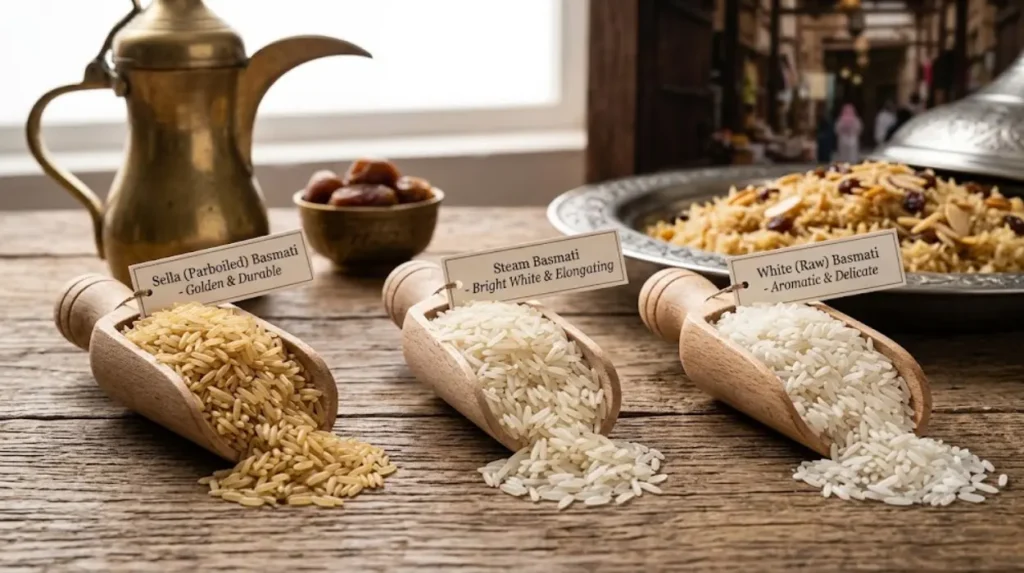
1121 Steam, 1121 Sella, 1121 Golden Sella, and 1121 White Rice represent the primary export grades supplied to Saudi Arabian buyers.
Different processing methods create different market applications.
1121 White Basmati Rice
1121 White Rice undergoes conventional milling and polishing.
Characteristics include:
- Bright appearance
- Soft texture
- Distinct aroma
- Shorter shelf life than parboiled grades
Retail consumers frequently select white rice for household use.
1121 Steam Basmati Rice
Steam processing strengthens grain structure without extensive color change.
Characteristics include:
- Light cream appearance
- Improved grain strength
- Better cooking stability
- Enhanced export durability
Steam rice remains popular among premium food service buyers.
1121 Sella Basmati Rice
Sella rice undergoes parboiling before milling.
Characteristics include:
- Strong grain integrity
- Reduced breakage
- Longer shelf life
- Improved storage performance
Large-scale catering operations often choose Sella grades.
1121 Golden Sella Basmati Rice
Golden Sella receives a specialized parboiling treatment.
Characteristics include:
- Golden color
- High elongation
- Strong grain structure
- Extended storage capability
Buyers comparing premium long-grain specifications often evaluate how different Basmati varieties perform across Gulf markets. A detailed comparison of grain size, cooking behavior, and market suitability is available in our guide on choosing the right Basmati variety for Saudi Arabian consumer preferences.
With processing grades defined, the next question examines the practical advantages these grades deliver.
What Benefits Does Pakistan’s 1121 Basmati Rice Provide?
1121 Basmati offers premium presentation, strong cooking performance, excellent aroma retention, efficient yield, and broad compatibility with Gulf cuisine.
Visual quality influences purchasing decisions throughout the food chain.
Long grains create a premium appearance in restaurants, hotels, and family gatherings.
Cooking performance creates operational value. Food service businesses need predictable results across large batches.
Aroma enhances customer satisfaction. Fragrance contributes directly to dining experience and product differentiation.
Shelf stability supports international trade. Properly processed Basmati tolerates long-distance shipping and warehouse storage.
Brand positioning also benefits from premium rice specifications. Retailers frequently market long-grain Basmati as a higher-value category than standard rice.
With benefits established, the next question focuses on actual market applications.
How Is 1121 Basmati Rice Used Across Saudi Arabia?
Restaurants, catering companies, retailers, wholesalers, food processors, and hospitality operators use 1121 Basmati for premium rice-based meals.
Saudi Arabia imports rice through multiple distribution channels.
Food Service Sector
- Hotels require consistent rice quality for banquet operations.
- Restaurants need reliable cooking performance for daily service.
- Catering companies depend on high-volume cooking efficiency.
Examples include wedding catering, corporate events, religious gatherings, and institutional kitchens.
Retail Sector
- Supermarkets package 1121 Basmati under private labels and established rice brands.
- Consumers purchase rice for home preparation of traditional dishes.
- Examples include Kabsa, Mandi, Bukhari Rice, and Zurbian.
Wholesale Distribution
- Wholesalers import container loads and distribute rice across regional markets.
- Large inventory management requires stable quality and storage performance.
- With use cases covered, the next question addresses common misconceptions surrounding 1121 Basmati.
What Misconceptions Exist About Pakistan’s 1121 Basmati Rice?
Many buyers incorrectly assume all long-grain rice is Basmati, all Basmati grades perform identically, and grain length alone determines quality.
Several misconceptions influence purchasing decisions.
Is Every Long-Grain Rice a Basmati Rice?
No. Long grain describes physical shape. Basmati describes a specific rice category with aroma, elongation, and genetic characteristics.
Many non-Basmati varieties achieve long grain dimensions without authentic Basmati traits.
Does Longer Grain Always Mean Better Quality?
No. Quality evaluation includes:
- Purity percentage
- Moisture level
- Broken grain ratio
- Aroma intensity
- Milling quality
- Cooking performance
Grain length remains important but does not determine total value alone.
Are All 1121 Grades Identical?
No. Golden Sella, Sella, Steam, and White grades serve different applications.
- Golden Sella provides stronger storage performance.
- Steam grades offer lighter appearance.
- White grades emphasize natural color and aroma.
Does Basmati Require Special Certifications?
Import regulations require documentation and testing.
Certification requirements commonly include:
- Phytosanitary Certificate
- Certificate of Origin
- Fumigation Certificate
- Quality Inspection Reports
- Health Certificates when required
- ISO-based processing compliance
- HACCP compliance verification
- Food safety documentation
Certification requirements vary according to importer specifications and Saudi regulatory updates.
With misconceptions clarified, the final question examines why Saudi demand remains strong.
Why Does Saudi Arabian Demand for Pakistani 1121 Basmati Continue Growing?
Saudi demand remains strong because Pakistani 1121 Basmati combines premium grain length, recognized aroma, reliable supply chains, and compatibility with traditional Gulf cuisine.
- Consumer preferences continue favoring visually attractive rice dishes.
- Food service operators require consistent specifications across large import volumes.
- Retailers benefit from strong consumer recognition of Basmati rice categories.
Pakistan maintains a significant role in global Basmati exports because Punjab’s growing conditions support high-quality production (source: REAP export data, December 2025).
1121 Basmati therefore remains one of the most important rice varieties in Saudi Arabia’s premium rice segment. Its combination of length, aroma, cooking performance, and export readiness aligns closely with the requirements of importers, distributors, restaurants, and consumers across the Kingdom.
Frequently Asked Questions
Why is Pakistani 1121 Basmati Rice popular in Saudi Arabia?
Pakistani 1121 Basmati Rice is popular in Saudi Arabia because it offers extra-long grains, strong aroma, high cooking elongation, and excellent presentation. These characteristics match the requirements of traditional Saudi dishes such as Kabsa, Mandi, and Bukhari Rice.
What is the average grain length of Pakistan’s 1121 Basmati Rice?
Pakistan’s 1121 Basmati Rice typically has a raw grain length of 8.30–8.50 mm. After cooking, the grains can reach more than 18 mm in length while maintaining a slender shape, which makes the rice attractive for premium food service and retail markets.
Which grade of 1121 Basmati Rice is most imported by Saudi buyers?
1121 Golden Sella and 1121 Steam Basmati Rice are among the most imported grades by Saudi buyers. Golden Sella is preferred for catering and bulk food service because of its strong grain structure and longer shelf life, while Steam Rice is valued for its lighter appearance and premium presentation.
How is 1121 Basmati Rice different from ordinary long-grain rice?
1121 Basmati Rice differs from ordinary long-grain rice because it combines natural aroma, superior elongation, and authentic Basmati characteristics. Ordinary long-grain rice lacks the distinctive fragrance and cooking performance that define genuine Basmati varieties.
What certifications are required for exporting 1121 Basmati Rice to Saudi Arabia?
Export shipments commonly require a Phytosanitary Certificate, Certificate of Origin, Fumigation Certificate, and quality inspection documents. Exporters also follow food safety standards such as HACCP and ISO-based quality management systems to meet importer and regulatory requirements.