1121 Steam vs 1121 Sella Rice: Grain Length Performance for Saudi Arabian Mandi Operations
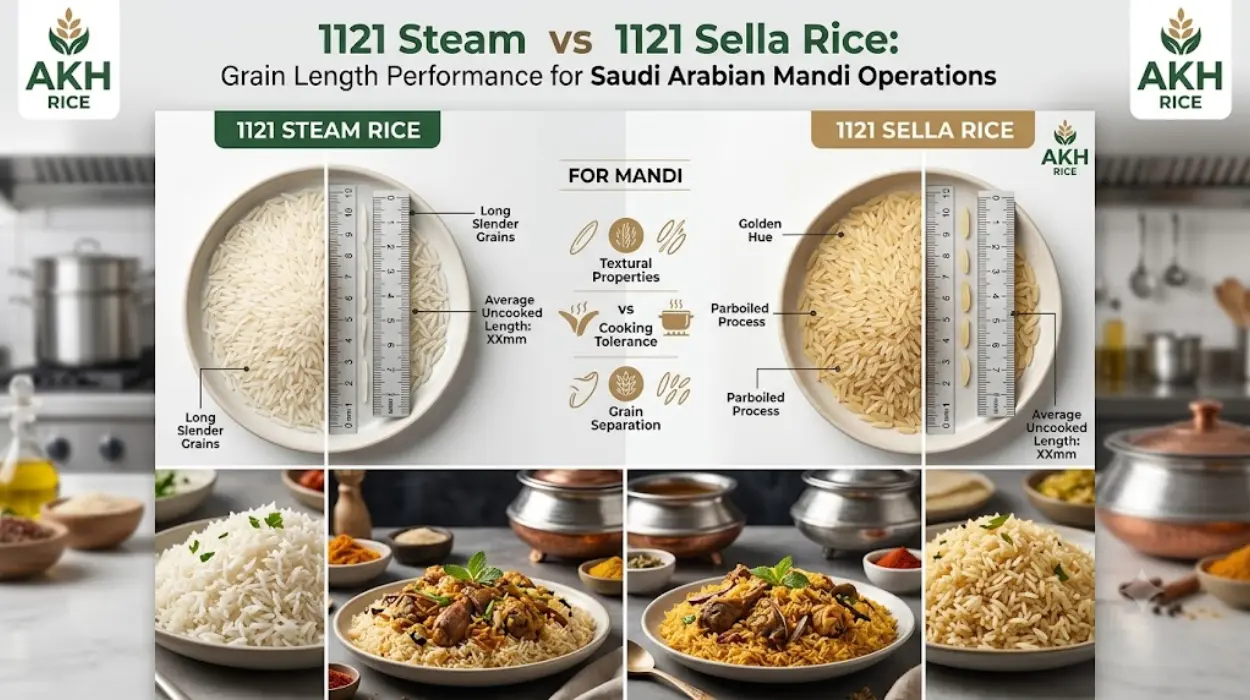
1121 Sella Rice delivers better grain stability for large-scale Saudi Arabian mandi operations, while 1121 Steam Rice provides a softer texture and brighter appearance. Here is why: Sella rice undergoes parboiling before milling, which strengthens the grain structure and reduces breakage during bulk cooking. Steam rice retains a more natural texture and aroma, making it suitable for premium dining experiences.
Saudi Arabian mandi restaurants depend on consistent grain performance. Rice must remain separate after cooking, maintain visual appeal during service, and withstand long holding times in commercial kitchens. These requirements make grain length performance a critical purchasing factor.
Pakistan remains the largest supplier of premium long-grain Basmati rice for Gulf foodservice markets because its 1121 variety produces some of the longest cooked grains available globally (source: REAP Export Data, December 2025). Buyers seeking background information on why Saudi restaurants prioritize extra-long grains can explore our guide on how Gulf operators select premium Pakistani Basmati varieties for traditional mandi preparation.
AHK Rice supplies Pakistani Basmati rice to more than 15 countries. The company processes, grades, inspects, certifies, loads, and exports 1121 Steam, 1121 Sella, Super Kernel, and 1509 Basmati rice from Punjab, Pakistan.
What Is the Difference Between 1121 Steam Rice and 1121 Sella Rice?
1121 Steam Rice offers softer texture and brighter color, while 1121 Sella Rice provides stronger grain structure, lower breakage, and longer holding performance in commercial mandi kitchens.
What Is 1121 Steam Rice?
1121 Steam Rice is produced by applying controlled steam treatment before milling. The process improves grain strength while preserving most natural Basmati characteristics.
1121 Steam Rice typically achieves raw grain lengths between 8.20–8.40 mm. Cooked grain expansion often reaches 16.5–18.0 mm depending on cooking conditions.
Saudi premium restaurants often choose Steam Rice because guests prefer its soft mouthfeel and bright white appearance.
What Is 1121 Sella Rice?
1121 Sella Rice undergoes parboiling before milling. Paddy absorbs nutrients and moisture before drying and milling.
1121 Sella Rice develops a stronger internal grain structure. The process reduces cooking breakage and improves resistance during large-batch preparation.
Saudi catering operations frequently choose Sella Rice because it performs consistently during high-volume service.
Specification Comparison
| Attribute | 1121 Steam Rice | 1121 Sella Rice |
|---|---|---|
| Raw Grain Length | 8.20–8.40 mm | 8.20–8.40 mm |
| Cooked Length | 16.5–18.0 mm | 17.0–19.0 mm |
| Grain Strength | Medium | High |
| Breakage Resistance | Moderate | Excellent |
| Texture | Soft | Firm |
| Holding Time | 2–3 Hours | 4–6 Hours |
| Shelf Life | 12–18 Months | 18–24 Months |
Steam and Sella share similar raw dimensions, but processing creates major performance differences. The next question is how these differences affect actual mandi operations.
How Do 1121 Steam and 1121 Sella Perform in Saudi Arabian Mandi Kitchens?
1121 Sella performs better in bulk cooking, while 1121 Steam performs better in premium plated service where texture and appearance receive greater attention.
Grain Expansion Performance
1121 Sella Rice achieves stronger expansion during mandi preparation. The parboiled structure allows grains to remain separate after cooking.
In Riyadh banquet operations serving 500 guests, Sella Rice maintains grain separation throughout service. Steam Rice provides excellent presentation initially but softens faster during extended holding periods.
Breakage Performance
1121 Sella Rice records lower breakage rates during large-scale cooking.
Commercial kitchens using industrial steam kettles report reduced grain damage with Sella grades because the strengthened grain structure tolerates mechanical handling.
Steam Rice remains suitable for restaurants serving smaller guest volumes where rapid turnover minimizes holding time.
Heat Retention Performance
Saudi mandi restaurants frequently hold rice at serving temperature for several hours.
1121 Sella Rice maintains structure during prolonged holding. In kitchens operating at high ambient temperatures, Sella preserves grain definition longer than Steam Rice.
For wedding catering operations, Sella provides greater operational consistency. For premium dining venues, Steam provides superior eating quality.
With cooking performance established, buyers must compare available solution types for different business models.
What Are the Available Rice Solutions for Saudi Arabian Mandi Operations?
Three practical solutions exist: premium Steam grades, premium Sella grades, and customized processing grades designed for specific restaurant and catering requirements.
Premium 1121 Steam Grades
Premium Steam grades target upscale restaurants.
Key benefits include:
- Brighter appearance
- Softer texture
- Strong aroma retention
- Premium dining presentation
Premium Riyadh and Jeddah restaurants often prioritize guest experience over storage duration.
Premium 1121 Sella Grades
Premium Sella grades target institutional kitchens.
Key benefits include:
- Lower breakage
- Better holding stability
- Higher cooking tolerance
- Longer storage capability
Large catering companies commonly select Sella specifications.
Customized Processing Grades
AHK Rice offers multiple processing specifications for export buyers.
Processing options include:
- Steam
- Creamy Sella
- Golden Sella
- White Rice
- Extra White Rice
- Double Polished Rice
- Sortex Premium Rice
Customized grades allow buyers to match rice performance with operational requirements.
Understanding available solutions creates a foundation for evaluating which approach fits each market segment.
How Do Different Saudi Market Regions Compare in Rice Preferences?
Central Saudi Arabia favors stronger Sella grades, while Western Saudi Arabia shows greater demand for premium Steam grades in restaurant environments.
Central Saudi Arabia
Cities such as Riyadh and Buraydah consume significant volumes through catering companies and banquet operators.
These buyers prioritize:
- Storage stability
- Cooking consistency
- Bulk preparation efficiency
- Lower operational losses
1121 Sella Rice dominates many institutional procurement programs.
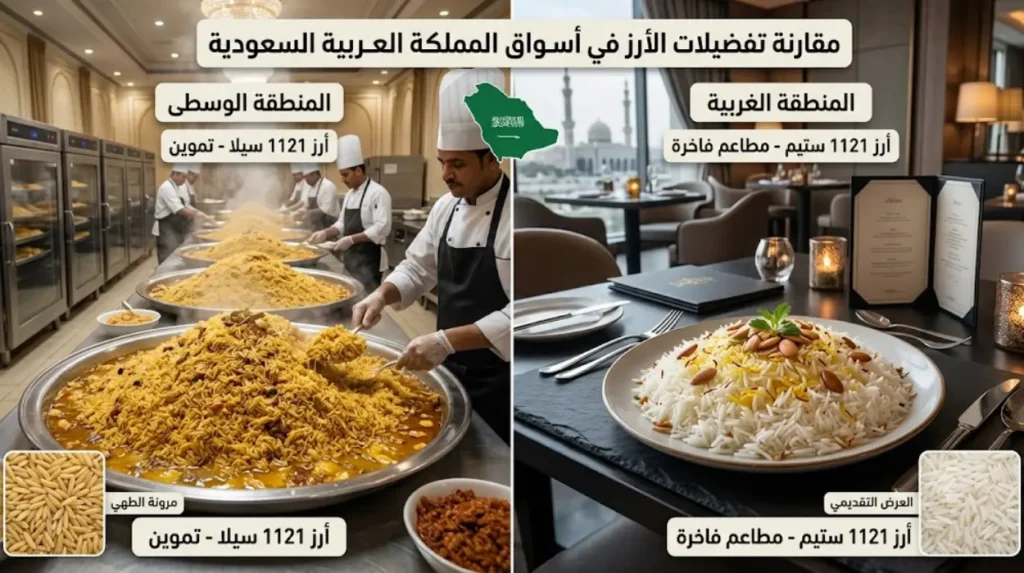
Western Saudi Arabia
Cities such as Jeddah and Makkah support extensive restaurant activity.
These buyers prioritize:
- Visual presentation
- Guest experience
- Aroma retention
- Premium positioning
1121 Steam Rice receives stronger demand in premium restaurant channels.
Regional demand patterns directly influence pricing and procurement decisions, which leads to the next comparison.
How Do Price Per Metric Ton and Shelf Life Compare?
1121 Steam typically commands higher pricing, while 1121 Sella delivers longer storage flexibility and lower operational risk.
Price Comparison 2026
Export prices fluctuate according to crop quality, freight costs, and destination market demand.
| Product | Average Export Range (USD/MT) |
| 1121 Steam Rice | $1,050–1,250 |
| 1121 Sella Rice | $950–1,150 |
(Source: REAP Export Data, Q1 2026)
Steam grades often command premiums because buyers value appearance and texture.
Sella grades remain attractive because lower procurement costs combine with stronger operational performance.
Shelf Life Comparison
| Product | Typical Shelf Life |
| 1121 Steam Rice | 12–18 Months |
| 1121 Sella Rice | 18–24 Months |
Sella lasts longer than Steam.
In Gulf warehouses operating above 40°C, Sella maintains quality longer.
For Saudi catering buyers managing large inventories, Sella reduces inventory risk.
For premium restaurants ordering frequently, Steam remains a practical specification.
Price and storage performance reveal economic differences, but procurement decisions require a structured framework.
Which Method Works Best for Different Business Cases?
The best choice depends on guest volume, storage duration, service model, budget requirements, and presentation priorities.
Decision Framework
| Decision Factor | Choose 1121 Steam | Choose 1121 Sella |
| Premium Dining | ✓ | |
| Wedding Catering | ✓ | |
| Long-Term Storage | ✓ | |
| Maximum Aroma | ✓ | |
| Cost Efficiency | ✓ |
Pros of 1121 Steam Rice
- Superior visual appearance
- Softer texture
- Better premium positioning
- Strong consumer perception
Example: Fine-dining mandi restaurants in Jeddah often select Steam grades.
Cons of 1121 Steam Rice
- Shorter shelf life
- Lower holding stability
- Higher procurement cost
Pros of 1121 Sella Rice
- Longer storage capability
- Better grain durability
- Lower breakage rates
- Improved catering performance
Example: Riyadh event caterers frequently select Sella grades for banquet service.
Cons of 1121 Sella Rice
- Firmer texture
- Less natural appearance
- Lower premium dining appeal
The decision framework clarifies buyer priorities and prepares procurement teams for supplier evaluation.
Which Rice Specification Should Saudi Arabian Mandi Buyers Choose?
Premium restaurants should choose 1121 Steam Rice, while catering companies and high-volume operators should choose 1121 Sella Rice.
1121 Steam Rice creates a premium dining experience. The grain remains attractive, aromatic, and soft. Restaurants focused on customer presentation gain the greatest value from Steam specifications.
1121 Sella Rice delivers operational efficiency. The grain remains stable, durable, and consistent during bulk cooking. Catering companies benefit from reduced breakage and longer inventory life.
Saudi buyers evaluating long-term sourcing programs should compare supplier processing standards, grading systems, quality testing procedures, export certifications, and logistics capabilities before finalizing procurement contracts.
Buyers moving from evaluation to supplier selection can continue with our detailed guide covering Pakistani long-grain Basmati sourcing strategies for Saudi mandi restaurant chains and multi-location foodservice operators.
AHK Rice supports both procurement approaches through end-to-end processing, grading, inspection, custom packaging, documentation, loading, and export services from Punjab, Pakistan.
Frequently Asked Questions
What is the main difference between 1121 Steam Rice and 1121 Sella Rice?
1121 Steam Rice undergoes steam treatment before milling, while 1121 Sella Rice undergoes a full parboiling process before milling. Steam Rice offers a softer texture and brighter appearance. Sella Rice provides stronger grain structure, lower breakage, and better performance in large-scale mandi cooking operations.
Which rice is better for Saudi Arabian mandi restaurants?
The best choice depends on the restaurant model. Premium dine-in restaurants often prefer 1121 Steam Rice because of its soft texture and attractive presentation. High-volume catering companies and banquet kitchens usually select 1121 Sella Rice because it maintains grain separation and quality during extended holding periods.
Does 1121 Sella Rice produce longer cooked grains than 1121 Steam Rice?
Yes. Both varieties have similar raw grain lengths of approximately 8.20–8.40 mm. However, 1121 Sella Rice often achieves cooked grain lengths of 17.0–19.0 mm, while 1121 Steam Rice typically reaches 16.5–18.0 mm. This difference makes Sella Rice popular for large mandi platters.
Which rice has a longer shelf life for export and storage?
1121 Sella Rice generally offers a longer shelf life of 18–24 months because the parboiling process strengthens the grain and improves storage stability. 1121 Steam Rice usually maintains optimal quality for 12–18 months under proper warehouse conditions.
How do Saudi buyers choose between 1121 Steam and 1121 Sella Rice?
Saudi buyers evaluate several factors, including restaurant type, storage duration, serving volume, cooking method, and budget. Steam Rice is suitable for premium dining experiences, while Sella Rice is often selected for catering contracts, banquet operations, and institutional foodservice programs that require maximum consistency.