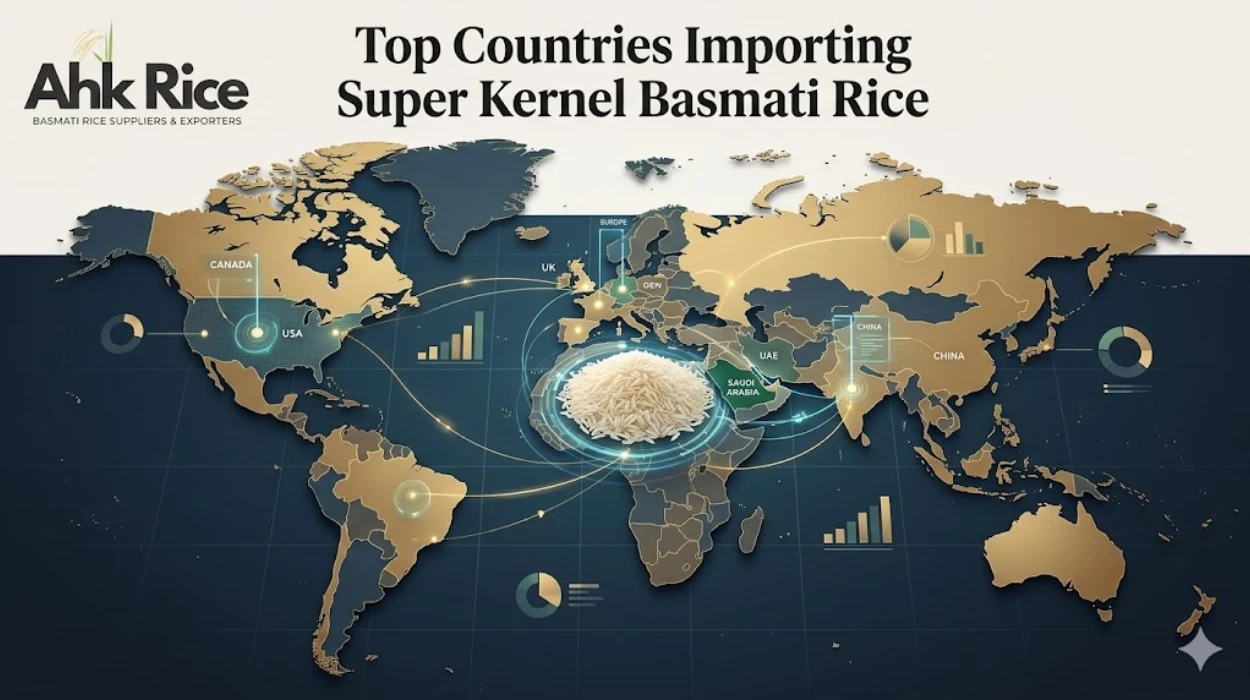
Top Countries Importing Super Kernel Basmati Rice
Super Kernel Basmati Rice is a long-grain aromatic rice variety cultivated in Punjab, Pakistan, defined by extra-long grain length, high elongation after cooking, and strong fragrance. Here is why: it originates from irrigated basmati-growing zones, is milled under controlled polishing systems, and is graded for premium export specifications used in global catering and retail markets.
Super Kernel Basmati Rice belongs to the broader basmati family cultivated in fertile plains of Punjab, where farmers cultivate it under canal irrigation systems. The grain is known for its slender structure and natural aroma compound retention during milling and storage.
Super Kernel Basmati Rice is harvested after a 120–140 day growth cycle, depending on sowing time and climate conditions. Farmers irrigate fields in controlled cycles to ensure uniform grain maturity and reduce broken kernels during milling.
Super Kernel Basmati Rice is then processed through milling systems that remove husk layers while preserving kernel integrity. Mills dehusk, polish, and grade grains based on length, moisture, and head rice yield.
Super Kernel Basmati Rice is classified as a premium export grain due to its cooking elongation ratio of nearly 2.0 times original length, making it preferred in hospitality and bulk catering sectors.
With the definition of Super Kernel Basmati Rice established, the next step is understanding how its cultivation and export processing system operates.
How does Super Kernel Basmati Rice cultivation and processing work?
Super Kernel Basmati Rice cultivation and processing follow a structured agricultural-to-export pipeline involving irrigation, harvesting, milling, grading, and packaging. Here is why: each stage controls grain length retention, aroma stability, and export compliance, ensuring consistent performance for international importers across long shipping cycles.
Super Kernel Basmati Rice cultivation begins with seed selection in Punjab farming zones where soil fertility and water availability determine yield quality. Farmers cultivate seedlings in nursery beds before transplanting them into flooded fields.
Super Kernel Basmati Rice irrigation management uses controlled water intervals. Farmers irrigate at vegetative, flowering, and grain-filling stages to stabilize starch accumulation and reduce chalkiness.
Super Kernel Basmati Rice harvesting occurs after full grain maturation. Farmers harvest when moisture levels drop to approximately 20–22 percent to reduce breakage during milling.
Super Kernel Basmati Rice processing includes multiple controlled stages:
- Clean paddy removal of dust and foreign matter
- De-husk rice grain separation from husk layers
- Parboil controlled steaming for kernel strengthening
- Dry moisture reduction to export-safe levels
- Mill polish outer bran layer removal
- Grade length-based sorting for export classification
- Inspect quality for export compliance standards
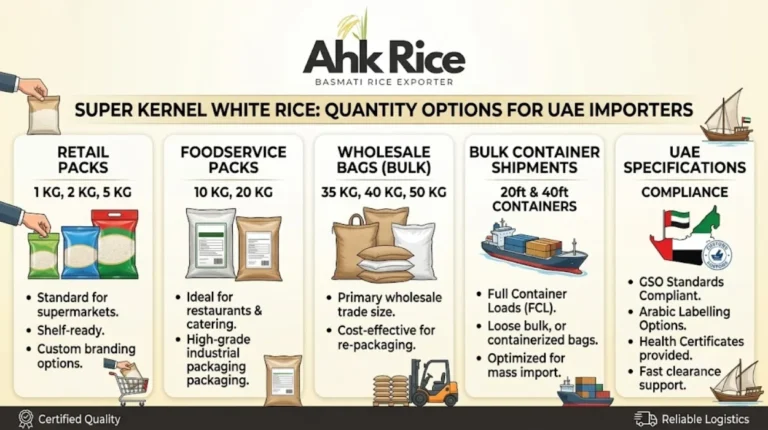
Super Kernel Basmati Rice is then packed into export-ready packaging formats including 5 kg, 10 kg, 25 kg, and 40 kg bags depending on importer requirements. AHK Rice dispatches shipments after inspection and certification checks.
With cultivation and processing defined, the next focus is the structural components that define export-grade Super Kernel Basmati Rice.
What are key components of export-grade Super Kernel Basmati Rice?
Export-grade Super Kernel Basmati Rice is defined by grain length, moisture level, aroma retention, head rice yield, and uniformity in sorting. Here is why: each component determines cooking performance, storage stability, and acceptance in regulated import markets with strict food compliance standards.
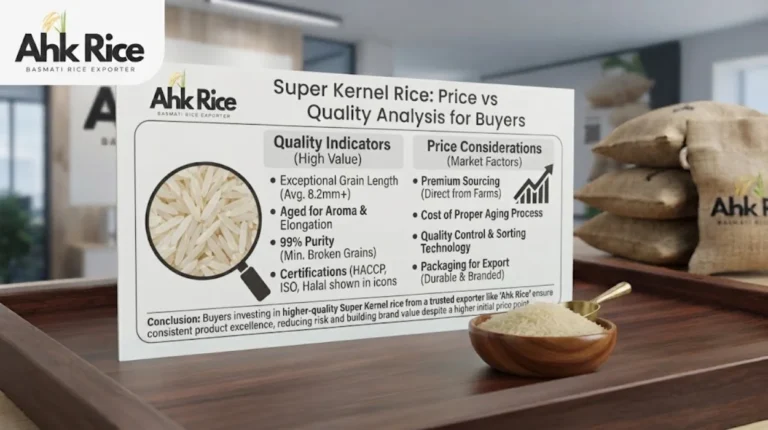
Super Kernel Basmati Rice grain length typically ranges between 7.0–7.4 mm before cooking, which elongates significantly after cooking. This dimension supports premium plate presentation in food service sectors.
Super Kernel Basmati Rice moisture control is maintained at 12–13 percent during export preparation. Lower moisture reduces microbial growth during long-distance shipping cycles.
Super Kernel Basmati Rice aroma retention depends on natural 2-acetyl-1-pyrroline compound stability. Controlled drying and storage preserve fragrance intensity across transport durations.
Super Kernel Basmati Rice head rice yield remains high due to careful milling calibration. Mills adjust pressure settings to reduce broken kernels during polishing stages.
Super Kernel Basmati Rice uniformity is ensured through color sorting machines that remove discolored or immature grains before packaging.
Super Kernel Basmati Rice packaging integrity supports humidity resistance during sea freight shipping across Gulf and African trade routes.
With export components defined, the next step explains how these qualities translate into market benefits.
What benefits does Super Kernel Basmati Rice provide to import markets?
Super Kernel Basmati Rice provides high elongation, aroma retention, cooking consistency, and long storage stability for import markets. Here is why: importers rely on uniform grain performance to serve catering chains, retail distributors, and institutional food programs with predictable cooking results and reduced waste.
Super Kernel Basmati Rice elongation improves plate volume perception in hospitality markets. A 1 kg batch produces higher serving expansion compared to short-grain rice categories.
Super Kernel Basmati Rice aroma enhances consumer preference in Middle Eastern and South Asian cuisines. Strong fragrance increases repeat purchase rates in retail segments.
Super Kernel Basmati Rice cooking consistency ensures uniform texture in large-scale catering kitchens. Hotels require batch stability for buffet service operations.
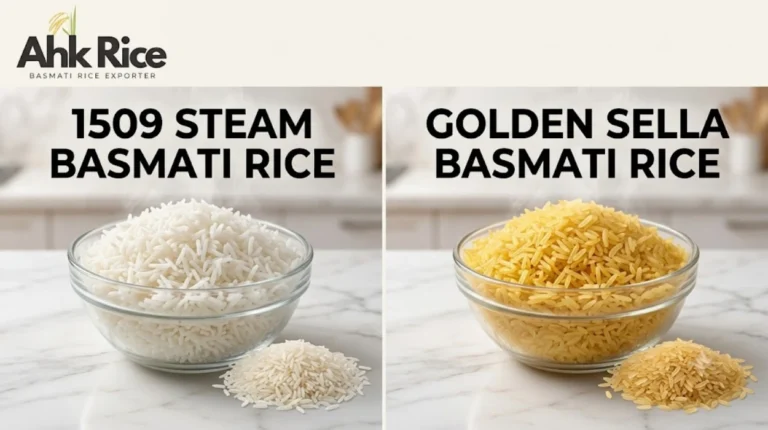
Super Kernel Basmati Rice storage stability extends shelf life up to 18 months in controlled environments. In high-temperature warehouses such as UAE logistics hubs, Golden Sella variants maintain structure longer than steam rice, which degrades faster under heat exposure conditions.
Super Kernel Basmati Rice cost efficiency supports bulk procurement models in government and institutional supply chains.
Importers often compare product performance using structured evaluation frameworks, including pricing stability, grain uniformity, and cooking yield. A detailed comparison with other aromatic varieties is available in Super Kernel Basmati vs Jasmine Rice: Key Differences for Importers.
With benefits defined, the next section explains which global markets import this rice and why demand patterns exist
Which countries import Super Kernel Basmati Rice and why?
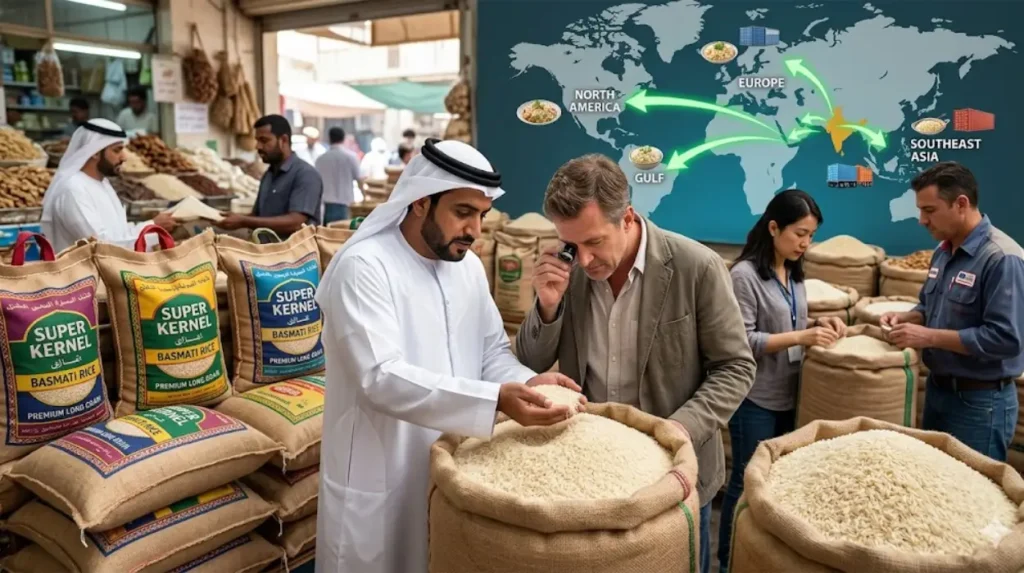
Super Kernel Basmati Rice is primarily imported by Gulf, European, North American, and Southeast Asian countries due to its aroma, elongation, and cooking stability. Here is why: each region selects this rice based on culinary traditions, storage conditions, and institutional food service requirements.
Super Kernel Basmati Rice imports in UAE and Saudi Arabia dominate due to high demand in catering companies serving rice-based meat dishes. These markets prefer long-grain aromatic rice for banquet-scale cooking.
Super Kernel Basmati Rice imports in Iraq and Iran focus on bulk procurement for retail distribution and food security programs. These markets prioritize storage stability in non-refrigerated warehouses.
Super Kernel Basmati Rice imports in United Kingdom and European Union emphasize retail packaging and restaurant supply chains. Consumers demand consistent grain quality for ethnic cuisine restaurants.
Super Kernel Basmati Rice imports in United States and Canada serve both retail supermarkets and institutional catering suppliers. Importers require standardized grading and USDA-compliant packaging systems.
Super Kernel Basmati Rice imports in Malaysia and Indonesia support hospitality industries and halal food sectors. These markets value aroma consistency and long-grain presentation.
Super Kernel Basmati Rice demand patterns align with cultural cuisine structures, where rice forms a central dietary component in daily meals and hospitality service systems.
With import geography defined, the next section addresses common trade problems and misconceptions in the Super Kernel Basmati market.
What are common problems and misconceptions in Super Kernel Basmati trade?
Super Kernel Basmati Rice trade faces misconceptions about grain identity, quality consistency, and price variation across export grades. Here is why: lack of standardized understanding between origin grading systems and import expectations creates confusion in procurement decisions and contract specifications.
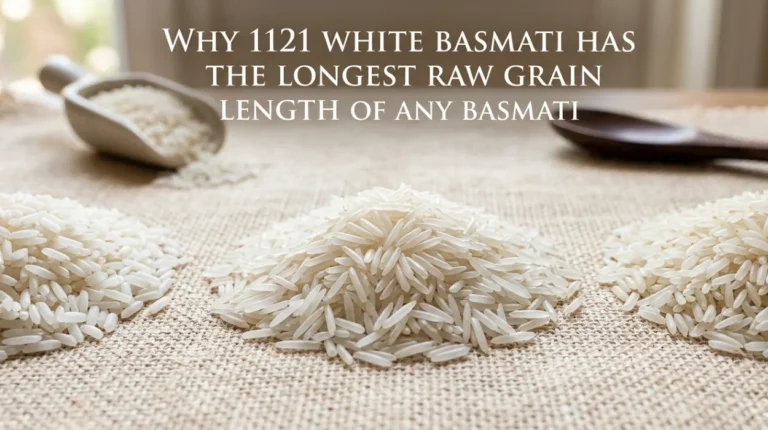
Super Kernel Basmati Rice confusion often occurs between Super Kernel and 1121 basmati categories. Buyers assume identical performance, but grain length and elongation ratios differ under cooking conditions.
Super Kernel Basmati Rice quality variation arises when mills use inconsistent polishing pressure. Excess polishing reduces aroma retention and weakens kernel structure during export handling.
Super Kernel Basmati Rice pricing discrepancies occur due to differences in broken percentage, moisture levels, and parboiling status. Golden Sella variants typically command higher prices due to enhanced durability.
Super Kernel Basmati Rice shipment delays happen when documentation lacks phytosanitary certification or export inspection clearance. Proper certification ensures smooth customs processing.
Super Kernel Basmati Rice storage issues develop when humidity exceeds recommended thresholds during transit. Moisture absorption leads to grain breakage and reduced cooking quality.
Super Kernel Basmati Rice procurement decisions improve when importers evaluate structured specifications instead of relying on visual inspection alone.
With trade challenges defined, the overall export system becomes clearer across production, grading, and global distribution networks.
Super Kernel Basmati Rice remains a globally traded aromatic grain shaped by cultivation discipline, milling precision, and structured export logistics from Punjab, Pakistan. AHK Rice ensures controlled processing and dispatch systems aligned with international import requirements.
Frequently Asked Questions
What makes Super Kernel Basmati Rice different from other rice?
Super Kernel Basmati Rice stands out due to its extra-long grain, strong aroma, and high elongation after cooking. It belongs to premium basmati varieties grown in Punjab, Pakistan, and is widely used in export markets for its consistent cooking quality.
Where is Super Kernel Basmati Rice mainly grown?
This rice is mainly grown in the fertile plains of Punjab, Pakistan. The region’s canal irrigation system, soil quality, and climate conditions support the cultivation of high-quality aromatic basmati rice.
Why is Super Kernel Basmati Rice popular in international markets?
It is popular because of its fragrance, long grains, and ability to remain fluffy after cooking. Importers prefer it for restaurants, hotels, and retail use, especially in the Middle East, Europe, and North America.
How is Super Kernel Basmati Rice processed for export?
After harvesting, the rice goes through cleaning, de-husking, polishing, grading, and sorting. Moisture is carefully controlled, and grains are packed in export-ready bags to maintain quality during international shipping.
What are the main uses of Super Kernel Basmati Rice?
It is widely used in biryani, pilaf, and other rice-based dishes in households and restaurants. Its long grain and aroma make it ideal for large-scale catering and premium food service industries.