How Does Grain Length Influence Saudi Arabian Consumer Preferences for Pakistan Basmati Rice?
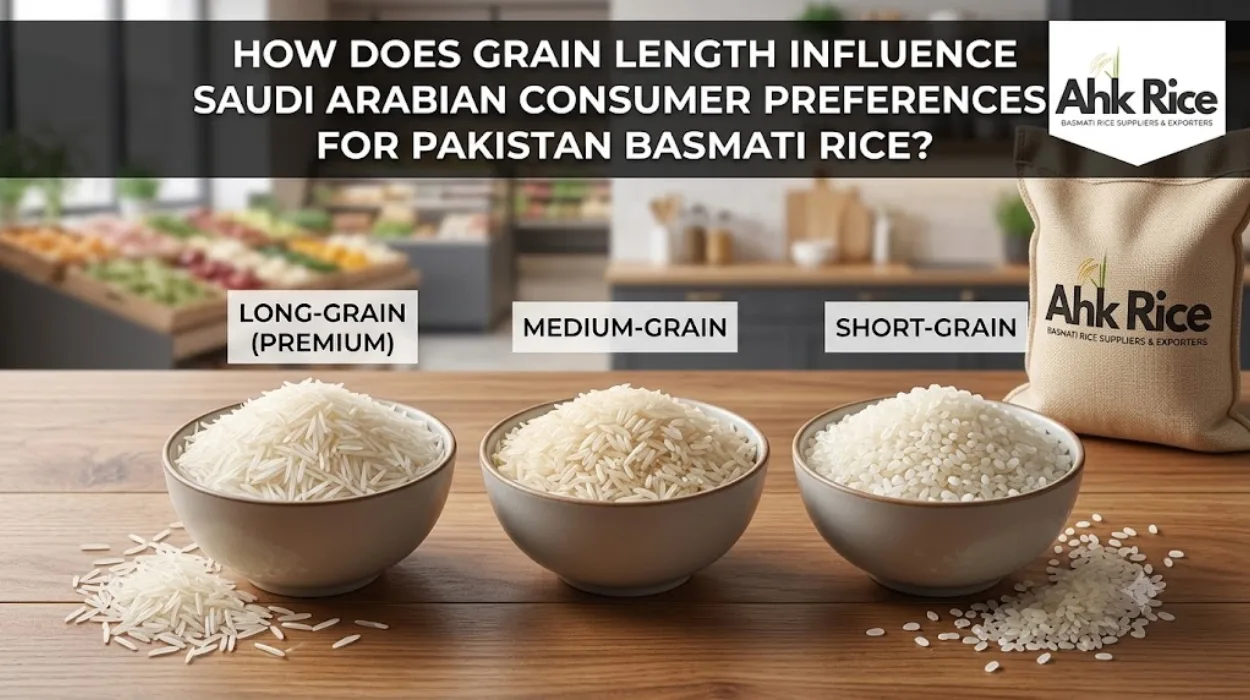
Saudi Arabian consumers prefer Pakistan Basmati rice with longer grains because long-grain varieties deliver a premium appearance, higher cooked grain elongation, better plate presentation, and stronger alignment with traditional Gulf rice dishes. Here is why: Saudi retail buyers consistently favor extra-long grain Basmati varieties such as 1121 and Super Kernel for mandi, kabsa, catering, and premium household consumption, where grain appearance directly influences purchasing decisions.
Pakistan Basmati rice occupies a strong position in Saudi Arabia because the country imports large volumes of aromatic long-grain rice for traditional cuisine (source: REAP export data, December 2025). Grain length remains one of the first quality indicators consumers evaluate before aroma, cooking behavior, and packaging.
Saudi consumers associate longer grains with premium quality. Retail shelves, wholesale markets, catering suppliers, and food service distributors use grain length as a primary classification factor. Understanding this preference requires examining how grain length affects appearance, cooking performance, grading systems, and consumer purchasing behavior.
What Is Grain Length in Pakistan Basmati Rice?
Longer grains measuring approximately 7.0–8.4 mm before cooking create stronger consumer preference in Saudi Arabia because they provide premium visual appeal, superior elongation, and better suitability for Gulf cuisine.
Buyers comparing premium Saudi retail specifications often examine the differences between extra-long and traditional Basmati varieties through a detailed comparison of 1121 and Super Kernel grain characteristics.
Grain length refers to the physical measurement of a rice kernel before cooking. Rice mills measure grain length in millimeters after milling and grading. Export specifications classify rice varieties according to average grain dimensions.
Pakistan produces several Basmati varieties with different grain lengths. Each variety serves different market segments and consumer expectations.
1121 Basmati Rice
1121 Basmati rice is recognized for its extra-long grain structure. Raw grain length typically ranges from 8.2–8.4 mm. Cooked grains often elongate to more than twice their original size under proper cooking conditions.
Saudi consumers prefer 1121 because cooked grains remain separate and visually attractive in serving dishes. Mandi restaurants, premium retailers, and hospitality buyers frequently source this specification.
Super Kernel Basmati Rice
Super Kernel Basmati rice generally measures 7.0–7.5 mm before cooking. The variety combines traditional Basmati aroma with a slightly shorter grain profile than 1121.
Saudi households often recognize Super Kernel as a traditional premium Basmati option. The variety maintains strong demand among consumers seeking authentic aroma and balanced cooking performance.
1509 Basmati Rice
1509 Basmati rice typically measures 8.0–8.3 mm. The variety offers long grain characteristics and faster cultivation cycles.
Exporters increasingly supply 1509 to Gulf markets because it combines competitive pricing with premium grain appearance.
Grain length defines the first visual quality signal consumers observe. The next question is how grain length influences purchasing decisions in Saudi retail markets.
How Does Grain Length Affect Saudi Consumer Purchasing Decisions?
Consumers associate grains above 8.0 mm with premium quality, higher value, superior cooking performance, and authentic Gulf dining experiences.
Saudi consumers often evaluate rice visually before purchase. Packaging windows, product photographs, and transparent retail bags highlight grain dimensions because appearance influences perceived value.
Long grains create a premium impression. Consumers frequently compare rice products side by side and select varieties that appear longer, more uniform, and less broken.
Retailers recognize this preference and allocate premium shelf space to extra-long grain products. Wholesale traders use grain length specifications when sourcing inventory for supermarkets and catering suppliers.
Visual Appeal in Retail Stores
Long grains create a clean and uniform appearance. Uniform grain structure signals professional grading and quality control.
Saudi consumers often interpret uniform long grains as indicators of better processing standards. Rice that contains mixed lengths or excessive broken kernels receives lower market acceptance.
Premium Positioning
Premium rice categories commonly feature extra-long grain specifications. Higher-end packaging emphasizes grain length measurements because consumers use these figures as quality benchmarks.
Retail brands frequently display grain specifications on packaging. Grain length becomes a marketing attribute similar to aroma, purity, and country of origin.
Consumer Perception of Value
Long grains create larger cooked servings through elongation. Consumers perceive greater value because cooked rice appears fuller on serving plates.
Saudi families preparing kabsa or mandi often prefer rice that produces visually impressive presentations during gatherings and celebrations.
Consumer purchasing decisions begin with appearance. The next factor involves understanding how grain length affects cooking performance.
How Does Grain Length Influence Cooking Performance?
Longer grains produce better elongation, stronger grain separation, improved presentation, and greater suitability for traditional Saudi rice dishes.
Cooking performance strongly influences repeat purchases. Consumers evaluate rice after preparation and compare results against expectations.
Long-grain Basmati varieties undergo significant elongation during cooking. The grains expand lengthwise while maintaining structural integrity.
Elongation During Cooking
1121 Basmati rice demonstrates exceptional elongation performance. Raw grains measuring over 8 mm can expand substantially during cooking.
Long cooked grains create an attractive appearance in serving trays. Mandi and kabsa preparations benefit from this characteristic because presentation remains important in Gulf cuisine.
Grain Separation
Long grains remain distinct after cooking when moisture levels and cooking procedures are controlled correctly.
Separate grains create a lighter texture. Saudi consumers often prefer rice that avoids clumping because traditional dishes require fluffy presentation.
Absorption Characteristics
Long-grain Basmati absorbs flavors effectively while maintaining structure. Meat stock, spices, saffron, and seasoning distribute evenly throughout the rice.
Saudi recipes frequently depend on this absorption capability. Rice serves as the foundation of the meal rather than a side component.
Cooking performance explains consumer satisfaction after purchase. Understanding production methods helps explain why grain lengths differ among varieties.

How Is Grain Length Developed and Preserved During Processing?
Cultivation practices, variety selection, harvesting methods, milling controls, and grading systems preserve grain length and determine final export specifications.
Grain length originates in genetics. Basmati breeders develop varieties with specific dimensional characteristics before cultivation begins.
Processing preserves these characteristics through careful handling and quality control.
Cultivate the Appropriate Variety
Farmers cultivate varieties such as 1121, Super Kernel, and 1509 in Punjab’s Basmati-growing regions.
Punjab provides suitable soil conditions, irrigation systems, and climate patterns for producing premium Basmati rice. Pakistan’s primary Basmati cultivation zones include districts surrounding Lahore, Gujranwala, Hafizabad, Sheikhupura, and Sialkot.
Harvest at Proper Maturity
Farmers harvest paddy at optimal maturity levels. Correct harvesting reduces kernel damage and preserves grain integrity.
Immature harvesting increases breakage rates during milling. Mature harvesting supports stronger grain structure.
Process Through Controlled Milling
Rice processors follow specific operational stages:
- Clean the paddy.
- Dry the grain.
- De-husk the paddy.
- Polish the kernels.
- Grade by size.
- Sort by length.
- Remove broken kernels.
- Inspect quality.
- Package for export.
Each stage protects grain integrity and supports final specification compliance.
Grade According to Export Standards
Grading systems separate rice according to grain dimensions, purity levels, and broken percentages.
Saudi importers frequently specify exact grain length requirements when sourcing Basmati rice. Export contracts often include minimum length specifications and maximum broken grain tolerances.
Processing explains how grain specifications reach consumers. The next question concerns which markets value grain length most strongly.
Which Saudi Market Segments Value Long Grain Basmati Most?
Premium retail, hospitality, catering, restaurant, and ceremonial food segments place the highest value on extra-long grain Pakistan Basmati rice.
Different buyer groups prioritize grain length differently. Consumer expectations vary according to application and purchasing objectives.
Retail Consumers
Households purchasing rice for family meals often seek premium appearance and traditional cooking results.
Long grains create a visual quality signal that influences purchase confidence. Premium retail brands therefore emphasize grain dimensions prominently.
Restaurants
Restaurants require consistent presentation. Long-grain rice improves dish appearance and supports customer satisfaction.
Mandi restaurants specifically prefer varieties with strong elongation because presentation forms part of the dining experience.
Catering Companies
Catering companies prepare large volumes for weddings, events, and corporate functions.
Long grains maintain visual appeal across large serving trays. Consistency becomes particularly important during high-volume service.
Hospitality Industry
Hotels frequently select premium Basmati specifications for buffet operations and specialty restaurants.
Luxury hospitality environments demand products that align with premium guest expectations.
Market demand highlights the importance of grain length. Consumer misconceptions, however, often create confusion about rice quality.
What Common Misconceptions Exist About Grain Length and Rice Quality?
Longer grain does not automatically guarantee better aroma, higher nutrition, or superior quality; quality depends on multiple measurable factors.
Many consumers use grain length as a shortcut for evaluating rice quality. Grain length remains important, but it represents only one specification.
Longer Grain Means Better Aroma
Aroma depends primarily on variety genetics and storage conditions.
Super Kernel Basmati often delivers stronger traditional Basmati aroma than some longer-grain alternatives. Grain length and aroma operate as separate quality characteristics.
Longer Grain Means Better Nutrition
Nutritional values remain relatively similar across polished white Basmati varieties.
Protein content, carbohydrate levels, and energy values depend more on rice type and processing methods than grain length alone.
Longer Grain Means Higher Overall Quality
Quality evaluation requires multiple factors:
- Grain length
- Purity percentage
- Broken percentage
- Moisture content
- Aroma intensity
- Cooking performance
- Color consistency
- Milling quality
Professional buyers inspect all specifications before procurement decisions.
Understanding misconceptions creates a complete picture of grain length evaluation. The final question concerns certifications and quality standards relevant to Saudi imports.
Which Certifications and Standards Apply to Pakistan Basmati Rice Exported to Saudi Arabia?
Food safety certification, phytosanitary compliance, quality testing, and export documentation verify that Pakistan Basmati rice meets Saudi import requirements.
Saudi importers require compliance with recognized quality and food safety standards.
Exporters and processors inspect, test, certify, and verify rice before shipment.
Food Safety Certifications
Common certifications include:
- ISO 22000
- HACCP
- GMP
- Halal Certification
These systems verify food safety management procedures throughout processing operations.
Export Documentation
Required export documents typically include:
- Phytosanitary Certificate
- Certificate of Origin
- Commercial Invoice
- Packing List
- Bill of Lading
- Quality Inspection Reports
Saudi authorities use these documents to verify compliance and traceability.
Quality Testing Parameters
Laboratories test:
- Moisture content
- Grain length
- Broken percentage
- Purity levels
- Foreign matter
- Residue compliance
Testing ensures rice specifications match contractual requirements and import regulations.
Certification confirms product compliance, while grain length remains the visual characteristic most consumers recognize first.
Conclusion
Grain lengths above 8.0 mm receive the strongest preference in Saudi Arabia because they deliver premium appearance, superior elongation, stronger presentation, and better compatibility with traditional dishes such as mandi and kabsa.
Pakistan’s leading Basmati varieties satisfy different consumer expectations. 1121 dominates premium extra-long grain segments. Super Kernel maintains strong demand through traditional aroma and balanced cooking performance. 1509 offers long-grain characteristics with competitive market positioning.
Saudi consumer behavior consistently demonstrates that grain length influences first impressions, purchasing decisions, cooking satisfaction, and perceived value. Grain length alone does not define quality, but it remains one of the most influential specifications in the Saudi Arabian Basmati rice market.
Frequently Asked Questions
How long should Pakistan Basmati rice grains be for Saudi Arabian consumers?
Saudi Arabian consumers generally prefer Basmati rice with grain lengths above 8.0 mm before cooking. Varieties such as 1121 Basmati and 1509 Basmati are popular because they offer extra-long grains, premium appearance, and strong elongation after cooking.
Why do Saudi consumers prefer longer grain Basmati rice?
Longer grain Basmati rice creates a premium visual appearance and improves presentation in traditional dishes such as mandi and kabsa. Long grains remain separate after cooking and make large serving platters look more attractive during family gatherings and events.
Does longer grain Basmati rice have better aroma?
Grain length and aroma are different quality characteristics. Super Kernel Basmati often delivers a strong traditional Basmati aroma despite having shorter grains than 1121 Basmati. Buyers evaluate both aroma and grain length when selecting rice.
Which Pakistan Basmati rice variety is most popular in Saudi Arabia?
1121 Basmati rice is one of the most demanded varieties in Saudi Arabia because of its extra-long grain length, high elongation ratio, and suitability for mandi and kabsa preparation. Super Kernel Basmati also maintains strong demand among consumers who prefer traditional Basmati characteristics.
How do exporters verify grain length before shipping rice to Saudi Arabia?
Exporters inspect and test rice during grading and quality control processes. Laboratories measure grain length, broken percentage, moisture content, purity levels, and other specifications before shipment to ensure compliance with buyer requirements and Saudi import standards.