How Do Indonesian Wholesalers Compare Pakistan Sella Rice Grades and Specifications?
Indonesian wholesalers should compare 1121 Golden Sella, 1121 Creamy Sella, 1121, Super Kernel, and 1509 Basmati rice by grain length, processing, moisture, broken percentage, appearance, cooking performance, price, and shelf-life requirements. Here is why: the cheapest Sella grade is not automatically the most profitable grade for every Indonesian distribution channel.
Pakistan Sella rice is parboiled rice produced by soaking, steaming, drying, milling, polishing, grading, and sorting paddy. Indonesian buyers evaluate Sella because parboiling strengthens the grain and supports separate cooking. For background on grain-length evaluation, wholesalers can review how Pakistan Basmati grain length affects Indonesian buying decisions.
Indonesia treats Basmati as a special rice category rather than ordinary consumption rice. Indonesia’s National Food Agency identified Basmati as special rice within its import framework in 2025. Import permissions therefore depend on the applicable rice category and current regulations. (source: Badan Pangan Nasional, 2025)
Pakistan is already a significant rice supplier to Indonesia. In 2024, Indonesia imported approximately 803,845 metric tons of rice from Pakistan, valued at about US$472.4 million. (source: World Bank WITS, 2024)
What are the available Sella rice solutions for Indonesian wholesalers?
1121 Golden Sella provides the strongest premium specification, 1121 Creamy Sella balances appearance and cooking performance, 1509 Sella offers long-grain value, and Super Kernel Sella targets aromatic traditional Basmati demand. Each grade serves a different commercial position.
1121 Golden Sella
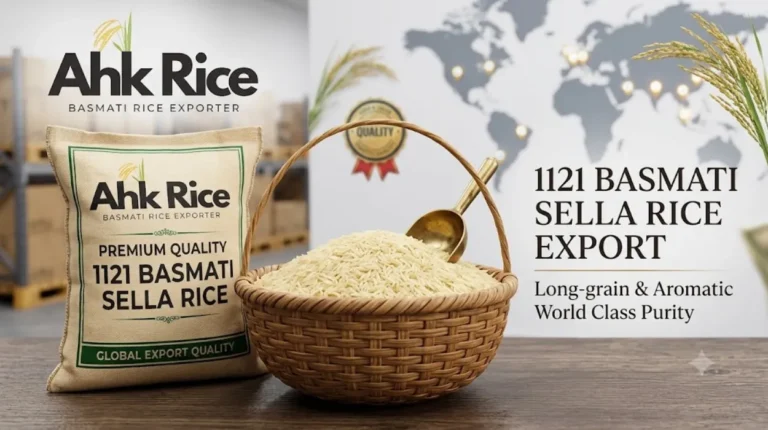
1121 Golden Sella is a premium parboiled Basmati grade. Its grain commonly measures around 8.3–8.5 mm before cooking. The parboiling process creates a golden appearance and firm kernel structure.
Golden Sella suits Indonesian wholesalers supplying restaurants, catering companies, biryani outlets, and premium retailers. Its visual colour creates a distinct shelf position compared with white rice.
1121 Creamy Sella
1121 Creamy Sella uses the same 1121 variety but produces a lighter creamy appearance. The raw grain remains around 8.3–8.5 mm, while the colour provides a less pronounced golden presentation.
Creamy Sella works well for wholesalers supplying customers who want long Basmati grains without a deep amber appearance. The grade also provides strong cooking separation after parboiling.
1509 Sella
1509 Sella provides a long-grain alternative to 1121. Typical commercial specifications place the grain around 8.0–8.3 mm. The grade combines long appearance with a more value-oriented commercial position.
1509 suits distributors that need long-grain Basmati while controlling procurement cost. It can support retail, foodservice, and restaurant channels where 1121-level premium positioning is unnecessary.
Super Kernel Sella
Super Kernel Sella generally measures around 7.2–7.6 mm before cooking. Its strength is traditional Basmati aroma combined with parboiled cooking performance.
Super Kernel Sella fits buyers who prioritize fragrance and traditional Basmati identity over maximum grain length. It can provide a different price and positioning strategy within the same wholesale portfolio.
With the four main solutions defined, Indonesian wholesalers can compare their specifications before selecting a grade.
How do Pakistani Sella grades compare technically?
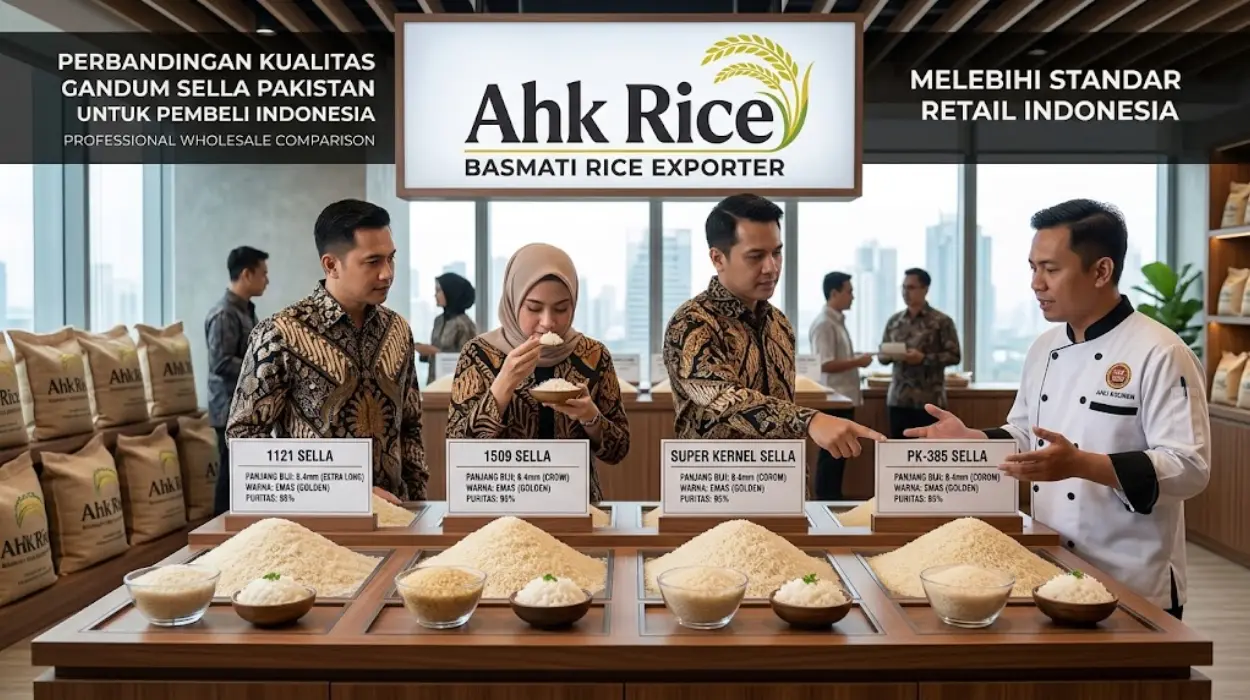
1121 leads in grain length and premium appearance, 1509 balances length and value, while Super Kernel emphasizes aroma; Creamy and Golden Sella differ mainly through parboiling colour and presentation. The correct comparison uses measurable specifications rather than variety names alone.
| Attribute | 1121 Golden Sella | 1121 Creamy Sella | 1509 Sella | Super Kernel Sella |
|---|---|---|---|---|
| Raw grain length | 8.3–8.5 mm | 8.3–8.5 mm | 8.0–8.3 mm | 7.2–7.6 mm |
| Processing | Parboiled Sella | Parboiled Sella | Parboiled Sella | Parboiled Sella |
| Colour | Golden to amber | Creamy to pale gold | Creamy/golden | Natural golden |
| Grain elongation | Very high | Very high | High | High |
| Aroma | Strong | Strong | Moderate to strong | Traditional strong |
| Broken target | ≤2% common export specification | ≤2% common export specification | ≤2% common export specification | ≤2% common export specification |
| Commercial position | Premium | Premium | Value long-grain | Aromatic value/premium |
Published Pakistani supplier specifications place 1121 Sella around 8.3 mm and Super Kernel Sella around 7.2 mm. Commercial specifications vary by processor and contract, so Indonesian wholesalers should approve the exact specification before loading.
AHK Rice’s published Indonesian 1121 Sella specification lists 8.3–8.4 mm average grain length, 12% maximum moisture, and 0.5% maximum broken grains.
The comparison shows why grain length cannot determine the purchasing decision alone. Moisture, broken percentage, colour, purity, processing, packaging, and cooking performance also influence wholesale value.
How do price and shelf life compare between Sella grades?
1121 Sella generally commands the strongest premium, while 1509 and Super Kernel can reduce acquisition cost; properly controlled Sella commonly supports longer storage planning than raw white rice. Actual prices depend on crop year, specifications, packaging, volume, freight, and Incoterm.
A current Pakistan export benchmark places 1121 Sella around US$1,135–1,175 per MT FOB Karachi, with Golden Sella around US$1,145–1,185 per MT on one published market reference. These figures are indicative rather than contractual.
For Indonesian procurement, the relevant figure is landed cost rather than FOB price. Freight to Jakarta or Surabaya, insurance, port charges, customs costs, inspection, inland transport, and packaging can change the final wholesale margin.
| Commercial factor | 1121 Golden Sella | 1121 Creamy Sella | 1509 Sella | Super Kernel Sella |
|---|---|---|---|---|
| Indicative price position | Highest | High | Medium | Medium |
| Shelf-life planning | Up to 18–24 months under controlled storage | Up to 18–24 months | Up to 18–24 months | Up to 18–24 months |
| Storage advantage | Strong | Strong | Strong | Strong |
| Margin opportunity | Premium | Premium | Volume/value | Aroma/value |
| Best commercial use | Premium foodservice | Retail/foodservice | Wholesale/value | Aromatic Basmati channels |
Shelf life depends on moisture, packaging, temperature, humidity, pest control, sanitation, and crop age. A fixed shelf-life number should therefore appear in the commercial specification and product documentation rather than being assumed from the word “Sella.”
AHK Rice’s published Indonesian material identifies controlled moisture and Sella processing as important quality specifications. Its current 1121 Sella page lists 12% maximum moisture.
Indonesia’s tropical climate makes moisture control especially important. Rice quality can deteriorate faster under excessive humidity and poor storage conditions. Indonesian buyers should therefore evaluate moisture at loading and through representative sampling.
Which Sella grades work best for Indonesian market regions?
Greater Jakarta and Java favour premium 1121 grades for specialty retail and foodservice, while price-sensitive wholesale channels can use 1509 or Super Kernel to balance cost and product differentiation. Regional selection should follow customer segment and turnover speed.
Java and Greater Jakarta
Greater Jakarta supports premium imported food distribution, restaurants, hotels, and specialty retail. Buyers serving these channels can position 1121 Golden Sella or Creamy Sella as premium long-grain Basmati.
Golden Sella suits restaurants that value firm grains and strong visual separation. Creamy Sella suits retailers seeking a lighter appearance with the same extra-long 1121 grain identity.
Sumatra and wider value-oriented distribution
Value-focused wholesalers can consider 1509 Sella or Super Kernel Sella where purchase price has greater influence on retail positioning.
1509 provides longer grain than Super Kernel. Super Kernel provides stronger traditional aroma positioning. The better option depends on the buyer’s customer profile and target selling price.
Indonesia’s private rice import market includes specialty rice for restaurants and further processing. USDA reporting forecast Indonesian rice imports at 750,000 MT for 2025/26, including specialty rice for retail and restaurant channels. (source: USDA Foreign Agricultural Service, 2025)
The market data supports a segmented strategy rather than one universal Sella grade. Wholesalers should match grade specifications to the channel they actually serve.
What are the advantages and disadvantages of each approach?
Golden Sella offers the strongest premium presentation, Creamy Sella provides lighter colour, 1509 controls cost, and Super Kernel strengthens aroma positioning; each option sacrifices something to gain another advantage. The trade-off determines commercial suitability.
1121 Golden Sella
Advantages: Premium colour, extra-long grain, firm cooking, strong visual separation, and strong foodservice positioning.
Disadvantages: Higher procurement cost and a stronger colour that may not suit every Indonesian retail customer.
A catering wholesaler serving premium biryani restaurants can justify the premium because cooked appearance contributes directly to dish presentation.
1121 Creamy Sella
Advantages: Extra-long grain, lighter appearance, firm cooking, and premium positioning.
Disadvantages: Higher price than value grades and less distinctive colour than Golden Sella.
A supermarket distributor can use Creamy Sella where customers prefer a lighter rice appearance.
1509 Sella
Advantages: Long grain, parboiled structure, competitive positioning, and broad commercial application.
Disadvantages: Lower premium perception than 1121 despite its long grain.
A high-volume wholesaler can use 1509 to protect margins where buyers demand long grain but resist premium 1121 pricing.
Super Kernel Sella
Advantages: Traditional Basmati aroma, parboiled structure, and value-oriented positioning.
Disadvantages: Shorter raw grain than 1121 and 1509.
A distributor targeting aroma-focused customers can use Super Kernel as an alternative to paying for maximum grain length.
Which decision factors should Indonesian wholesalers use?
The strongest procurement decision combines grade, grain length, moisture, broken percentage, cooking performance, landed cost, shelf life, and regulatory documentation before the purchase order is confirmed. Price should be evaluated only after the technical specification is fixed.
| Decision factor | What to verify | Best application |
|---|---|---|
| Grain length | Raw and cooked measurements | Premium retail and foodservice |
| Processing | Sella/parboiled method | Firm, separate cooking |
| Moisture | Contract maximum and test report | Tropical storage |
| Broken percentage | Agreed maximum | Premium presentation |
| Landed cost | FOB/CFR/CIF plus destination costs | Margin planning |
| Shelf life | Storage conditions and documented date | Slow or fast inventory |
| Compliance | Applicable Indonesian permits and certificates | Import clearance |
Indonesian wholesalers should also distinguish a supplier specification from a legal requirement. Indonesia’s rice-import regulations are governed through specific agricultural import policies, and Permendag No. 18/2025 covers rice among regulated agricultural commodities.
A specification sheet should state variety, processing grade, grain length, moisture, broken percentage, foreign matter, damaged kernels, packaging, crop year, inspection requirements, and Incoterm.
AHK Rice supplies 1121, Super Kernel, and 1509 from Punjab and provides processing, grading, sorting, customized packaging, and export handling. The company therefore supports a specification-based procurement model rather than a single-grade approach.
Which Sella rice method works best for different buying cases?
Choose 1121 Golden Sella for premium catering, 1121 Creamy Sella for lighter premium presentation, 1509 Sella for cost-controlled long-grain distribution, and Super Kernel Sella for aroma-led value positioning. The selection should follow the buyer’s sales channel.
A premium Jakarta restaurant distributor should prioritize 1121 Golden Sella when visual presentation and firm cooking dominate customer requirements.
A specialty retailer can prioritize 1121 Creamy Sella when long grain and lighter colour matter more than golden presentation.
A high-volume regional wholesaler can prioritize 1509 Sella when long grain must be retained while procurement cost remains tightly controlled.
An aroma-focused Basmati distributor can prioritize Super Kernel Sella when traditional fragrance provides greater selling value than maximum grain length.
The strongest procurement process starts with samples. Buyers should compare cooked elongation, aroma, texture, colour, broken grains, and appearance before approving the bulk specification.
Sample approval should then connect directly to the commercial contract. The contract should reproduce the approved grade and measurable tolerances so production can be checked against the same reference.
What is the final recommendation for Indonesian Sella rice wholesalers?
1121 Sella is the strongest premium choice, 1509 Sella is the strongest value long-grain choice, and Super Kernel Sella is the strongest aroma-led alternative. Indonesian wholesalers should select the grade through a specification and landed-cost comparison.
The best buying strategy is not to compare prices first. Compare the product specification first, then calculate the landed cost for each matching grade.
A 1121 Sella quotation with a lower broken percentage can justify a higher FOB price when premium customers pay for appearance and cooking yield.
A 1509 quotation can outperform 1121 when the target market is price-sensitive and long grain remains commercially important.
Super Kernel can create a separate value proposition where aroma has greater importance than maximum grain length.
AHK Rice’s Punjab-based operation supplies these three Pakistani Basmati varieties with processing, sorting, packaging, and export support. Indonesian buyers can therefore compare several Sella specifications within one sourcing framework.
The final purchase decision should use four controls: approved sample, written specification, verified inspection, and complete landed-cost calculation. This method gives Indonesian wholesalers a defensible basis for choosing the right Pakistan Sella rice grade.
Where should the BOFU article link be inserted?
Place the BOFU article link after the final recommendation section, immediately after the sentence explaining that buyers should use an approved sample, written specification, inspection, and landed-cost calculation. Use a natural decision-focused anchor such as “Pakistan Sella Basmati supply options for Indonesian wholesale buyers.”
The destination should be the published BOFU article “AHK Rice Pakistan Sella Basmati Rice Supply for Indonesian Wholesale Buyers” once its final URL is available. This keeps the MOFU article evaluative while moving readers naturally into the commercial decision stage.
Frequently Asked Questions
Which Pakistan Sella rice is best for Indonesian wholesalers?
1121 Golden Sella is the strongest premium option, while 1509 Sella offers a more cost-controlled long-grain alternative. Super Kernel Sella suits aroma-focused buyers.
What is the grain length of 1121 Sella rice?
1121 Sella commonly measures around 8.3–8.5 mm before cooking. Exact commercial specifications should be agreed in the purchase contract.
Is Golden Sella better than Creamy Sella?
Neither grade is universally better. Golden Sella suits deeper colour and premium presentation, while Creamy Sella suits lighter visual presentation.
What moisture level should Indonesian buyers specify?
A commercial target around 12–13% is common for export Basmati, while SNI 6128:2020 sets 14% as the maximum moisture level for rice. Buyers should use the stricter contractual specification where required.
Which Pakistani Sella grade is more economical?
1509 Sella generally provides a more value-oriented long-grain position than 1121. Final economics depend on crop year, quantity, packaging, freight, and destination costs.
How should Indonesian wholesalers compare suppliers?
Compare the approved sample, technical specification, inspection evidence, packaging, Incoterm, landed cost, and shipment documentation. A low FOB price alone does not establish the best commercial offer.
How much Pakistan rice does Indonesia import?
Indonesia imported about 803,845 MT of rice from Pakistan in 2024, worth approximately US$472.4 million.
Does Sella rice have a longer shelf life?
Properly processed and stored Sella can support long-term inventory planning, but shelf life depends on moisture, packaging, temperature, humidity, and pest control. The supplier should document the applicable storage conditions.