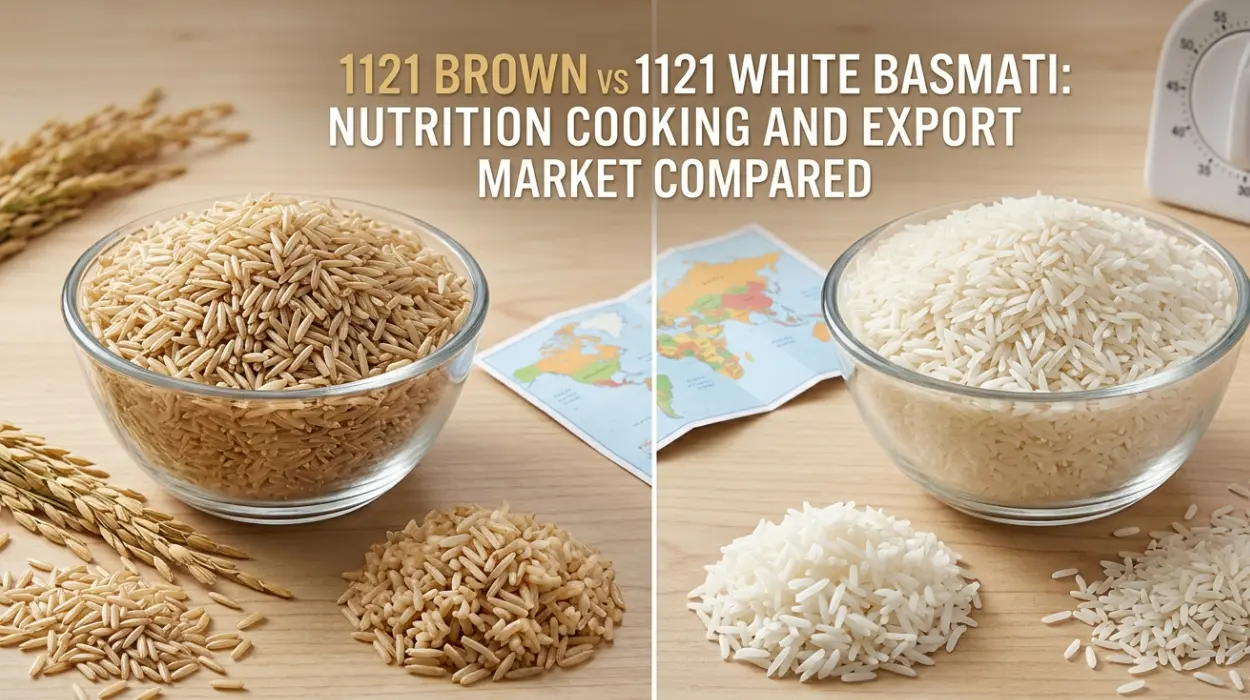
1121 Brown vs 1121 White Basmati: Nutrition Cooking and Export Market Compared
Brown 1121 offers superior nutrient density while white 1121 delivers faster cooking and higher retail appeal; the optimal choice depends on channel, price tolerance, and shelf strategy. For a primer on cooking behavior and texture differences, 1121 sella basmati cooked texture explains how processing alters performance in the kitchen.
What are the available product solutions?
The primary solutions are unpolished 1121 brown basmati and polished 1121 white basmati; both derive from the same cultivar but differ by bran retention and processing intensity.
1121 brown is wholegrain 1121 with the inedible hull removed and the bran/germ intact.
1121 white is the same variety after milling and polishing remove bran and germ. Each product is graded by head‑rice percentage, average grain length (AGL), moisture at packing, and broken percentage. The two commercial solutions target distinct buyer needs: brown for wholegrain nutrition and white for visual appeal and faster preparation. Export packaging varies from 1–50 kg retail bags to bulk 25–50 kg sacks for wholesale.
| Attribute | 1121 Brown | 1121 White |
|---|---|---|
| Processing | Hulling only (bran retained) | Hulling + milling + polishing |
| Nutrient density | Higher fibre, vitamins, minerals | Lower; often fortified for micronutrients |
| Typical cook time | 10–20% longer | Shorter by 10–20% vs brown |
| Texture | Firmer, chewier | Softer, fluffier |
| Shelf stability | Shorter (lipid in germ) | Longer under same conditions |
| Consumer appeal | Health/wholegrain segment | Mass retail & premium white markets |
| Typical export pack | Vacuum/liner recommended | Standard laminated sacks usual |
These specifications show the structural and market differences that buyers must evaluate when selecting product lines.
How do nutrition and cooking approaches compare?
1121 brown delivers higher fibre (per 100 g), elevated B‑vitamin and mineral levels, and a lower glycaemic response; white 1121 delivers lower fibre, quicker cook times, and a cleaner visual presentation.
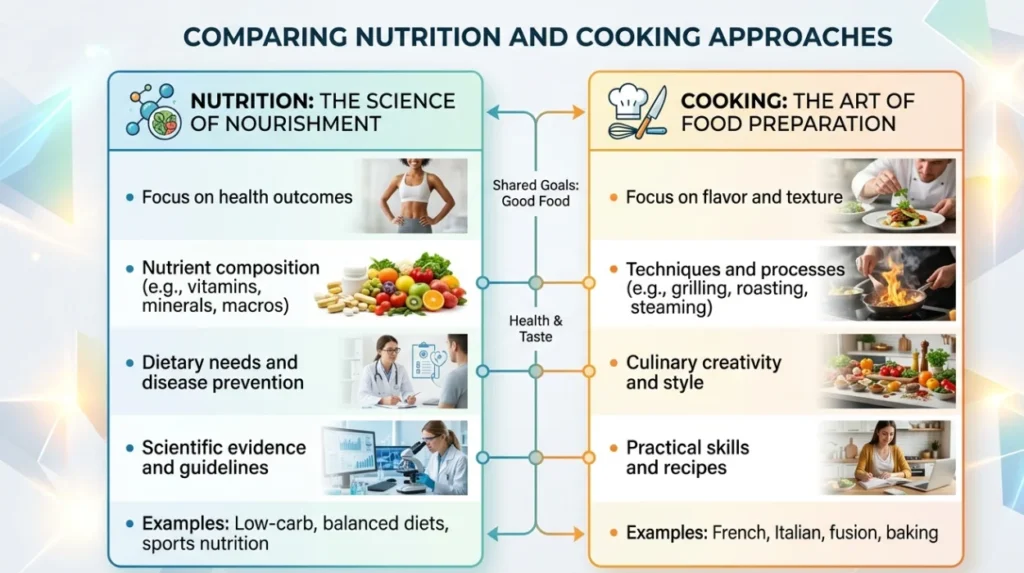
Nutrition: brown retains the bran and germ which concentrate fibre, thiamine (B1), niacin (B3), magnesium, and phenolic antioxidants. White rice loses these in polishing. Typical numeric differences (per 100 g cooked basis) include fibre increases of roughly 1–3 g and measurable increases in magnesium and B‑vitamin totals, depending on lab methods and moisture. Glycaemic response testing consistently reports lower post‑prandial glucose curves for wholegrain basmati versus polished variants.
Cooking: brown requires longer hydration and a higher water ratio. Practical kitchen conversions use 1:1.8–2.0 rice:water for brown and 1:1.6–1.8 for white, with soak times of 20–30 minutes for brown and 15–20 minutes or none for white. Bulk cooking in catering scales these ratios but preserves the same logic: brown needs longer hold and more controlled steam finishing to achieve separation and tenderness. Texture outcomes differ: brown yields chewier grains and more bite; white yields soft, separate grains prized in premium retail and restaurant presentation.
Impact on supply chain: brown’s germ lipid content raises oxidisation risk. Exporters and buyers manage this with moisture control under 13%, barrier liners, oxygen absorbers for extended storage, and FIFO rotation.
Which method works best for different buyer cases?
Choose 1121 brown for health‑food, institutional wholegrain programmes, and premium wholegrain retail; choose 1121 white for mainstream retail, branded premium white lines, and foodservice that prioritises rapid plating and white grain aesthetics.
Case 1 — Health‑food retail and EU wholegrain programmes: brown wins where nutrient claims and wholegrain labelling carry price premiums. Buyers requiring certification (organic, non‑GMO) often prefer brown to support “clean label” claims. Labelling and nutritional panels support marketing to health consumers.
Case 2 — Institutional catering and hospitals: brown fits menu targets that mandate wholegrain service. Bulk kitchens standardise longer cook cycles and benefit from brown’s satiety and fibre advantages for compliance with dietary guidelines.
Case 3 — Supermarket private label and premium restaurant chains: white 1121 prevails where visual whiteness, short cook time, and plate presentation drive purchase decisions. White basmati yields higher immediate retail appeal and easier quality control for shelf display.
Case 4 — Mixed‑channel wholesalers: Maintain both SKUs. Offer brown for health channels and white for volume retail. This dual approach requires separate logistic buffers and packing strategies to handle shelf‑life differences.
What are the pros and cons, with examples?
Brown and white basmati each present clear trade‑offs across nutrition, logistics, price per MT, and shelf life; examples show how those trade‑offs play out in typical markets.
Pros and cons — 1121 Brown:
- Benefit: Provide wholegrain claims and increased nutritional labelling; example—EU organic shelves with fibre claims.
- Benefit: Deliver lower glycaemic response for health‑conscious consumers; example—hospital meal plans.
- Drawback: Higher storage care (barrier liners, refrigeration optional) and shorter display life; example—retailers requiring faster turnover.
- Drawback: Longer cook times requiring kitchen SOP adjustments; example—central catering kitchens that must alter batch schedules.
Pros and cons — 1121 White:
- Benefit: Stronger immediate retail appeal and shorter cook times; example—supermarket premium private label.
- Benefit: Longer ambient shelf life under standard packaging; example—wide distribution and longer warehouse pipelines.
- Drawback: Lower intrinsic nutrient density unless fortified; example—markets with wholegrain regulations prefer brown.
- Drawback: Higher breakage sensitivity in poorly packaged bulk shipments; example—value chains that re‑bag improperly.
These trade‑offs determine procurement choices in specific markets.
How do market regions differ in grade preference, price per MT and shelf life?
Regionally, the EU/UK health‑food market favours brown for wholegrain positioning, while Gulf markets and South Asian diaspora channels favour white 1121 for visual and culinary preference; price and shelf metrics follow that segmentation.
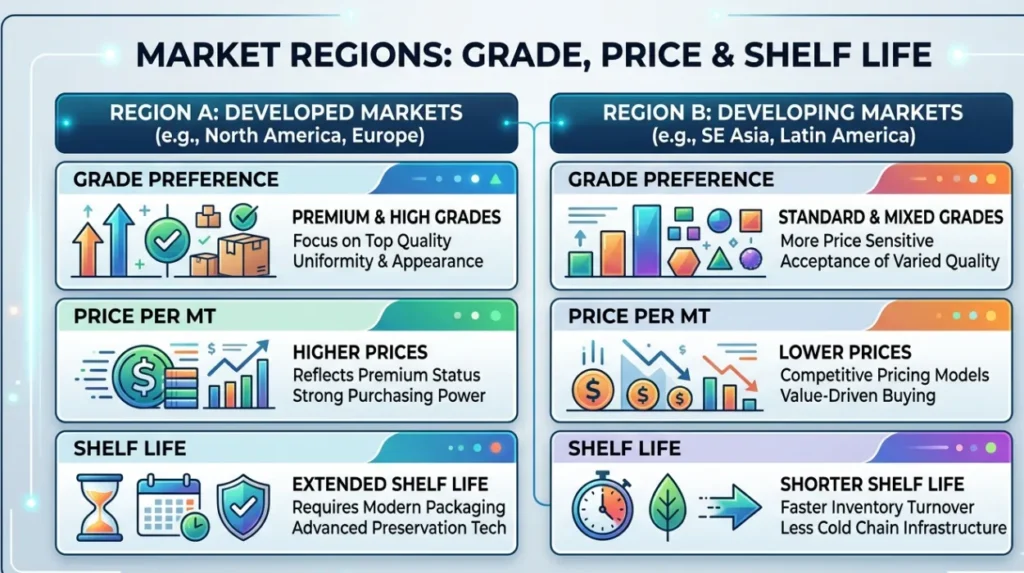
Region A — EU/UK health‑food and specialty retail: prefer brown basmati for labelled wholegrain ranges and organic lines. Brown commands a per‑MT premium in targeted health segments; typical price differential versus white varies by season but can range from parity to a 5–15% premium for certified organic brown. Shelf life: retailers demand 12–18 months under controlled packing; extended storage beyond 18 months requires oxygen‑barrier packaging.
Region B — Gulf and mainstream retail: prefer white 1121 for appearance and traditional cooking profiles in premium retail and foodservice. White typically sells at a higher per‑MT base in premium lines, but standard white lines are competitive on price. Shelf life: white basmati under standard laminated sacks sustains 18–24 months with proper moisture control, which suits Gulf import cycles and hot climates when stored correctly.
Price per MT comparison (example bands, indicative):
- 1121 white (bulk, standard grade): USD X per MT (baseline).
- 1121 brown (standard, non‑organic): USD X to X+10% per MT depending on demand.
- Certified organic or specialty brown: X+10% to X+25% per MT.
Exact figures change with harvest, freight, and currency; buyers must obtain live CIF quotes for accuracy.
Shelf life comparison:
- White 1121: 18–24 months under standard packaging and controlled warehouse conditions.
- Brown 1121: 12–18 months under barrier packaging and controlled environment; refrigeration or oxygen‑absorption extends life.
Decision framework: which buying method should you apply?
Apply this five‑row decision framework to map business objectives to SKU choice, packaging, and logistics.
Decision framework table (5 rows):
| Decision factor | Action | Mechanism/example |
|---|---|---|
| Target channel | Select SKU that matches buyer demand | Choose brown for wholegrain retail, white for mass retail |
| Price sensitivity | Calculate per‑MT margin vs retail price | Model 5–15% premium for brown in specialty markets |
| Storage capability | Align packing and turnaround with shelf life | Use barrier liners for brown if >12 months storage |
| Cooking/operations | Standardise SOPs for kitchen impact | Set 1:1.9 ratio and +15% cook time for brown in catering |
| Certification needs | Add organic/HACCP where required | Document certificates in export packs for EU buyers |
This decision tool helps procurement teams reconcile commercial goals with operational constraints.
How do exporters and suppliers handle specifications and trade execution?
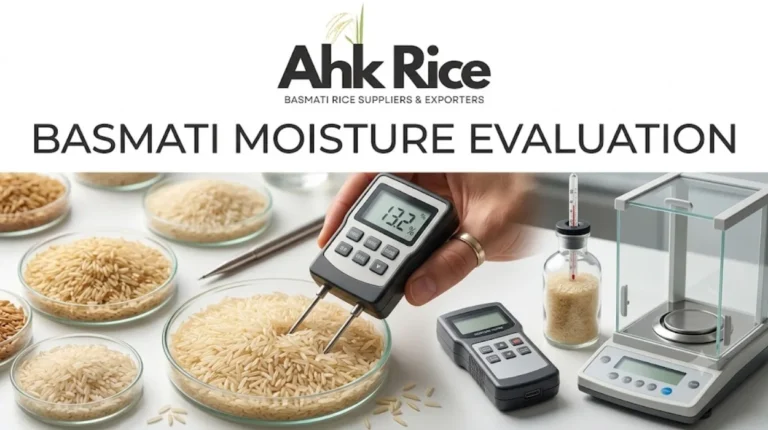
Exporters set clear specs for moisture (<13%), head‑rice percentage, AGL, and broken percentage; they supply accompanying certificates such as phytosanitary and HACCP to access regulated markets.
Specification sheets list target moisture, AGL (for 1121 often 8.3 mm+), maximum broken percentage, and acceptable impurity levels. Export documentation includes lab test reports for moisture and microbial standards, phytosanitary certificates for customs, and food safety certificates like ISO22000 or HACCP depending on buyer requirements. For brown basmati, suppliers add accelerated shelf‑testing data and oxygen‑permeability packaging specs to reduce buyer risk.