1121 Creamy Sella Basmati Rice FOB Pakistan vs CIF UAE Price Breakdown for Wholesale Buyers
When comparing FOB Pakistan and CIF UAE pricing for 1121 Creamy Sella Basmati Rice, FOB provides maximum buying flexibility and cost control, while CIF offers predictable landed costs and simpler procurement for importers who prefer supplier-managed logistics.
Wholesale rice buyers in the UAE frequently compare FOB and CIF quotations before placing contracts. The comparison is important because the same rice can have significantly different landed costs depending on freight rates, insurance charges, handling fees, and destination port expenses. Understanding every component helps importers calculate margins accurately and choose the most suitable purchasing method.
1121 Creamy Sella Basmati Rice is one of Pakistan’s most exported premium parboiled rice categories. It is known for extra-long grain length, creamy appearance, high elongation after cooking, and strong acceptance in Gulf markets. Before evaluating prices, buyers should understand rice specifications, grading systems, export terms, and logistics costs. Readers seeking foundational knowledge about rice grading, processing stages, and export classifications can first review this educational guide on Pakistani Basmati rice quality standards and export grades .
The first mention of the product should direct buyers to the exporter service page. 1121 Creamy Sella Basmati Rice is processed through cleaning, de-stoning, grading, color sorting, polishing, packing, container loading, and export documentation before shipment from Pakistan.
What Is 1121 Creamy Sella Basmati Rice and Why Is It Popular in UAE Markets?
1121 Creamy Sella Basmati Rice is a premium parboiled rice variety from Pakistan that combines long grain length, excellent cooking expansion, strong shelf stability, and competitive pricing, making it one of the most imported rice categories across retail, wholesale, foodservice, and institutional channels in the UAE.
The term “1121” refers to a specific Basmati cultivar known for exceptionally long grains. “Sella” indicates a parboiling process in which paddy rice undergoes soaking, steaming, and drying before milling. The creamy classification refers to the grain color that develops after processing.
The UAE imports substantial volumes of Pakistani Basmati rice due to strong consumer preference among South Asian, Arab, and international populations. Restaurants value grain elongation and plate presentation. Retail brands prefer consistent quality and shelf stability. Wholesalers appreciate year-round availability.
Major import destinations include Dubai, Abu Dhabi, Sharjah, Ajman, Ras Al Khaimah, and Fujairah. Demand remains stable because rice is a staple food across multiple demographic groups.
How Do FOB Pakistan and CIF UAE Pricing Terms Differ?
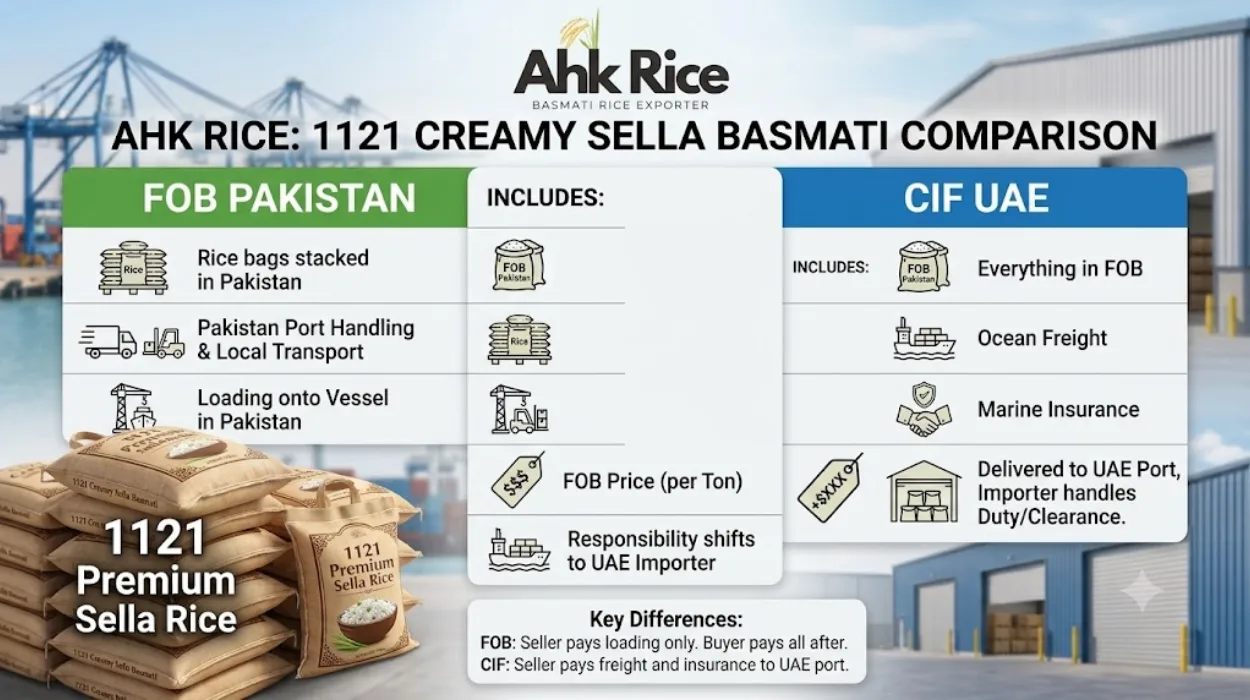
FOB Pakistan pricing includes rice costs up to loading at the Pakistani port, while CIF UAE pricing additionally includes ocean freight and cargo insurance, resulting in a complete shipment value delivered to the destination port in the UAE.
FOB stands for Free on Board. Under FOB terms, the exporter is responsible for preparing cargo and loading it onto the vessel at the agreed Pakistani port.
The buyer assumes responsibility for freight booking, insurance, transit costs, and destination charges after loading.
CIF stands for Cost, Insurance, and Freight. Under CIF terms, the exporter arranges transportation and insurance up to the destination port.
The distinction affects purchasing strategy, logistics control, and total landed cost calculations.
FOB Cost Components
- Rice value
- Processing cost
- Packaging
- Inland transportation
- Export documentation
- Port handling
- Vessel loading
CIF Cost Components
- All FOB costs
- Ocean freight
- Marine insurance
- Freight administration
Import duties and local UAE charges generally remain outside CIF calculations unless otherwise agreed.
How Do FOB and CIF Prices Compare for Wholesale Buyers?
FOB quotations appear lower because freight is excluded, while CIF quotations are higher because they include shipping and insurance costs, giving buyers a clearer estimate of expected import expenditure at destination ports.
The following example illustrates typical wholesale pricing structures.
FOB Pakistan vs CIF UAE Specification Comparison
| Attribute | FOB Pakistan | CIF UAE |
|---|---|---|
| Price Scope | Rice loaded at origin port | Rice delivered to UAE port |
| Freight Included | No | Yes |
| Insurance Included | No | Yes |
| Buyer Logistics Control | High | Moderate |
| Supplier Responsibility | Lower | Higher |
| Cost Visibility | Partial | Greater |
| Suitable Buyer Type | Experienced importer | New importer |
Example Price Breakdown Per Metric Ton
| Cost Component | FOB Pakistan (USD/MT) | CIF UAE (USD/MT) |
|---|---|---|
| Rice Product Cost | 1,050 | 1,050 |
| Export Handling | 35 | 35 |
| Ocean Freight | Buyer Arranged | 45 |
| Insurance | Buyer Arranged | 5 |
| Total | 1,085 | 1,135 |
Actual prices vary according to season, crop year, freight conditions, packaging specifications, and order volume.
What Grades of 1121 Creamy Sella Rice Are Preferred in Different Markets?
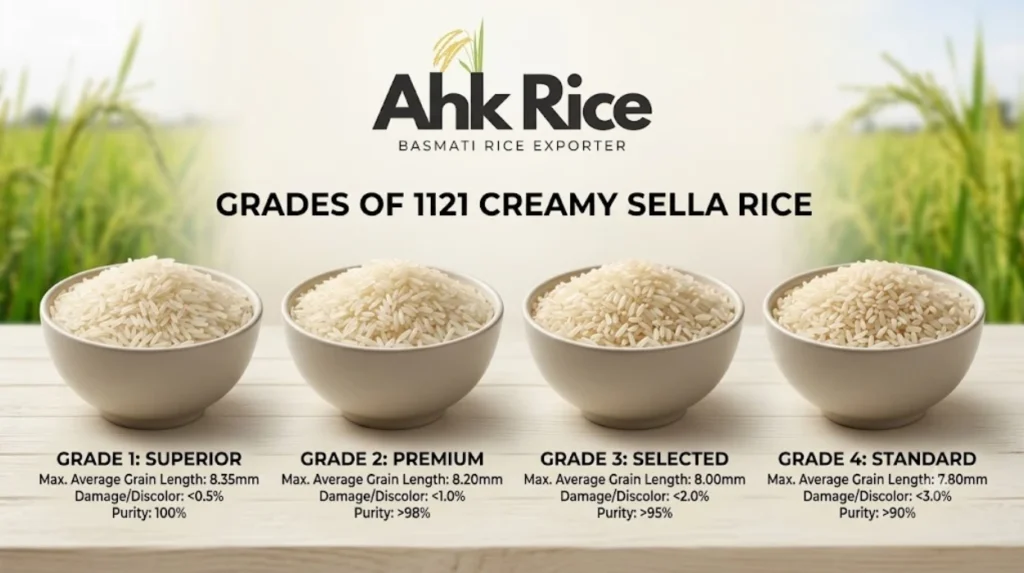
Premium retail markets prefer low-broken grades with superior grain uniformity, while wholesale distribution channels often prioritize value-focused grades that maintain acceptable quality while reducing procurement costs and increasing competitiveness.
Different buyers select different grades depending on end use.
UAE Retail Market Preferences
Retail importers generally prioritize:
- Sortex quality
- Maximum grain uniformity
- Low broken percentage
- Premium packaging
- Consistent appearance
Common preferences include:
- 0–1% broken
- Double polished
- Color sorted
- Consumer packs
UAE Foodservice Market Preferences
Hotels, caterers, and restaurants often prefer:
- 2–5% broken grades
- Cost efficiency
- Reliable cooking performance
- Large packaging sizes
These grades balance quality and operational costs.
Which Available Purchasing Solution Works Best?
The best purchasing method depends on importer experience, logistics capabilities, order volume, freight negotiation strength, and risk management priorities rather than simply selecting the lowest quoted rice price.
Wholesale buyers typically evaluate three procurement approaches.
Solution 1: FOB Purchase
FOB purchasing provides maximum logistics flexibility.
Importers negotiate freight independently and often achieve better transportation rates when shipping frequently.
Advantages include cost control and carrier selection.
Disadvantages include additional management responsibilities.
Solution 2: CIF Purchase
CIF purchasing simplifies procurement.
Exporters coordinate freight and insurance.
Advantages include predictable costs and reduced operational complexity.
Disadvantages include limited logistics control.
Solution 3: Hybrid Procurement
Some buyers request freight quotations separately while maintaining FOB contracts.
This approach creates transparency and allows direct cost comparison.
Large importers frequently adopt this strategy.
What Are the Pros and Cons of FOB and CIF Purchasing?
FOB offers flexibility and negotiation advantages, while CIF reduces operational workload and planning complexity. The optimal choice depends on organizational capabilities, shipment frequency, and internal logistics expertise.
FOB Advantages
- Greater freight control
- Multiple shipping options
- Easier cost benchmarking
- Better scalability
FOB Disadvantages
- More administrative work
- Freight management required
- Insurance arrangements required
CIF Advantages
- Simplified procurement
- Single supplier coordination
- Easier budgeting
- Faster purchasing process
CIF Disadvantages
- Reduced freight transparency
- Limited carrier selection
- Less direct logistics control
Practical Example
A buyer importing 20 containers annually may benefit from FOB due to accumulated freight negotiation power.
A buyer importing two containers annually often benefits from CIF because administrative simplicity outweighs potential freight savings.
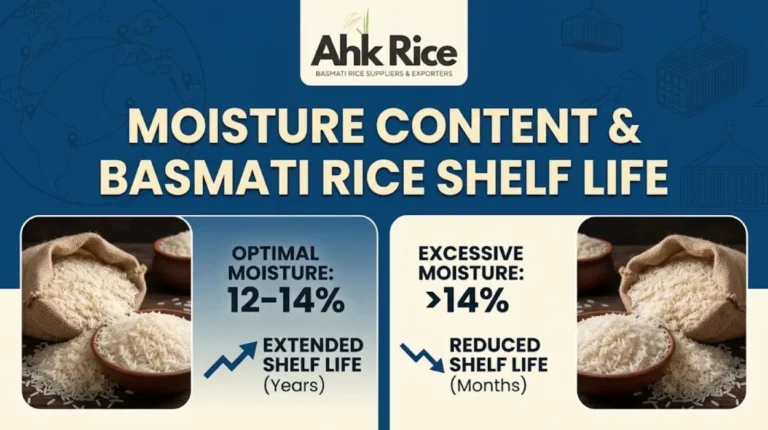
How Does Shelf Life Affect Wholesale Purchasing Decisions?
Shelf life directly influences inventory planning, warehouse management, product rotation, and profitability because longer storage stability reduces wastage risks and provides greater flexibility for distributors and retailers.
1121 Creamy Sella Basmati Rice has strong shelf stability due to the parboiling process.
Shelf Life Comparison
| Product Type | Typical Shelf Life |
|---|---|
| 1121 Creamy Sella Rice | 24 Months |
| White Basmati Rice | 18–24 Months |
| Steam Basmati Rice | 18–24 Months |
Storage conditions remain critical.
Recommended storage includes:
- Dry warehouses
- Controlled humidity
- Palletized stacking
- Proper ventilation
Importers planning longer inventory cycles often prefer Sella rice because it maintains quality effectively during storage.
What Decision Factors Should Wholesale Buyers Evaluate?
Successful procurement decisions depend on total landed cost analysis, product specifications, logistics strategy, inventory planning, supplier reliability, and market positioning rather than focusing exclusively on the quoted rice price.
Wholesale Buyer Decision Framework
| Decision Factor | FOB Better | CIF Better |
|---|---|---|
| Logistics Expertise | ✓ | |
| New Importer | ✓ | |
| Freight Negotiation Ability | ✓ | |
| Fast Procurement | ✓ | |
| Cost Control Priority | ✓ |
Buyers should compare:
- Rice specifications
- Grade consistency
- Container loading efficiency
- Packaging options
- Freight reliability
- Documentation quality
- Shipment lead times
These factors affect profitability more than small differences in quoted prices.
Which Method Is Best for UAE Wholesale Buyers?
Experienced UAE importers usually achieve stronger long-term cost optimization through FOB contracts, while newer buyers often benefit from CIF arrangements that simplify operations and reduce execution risks during initial purchasing cycles.
FOB purchasing works best when buyers:
- Import regularly
- Manage logistics internally
- Negotiate freight contracts
- Monitor shipping markets
CIF purchasing works best when buyers:
- Import occasionally
- Require predictable budgeting
- Prefer supplier-managed logistics
- Have limited shipping expertise
Many established UAE importers eventually migrate toward FOB structures after gaining experience in freight procurement and logistics management.
The comparison between FOB Pakistan and CIF UAE pricing is fundamentally a comparison between control and convenience. FOB pricing offers lower quoted costs and greater logistics flexibility. CIF pricing delivers operational simplicity and clearer landed-cost visibility.
For 1121 Creamy Sella Basmati Rice, the most effective procurement strategy depends on importer size, freight expertise, inventory planning, and sourcing objectives. Wholesale buyers should evaluate total landed costs, preferred grade specifications, shelf-life requirements, and logistics capabilities before selecting a purchasing structure.
Buyers who are actively comparing supplier quotations, shipment terms, packaging options, and current market rates can continue their evaluation through the detailed guide Get Bulk 1121 Creamy Sella Basmati Rice FOB Pakistan and CIF UAE Price Offers .
Frequently Asked Questions
What is the difference between FOB and CIF rice prices?
FOB includes costs up to loading at the Pakistani port. CIF includes freight and insurance costs up to the UAE destination port.
Which option is cheaper, FOB or CIF?
FOB quotations are usually lower because freight and insurance are excluded. The final landed cost depends on freight rates negotiated by the buyer.
What is the typical shelf life of 1121 Creamy Sella Basmati Rice?
Under proper storage conditions, 1121 Creamy Sella Basmati Rice generally maintains quality for up to 24 months.
Why is 1121 Creamy Sella Rice popular in the UAE?
The rice offers extra-long grains, excellent cooking elongation, attractive appearance, and strong acceptance among retail and foodservice buyers.
Which buyers should choose FOB contracts?
Experienced importers with logistics expertise and freight negotiation capabilities typically gain the most value from FOB purchasing.
Which buyers should choose CIF contracts?
New importers and businesses seeking procurement simplicity often benefit from CIF arrangements because shipping and insurance are handled by the exporter.