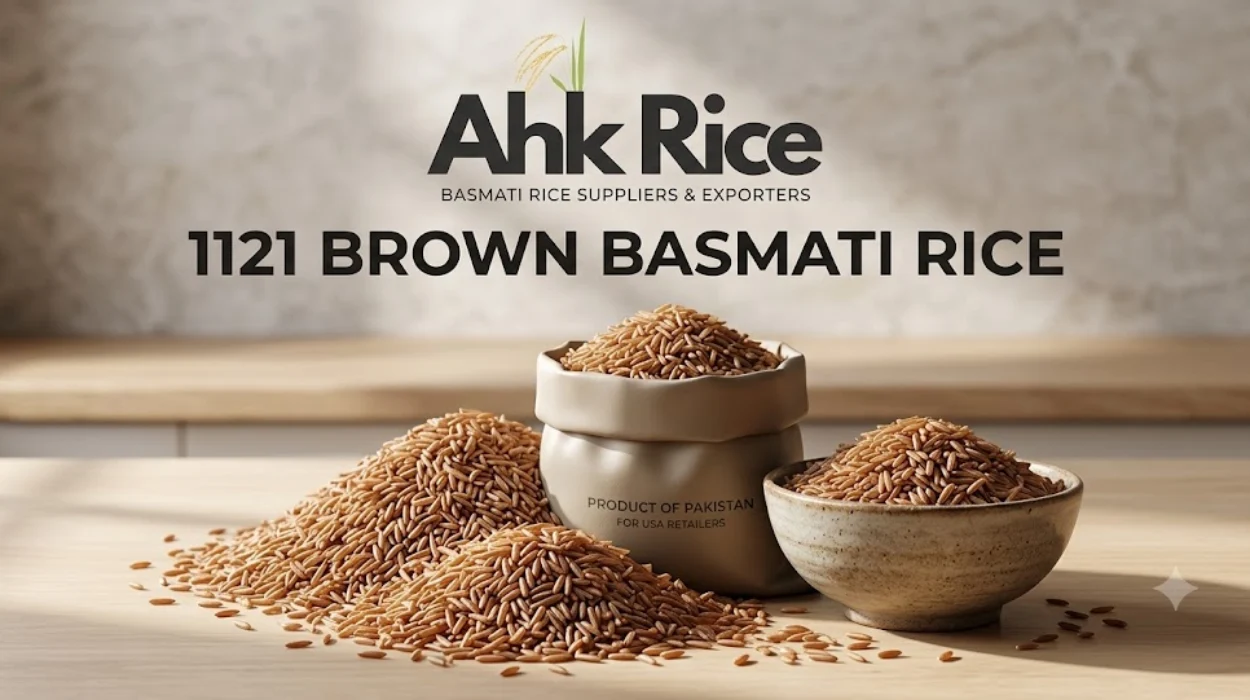
Source 1121 Brown Basmati Rice from Pakistan for USA Retailers
USA retailers looking for a reliable source of premium 1121 Brown Basmati Rice need more than competitive pricing. They need a supplier with consistent quality, food safety compliance, dependable shipping schedules, transparent documentation, and proven export experience. If you have already learned:
Why health-conscious Americans increasingly choose 1121 Brown Basmati Rice in our earlier guide and compared its quality characteristics with our article about:
Premium brown basmati cooking quality and aroma standards, the next step is selecting a supplier that can consistently deliver retail-ready products. AHK Rice provides end-to-end export solutions for American importers seeking long-term supply partnerships.
What is the best solution for sourcing 1121 Brown Basmati Rice from Pakistan for USA retailers?
The best solution is partnering with an experienced exporter that controls sourcing, processing, quality testing, packaging, export documentation, and shipping while meeting U.S. import requirements. This reduces supply risks, protects product consistency, improves inventory planning, and helps retailers maintain customer confidence through reliable deliveries throughout the year.
Retail buyers compete in a market where consumers expect consistent grain quality every time they purchase a package of rice. Any variation in grain length, aroma, cooking performance, or packaging quality can affect repeat purchases.
AHK Rice supplies 1121 Brown Basmati Rice directly from Punjab, Pakistan, where the variety is cultivated under suitable climatic conditions. The company manages procurement, cleaning, grading, color sorting, metal detection, packaging, palletization, container loading, and export documentation before shipment.
Retailers benefit from working with one supplier responsible for the complete export chain instead of coordinating multiple vendors.
For buyers wanting background information, read our guide explaining why health-conscious Americans prefer 1121 Brown Basmati Rice before making sourcing decisions.
Retail businesses typically require:
- Uniform grain size
- Stable cooking performance
- Food-safe processing
- Retail packaging options
- Consistent inventory availability
- Export documentation
- Timely shipment schedules
These requirements are easier to achieve when the exporter controls every production stage.
Why should USA retailers choose the USA export service from AHK Rice USA export solutions?
Choosing an experienced exporter with dedicated USA shipping services ensures regulatory compliance, predictable logistics, flexible packaging, transparent communication, and reliable product quality. These advantages reduce operational risks while helping retailers maintain shelves with premium 1121 Brown Basmati Rice throughout the year.
AHK Rice has developed export procedures specifically for international buyers, including U.S. retailers, distributors, wholesalers, specialty grocery chains, and ethnic food importers.
The export service includes:
- Procurement from selected growing regions
- Modern processing facilities
- Brown rice milling
- Optical color sorting
- Moisture management
- Quality inspection
- Laboratory testing
- Retail packaging
- Private labeling
- Container loading
- Export documentation
- Shipping coordination
The company also assists buyers with:
- Commercial invoices
- Packing lists
- Certificate of Origin
- Phytosanitary Certificate
- Fumigation documentation where required
- Bill of Lading
- Product specifications
- Quality reports
Retailers often compare brown basmati products before selecting suppliers. Our detailed comparison covering premium cooking quality and aroma standards explains the characteristics buyers should evaluate before placing commercial orders.
AHK Rice supports multiple packaging options including:
- 1 kg
- 2 kg
- 5 kg
- 10 kg
- 20 kg
- 25 kg
- 40 lb
- 50 lb
Private label production is also available for retailers building their own branded product lines.
What shipping times can USA buyers expect?
Most shipments from Pakistan to the United States require production, inspection, documentation, and ocean transportation. Depending on the destination port and shipping route, buyers should generally plan complete delivery schedules ranging from approximately 35 to 55 days after production begins in 2026.
Export timing includes several operational stages.
Production and processing generally require 7–10 working days after advance payment confirmation and artwork approval.
Quality inspection, packaging, documentation, and container loading usually require another 2–4 days.
Estimated ocean transit times during 2026 are generally:
| USA Destination | Estimated Ocean Transit |
|---|---|
| New York | 28–35 days |
| Norfolk | 30–36 days |
| Savannah | 31–38 days |
| Houston | 32–40 days |
| Los Angeles | 25–32 days |
| Oakland | 24–31 days |
| Seattle | 27–34 days |
The complete export timeline generally includes:
- Production: 7–10 days
- Packaging: 2–3 days
- Documentation: 1–2 days
- Port handling: 2–4 days
- Ocean transit: 24–40 days depending on destination
Buyers placing recurring orders can establish rolling shipment schedules that reduce inventory shortages and improve stock planning.
AHK Rice works closely with freight partners to provide shipment tracking and estimated arrival updates throughout transportation.
What quality results can retailers expect?
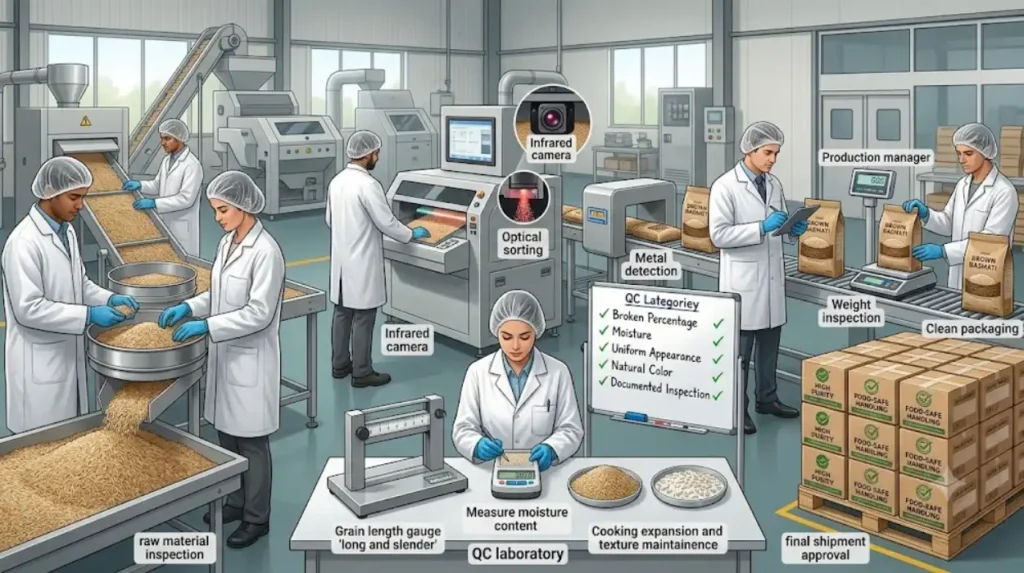
Retailers should expect consistent grain dimensions, natural bran retention, reliable cooking expansion, strict quality control, food safety compliance, and stable packaging quality. These measurable outcomes help strengthen customer satisfaction while supporting repeat purchases across competitive retail markets.
Consumers buying premium brown basmati expect several characteristics.
The grains should be long and slender.
The bran layer should remain intact.
Cooking should produce separate grains.
Natural aroma should remain noticeable.
The rice should maintain texture after cooking.
AHK Rice applies multiple quality control stages including:
Raw material inspection.
Cleaning.
Destoning.
Optical sorting.
Metal detection.
Moisture verification.
Weight inspection.
Packaging inspection.
Final shipment approval.
Typical export specifications include:
- High purity
- Controlled moisture
- Low broken percentage
- Uniform grain appearance
- Natural color
- Clean packaging
- Food-safe handling
Each production lot undergoes documented inspection before shipment approval.
How does the product sample process work?
A structured sampling process allows retailers to evaluate quality before placing commercial orders. Reviewing physical samples, cooking performance, packaging quality, and laboratory reports significantly reduces purchasing uncertainty while improving confidence before full container procurement begins.
Many first-time importers prefer evaluating products before confirming commercial contracts.
AHK Rice offers a structured sampling process.
Step 1
The buyer submits desired specifications including:
- Grain type
- Package size
- Quantity
- Branding requirements
Step 2
Samples are prepared according to requested specifications.
Step 3
Laboratory reports may accompany samples upon request.
Step 4
International courier shipment is arranged.
Step 5
The buyer performs:
- Visual inspection
- Cooking tests
- Aroma evaluation
- Packaging review
Sample Costs (2026)
| Item | Typical Cost |
|---|---|
| Product sample | Usually complimentary |
| Courier charges | Approximately $60–$150 depending on destination |
| Private label mock-up | Varies by artwork requirements |
| Laboratory analysis (if requested) | Approximately $80–$250 |
Many commercial orders proceed after successful sample approval.
Sampling significantly reduces commercial risks for new supplier relationships.
What factors affect pricing?
Export pricing depends on crop conditions, packaging requirements, order quantity, freight rates, certifications, destination, private labeling, and currency movements. Buyers receive more competitive pricing when purchasing larger volumes under longer-term supply agreements with predictable shipping schedules.
No responsible exporter should advertise fixed prices because international agricultural markets change throughout the year.
Several factors influence quotations.
Harvest quality.
Crop availability.
Container quantity.
Packaging materials.
Printing requirements.
Shipping destination.
Ocean freight.
Exchange rates.
Certification requirements.
Seasonal demand.
Retail-ready packaging generally costs more than bulk packaging because it includes:
Printed bags.
Retail cartons.
Labeling.
Barcode printing.
Palletization.
Shrink wrapping.
Private label preparation.
Importers purchasing full container loads generally receive more favorable pricing than buyers ordering pallet quantities.
AHK Rice prepares customized quotations based on each buyer’s specifications rather than offering one standard price.
How does AHK Rice reduce sourcing risks?
Reliable sourcing depends on transparent communication, documented quality systems, verified production processes, shipment tracking, and responsive customer support. These operational controls reduce uncertainty while helping retailers establish dependable long-term supply relationships with confidence.
Retailers often face several sourcing challenges.
Delayed shipments.
Quality variation.
Incomplete documentation.
Packaging inconsistencies.
Communication gaps.
AHK Rice minimizes these issues through organized export management.
Each order follows documented production stages.
Quality checkpoints verify specifications before shipment.
Documentation is prepared before cargo departure.
Production updates are shared with buyers.
Container information becomes available after vessel loading.
This organized workflow helps buyers coordinate warehouse planning, customs clearance, and retail inventory management more efficiently.
Long-term supply agreements also improve production scheduling during periods of increased seasonal demand.
How can USA retailers get started?
Getting started involves sharing product specifications, requesting samples, reviewing quotations, confirming packaging, approving production, and scheduling shipment. Following this structured procurement process allows retailers to establish dependable imports with lower operational risk and greater purchasing confidence.
The process is straightforward.
First, define your required specifications.
Select package sizes.
Specify labeling requirements.
Estimate annual purchasing volumes.
Request product samples.
Review laboratory reports if required.
Approve specifications.
Receive a customized quotation.
Confirm the commercial order.
Production begins after payment confirmation.
Quality inspections take place before shipment.
Export documentation is prepared before cargo departure.
Ocean freight is scheduled according to the agreed shipping plan.
AHK Rice supports retailers throughout every stage, from the first inquiry to final shipment delivery, helping buyers secure premium 1121 Brown Basmati Rice with reliable quality, transparent communication, and dependable export performance. When you are ready to begin sourcing, submit your requirements through request-a-quote to receive a customized export proposal from AHK Rice.
Frequently Asked Questions
How long does it take to ship 1121 Brown Basmati Rice from Pakistan to the USA?
Most shipments require 35–55 days from production to arrival, depending on the U.S. destination port, customs clearance, and ocean freight schedules.
What is the minimum order quantity for USA retailers?
The minimum order quantity depends on packaging requirements and export arrangements. Many buyers start with pallet quantities or a full 20-foot container for better pricing.
Can I request a sample before placing a bulk order?
Yes. AHK Rice provides product samples so buyers can evaluate grain quality, aroma, cooking performance, and packaging before confirming a commercial order.
Does AHK Rice offer private label packaging?
Yes. Retailers can choose custom private label packaging in multiple sizes, including 1 kg, 2 kg, 5 kg, 10 kg, and larger bulk options suitable for wholesale distribution.
Which quality certifications are available for exports to the USA?
Depending on buyer requirements, shipments can be supported with documents such as Phytosanitary Certificates, Certificate of Origin, laboratory reports, and other export compliance documentation.
What factors influence the price of 1121 Brown Basmati Rice?
Pricing varies based on crop season, order volume, packaging type, private labeling, certifications, freight costs, exchange rates, and destination port.
What documents are provided with export shipments?
Commercial invoices, packing lists, Bills of Lading, Certificates of Origin, Phytosanitary Certificates, and other required export documents are prepared according to shipment requirements.
Why should USA retailers source directly from Pakistan?
Direct sourcing helps retailers access fresher products, better pricing, customizable packaging, consistent quality, and a more transparent supply chain through experienced exporters like AHK Rice.