Why Is Purity a Key Indicator of Premium Basmati Rice?
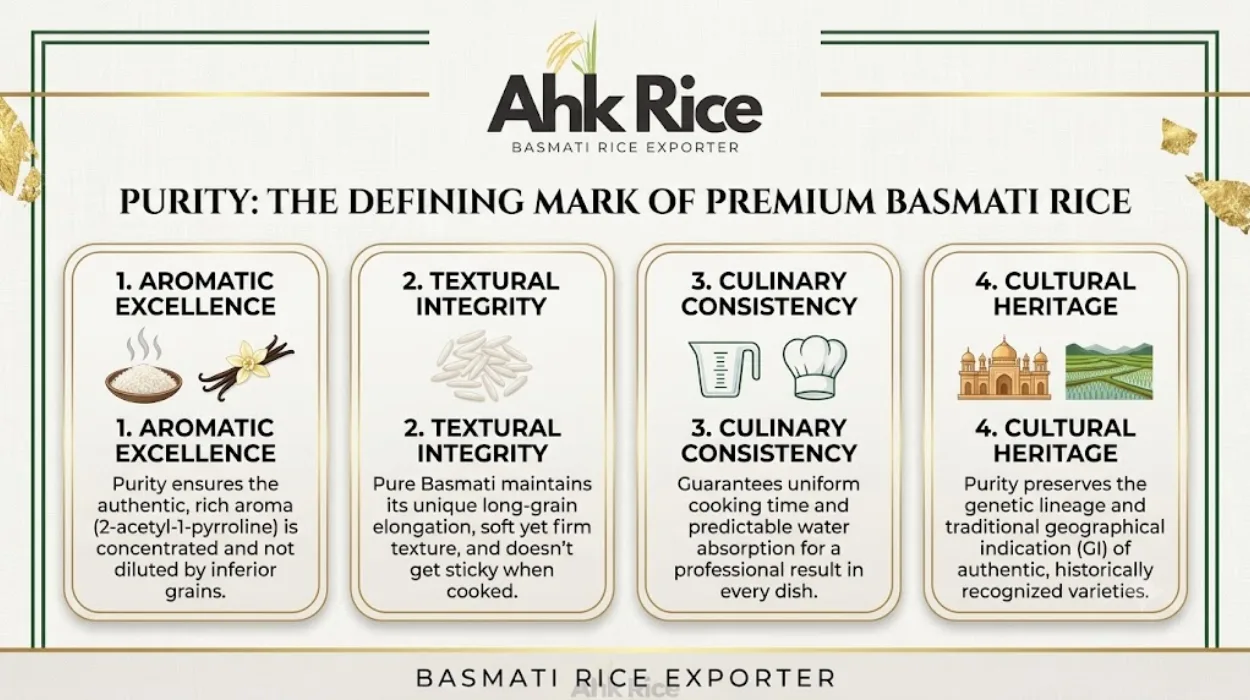
Purity is a key indicator of premium Basmati rice because it determines grain authenticity, consistency, cooking performance, aroma retention, and market value. Here is why: higher purity means fewer broken grains, fewer foreign particles, lower admixture levels, and a greater percentage of genuine Basmati kernels that meet international quality specifications.
Basmati rice commands a premium price because buyers pay for uniformity, fragrance, grain elongation, and appearance. Purity directly affects all four characteristics. Importers, retailers, food service companies, and consumers use purity standards to distinguish premium Basmati from mixed rice products. Across global markets, purity remains one of the most important quality benchmarks for rice procurement and export transactions.
What Does Purity Mean in Basmati Rice?
Purity refers to the percentage of authentic Basmati grains present in a rice lot, often measured at 95%–100% depending on the grade and export specification.
Purity measures how much of a shipment consists of genuine Basmati rice. The assessment includes varietal identity, grain uniformity, foreign matter content, damaged kernels, and admixture percentages. A rice lot containing only authentic Basmati grains receives a higher purity classification than a lot mixed with non-Basmati varieties.
Basmati purity also affects consumer experience. Authentic Basmati grains produce a distinctive aroma because they contain higher concentrations of natural aromatic compounds. Pure Basmati also elongates significantly during cooking, often reaching nearly twice its original length.
Rice exporters, importers, and inspectors test purity before approving shipments. Quality verification protects buyers from receiving mixed varieties that fail to meet contract requirements.
With the definition of purity established, the next question is how purity standards are measured.
How Is Basmati Rice Purity Measured?
Purity is measured through varietal identification, laboratory testing, visual inspection, and grading systems that verify grain authenticity, uniformity, and contamination levels.
Rice quality laboratories inspect representative samples from each production batch. Inspectors evaluate grain length, shape, color, and consistency. They compare samples against established varietal standards.
What Steps Are Used to Verify Purity?
Rice processors follow a structured quality process:
- Clean the paddy.
- De-husk the grain.
- Dry the kernels.
- Polish the rice.
- Grade by size.
- Sort by length.
- Remove broken grains.
- Remove foreign matter.
- Inspect final samples.
Each step improves uniformity and reduces contamination.
Advanced processing facilities also use optical colour sorters. These machines identify discolored kernels, immature grains, and foreign particles. Automated sorting improves purity percentages and consistency.
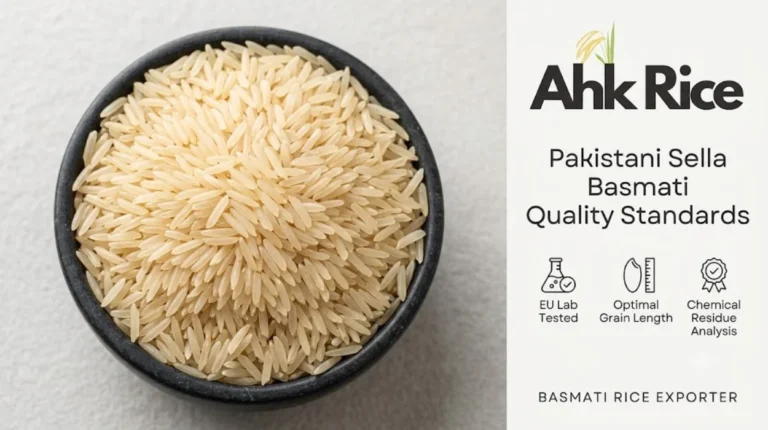
Quality laboratories then test moisture content, damaged grain percentages, and varietal conformity before approving export shipments.
Understanding measurement methods helps explain why purity directly affects rice quality and market value.
Why Does Purity Affect Basmati Rice Quality?
Higher purity delivers better aroma, longer grain elongation, improved appearance, and more consistent cooking performance.
Pure Basmati rice contains a higher percentage of genuine aromatic kernels. Authentic grains release characteristic fragrance compounds during cooking. Mixed varieties reduce aroma intensity.
Grain elongation also depends on purity. Premium Basmati varieties such as 1121 and Super Kernel can double in length after cooking. Mixed rice lots often produce uneven expansion.
Visual appearance matters equally. Uniform grains create a consistent presentation in retail packaging and food service applications. Restaurants prefer consistent grain size because customers associate uniformity with premium quality.
Cooking consistency provides another benefit. Pure rice cooks evenly. Mixed varieties absorb water at different rates. Uneven absorption affects texture and presentation.
Quality advantages explain why premium buyers prioritize high-purity specifications during procurement.
With quality benefits understood, the next question concerns the factors that influence purity levels.
What Factors Influence Basmati Rice Purity?
Purity depends on seed selection, cultivation practices, harvesting methods, processing technology, and storage controls.
How Does Cultivation Affect Purity?
Farmers cultivate certified seed varieties to maintain varietal integrity. Seed mixing during planting reduces final purity levels. Controlled cultivation preserves genetic consistency across the crop.
Punjab remains one of the primary Basmati cultivation regions because its soil conditions and climate support premium aromatic rice production.
How Does Harvesting Affect Purity?
Harvest timing influences grain quality. Farmers harvest mature crops at optimal moisture levels. Premature harvesting increases immature kernels. Delayed harvesting increases breakage risks.
Separate harvesting equipment prevents cross-contamination between rice varieties.
How Does Processing Affect Purity?
Rice mills use grading and sorting systems to separate kernels by size and quality.
Key processing components include:
- Colour sorting
- Length grading
- Density separation
- Moisture control
- Metal detection
- Foreign matter removal
- Quality inspection
Modern processing equipment improves consistency and increases export-grade purity levels.
Production factors determine purity outcomes. The next section explains the grades available in the market.
What Purity Grades Exist in Basmati Rice?
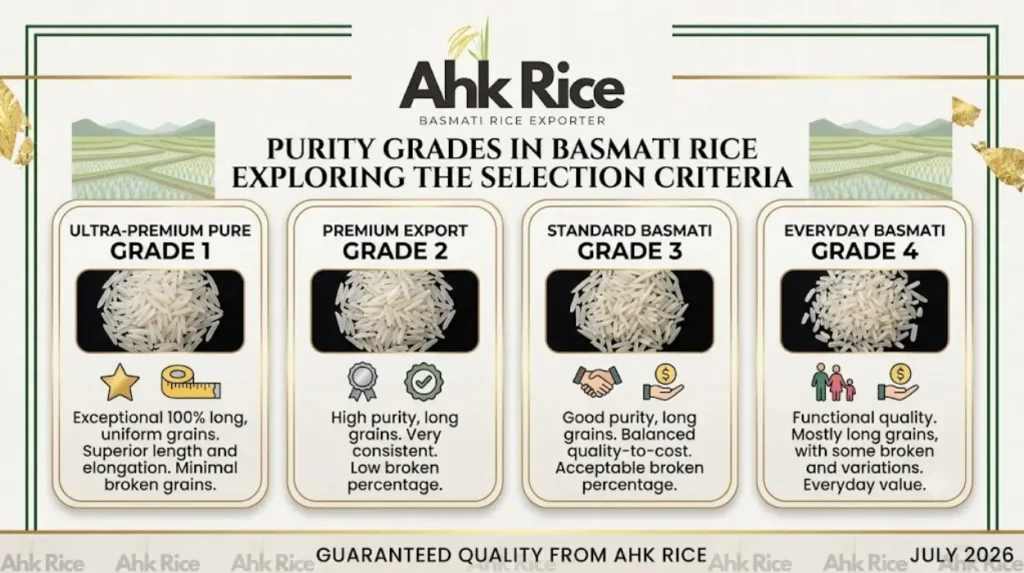
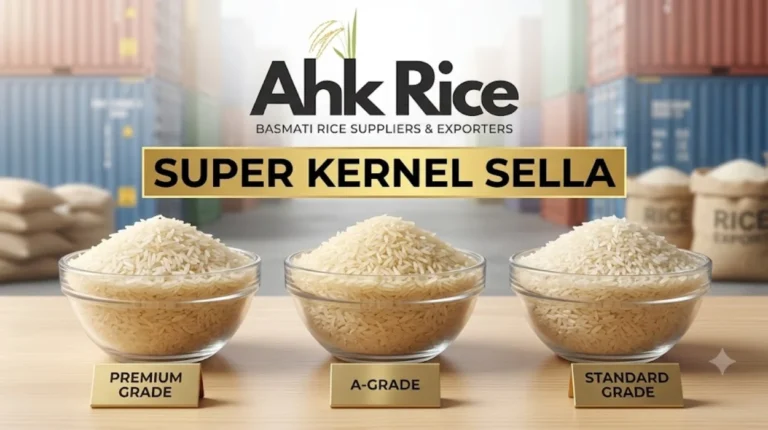
Commercial Basmati grades generally range from 95% to 100% purity, depending on buyer requirements and market specifications.
Different markets request different quality standards. Premium retail buyers often demand very high purity levels. Food service operators sometimes accept lower specifications when price becomes a primary factor.
100% Pure Basmati
This grade contains only authentic Basmati kernels. It targets premium retail brands and specialty food markets.
98% Pure Basmati
This specification allows very limited admixture. Many international supermarket chains use this standard.
95% Pure Basmati
This grade remains acceptable in several wholesale and catering markets. It balances quality and cost efficiency.
Purity grades also apply across major varieties.
Common Premium Basmati Varieties
- 1121 Basmati Rice
- Super Kernel Basmati Rice
- 1509 Basmati Rice
- Traditional Basmati Rice
Each variety follows its own grading specifications while maintaining purity requirements.
Understanding grades helps explain why different countries import different purity levels.
Which Markets Import High-Purity Basmati Rice?
The Gulf region, Europe, North America, and premium Asian markets consistently import high-purity Basmati rice grades.
Saudi Arabia imports substantial quantities of premium Basmati for retail and hospitality sectors (source: REAP export data, December 2025).
The United Arab Emirates imports high-purity rice for supermarkets and food service distribution networks (source: REAP export data, December 2025).
The United Kingdom maintains strict food quality requirements. Retailers prioritize authenticity and traceability. High-purity Basmati supports compliance with these standards (source: UK food import regulations).
North American consumers increasingly seek authentic ethnic food products. Pure Basmati supports consumer expectations regarding aroma and cooking performance.
European buyers often require extensive testing and certification before approving imports. Purity verification forms part of the approval process.
Market requirements lead directly to certification requirements, which verify quality claims.
What Certifications Support Basmati Rice Purity?
Quality certifications verify food safety, traceability, quality management, and product authenticity throughout the supply chain.
Several internationally recognized certifications support purity verification.
Common Rice Export Certifications
- ISO 22000
- HACCP
- BRCGS
- FDA Registration
- Phytosanitary Certification
- Certificate of Origin
- Fumigation Certification
Quality systems require regular inspections. Laboratories test samples and verify compliance before export shipments proceed.
Traceability systems also strengthen purity assurance. Processors track rice from cultivation through milling and packaging. Documentation supports authenticity verification during international trade.
Certification standards help buyers evaluate quality consistently. The next section addresses common misconceptions about rice purity.
What Are Common Misconceptions About Basmati Rice Purity?
Purity does not simply mean cleanliness; it also includes varietal authenticity, uniformity, and compliance with grading standards.
Many buyers assume clean rice automatically indicates high purity. Cleanliness only addresses visible contaminants. Purity also measures the percentage of authentic Basmati grains.
Another misconception involves grain length. Long grains alone do not confirm purity. Several non-Basmati varieties also produce long kernels. Authenticity testing remains necessary.
Some buyers believe aroma alone proves purity. Aroma provides an indicator but not definitive verification. Laboratory analysis and grading inspections provide more reliable assessment.
Another misunderstanding concerns price. Higher prices often reflect higher purity standards, but price alone does not guarantee authenticity. Verified specifications remain essential.
Understanding these misconceptions allows buyers to evaluate rice quality more accurately.
Purity remains one of the most important indicators of premium Basmati rice quality. It influences aroma, grain elongation, appearance, cooking consistency, and market value. Purity measurement combines varietal verification, grading, sorting, and laboratory testing. Certified cultivation, modern milling, and rigorous inspection systems help maintain high purity levels. Global import markets continue to prioritize authentic Basmati because consistent quality supports consumer expectations and international food standards.
For readers interested in how commercial buyers evaluate imported rice shipments, continue with the article on assessing quality specifications during procurement.
Frequently Asked Questions
What purity percentage is considered premium Basmati rice?
Premium Basmati rice typically contains 98% to 100% authentic Basmati grains, depending on market specifications and buyer requirements.
Why is purity important in rice exports?
Purity ensures authenticity, consistent cooking performance, better aroma, and compliance with import regulations required by international buyers.
How do exporters test Basmati rice purity?
Exporters inspect samples, conduct laboratory analysis, verify varietal identity, and use grading and colour sorting systems to remove impurities.
Does higher purity improve cooking quality?
Yes. Higher purity improves grain elongation, aroma retention, texture consistency, and visual appearance after cooking.
Which certifications support rice quality verification?
Common certifications include ISO 22000, HACCP, BRCGS, Phytosanitary Certificates, FDA Registration, and Certificates of Origin.
Can long grain rice still have low purity?
Yes. Long grain appearance alone does not confirm purity. Authenticity testing is required to verify that grains belong to genuine Basmati varieties.