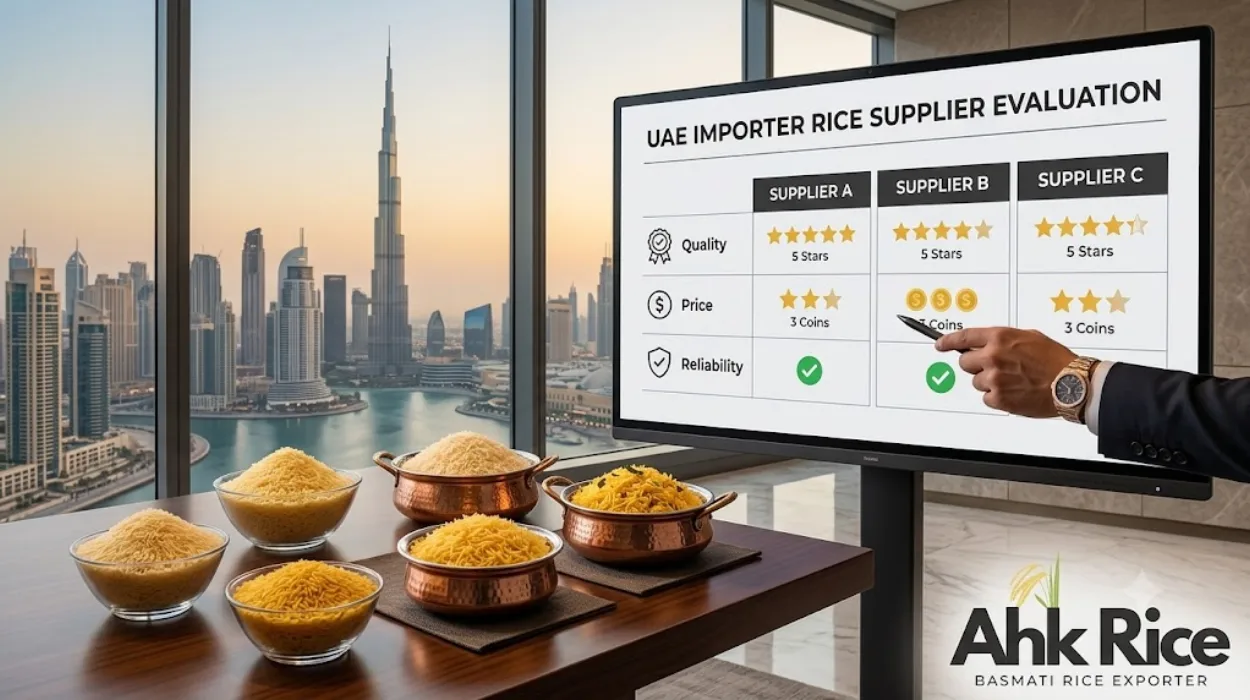
How UAE Importers Compare Pakistani Sella Basmati Rice Suppliers
UAE importers achieve better purchasing outcomes when they compare suppliers using quality consistency, processing grades, export capability, packaging flexibility, and logistics performance instead of focusing only on price.
The UAE remains one of the largest destinations for Pakistani Basmati rice exports because of strong consumer demand, a large expatriate population, and an established food distribution network (source: Pakistan Bureau of Statistics, FY2024-25). Importers evaluating suppliers often compare grain quality, processing methods, certifications, and supply reliability before making long-term procurement decisions. Buyers seeking foundational knowledge about Pakistani Sella Basmati production and processing can first explore a detailed guide on Pakistani Sella Basmati Rice varieties, processing methods, and export grades.
The comparison process becomes more important because multiple Pakistani exporters offer similar rice varieties. However, their processing systems, inspection standards, packaging options, and delivery performance differ significantly. A supplier comparison framework helps UAE distributors reduce risk and improve inventory performance.
What solutions are available for UAE importers sourcing Pakistani Sella Basmati rice?
The main sourcing options are direct exporters, trading companies, consolidators, private-label suppliers, and integrated processors. Each solution serves different volume requirements, quality expectations, and distribution models within the UAE market.
Pakistani Sella Basmati rice refers to parboiled Basmati rice processed through controlled soaking, steaming, drying, milling, grading, and sorting operations. The process strengthens the grain structure and improves shelf stability.
Direct Rice Exporters
Direct exporters cultivate sourcing networks, mill rice, grade rice, inspect quality, and export shipments under their own management systems.
Companies such as AHK Rice operate through integrated processing facilities. This model provides better visibility into grain specifications, production schedules, packaging customization, and shipment timelines.
Trading Companies
Trading companies source rice from multiple mills and export according to customer requirements.
This approach increases sourcing flexibility. However, quality consistency may vary because multiple production facilities contribute to supply.
Consolidators
Consolidators combine shipments from several mills to fulfill large volume orders.
This solution works well for distributors requiring mixed grades and flexible procurement schedules.
Private Label Suppliers
Private label suppliers package rice under importer-owned brands.
This approach supports supermarket chains and regional distributors seeking brand control within the UAE retail sector.
Integrated Processing Exporters
The integrated model combines procurement, parboiling, milling, grading, packaging, inspection, and export management.
AHK Rice operates within this category by managing end-to-end processing and export activities. This structure improves traceability and specification control.
With sourcing solutions established, the next question becomes how these supplier models compare across measurable specifications.
How do different Pakistani Sella Basmati rice suppliers compare?
Quality consistency, grain length, broken percentage, sorting accuracy, export experience, packaging flexibility, and logistics capability create the largest performance differences between suppliers.
Supplier Comparison Specifications
Specification Comparison Table
| Attribute | Integrated Processor | Trading Company | Consolidator |
|---|---|---|---|
| Grain Consistency | High | Medium | Medium |
| Traceability | High | Low | Medium |
| Packaging Flexibility | High | Medium | Medium |
| Quality Inspection Control | High | Medium | Low |
| Shipment Planning | High | Medium | Medium |
| Product Customization | High | Low | Medium |
| Long-Term Supply Stability | High | Medium | Medium |
Quality consistency influences customer satisfaction. A supplier controlling milling and grading operations maintains more predictable specifications.
Traceability affects food safety compliance. UAE distributors increasingly require visibility into processing and certification records.
Packaging flexibility supports market segmentation. Retail buyers often prefer 1 kg to 10 kg formats, while catering buyers require 20 kg to 40 kg packaging.
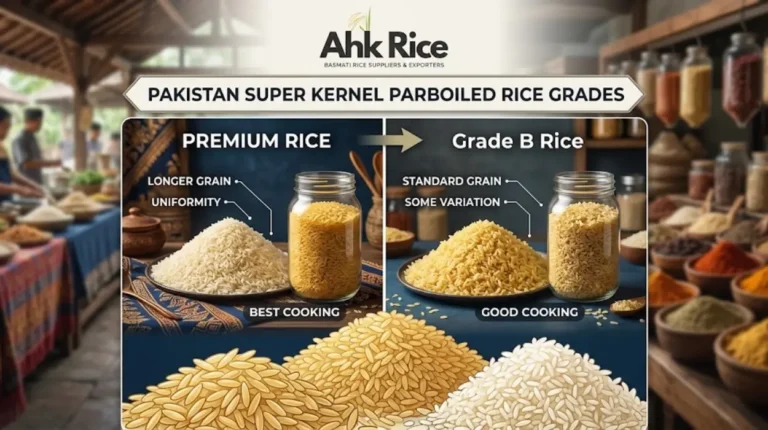
Common Sella Grades Compared by UAE Buyers
1121 Golden Sella
1121 Golden Sella delivers extra-long grains and high visual appeal. Grain lengths generally range between 8.30 mm and 8.50 mm before cooking.
The grade performs well in premium retail and hospitality channels.
1121 Creamy Sella
1121 Creamy Sella provides a lighter appearance and consistent cooking performance.
Many supermarket distributors select this grade because of broad consumer acceptance.
Super Kernel Golden Sella
Super Kernel Golden Sella combines traditional aroma with strong grain integrity.
This specification remains popular among ethnic retail channels.
1509 Golden Sella
1509 Golden Sella offers cost efficiency while maintaining long grain characteristics.
Importers targeting value-focused retail segments frequently select this grade.
With supplier specifications compared, the next question is which grades perform best across different UAE distribution channels.
Which Pakistani Sella Basmati rice grades work best for different UAE market segments?
1121 Golden Sella dominates premium retail, 1121 Creamy Sella serves mainstream supermarkets, Super Kernel supports traditional consumers, and 1509 Golden Sella targets value-driven distribution channels.
UAE Retail Market Preferences
Retail buyers prioritize appearance, aroma, and cooking performance.
1121 Golden Sella typically receives preference because consumers associate longer grains with premium quality.
Premium supermarket chains often select higher-grade sorting specifications with lower broken percentages.
UAE Hospitality Market Preferences
Hotels and restaurants prioritize cooking yield and plate presentation.
1121 Golden Sella performs strongly because grains remain separate after cooking.
Large catering operators prefer stable quality because operational consistency affects food service efficiency.
UAE Wholesale Market Preferences
Wholesale distributors balance quality and pricing.
1509 Golden Sella frequently enters this segment because it offers competitive procurement costs while maintaining acceptable grain characteristics.
UAE Ethnic Grocery Segment
Traditional South Asian grocery stores often stock Super Kernel Golden Sella because customers recognize its aroma profile and cooking characteristics.
Market preferences influence supplier selection, which leads directly into the advantages and limitations of each sourcing strategy.
What are the pros and cons of different supplier approaches?
Integrated processors provide consistency and control, while traders offer flexibility and consolidators provide sourcing diversity. Each model presents different operational advantages and limitations.
Integrated Processor Model
Advantages
- Quality consistency
- Direct traceability
- Packaging customization
- Better production visibility
- Strong specification control
Limitations
- Higher quality management costs
- More structured procurement procedures
Trading Company Model
Advantages
- Flexible sourcing
- Wider supplier network
- Product availability options
Limitations
- Variable specifications
- Reduced traceability
- Less production oversight
Consolidator Model
Advantages
- Large volume capacity
- Multi-grade sourcing
- Flexible shipment assembly
Limitations
- Quality variation risk
- Complex traceability management
- Less control over production processes
A UAE distributor launching a premium retail brand benefits more from integrated processing suppliers. A wholesale importer sourcing multiple grades may benefit from consolidator networks.
Understanding supplier strengths leads naturally into the decision factors used during final supplier evaluation.
What decision factors should UAE importers use when comparing suppliers?
Quality control systems, certifications, processing capability, packaging options, logistics performance, pricing structure, and supply reliability should determine supplier selection.
Decision Framework for UAE Importers
| Evaluation Factor | Importance | Key Question |
|---|---|---|
| Quality Systems | Very High | How is rice inspected and tested? |
| Processing Capability | Very High | Does the supplier control milling and grading? |
| Packaging Options | High | Can packaging match market needs? |
| Logistics Performance | High | Are shipments delivered consistently? |
| Supply Stability | Very High | Can supply continue year-round? |
Price per MT Comparison
Price comparisons should consider specification differences rather than headline costs.
| Grade | Relative Price Level |
|---|---|
| 1121 Golden Sella | Highest |
| 1121 Creamy Sella | High |
| Super Kernel Golden Sella | Medium |
| 1509 Golden Sella | Lower |
A lower-priced shipment with higher broken percentages may create greater downstream costs for distributors.
A premium-grade shipment may generate stronger retail acceptance and improved inventory turnover.
Shelf Life Comparison
| Grade | Typical Shelf Life |
|---|---|
| Golden Sella | 18–24 Months |
| Creamy Sella | 18–24 Months |
| Steam Rice | 12–18 Months |
Golden Sella generally performs better in long-term storage because the parboiling process strengthens grain structure.
In a UAE warehouse environment, Golden Sella maintains quality longer. In regional redistribution operations, Golden Sella reduces inventory risk. In wholesale storage facilities, Golden Sella supports extended stock holding periods.
Certifications UAE Buyers Commonly Request
Quality Documents
- ISO Certification
- HACCP Certification
- Phytosanitary Certificate
- Certificate of Origin
- Fumigation Certificate
Inspection Documents
- Quality Inspection Report
- Weight Verification Report
- Container Inspection Record
Importers should verify documentation before shipment dispatch because compliance directly affects customs clearance and distribution timelines.
With decision factors established, buyers can compare exporters through a structured procurement framework instead of relying on price alone.
UAE importers compare Pakistani Sella Basmati rice suppliers most effectively by evaluating quality systems, processing control, packaging flexibility, export capability, and long-term supply reliability. Price remains important, but specification consistency determines profitability across retail, wholesale, and hospitality distribution channels. Integrated processors generally provide stronger traceability and quality control, while traders and consolidators provide sourcing flexibility.
Frequently Asked Questions
How do UAE importers compare Pakistani rice suppliers?
Importers compare grain specifications, processing capability, certifications, packaging flexibility, quality control systems, logistics performance, and supply consistency.
Which Sella Basmati grade is most popular in the UAE?
1121 Golden Sella remains the most demanded grade because of its long grain appearance, cooking performance, and premium market positioning.
What certifications should a Pakistani rice exporter provide?
Most UAE buyers request ISO certification, HACCP certification, phytosanitary certificates, fumigation certificates, and certificates of origin.
Why is Golden Sella preferred for distribution?
Golden Sella offers longer shelf life, stronger grain structure, and better resistance to breakage during transportation and storage.
What is the biggest supplier selection mistake?
Choosing suppliers solely on price often creates quality variation, customer complaints, and inventory management issues.