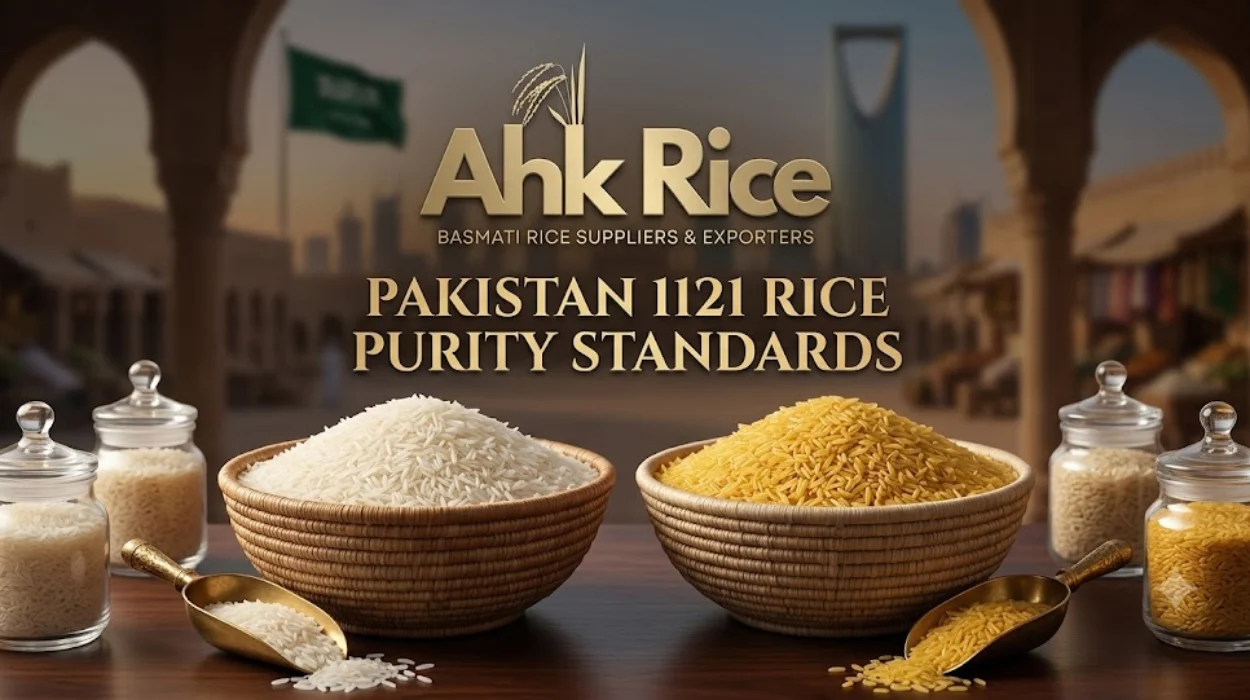
Purity Standards for Pakistan 1121 Steam and Golden Sella Rice in Saudi Arabia
Pakistan 1121 Steam Rice generally meets the preferred purity requirements of Saudi Arabian food service buyers for premium applications, while Pakistan 1121 Golden Sella Rice provides superior durability during large-scale cooking. The better choice depends on menu type, cooking method, buyer specifications, and acceptable impurity tolerance rather than price alone.
Saudi Arabia remains one of the largest importers of Pakistani Basmati rice in the Gulf region. Hotels, catering companies, restaurants, wholesalers, supermarkets, and institutional kitchens increasingly evaluate purity reports before selecting suppliers because rice consistency directly affects cooking performance, customer satisfaction, and operational costs. Buyers seeking a deeper understanding of why purity testing influences purchasing decisions can first explore our guide on:
How Saudi buyers evaluate Pakistan Basmati rice quality before making procurement decisions, which explains the inspection process used by professional importers.
Among exporters serving the Saudi market, AHK Rice has developed export processes that focus on maintaining internationally accepted purity specifications through controlled milling, colour sorting, grading, polishing, laboratory inspection, and export documentation. As a Pakistani Basmati exporter based in Punjab, AHK Rice supplies 1121 Steam, 1121 Golden Sella, Super Kernel, and 1509 varieties to buyers across more than 15 countries through customised packaging and complete export management services.
What do purity standards mean for Pakistan 1121 Steam and Golden Sella Rice?
Purity standards define the percentage of whole rice kernels belonging to the declared variety while limiting foreign matter, broken grains, damaged kernels, chalky grains, paddy, stones, and other impurities. Higher purity creates consistent cooking, improved appearance, stronger buyer confidence, and fewer quality disputes throughout international food supply chains.
Rice purity refers to how accurately a shipment matches the agreed commercial specification. International buyers measure purity using laboratory inspection before shipment and again upon arrival.
Typical purity evaluations include:
- Variety purity
- Whole kernel percentage
- Broken percentage
- Chalky grains
- Foreign matter
- Paddy grains
- Damaged kernels
- Moisture content
- Stone content
- Colour consistency
Saudi food service companies normally request independent inspection certificates because rice is prepared in very large quantities where minor inconsistencies become highly visible.
A shipment advertised as 95% purity contains at least 95% genuine kernels of the declared rice variety with remaining tolerance allocated to accepted commercial deviations within contract specifications.
How do Pakistan 1121 Steam and Golden Sella Rice compare?
Pakistan 1121 Steam Rice delivers brighter appearance and softer texture, while Golden Sella Rice provides stronger grain structure, greater resistance to overcooking, and better performance during buffet service. Both achieve high purity when processed under modern export quality systems.
Although both products originate from the same premium Basmati variety, processing creates significant differences.
Specification Comparison
| Specification | 1121 Steam Rice | 1121 Golden Sella Rice |
|---|---|---|
| Processing Method | Steamed before milling | Parboiled and dried before milling |
| Grain Colour | White | Golden |
| Grain Strength | High | Very High |
| Cooking Texture | Soft and fluffy | Firm and separate |
| Buffet Holding Time | Moderate | Excellent |
| Purity Requirement | 92–95%+ depending on contract | 92–95%+ depending on contract |
| Preferred Food Service Use | Restaurants and premium dining | Catering, banquets and institutional kitchens |
Steam rice is widely selected where presentation matters most.
Golden Sella is preferred where rice must remain stable during transport, reheating, or prolonged serving periods.
Both varieties can achieve identical commercial purity levels when processed using advanced optical sorting and strict grading systems.
What purity specifications do Saudi Arabian buyers usually request?
Saudi importers commonly request commercial purity between 92% and 95% or higher, supported by moisture control, low broken percentage, minimal foreign matter, and internationally recognised inspection certificates before shipment from Pakistan.
Large buyers rarely purchase solely based on variety.
Instead, procurement teams evaluate measurable quality indicators including:
- Moisture below commercial contract limits
- Minimal damaged kernels
- Low foreign matter
- Uniform kernel length
- Controlled broken percentage
- Consistent polishing
- Uniform colour
- Laboratory inspection reports
Government institutions, luxury hotels, airline caterers, and restaurant chains frequently specify tighter tolerances than retail distributors.
The highest-value contracts normally include independent inspection before container loading.
What solutions are available to achieve higher rice purity?
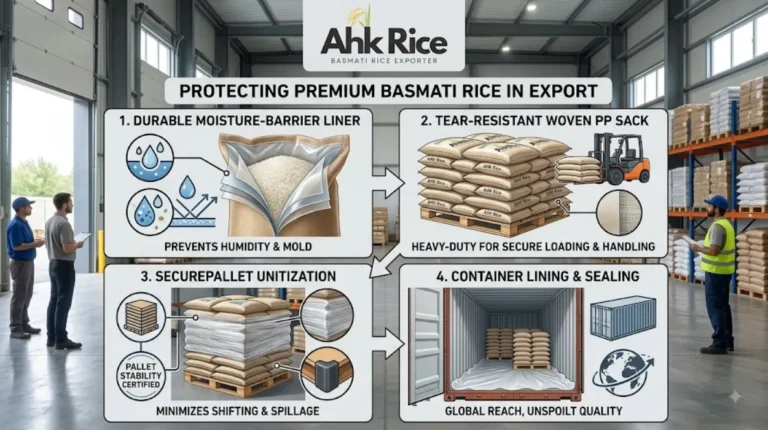
Modern rice exporters improve purity through integrated processing systems that combine cleaning, grading, optical sorting, polishing, laboratory testing, moisture control, and export inspection, reducing contamination while maintaining kernel integrity from paddy intake to container loading.
Several approaches contribute to higher purity.
Traditional mechanical cleaning
Mechanical separators remove stones, dust, straw, and larger contaminants.
This forms the first stage of quality improvement.
Length grading
Indented cylinders separate broken kernels from whole grains.
This improves visual consistency.
Optical colour sorting
High-resolution cameras identify defective kernels.
Automatic air ejectors remove:
- Chalky grains
- Black kernels
- Discoloured rice
- Foreign seeds
- Damaged grains
Modern optical sorting dramatically improves commercial purity.
Laboratory verification
Samples undergo testing for:
- Moisture
- Purity
- Broken percentage
- Foreign matter
- Grain dimensions
Laboratory reports verify compliance before shipment.
Multiple-stage inspection
Professional exporters inspect rice repeatedly during:
- Milling
- Packaging
- Container loading
- Final export approval
This layered process reduces shipment variation.
How do different quality control approaches compare?
Integrated quality management consistently produces higher purity than relying on single-stage inspection because contamination is removed throughout processing instead of only during final packing, improving consistency across every exported container.
| Quality Control Method | Purity Improvement | Investment | Consistency | Suitable Buyer |
|---|---|---|---|---|
| Basic Cleaning | Moderate | Low | Moderate | Local markets |
| Cleaning + Grading | High | Medium | High | Regional importers |
| Cleaning + Colour Sorting | Very High | High | Very High | Premium wholesalers |
| Integrated Laboratory System | Excellent | High | Excellent | Food service companies |
| Full Export Quality Management | Highest | Highest | Exceptional | International contract buyers |
The highest-performing exporters combine every stage rather than depending on a single technology.
Which option works best for different Saudi buyers?
Different buyer categories require different purity priorities because restaurant presentation, institutional efficiency, supermarket branding, and wholesale distribution each place different importance on grain appearance, cooking stability, and quality consistency.
Saudi restaurants
Usually prefer:
- High visual quality
- Long grains
- Soft texture
- Excellent plate presentation
Steam Rice often becomes the preferred option.
Catering companies
Usually prioritise:
- Cooking stability
- Large batch preparation
- Reduced breakage
- Longer holding time
Golden Sella performs exceptionally well.
Retail distributors
Focus on:
- Attractive packaging
- Consistent appearance
- Consumer satisfaction
- Brand reputation
Either product works depending on target customers.
Institutional kitchens
Schools, hospitals, and government catering generally value operational consistency more than visual appearance.
Golden Sella frequently provides better efficiency.
Which rice grades do different Saudi market regions prefer?
Regional demand differs because consumer preferences, restaurant styles, and distribution channels influence purchasing decisions. Premium urban markets usually request higher purity specifications, while volume-driven wholesale markets balance purity with competitive pricing.
| Saudi Market Region | Preferred Grade | Typical Purity Preference | Main Buyers |
|---|---|---|---|
| Central Region (Riyadh) | 1121 Steam Premium | 95%+ | Hotels, restaurants, supermarkets |
| Western Region (Jeddah & Makkah) | 1121 Golden Sella Premium | 94–95% | Catering, Hajj & Umrah food service, wholesalers |
Premium hospitality buyers generally specify stricter inspection requirements than traditional wholesale distributors.
How do prices compare in 2026?
Rice prices depend on harvest quality, freight costs, exchange rates, processing standards, and contract volume rather than purity alone. Higher purity usually commands a moderate premium because additional sorting and inspection increase production costs.
Average Export Price Comparison (2026)
| Product | Typical Export Price (USD/MT FOB Pakistan) |
|---|---|
| 1121 Steam Rice | $1,080–1,220 |
| 1121 Golden Sella Rice | $1,040–1,180 |
Actual contract pricing varies according to:
- Packaging
- Container quantity
- Inspection requirements
- Payment terms
- Destination port
- Seasonal demand
Higher purity specifications generally increase processing costs but reduce buyer complaints and product losses.
How does shelf life compare?
Proper storage maintains quality for extended periods regardless of processing method, although Golden Sella generally retains structural integrity slightly longer under demanding storage and transportation conditions.
| Product | Recommended Storage | Commercial Shelf Life |
|---|---|---|
| 1121 Steam Rice | Cool, dry warehouse | Up to 24 months |
| 1121 Golden Sella Rice | Cool, dry warehouse | Up to 24–30 months |
Storage conditions remain more important than processing type.
Humidity control, ventilation, palletisation, and sealed packaging significantly influence long-term quality.
What are the advantages and disadvantages of each option?
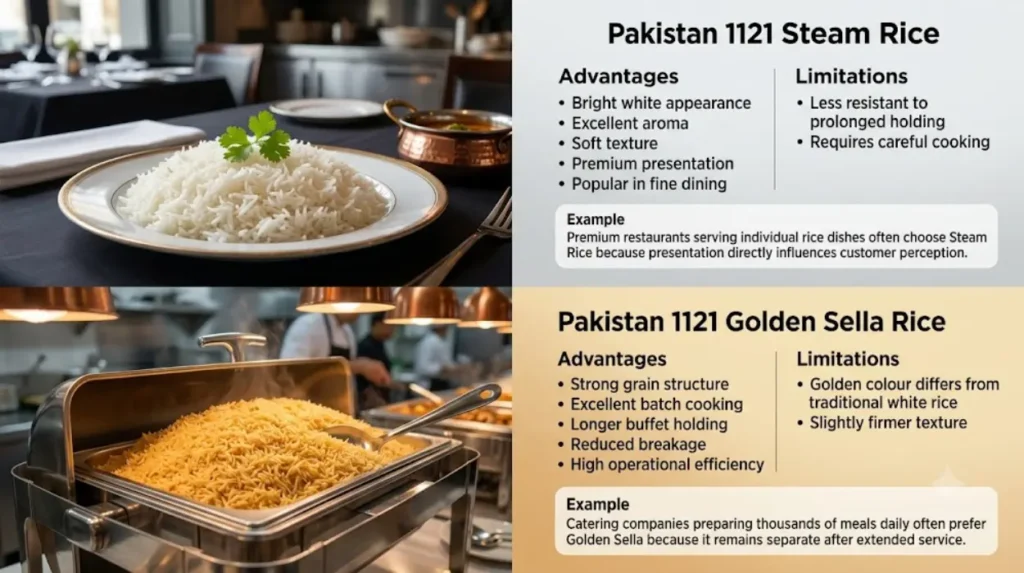
Neither product is universally superior because each delivers different operational benefits depending on cooking style, customer expectations, and food service requirements. Choosing according to application produces better long-term purchasing outcomes.
Pakistan 1121 Steam Rice
Advantages
- Bright white appearance
- Excellent aroma
- Soft texture
- Premium presentation
- Popular in fine dining
Limitations
- Less resistant to prolonged holding
- Requires careful cooking
Example: Premium restaurants serving individual rice dishes often choose Steam Rice because presentation directly influences customer perception.
Pakistan 1121 Golden Sella Rice
Advantages
- Strong grain structure
- Excellent batch cooking
- Longer buffet holding
- Reduced breakage
- High operational efficiency
Limitations
- Golden colour differs from traditional white rice
- Slightly firmer texture
Example: Catering companies preparing thousands of meals daily often prefer Golden Sella because it remains separate after extended service.
Which factors should buyers evaluate before choosing?
Successful procurement decisions balance purity, cooking performance, supplier reliability, inspection documentation, pricing, logistics, and intended food service application instead of focusing on a single quality indicator.
Decision Framework
| Decision Factor | Steam Rice | Golden Sella Rice |
|---|---|---|
| Premium Restaurant Dining | Excellent | Very Good |
| Large Catering Events | Good | Excellent |
| Buffet Service | Very Good | Excellent |
| Retail Consumer Sales | Excellent | Very Good |
| Long Distribution Chains | Very Good | Excellent |
Professional procurement teams compare complete specifications rather than selecting the lowest quotation.
Supplier transparency, laboratory testing, shipment consistency, and documented export quality frequently generate greater long-term value than small price differences.
For organisations preparing supplier evaluations, reviewing our detailed resource on:
Bulk sourcing premium Pakistan Basmati rice for commercial food service operations provides practical guidance on selecting export partners, contract specifications, packaging options, and shipment planning.
As one of Pakistan’s established exporters, AHK Rice supports international buyers with controlled processing, customised packaging, documented quality inspection, and complete export management for 1121 Steam, 1121 Golden Sella, Super Kernel, and 1509 Basmati varieties supplied to more than 15 countries. Consistent purity standards, transparent documentation, and application-specific product selection remain the foundation of successful long-term procurement for the Saudi Arabian food service market.
Frequently Asked Questions
What purity percentage do Saudi Arabian buyers prefer for Pakistan 1121 Basmati Rice?
Most Saudi food service buyers prefer Pakistan 1121 Basmati Rice with a purity level of 92–95% or higher, depending on their contract specifications, application, and quality requirements.
Is 1121 Steam Rice purer than 1121 Golden Sella Rice?
No. Both 1121 Steam Rice and 1121 Golden Sella Rice can achieve the same commercial purity standards when processed using modern cleaning, grading, and optical colour-sorting technology.
Which rice is better for Saudi restaurants: Steam or Golden Sella?
1121 Steam Rice is generally preferred by premium restaurants for its bright appearance and soft texture, while Golden Sella Rice is better suited for catering and buffet services due to its stronger grain structure.
How is rice purity tested before export to Saudi Arabia?
Rice purity is tested through laboratory analysis, optical colour sorting, grading, moisture testing, and independent pre-shipment inspections to ensure compliance with buyer specifications.
Does higher rice purity affect export prices?
Yes. Higher purity usually increases export prices slightly because additional sorting, grading, and quality inspections require more advanced processing and quality control.
What is the shelf life of Pakistan 1121 Steam and Golden Sella Rice?
Under proper storage conditions, 1121 Steam Rice has a shelf life of up to 24 months, while 1121 Golden Sella Rice can maintain quality for 24–30 months.
Why is rice purity important for Saudi food service companies?
High-purity rice ensures consistent cooking performance, fewer defective grains, improved presentation, reduced waste, and greater customer satisfaction in commercial kitchens.
Which Saudi market regions demand the highest rice purity standards?
Premium buyers in Riyadh and Jeddah generally require the highest purity standards, particularly hotels, restaurants, catering companies, and large supermarket chains.
Can exporters customise purity specifications for Saudi buyers?
Yes. Professional Pakistani exporters can customise purity levels, broken percentage, packaging, and inspection requirements to meet individual Saudi buyer contracts.
What should buyers consider besides rice purity?
Buyers should evaluate grain length, moisture content, broken percentage, cooking performance, inspection certificates, packaging options, supplier reliability, and export experience before making a purchasing decision.