Why Should Welsh Buyers Verify Supplier Compliance Capabilities?
Welsh buyers should verify supplier compliance capabilities before purchasing rice because verified compliance protects food safety, ensures uninterrupted imports, supports legal customs clearance, and confirms consistent product quality. Here is why: documented compliance proves that the supplier follows recognized production, quality, certification, and export standards throughout the supply chain.
Rice importers in Wales operate within the United Kingdom’s food safety and import regulations. Every shipment requires accurate documentation, quality verification, and compliance with internationally recognized standards. Supplier compliance extends beyond certificates. It covers cultivation practices, milling procedures, laboratory testing, packaging specifications, export documentation, and shipment traceability.
Verifying compliance also reduces commercial risks. Buyers gain confidence that products meet agreed specifications before shipment. Import delays, rejected consignments, and unexpected inspection failures become less frequent when exporters follow established compliance systems.
Importers interested in understanding how exporters simplify documentation, inspections, and shipping procedures can continue reading about how experienced suppliers help buyers manage international procurement requirements through the companion article: How Do Exporters Support Smooth International Rice Import Processes?
What Does Supplier Compliance Capability Mean?
Supplier compliance capability means the verified ability to produce, inspect, certify, package, document, and export rice according to customer specifications and international regulations throughout every production and shipping stage.
Supplier compliance combines operational processes with documented evidence. A compliant exporter follows defined procedures instead of informal practices. Every shipment passes through inspection points before export.
Compliance begins in agricultural production. Farmers cultivate paddy using documented farming practices. Processing facilities then mill, polish, grade, and inspect rice according to buyer specifications. Laboratory testing confirms that measurable quality parameters remain within agreed limits.
Compliance also includes documentation. Exporters prepare commercial invoices, packing lists, certificates of origin, phytosanitary certificates, fumigation certificates, and laboratory reports according to destination requirements.
What Areas Does Supplier Compliance Cover?
Supplier compliance normally includes several measurable activities:
- Cultivation records
- Raw material traceability
- Quality inspection
- Laboratory testing
- Food safety systems
- Packaging standards
- Export documentation
- Container loading procedures
- Shipment traceability
Each activity contributes to consistent product quality and smoother international trade.
For example, Welsh wholesalers importing Basmati rice expect every shipment to match the agreed grain length, moisture level, broken percentage, and packaging specification. Documented compliance verifies these specifications before loading.
With supplier compliance defined, the next question explains how this system functions throughout the export process.
How Does Supplier Compliance Work During Rice Exports?
Supplier compliance works through a structured sequence of cultivation, processing, inspection, certification, documentation, container loading, and shipment verification that confirms every exported batch satisfies contractual and regulatory requirements.
Compliance follows a repeatable workflow rather than isolated inspections. Every production stage produces records that support the final shipment.
Step 1: Cultivate the Paddy
Farmers cultivate approved rice varieties using documented agricultural practices. Harvest timing affects grain maturity, moisture content, and milling performance.
Step 2: Mill the Rice
Processing facilities remove husk, polish kernels, and separate impurities. Modern milling improves grain consistency while reducing broken percentages.
Step 3: Grade the Rice
Technicians classify rice according to buyer specifications. Examples include:
- 1121 Steam Basmati
- 1121 Golden Sella
- 1121 White Rice
- Super Kernel Basmati
- 1509 Steam Rice
- PK-386 Rice
- IRRI-6 Rice
Each grade follows separate quality specifications.
Step 4: Inspect Product Quality
Quality inspectors verify measurable characteristics including:
- Grain length
- Moisture percentage
- Broken percentage
- Foreign matter
- Chalky grains
- Damaged kernels
- Colour consistency
Inspection results become part of shipment documentation.
Step 5: Test Laboratory Samples
Independent or accredited laboratories analyze samples for required quality parameters. Testing supports compliance with buyer specifications and applicable food safety requirements.
Step 6: Certify the Shipment
Relevant authorities issue certificates supporting export clearance. Documentation depends upon destination regulations.
Step 7: Load and Dispatch Containers
Export teams inspect packaging, verify pallet arrangements, seal containers, and prepare shipping documentation before dispatch.
Every completed stage strengthens shipment reliability and reduces documentation errors.
With the compliance process established, understanding its individual components becomes easier.
What Are the Key Components of Supplier Compliance?
The essential components include quality management, food safety systems, traceability, certification, laboratory verification, export documentation, packaging control, and logistics monitoring that together support reliable international rice trade.
Each component performs a different function within export operations. Together they create an integrated compliance framework.
Quality Management
Quality management defines inspection procedures throughout processing. Operators inspect rice before milling, after grading, and before packaging.
Consistent inspections improve uniformity between production batches.
Food Safety Management
Food safety systems establish hygiene procedures throughout processing facilities. Cleaning schedules, equipment maintenance, pest control, and employee hygiene all contribute to safer food production.
These systems support compliance with internationally recognized food safety standards.
Traceability Systems
Traceability records connect finished products with their production history.
Traceability normally records:
- Farm sources
- Harvest dates
- Processing batches
- Laboratory reports
- Packaging dates
- Container numbers
Accurate records simplify product verification during international trade.
Certification
Certification confirms that production follows recognized standards established by accredited organizations.
Common certifications requested during international rice exports include:
| Certification | Purpose |
|---|---|
| ISO 22000 | Food safety management |
| HACCP | Hazard analysis and preventive controls |
| Phytosanitary Certificate | Plant health verification |
| Certificate of Origin | Country of production confirmation |
| Fumigation Certificate | Pest treatment confirmation |
Certification requirements differ between importing markets.
Export Documentation
Documentation supports customs clearance and buyer verification.
Standard export documents include:
- Commercial invoice
- Packing list
- Bill of Lading
- Certificate of Origin
- Phytosanitary Certificate
- Laboratory analysis report
- Insurance documents where required
Complete documentation improves shipment efficiency and reduces administrative delays.
Understanding these compliance components explains why buyers rely on verified systems rather than assumptions. The following section examines the practical benefits of supplier compliance for Welsh rice importers.
What Benefits Does Supplier Compliance Provide for Welsh Buyers?
Verified supplier compliance delivers consistent product quality, faster customs clearance, stronger food safety assurance, reduced commercial risk, accurate documentation, improved shipment traceability, and dependable long-term procurement for Welsh rice importers purchasing from international exporters.
Supplier compliance creates measurable business value throughout the purchasing process. Welsh buyers evaluate suppliers beyond price because import success depends on documentation accuracy, product consistency, and regulatory conformity. Compliance systems reduce operational disruptions and improve purchasing confidence.
How Does Compliance Improve Product Consistency?
Rice quality depends on standardized production rather than individual inspections. A compliant supplier follows documented procedures from cultivation to container loading. Every batch passes through the same inspection sequence before export.
Quality inspectors verify grain length, moisture percentage, broken grain levels, foreign matter, damaged kernels, and colour consistency. Standardized testing produces repeatable results instead of variable shipment quality.
For example, buyers ordering 1121 Steam Basmati expect identical specifications across multiple containers. Compliance procedures help maintain those agreed standards throughout production.
How Does Compliance Support Food Safety?
Food safety depends on preventive controls throughout processing.
Processing facilities clean equipment according to scheduled procedures. Staff follow hygiene requirements. Storage areas remain protected from contamination. Laboratory testing verifies important quality parameters before shipment.
Food safety systems also create documented records. Buyers can review inspection reports instead of relying on verbal assurances.
How Does Compliance Reduce Import Delays?
Import delays often result from incomplete paperwork rather than product quality.
Compliant suppliers prepare documentation before cargo reaches the port. Customs authorities examine commercial invoices, packing lists, certificates, and shipping documents during clearance procedures.
Accurate documentation reduces requests for corrections and additional verification.
How Does Compliance Improve Traceability?
Traceability allows buyers to identify every production stage.
A traceable shipment records:
- Farm location
- Harvest period
- Processing batch
- Laboratory report
- Packaging date
- Container seal number
- Shipping reference
Complete records simplify quality investigations whenever buyers request additional verification.
Benefits Summary
| Benefit | Practical Value |
|---|---|
| Product consistency | Uniform specifications between shipments |
| Food safety | Verified processing controls |
| Documentation accuracy | Faster customs procedures |
| Traceability | Complete shipment history |
| Quality verification | Measurable inspection reports |
| Risk reduction | Lower likelihood of rejected cargo |
Supplier compliance strengthens every shipment stage. The next section examines situations where buyers depend most on verified compliance systems.
When Should Welsh Buyers Verify Supplier Compliance?
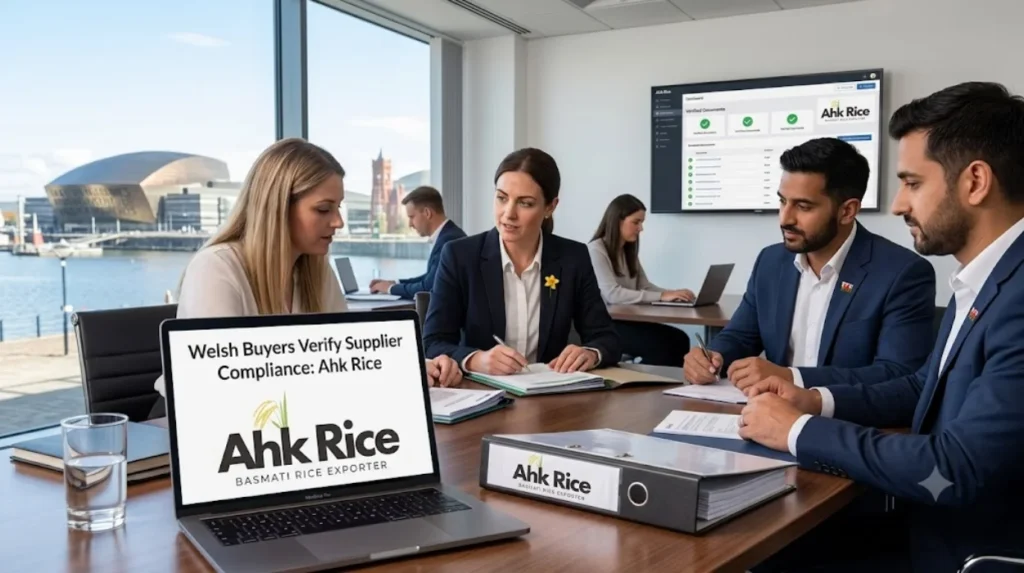
Welsh buyers should verify compliance before supplier selection, contract signing, first shipments, specification changes, private label production, and long-term procurement agreements because each stage influences product quality and import performance.
Compliance verification belongs at the beginning of procurement instead of after production. Early verification identifies operational capabilities before commercial commitments.
Before Selecting a Supplier
Supplier evaluation starts with operational capability rather than quotations alone.
Buyers review:
- Food safety certifications
- Export experience
- Laboratory testing procedures
- Quality management systems
- Documentation processes
- Traceability records
This evaluation provides objective information for supplier comparison.
Before Signing Purchase Contracts
Purchase contracts define measurable specifications.
Examples include:
- Grain length
- Broken percentage
- Moisture level
- Packaging weight
- Crop year
- Delivery terms
- Inspection requirements
Compliance capability confirms the supplier can consistently meet these contractual specifications.
Before First Commercial Shipments
Initial shipments establish long-term trading relationships.
Many buyers request:
- Product samples
- Laboratory reports
- Packaging photographs
- Inspection certificates
- Production specifications
These documents verify supplier performance before larger purchasing volumes.
During Private Label Production
Private label products require additional documentation and packaging controls.
Compliance systems help verify:
- Label accuracy
- Packaging specifications
- Batch identification
- Production traceability
- Regulatory markings
Accurate records reduce packaging errors during commercial production.
During Long-Term Supply Agreements
Long-term procurement depends on consistent performance rather than individual shipments.
Compliance monitoring continues through periodic audits, updated certifications, inspection reports, and production reviews.
Regular verification strengthens supplier relationships while maintaining documented quality standards.
Understanding when compliance verification matters naturally leads to another important question. Many buyers misunderstand what compliance actually guarantees. The next section addresses those common misconceptions.
What Common Misconceptions Exist About Supplier Compliance?
Supplier compliance does not guarantee premium quality alone, replace independent inspections, eliminate buyer responsibility, or depend only on certificates because effective compliance combines documented systems, verified inspections, laboratory testing, and continuous operational controls.
Several misunderstandings influence purchasing decisions. Understanding these misconceptions helps buyers evaluate suppliers more accurately.
Certification Alone Does Not Guarantee Product Quality
Certificates verify that management systems meet defined standards.
Certificates do not replace batch inspections, laboratory analysis, or shipment verification.
Professional buyers review certification together with measurable inspection results.
Low Prices Do Not Indicate Strong Compliance
Competitive pricing reflects commercial strategy.
Compliance reflects operational capability.
These two factors remain separate purchasing criteria.
Experienced buyers evaluate quality documentation before comparing commercial offers.
Every Exporter Does Not Follow Identical Standards
International exporters operate under different quality systems.
Some facilities maintain comprehensive inspection procedures. Others satisfy only minimum regulatory requirements.
Documented compliance allows buyers to compare suppliers using measurable evidence.
Compliance Continues After Production
Compliance extends beyond milling.
Packaging verification, container inspection, export documentation, customs preparation, and shipment traceability remain part of the compliance process until cargo reaches its destination.
Viewing compliance as a complete supply chain system provides a clearer understanding of international rice procurement. Buyers seeking a deeper explanation of documentation, inspections, customs preparation, and shipment coordination should continue with the companion article covering how exporters support smooth international rice import processes.
Frequently Asked Questions
Why is supplier compliance important for Welsh rice buyers?
Supplier compliance confirms that exporters follow documented quality, food safety, processing, and export procedures. Verification reduces commercial risks and supports smoother import operations.
What documents demonstrate supplier compliance?
Common documents include the commercial invoice, packing list, Certificate of Origin, phytosanitary certificate, laboratory analysis report, fumigation certificate, and Bill of Lading.
Which certifications are commonly requested for rice exports?
International buyers frequently request ISO 22000 certification, HACCP implementation, phytosanitary certification, Certificate of Origin, and laboratory testing reports.
Does supplier compliance guarantee premium-quality rice?
No. Compliance verifies documented systems and production controls. Buyers should also review laboratory reports, product specifications, and inspection results before purchasing.
How does traceability improve rice imports?
Traceability records production batches, harvest dates, processing history, laboratory testing, and shipment information. These records simplify quality verification and strengthen supply chain transparency.