Ship Inspection-Ready Pakistani Basmati Rice to England with AHK Rice
Ship inspection-ready Pakistani Basmati rice to England by controlling the specification, testing the shipment, preparing compliant documents, and completing pre-shipment inspection before loading. Here is why: UK controls currently cover rice from Pakistan for specific contaminants, while documentation accuracy directly affects border clearance. For the background, read the guide on why England importers prepare for rice border inspections.
What is the best solution for inspection-ready Pakistani Basmati rice?
The best solution is a specification-controlled shipment covering grain quality, moisture, contaminants, packaging, laboratory testing, certification, and final pre-shipment inspection. This approach gives English importers measurable evidence before containers leave Pakistan.
Pakistani Basmati rice enters England through a documented commercial supply chain. Buyers need consistent product specifications before production begins. AHK Rice aligns milling, grading, testing, packaging, and documentation with the agreed purchase specification.
UK controls currently identify Pakistan-origin rice within GB foodstuff restrictions for contaminants, including aflatoxins and Ochratoxin A. Restricted consignments can require entry through designated Border Control Points.
The practical objective is simple. The rice should match the contract before loading. The documents should match the physical shipment. The laboratory results should support the declared specification.
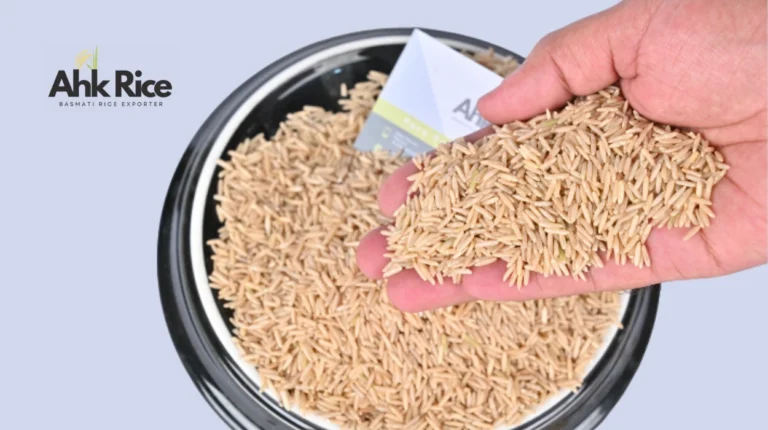
AHK Rice prepares Pakistani Basmati through cleaning, dehusking, polishing, grading, colour sorting, moisture testing, broken-grain inspection, fumigation, and container loading.
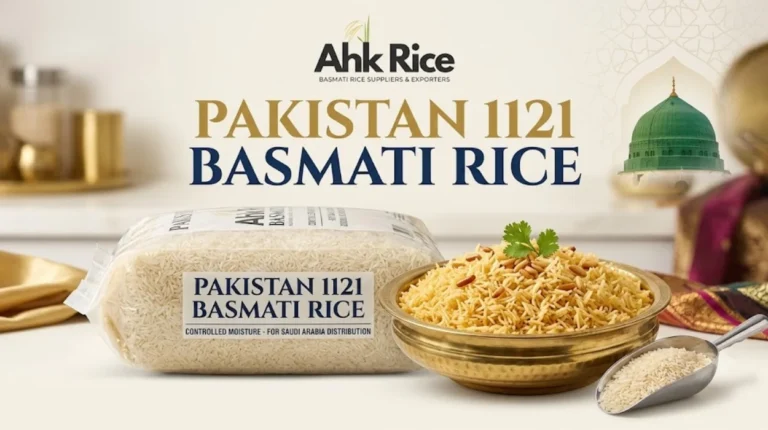
The available grades include 1121 Basmati, Super Kernel Basmati, and 1509 Basmati. Processing can also produce White, Steam, Sella, and Golden Sella specifications according to the buyer’s requirement.
With the specification established, the next decision is which supplier can execute every control consistently.
Why choose AHK Rice for England-bound Basmati shipments?
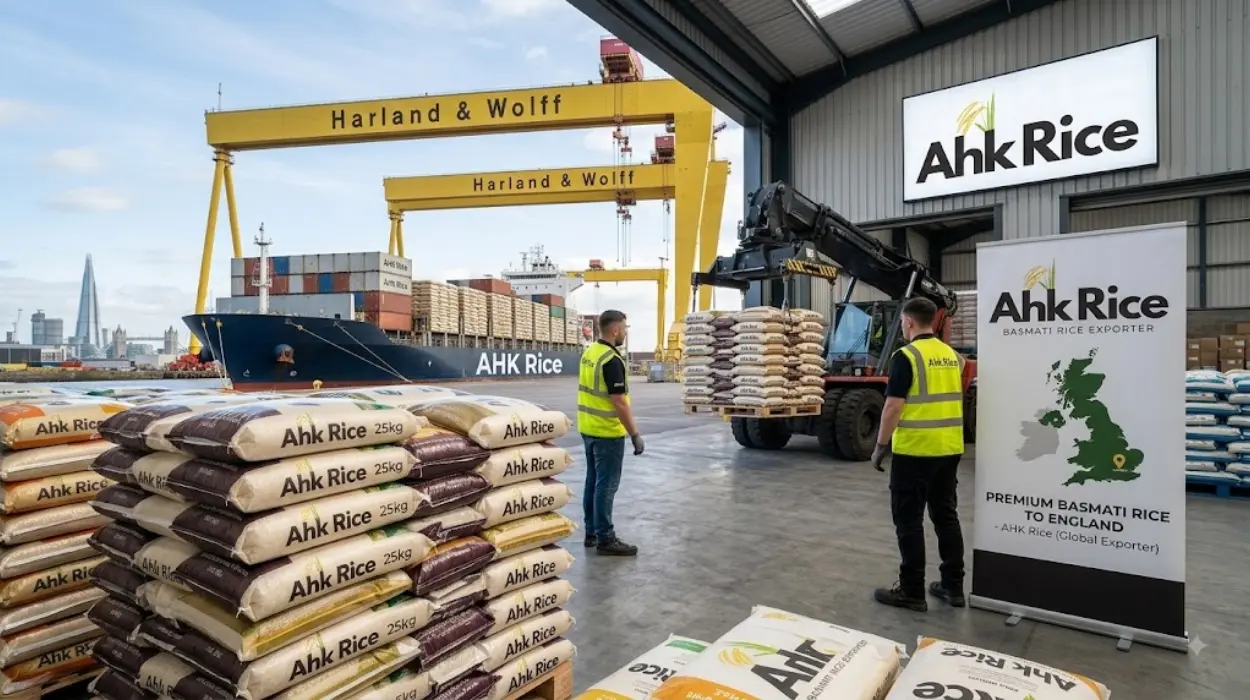
AHK Rice combines Pakistani Basmati sourcing, controlled milling, laboratory testing, certification, packaging, third-party inspection, documentation, and Karachi loading into one export workflow. This reduces coordination between separate suppliers and makes shipment verification easier.
AHK Rice Pakistani Basmati export service provides a defined UK export process from order confirmation through UK arrival.
AHK Rice starts with sample approval and contract confirmation. The published UK export process uses a 30% advance with the balance through LC or against documents. Production begins after the commercial terms are approved.
AHK Rice then tests purity, moisture, and contaminants. The published specification includes moisture below 14% and broken grains below 2% for UK shipments.
AHK Rice prepares HACCP, ISO, Halal, and phytosanitary documentation. The exporter also prepares the commercial invoice, packing list, bill of lading, certificate of origin, and UK-compliant export documentation.
AHK Rice offers third-party inspection through SGS or similar agencies. The inspection verifies quantity, quality, packaging, and loading conditions before dispatch.
This matters commercially because a buyer can identify a specification problem before the container sails. Independent agricultural inspection services can verify contractual quality and quantity before shipment.
The next decision is how the inspection-ready process translates into measurable shipment results.
How does the AHK Rice inspection-ready process work?
The process moves from sample approval to specification confirmation, production, laboratory testing, certification, pre-shipment inspection, documentation, container loading, and UK clearance support. Each stage creates evidence for the next stage.
How is the rice specification confirmed?
AHK Rice confirms the variety, processing type, broken percentage, moisture target, packaging, quantity, destination port, and commercial terms before production.
The buyer should approve the physical sample before the mill produces the commercial lot. This establishes the reference quality for the final inspection.
How is the commercial lot tested?
AHK Rice mills and sorts the rice before laboratory testing. Testing covers moisture, purity, broken grains, contaminants, and other contractual parameters.
Colour sorting removes discoloured kernels and unwanted particles. Metal detection adds another food-safety control before packaging.
Laboratory verification then checks a representative production sample. The test results provide measurable evidence against the agreed specification.
How is the final shipment inspected?
AHK Rice arranges final pre-shipment inspection before loading. Third-party inspectors can verify quantity, quality, packaging, and container condition.
The inspection report becomes part of the buyer’s shipment record. SGS identifies agricultural commodity inspection as a service covering sampling, pre-shipment inspection, quality and quantity verification, and loading supervision.
How does UK border preparation work?
The importer prepares the UK-side declaration and required pre-arrival information. UK post-Brexit import procedures use systems including IPAFFS and customs declarations for relevant food imports.
Current UK guidance confirms that certain restricted food consignments must enter through designated Border Control Points.
UK importers should also verify the current commodity-specific requirements before dispatch. Requirements can change, so the importer remains responsible for current UK entry compliance.
For a deeper comparison of the inspection workflow, use the Basmati rice shipment border inspection guide.
With inspection stages defined, shipping time becomes the next commercial consideration.
How many days does Pakistani Basmati take to reach England?
Plan approximately 21–40 days from Karachi to UK arrival, with the exact schedule determined by vessel availability, routing, port congestion, and clearance requirements. AHK Rice publishes 21–28 days for UK port arrival, while current market guidance shows 24–40 days sailing to Felixstowe.
| England delivery planning | Typical shipping window |
|---|---|
| Felixstowe | 24–40 days |
| General UK port planning | 21–40 days |
| AHK Rice published UK arrival estimate | 21–28 days |
| Pre-shipment inspection | Before loading |
| Documentation preparation | Before vessel departure |
Felixstowe is a common destination for Pakistani Basmati shipments. Current market guidance lists Karachi-to-Felixstowe sailing at approximately 24–40 days.
AHK Rice’s UK export process states that containers can arrive at UK ports such as Felixstowe within approximately 21–28 days total. Actual schedules depend on the vessel and logistics conditions.
English wholesalers should therefore plan inventory around the shipment window rather than a single fixed arrival date. Retail promotions, restaurant supply contracts, and warehouse replenishment should include clearance time.
With transit planning established, the remaining commercial question is the total cost.
What factors determine the cost of an England Basmati rice shipment?
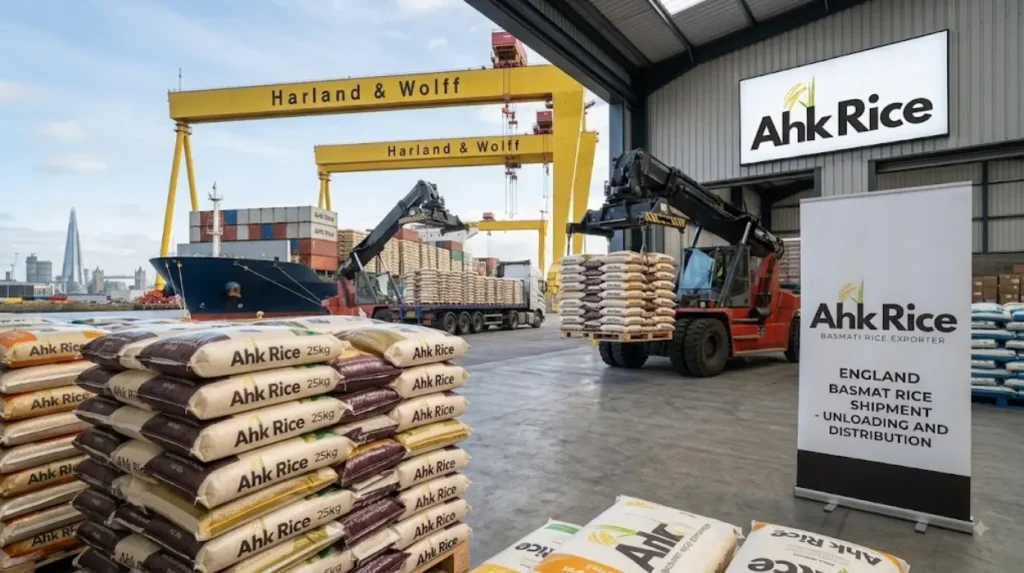
The final landed cost depends on rice grade, specification, quantity, packaging, inspection scope, freight, destination port, documentation, and UK import charges. A firm quotation requires the complete shipment specification rather than a generic price per metric ton.
Rice grade affects the product price. 1121 White, 1121 Steam, 1121 Golden Sella, 1509, and Super Kernel can carry different commercial values.
Quantity affects freight efficiency. Full-container orders normally produce a different freight structure from smaller consolidated shipments.
Packaging also affects cost. AHK Rice supports PP packaging and custom UK-oriented packaging requirements. Retail packs require different printing and packing specifications from 25 kg or 50 kg commercial bags.
Third-party inspection adds another cost when the buyer requests independent verification. A market inspection reference places pre-shipment inspection for smaller orders around $12–$18 per metric ton, depending on inspection scope; this is not an AHK Rice fixed tariff.
Sample costs depend on the sample weight, courier, destination, and requested testing. AHK Rice’s published UK information does not state one universal sample price.
A practical sample budget should therefore separate product sample cost, international courier, laboratory testing, and optional independent inspection.
What should a buyer include in the quotation request?
| Cost factor | Buyer specification |
|---|---|
| Product | 1121, Super Kernel, or 1509 |
| Processing | White, Steam, Sella, or Golden Sella |
| Broken percentage | Contract limit |
| Moisture | Target specification |
| Packing | Retail or bulk format |
| Quantity | Metric tons or FCL |
| Port | Felixstowe or another UK port |
| Incoterm | FOB, CFR, or agreed term |
| Inspection | Internal or third-party |
| Testing | Standard or expanded laboratory panel |
With the cost structure defined, the buyer can move from evaluation to execution.
What results can an English importer expect?
A controlled export workflow delivers specification consistency, documented testing, verified quantity, prepared export documents, and a shipment aligned with the approved sample. These outcomes reduce preventable quality disputes before the container reaches England.
The first result is specification control. The commercial lot follows the approved product definition rather than an undefined market grade.
The second result is documented quality. Laboratory testing provides evidence for moisture, purity, broken grains, and contaminants.
The third result is shipment verification. Third-party inspection can verify quantity, quality, packaging, and loading before dispatch.
The fourth result is logistics visibility. AHK Rice coordinates loading at Karachi and provides the documentation required for the shipment process.
The fifth result is commercial consistency. English wholesalers and foodservice buyers receive a repeatable specification that can support future purchase orders.
These outcomes do not remove UK border controls. They prepare the shipment for them.
How should an England importer get started with AHK Rice?
Start by sending the destination port, rice grade, processing type, quantity, packaging, quality specification, inspection requirement, and preferred Incoterm. AHK Rice can then structure the quotation and sample process around the actual purchase requirement.
What should the buyer send first?
- Specify the Basmati variety and processing type.
- Confirm the target broken percentage and moisture level.
- Select the required packaging format and weight.
- State the required metric-ton quantity.
- Provide the destination UK port.
- Request laboratory and inspection requirements.
- Approve the commercial sample.
- Confirm the contract and payment structure.
The sample should become the commercial reference. Production should follow the approved specification. Testing should verify the finished lot. Inspection should verify the shipment before loading.
AHK Rice then prepares the export documents and loads the container at Karachi. The buyer’s UK customs process remains the final import-side responsibility.
The strongest buying decision is therefore not the lowest quoted rice price. It is the supplier that can control the product, document the shipment, verify the load, and support the buyer through the export sequence.
For England importers ready to move from specification approval to a commercial order, use the AHK Rice request-a-quote page.
Frequently Asked Questions
How long does Pakistani Basmati rice take to reach England?
Pakistani Basmati rice typically takes 21–40 days to reach UK ports.
AHK Rice states an estimated 21–28 days for UK port arrival.
Felixstowe shipments can take approximately 24–40 days.
Vessel schedules and port conditions can affect the final arrival date.
Importers should plan inventory around a delivery window rather than one date.
What documents are required for Pakistani Basmati rice imports?
Common documents include the commercial invoice, packing list, and bill of lading.
Export shipments can also include a certificate of origin and phytosanitary certificate.
Laboratory and inspection reports can support quality verification.
Fumigation documentation may also be required for the shipment specification.
UK importers must complete the applicable customs and food-entry procedures.
What Basmati rice grades does AHK Rice supply to England?
AHK Rice supplies 1121, Super Kernel, and 1509 Pakistani Basmati rice.
Processing options include White, Steam, Sella, and Golden Sella.
Each grade can be matched to a defined commercial specification.
Buyers can approve a physical sample before production begins.
The final shipment should match the approved sample and purchase specification.
How does pre-shipment inspection protect UK rice buyers?
Pre-shipment inspection verifies the shipment before the container leaves Pakistan.
Inspectors can verify quantity, quality, packaging, and loading conditions.
Laboratory testing can verify agreed moisture and broken-grain specifications.
Independent inspection creates documented evidence for the commercial shipment.
This helps identify specification discrepancies before the rice reaches England.
What quality specifications should England importers confirm?
England importers should confirm variety, processing type, moisture, broken percentage, and purity.
Packaging, quantity, destination port, and inspection requirements should also be specified.
AHK Rice’s published UK specification includes moisture below 14%.
The published specification also states broken grains below 2% for UK shipments.
The approved sample should remain the reference for commercial production.
How much does a Basmati rice sample cost?
Sample pricing depends on the sample quantity, courier, destination, and testing requirements.
AHK Rice does not publish one universal sample price for every England order.
Additional laboratory testing can increase the sample cost.
Independent inspection is separately priced according to its required scope.
Buyers should request a complete sample and testing cost before approval.
What affects the final price of Pakistani Basmati rice?
The final price depends on rice grade, quantity, packaging, quality specifications, and shipping terms.
Freight and destination port charges also affect the landed cost.
Third-party inspection adds cost when independent verification is requested.
Retail packaging can cost more than standard bulk export packaging.
A precise quotation requires the buyer’s complete shipment specification.