Why Is Premium Basmati Rice Growing in Northern Ireland Retail?
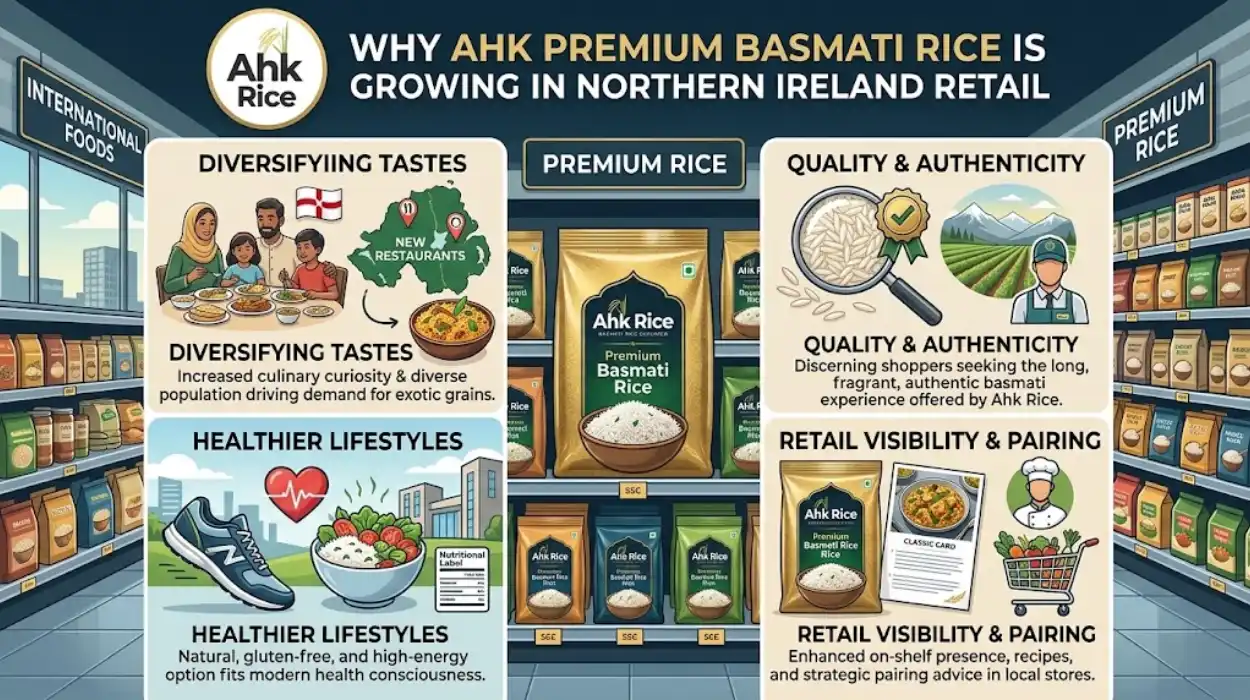
Premium Basmati rice is growing in Northern Ireland retail because shoppers value long grains, aroma, cooking performance, and authentic South Asian food. Retail shelves now show standard, organic, brown, easy-cook, and premium Basmati formats, creating several clear consumer choices today.
Northern Ireland retail already carries Basmati through mainstream and specialist channels. SuperValu lists standard, brown, organic, and boil-in-the-bag Basmati formats. M&S sells Basmati as a storecupboard product and identifies availability differences for Northern Ireland.
Musgrave’s Northern Ireland operation also expanded its ethnic range in 2026. The range includes Surya Select Basmati Rice and Salaam Long Grain Basmati Rice. This shows how rice connects with growing South Asian and fusion food demand across food retail and foodservice.
What Is Premium Basmati Rice in Northern Ireland Retail?
Premium Basmati rice means a retail category built around authentic variety, long grains, aroma, low broken content, controlled processing, and consistent cooking performance. The category includes white, steamed, parboiled, brown, organic, and convenience formats for distinct shoppers.
Basmati rice is a long-grain rice associated with India and Pakistan. UK food standards recognise Basmati as a specific rice category. UK authenticity testing checks declared Basmati varieties against recognised requirements.
The word premium describes a specification rather than one single rice variety. Retailers can position 1121, Super Kernel, or 1509 according to grain characteristics, processing method, packaging, origin, and target consumer.
Northern Ireland provides a distinctive retail environment because food regulation operates within the wider UK framework while EU rules remain relevant to goods entering Northern Ireland. Rice from Pakistan and India also appears within specific high-risk food controls.
The retail category therefore combines consumer expectations with technical requirements. Grain appearance attracts attention, while authenticity, food safety, origin information, and consistent cooking performance determine product credibility.
With the category defined, the next question is how Basmati moves from Pakistani fields to Northern Irish retail shelves.
How Does Premium Basmati Rice Reach Northern Ireland Shelves?
Premium Basmati rice reaches Northern Ireland shelves through a controlled chain: cultivation, harvesting, milling, grading, testing, export, import, warehousing, and retail packing. Each stage controls grain identity, broken percentage, moisture, foreign matter, packaging information, traceability, and food safety requirements.
How Is Basmati Rice Cultivated and Harvested?
Pakistani Basmati begins with rice cultivation in suitable agricultural areas, especially Punjab. Farmers manage irrigation, crop development, harvesting, drying, and paddy handling before milling begins.
The harvested paddy contains husk and requires controlled processing. Crop handling affects moisture, cleanliness, grain integrity, and subsequent milling performance.
How Is Basmati Rice Processed?
Commercial Basmati processing follows defined physical stages:
- Clean the paddy to remove stones, dust, straw, and other foreign matter.
- De-husk the grain to remove the outer husk.
- Mill the rice to produce brown or white rice according to specification.
- Polish the grain to achieve the required surface appearance.
- Grade the rice according to length, broken percentage, and quality parameters.
- Sort the rice using mechanical and optical systems to remove defective grains.
- Test the rice for relevant quality, safety, and authenticity requirements.
- Pack the rice using the required retail or wholesale packaging format.
UK tariff guidance classifies rice according to processing states including husked, milled, polished, broken, and parboiled forms.
What Happens Before Retail Sale?
Export documentation identifies the product, quantity, origin, packaging, and shipment information. Import procedures then determine applicable controls for the consignment.
Rice from Pakistan receives specific attention under Northern Ireland’s high-risk food controls. Country-of-origin information is also required for relevant rice products originating from Pakistan or India.
With processing and logistics established, the next question is which specifications create the premium retail category.
What Are the Key Components of Premium Basmati Rice?
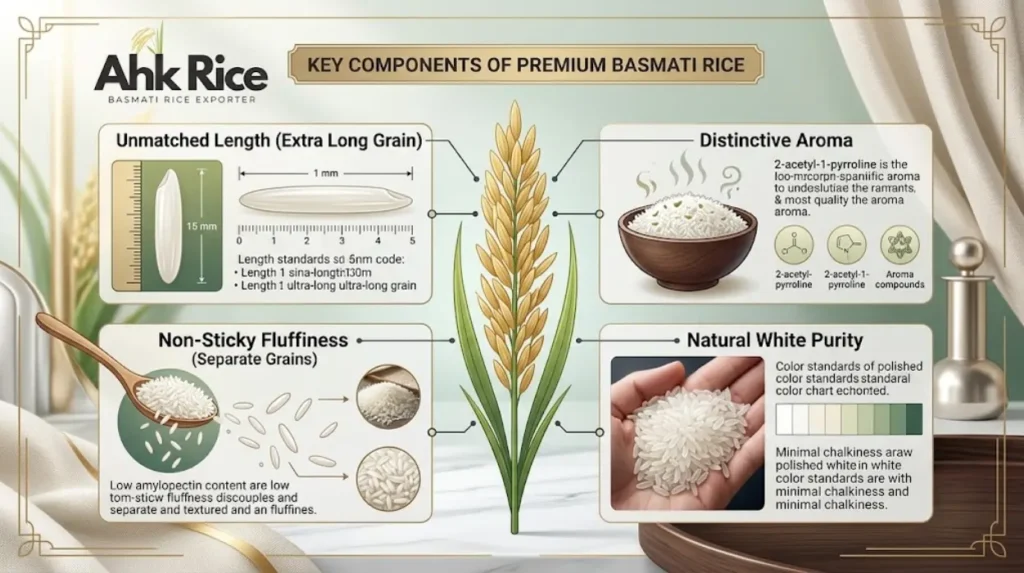
Premium Basmati rice combines variety, grain length, aroma, milling quality, broken percentage, moisture, processing method, packaging, origin, and authenticity. Retailers use these attributes to separate standard white rice from higher-value products such as aged, parboiled, organic, and brown Basmati products.
Which Basmati Varieties Serve Premium Retail?
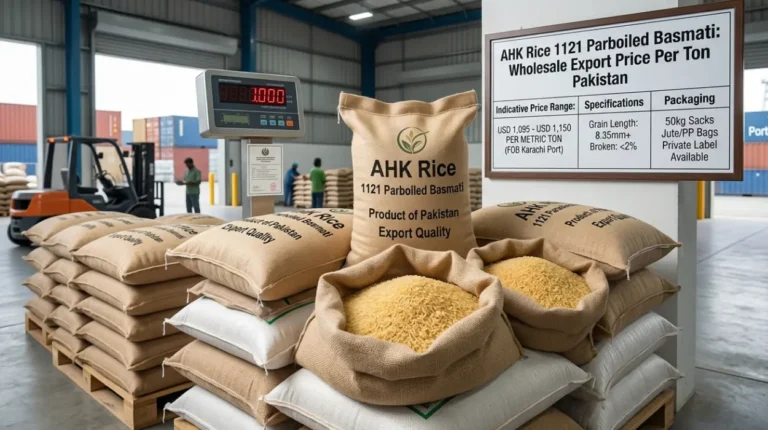
Pakistani commercial supply includes several recognised Basmati selections and market grades. AHK Rice’s product context includes 1121, Super Kernel, and 1509.
| Variety | Common processing formats | Typical retail positioning |
|---|---|---|
| 1121 | White, Steam, Golden Sella, Creamy Sella, Brown | Long-grain premium and specialist |
| Super Kernel | White, Steam, Sella, Parboiled | Premium household and foodservice |
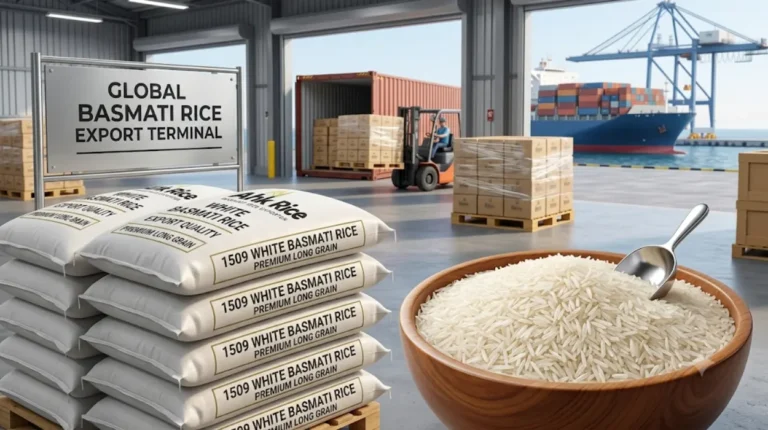
| 1509 | White, Steam, Golden Sella | Value-premium and fast-cooking segments |
These processing names describe how rice is treated rather than separate species. White rice is milled without parboiling. Steam rice receives steam treatment. Sella rice is parboiled before drying and milling.
Which Specifications Matter Most?
Grain length provides a visible premium signal. Broken percentage affects appearance and cooked presentation. Moisture affects storage stability and quality control.
Authenticity also matters. UK surveillance has found Basmati products containing non-Basmati varieties above the permitted tolerance. The cited Basmati Code of Practice sets a 7% maximum non-Basmati content and less than 10% broken grains for products described as Basmati rice.
Packaging adds another retail specification. UK food labels require the food name, net quantity, date information, required warnings, origin information where required, lot information, storage conditions, and cooking instructions where necessary.
These components explain the product differences visible on shelves, leading to the consumer benefits behind premium positioning.
What Benefits Make Premium Basmati Attractive to Retailers?
The main retail benefit is product differentiation. Long-grain Basmati creates visible shelf value, while aroma and separated cooked grains support repeat purchase. Organic, brown, easy-cook, and boil-in-bag formats expand the category across health, convenience, and specialist cooking needs for shoppers.
Why Does Grain Appearance Matter?
Long grains create an immediate visual distinction from conventional shorter-grain rice. A retailer can communicate this difference directly through pack imagery, product descriptions, and cooking claims that meet applicable requirements.
Why Does Aroma Matter?
Aromatic Basmati supports dishes where rice contributes to the overall eating experience. Biryani, pilaf, curry accompaniments, and rice-based meals rely on texture and aroma.
M&S describes its Basmati rice as fragrant with a tender texture. SuperValu similarly describes its Basmati products using aromatic and fluffy cooking characteristics.
Why Do Multiple Formats Matter?
Multiple formats allow retailers to serve different purchasing occasions. Organic Basmati addresses certified-organic demand. Brown Basmati addresses wholegrain preferences. Boil-in-the-bag products address convenience. Easy-cook formats address preparation time.
SuperValu currently lists standard, brown, organic, and boil-in-the-bag Basmati products, demonstrating this format diversification in retail.
These benefits explain why premium Basmati functions as a category rather than a single product.
Where Is Premium Basmati Rice Used in Northern Ireland Retail?
Retailers use premium Basmati across household cooking, South Asian cuisine, premium meal preparation, convenience formats, and specialist grocery. Examples include biryani, pilaf, curry accompaniments, ready meals, organic pantry ranges, brown-rice ranges, and quick-cooking formats sold through multiple channels.
What Household Uses Drive Demand?
Household consumers use Basmati as a main carbohydrate alongside curries, grilled foods, vegetables, and sauces. The long grain and aromatic profile distinguish it from basic long-grain rice.
What Specialist Uses Support the Category?
Specialist grocery stores serve consumers seeking products linked to South Asian cooking traditions. The category also connects with fusion cuisine, where Basmati accompanies modern recipes and prepared meals.
Musgrave’s 2026 ethnic range specifically identifies rice as a pantry staple alongside flours, lentils, pulses, spices, ghee, and other South Asian ingredients.
What Convenience Uses Are Emerging?
Convenience formats include boil-in-the-bag rice, easy-cook rice, and prepared Basmati meals. These formats reduce preparation steps while preserving the recognised Basmati positioning.
Dunnes Stores lists a frozen Basmati rice meal containing 70% Basmati rice, showing how the grain also enters prepared-food formats.
These use cases show how premium Basmati extends beyond one traditional cooking occasion.
What Problems and Misconceptions Affect Premium Basmati Retail?
Premium Basmati does not automatically mean authentic, high-grade, or better processed rice. Common problems include variety substitution, excessive broken grains, unclear origin, weak traceability, poor storage, inaccurate claims, and incomplete labels. Retailers need specifications, testing, and compliant packaging before listing.
Is Every Long-Grain Rice Basmati?
No. Long grain describes a physical rice characteristic. Basmati describes a defined category with recognised varieties and authenticity requirements.
UK surveillance demonstrates why this distinction matters. Testing found products labelled Basmati containing substantial non-Basmati rice. Authenticity testing therefore forms part of quality assurance.
Does Premium Mean Organic?
No. Organic is a certification status. Premium describes a commercial specification that can include grain length, aroma, processing, authenticity, packaging, and consistency.
An organic Basmati product requires the relevant organic certification. A conventional Basmati product does not become organic through premium positioning.
Does Pakistan Origin Create One Standard?
No. Pakistani origin identifies the source country. Grade, variety, processing method, broken percentage, moisture, packaging, and testing still require separate specifications.
Pakistan has registered Basmati as a geographical indication domestically. UK GI protection operates separately, while EU GI schemes apply to protected names sold in Northern Ireland.
Which Certifications and Controls Matter?
Retailers should distinguish between mandatory regulatory controls and voluntary certifications. Applicable controls include food safety, authenticity, labelling, import requirements, and relevant contaminant testing.
Organic products require recognised organic certification. Food safety systems can include standards such as BRCGS, depending on the supplier and buyer specification. Authenticity testing verifies declared Basmati content.
The FSA’s surveillance programme demonstrates the importance of authenticity testing, while Northern Ireland import rules identify rice from Pakistan and India within specific high-risk controls.
Understanding these controls gives retailers a clearer basis for evaluating premium Basmati lines and supplier specifications.
What Should Retailers Understand About Premium Basmati Growth?
Premium Basmati growth reflects greater product segmentation, stronger ethnic-food visibility, convenience formats, premium positioning, and tighter authenticity expectations. Northern Ireland shelves already show standard, organic, brown, easy-cook, and prepared Basmati formats across mainstream and specialist retail.
Retailers therefore evaluate more than grain appearance. They assess variety, processing, broken percentage, authenticity, origin, packaging, storage, certification, testing, and import controls.
The commercial question then moves from product definition to range construction. Retailers need to decide which grades, pack sizes, price points, and formats create a coherent imported rice range.
That evaluation naturally leads into the next consideration: how retailers build successful imported rice product lines.
Frequently Asked Questions
Is Basmati rice popular in Northern Ireland?
Basmati has established retail presence through mainstream, specialist, organic, convenience, and prepared-food formats. Current listings from SuperValu and M&S demonstrate this range.
Which Pakistani Basmati varieties are sold internationally?
Major Pakistani varieties include 1121, Super Kernel, and 1509. Each supports different processing formats and market specifications.
What makes Basmati rice premium?
Premium positioning combines authentic variety, grain length, aroma, low broken content, controlled processing, consistent cooking performance, packaging, and verified origin.
What is the maximum non-Basmati content allowed under the UK Basmati Code?
The cited Code of Practice allows no more than 7% non-Basmati rice when the product is described as Basmati rice.
Does Pakistani rice require special controls in Northern Ireland?
Yes. Rice originating from Pakistan falls within specific high-risk food controls under the applicable Northern Ireland import framework.
What information must appear on retail rice packaging?
Required information includes the food name, net quantity, relevant date, warnings, origin where required, lot information, storage conditions, and cooking instructions where necessary.