Turkey’s Rice Import Market Growth and Pakistan’s Export Opportunity in 2026
Turkey’s rice import market is expanding in the 2025/26 marketing year, with imports forecast at 425,000 metric tons. Here is why: USDA data places Turkey’s 2025/26 rice imports above the 358,000 MT estimate for 2024/25. Pakistan already supplies Turkey with both Basmati and non-Basmati rice.
What is Turkey’s rice import market in 2026?
Turkey’s 2025/26 rice import requirement is forecast at 425,000 MT, while domestic milled production is forecast at 560,000 MT. Imports therefore remain an important part of Turkey’s total rice supply. USDA data also forecasts 790,000 MT of consumption and residual use.
Turkey cultivates rice mainly for domestic consumption and processing. Its 2025/26 harvested area is forecast at 95,000 hectares, producing about 836,000 MT of rough rice. Milling converts this paddy into approximately 560,000 MT of milled rice.
Import demand also connects Turkey with international rice suppliers. Turkey imports long-grain, medium-grain, Basmati, and other milled rice categories. Shipment records show Pakistani white rice, Pakistani long-grain rice, and Pakistani Basmati Sella entering the Turkish market.
The market also has a re-export dimension. USDA forecasts 250,000 MT of Turkish rice exports during 2025/26. This creates demand from processors, wholesalers, food manufacturers, retailers, and distributors serving domestic and regional markets.
Turkey’s import market therefore consists of more than direct household consumption. Imported rice enters wholesale distribution, foodservice, retail packing, and processing channels. These channels require different grain lengths, milling grades, packaging formats, and price points.
With the market size established, the next question is how imported rice moves from origin to Turkish buyers.
How does rice importing work in Turkey?
Rice importing follows a controlled sequence covering supplier selection, product specification, documentation, pre-notification, official controls, customs clearance, and domestic distribution. Turkish authorities apply document, identity, physical, sampling, and laboratory controls.
What happens before shipment?
Specification approval starts with grain type, processing grade, broken percentage, moisture, packing, quantity, origin, and intended use. A commercial specification prevents buyers from comparing different rice qualities under one price.
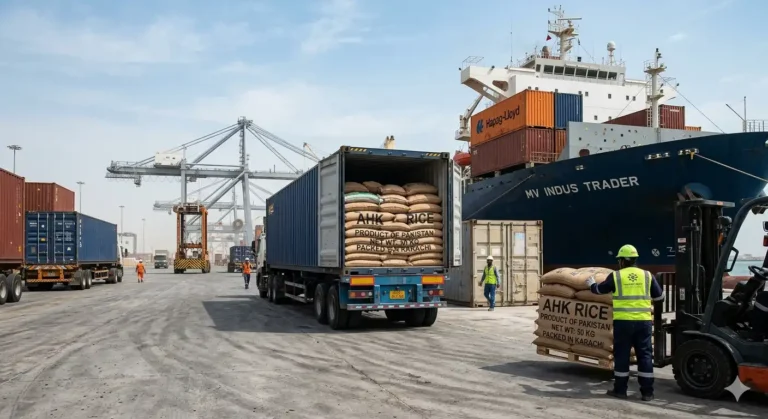
Pakistani exporters commonly supply both Basmati and non-Basmati rice. Shipment records show Pakistani 50 kg PP bags, white rice, long-grain rice, and Basmati Sella shipments to Turkey.
What happens during Turkish import control?
Turkish import control includes document checks, identity checks, physical examination, sampling, and laboratory analysis. The importer submits shipment information and required health documentation through the official process.
Turkish authorities check whether imported food complies with the Turkish Food Codex. Physical controls examine the product, packaging, and samples. Laboratory analysis verifies relevant food safety requirements.
The Turkish system also regulates pesticide residues, contaminants, microbiological criteria, packaging, labelling, sampling, and analysis.
This process connects commercial specifications with regulatory compliance. The next section identifies the components that determine rice suitability for Turkish buyers.
What are the key components of imported rice for Turkish buyers?
The key components are rice variety, grain length, processing grade, broken percentage, moisture, purity, packaging, documentation, and food-safety test results. These attributes determine product identity and commercial usability.
Which rice varieties matter?
Pakistani Basmati includes 1121, Super Kernel, and 1509, while non-Basmati trade includes long-grain varieties such as IRRI-6. Each variety serves different price, cooking, distribution, and foodservice requirements.
1121 Basmati is recognized for long grain length, aromatic character, and premium presentation. Super Kernel provides traditional Basmati aroma and a long-grain profile. 1509 provides long grain and commercial cooking performance.
Pakistani trade data confirms Turkey already imports rice from Pakistan. Pakistan exported 2.011 million kg of rice worth US$1.536 million to Turkey in 2024.
Which processing grades are available?
Basmati processing grades include White, Steam, Golden Sella, Creamy Sella, Brown, and broken rice. Processing changes cooking characteristics, appearance, storage behavior, and end-use suitability.
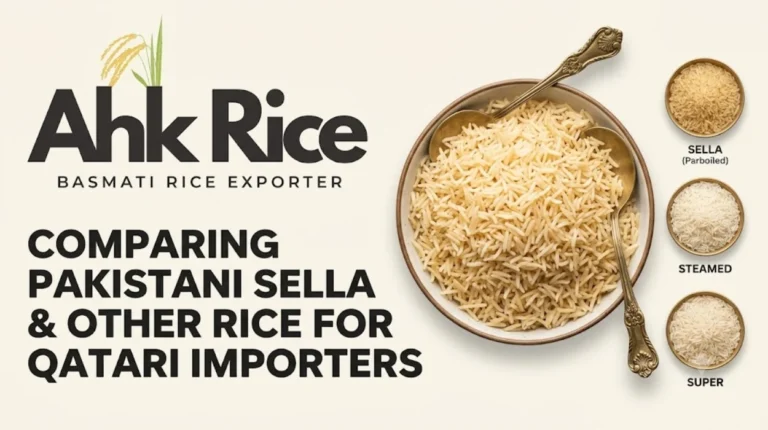
White rice is milled and polished for a clean appearance. Steam rice receives controlled steaming before milling. Sella rice is parboiled, dried, milled, and graded. Brown rice retains the bran layer.
Broken rice contains separated grain pieces produced during milling and handling. Buyers specify broken percentage according to their application and price target.
Which quality specifications matter?
Commercial specifications commonly define grain length, moisture, broken percentage, purity, milling quality, and packaging before shipment. A clear specification allows Turkish wholesalers to compare samples with contracted cargo.
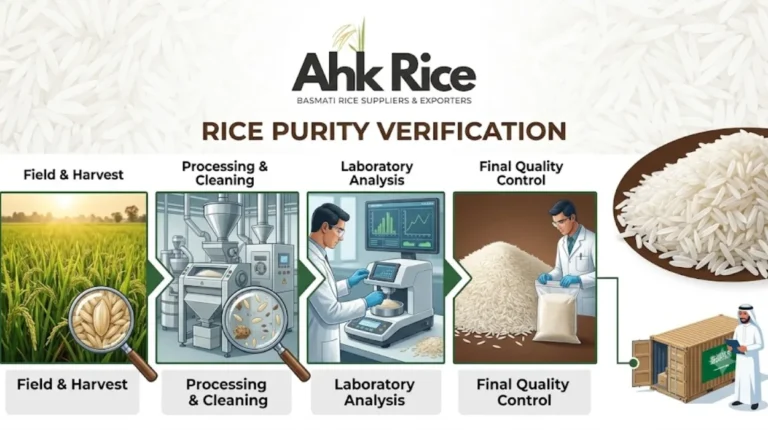
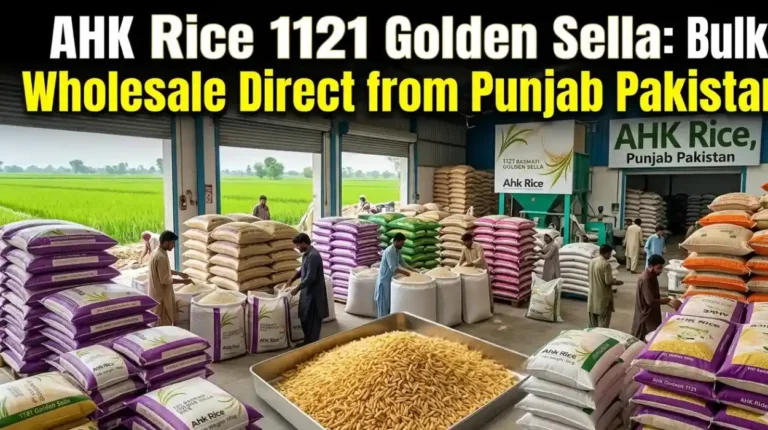
AHK Rice describes its Pakistani Basmati portfolio as 1121, Super Kernel, and 1509 varieties. Its export process covers sourcing, milling, grading, sorting, packaging, and shipment coordination.
With the product components defined, the next question is how Pakistan fits into Turkey’s expanding import requirement.
What is Pakistan’s export opportunity in Turkey?

Pakistan’s opportunity comes from Turkey’s forecast 425,000 MT import requirement and existing Pakistani supply, supported by competitive Basmati and non-Basmati export capacity. Pakistan and Türkiye also discussed increasing rice trade in January 2026.
Pakistan’s overall rice export base is substantial. REAP records 5.818 million MT of total rice exports in 2024/25, including 808,643 MT of Basmati rice. Basmati exports generated US$830.57 million during the same period.
Turkey therefore sits within Pakistan’s broader rice export network. Pakistan exported rice to Turkey in 2024, while 2025 trade data shows Pakistan’s rice exports to Turkey reaching US$3.59 million according to UN Comtrade data.
Pakistan’s Commerce Ministry also stated in January 2026 that both countries discussed increasing rice export volumes. The discussion covered both Basmati and non-Basmati rice and focused on international price competitiveness.
This trade relationship creates a clear connection between Turkey’s import requirement and Pakistan’s export capacity. The next issue is identifying where different rice types fit.
What are the main uses of imported rice in Turkey?
Imported rice serves wholesale distribution, retail packing, foodservice, restaurants, catering, food manufacturing, and re-export channels. Each channel uses specifications that match cooking performance, packaging requirements, price positioning, and customer demand.
How is Basmati used?
Basmati serves premium retail, restaurants, catering, ethnic food distribution, and foodservice applications requiring long grain and aromatic cooking characteristics.
1121 Basmati suits premium presentation and dishes where long cooked grains are important. Super Kernel suits buyers seeking traditional Basmati aroma. 1509 suits commercial applications requiring long grain with a cost-conscious positioning.
Turkish shipment records provide direct evidence of Pakistani Basmati trade. A March 2025 shipment listed 24,440 kg of long-grain Basmati Sella rice from Pakistan to Turkey.
How is non-Basmati rice used?
Non-Basmati rice serves price-sensitive wholesale, foodservice, processing, and high-volume distribution channels. Pakistani IRRI-6 appears in Turkish shipment records with commercial specifications such as 4% and 5% broken rice.
These examples show why Turkish buyers do not treat every imported rice shipment as the same product. Variety, grade, broken percentage, packing, and price create separate commercial categories.
The different use cases explain why product specifications must remain separate from general rice import statistics.
What certifications and documents apply to rice imports into Turkey?
Turkish rice imports require regulatory documentation, health documentation, product information, and compliance with applicable Turkish Food Codex requirements. Official controls verify documents, product identity, packaging, samples, and laboratory results.
Which regulatory requirements matter?
Turkish Food Codex rules cover pesticide residues, contaminants, microbiological criteria, packaging, labelling, sampling, and analytical controls. The applicable requirements depend on the product and import channel.
Pesticide compliance is especially important for plant-origin food. Turkish authorities evaluate pesticide residue analysis against Turkish Food Codex maximum residue limits.
Import procedures also request health certificate information during shipment notification. The Turkish authority determines official control timing after the importer submits the required information.
Exporters should therefore prepare product specifications and laboratory documentation before dispatch. Buyers should verify the exact documents required for their shipment and tariff classification.
With compliance requirements established, the next question is which problems commonly disrupt rice imports.
What are the common problems in Turkey’s rice import market?
Common problems include unclear specifications, incorrect documentation, inconsistent samples, residue non-compliance, packaging differences, and price comparisons between unequal grades. These problems increase inspection and commercial risk.
Which specification mistakes cause disputes?
Specification disputes usually start when buyers compare grain varieties, grades, or broken percentages without defining the complete product specification. A 1121 Basmati quotation cannot be compared directly with an IRRI-6 quotation.
Which compliance mistakes create delays?
Documentation errors can delay official controls because Turkish authorities review pre-notification, shipment information, certificates, product identity, and physical samples. Importers should verify documents before the shipment reaches the control stage.
Which market misconception needs correction?
Turkey does not depend only on imported rice, and Pakistan does not supply Turkey’s entire import requirement. Turkey combines domestic cultivation with imports from multiple origins and also exports processed rice. USDA forecasts 560,000 MT of milled production, 425,000 MT of imports, and 250,000 MT of exports for 2025/26.
The main lesson is that Turkey’s rice opportunity depends on specification, compliance, price, and reliable supply rather than import volume alone.
How should buyers understand Pakistan’s rice position in Turkey in 2026?
Pakistan enters 2026 with established rice shipments to Turkey, a large export base, and government-level discussions focused on increasing bilateral rice trade. Turkey’s 425,000 MT import forecast provides the broader market context.
For Turkish wholesalers, the relevant product variables remain clear: variety, grain length, processing grade, broken percentage, moisture, purity, packaging, documentation, and laboratory compliance.
The next consideration is product-level demand. A detailed comparison of Pakistani varieties explains how Turkish wholesalers evaluate Basmati options across commercial applications.
Frequently Asked Questions
What is Turkey’s rice import forecast for 2026?
Turkey’s 2025/26 marketing-year rice imports are forecast at 425,000 MT, according to USDA data. The estimate is above the 358,000 MT 2024/25 estimate.
How much rice did Pakistan export to Turkey in 2024?
Pakistan exported 2.011 million kg of rice worth US$1.536 million to Turkey in 2024, according to World Bank WITS data based on UN Comtrade.
Does Turkey import Basmati rice from Pakistan?
Yes. Trade shipment records show Pakistani Basmati and Basmati Sella shipments entering Turkey, including a 24,440 kg Basmati Sella shipment in March 2025.
Which Pakistani Basmati varieties are relevant to Turkish buyers?
The main Pakistani Basmati varieties include 1121, Super Kernel, and 1509. Their differences relate to grain characteristics, processing grades, cooking performance, aroma, and commercial positioning.
What documents are relevant for rice imports into Turkey?
Turkish import procedures include product information, pre-notification, shipment information, health certificate details, customs information, and official controls. Authorities conduct document, identity, and physical controls.
What food safety requirements apply to imported rice?
Turkish Food Codex requirements cover areas including pesticide residues, contaminants, microbiological criteria, packaging, labelling, sampling, and analysis.