AHK Rice 1121 Basmati: Premium Export Supplier from Pakistan
AHK Rice 1121 Basmati provides premium long-grain rice with controlled processing, documented quality checks, flexible packaging, and export coordination. Here is why: 1121 Basmati combines 8.20–8.50 mm grain length, strong aroma, high elongation, and consistent export specifications for international buyers.
Buyers evaluating Pakistan 1121 Basmati need more than a low quotation. They need defined grain specifications, controlled broken percentage, moisture verification, suitable packaging, reliable dispatch, and documents that support customs clearance.
For background, buyers can first review the [1121 Basmati Rice Explained: Grain, Aroma & Export Quality] guide to understand grain structure, aroma, processing, and export quality.
AHK Rice connects these product requirements with commercial export execution. Its Punjab-based sourcing and processing model supports 1121 Basmati supply for retail, hospitality, catering, wholesale, and private-label channels.
What is the best solution for buyers sourcing premium 1121 Basmati?
A specification-controlled 1121 Basmati export program is the practical solution because it combines defined grain length, moisture, broken percentage, processing grade, packaging, inspection, and shipment documentation in one procurement process.
1121 Basmati suits buyers who need premium appearance and strong cooking elongation. The variety is cultivated in Pakistan’s Punjab Basmati-growing region.
The export specification can include White, Steam, and Golden Sella processing. Each grade serves a different storage, cooking, and market requirement.
| Specification | Typical AHK Rice 1121 Range |
|---|---|
| Raw grain length | 8.20–8.50 mm |
| Moisture | 12–13% |
| Broken percentage | 1–5% |
| Cooking elongation | 2.0–2.5x |
| Aroma | Medium to strong |
| Packaging | 5–40 kg and bulk formats |
| Shelf life | 12–24 months by grade |
The final specification should always follow the buyer’s contract. Grain length, broken percentage, moisture, processing type, and packaging can change the quotation.
Buyers comparing 1121 with another long-grain export variety can also review the [1121 vs 1509 Basmati comparison for export buyers] before selecting a contract specification.
The next decision is whether the supplier can execute these specifications consistently.
Why choose AHK Rice for 1121 Basmati supply?
AHK Rice combines Pakistan-origin sourcing, controlled milling, grading, sorting, laboratory testing, packaging, documentation, and export coordination to reduce specification gaps between approved samples and commercial shipments.
AHK Rice sources 1121 Basmati from Pakistan’s Punjab rice belt. The supply chain begins with suitable paddy and continues through controlled processing.
The processing sequence follows defined commercial stages. These include cleaning, drying, dehusking, milling, polishing, grading, colour sorting, laboratory testing, packaging, and dispatch.
AHK Rice also supports multiple packaging formats. Retail buyers can specify smaller branded packs. Wholesale buyers can use larger PP bags for distribution and foodservice.
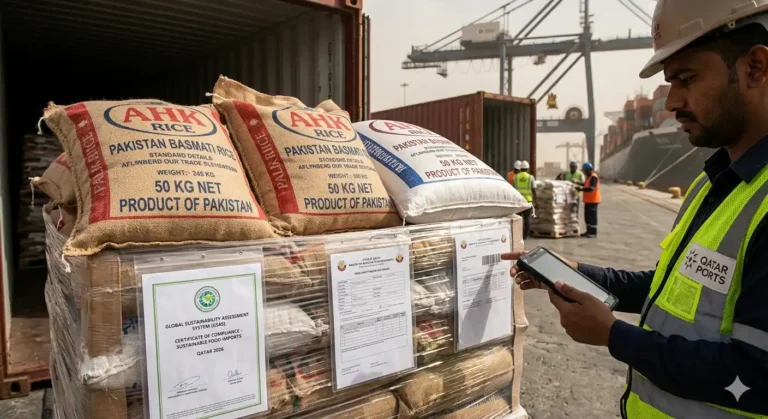
Quality checks cover moisture, grain length, broken percentage, purity, foreign matter, cooking characteristics, and packaging condition. Export documentation can include commercial invoices, packing lists, certificates of origin, phytosanitary certificates, fumigation certificates, and bills of lading.
For buyers requiring a complete export arrangement, [AHK Rice’s 1121 Basmati export service] provides the commercial pathway from product specification through dispatch.
The supplier decision therefore depends on measurable execution rather than the product name alone.
What results can be expected from an AHK Rice 1121 Basmati shipment?
Buyers can expect defined product specifications, consistent grading, documented quality checks, suitable packaging, export documentation, and shipment planning matched to their destination market and contract requirements.
1121 Basmati supports premium retail positioning through long grains and aromatic cooking performance. Restaurants use the grain for dishes where presentation and elongation matter.
Golden Sella suits buyers requiring stronger storage performance. AHK Rice specifications show Golden Sella shelf life reaching 18–24 months, compared with approximately 12 months for Steam under stated conditions.
A UAE wholesale example illustrates the distinction. A buyer using hot warehouse storage can select Golden Sella for stronger storage stability. A premium retailer using controlled storage can select Steam or White based on cooking and presentation requirements.
Shipping time also affects procurement planning. Typical sea-freight planning estimates are approximately 10–18 days to the UAE, 12–22 days to Saudi Arabia, 25–35 days to Europe, and 25–40 days to East African destinations from Pakistan.
These are planning ranges rather than guaranteed transit times. Port congestion, vessel schedules, customs clearance, routing, and container availability affect final delivery.
A buyer ordering 25 MT for Dubai therefore needs product approval before dispatch, while a European private-label buyer should allow additional time for documentation, labeling, and destination compliance.
The result is not simply a container of rice. The objective is a shipment that matches the approved commercial specification.
How does pricing work for 1121 Basmati exports?
1121 Basmati pricing depends on processing grade, grain specification, broken percentage, crop conditions, packaging, order volume, certification, destination, freight, and payment terms rather than one fixed export price.
Grade selection creates the first major price difference. Premium 1121 Golden Sella can carry a different price from 1121 White or Steam because processing and storage characteristics differ.
Grain length also affects pricing. A specification requiring longer and more uniform kernels generally creates stricter grading requirements.
Broken percentage matters because lower breakage requires tighter sorting and grading. A buyer specifying 1–2% broken should expect a different quotation from a buyer accepting 4–5%.
Packaging creates another cost variable. A 5 kg printed retail bag requires different materials and production work than a 25 kg or 40 kg PP export bag.
Freight also changes the final landed cost. FOB Pakistan and CIF destination pricing should therefore be compared using the same grade, quantity, packaging, and specification.
What does the sample process cost?
A practical sample program can use a small product sample, courier delivery, laboratory verification, and pre-shipment approval, with sample and freight charges confirmed according to destination and specification.
Start by defining the grade, grain length, broken percentage, moisture, packaging, quantity, and destination.
Request the representative sample from AHK Rice. Sample courier costs commonly depend on destination, parcel weight, and courier service.
Test the sample against the agreed specification. Laboratory testing can add a separate charge when an independent certificate is required.
Approve the sample before production. The approved specification should become the reference point for the commercial shipment.
Inspect the production lot before loading. This stage confirms that the shipped rice matches the agreed parameters.
Load the approved cargo into the container. Complete export documents before dispatch and share shipping information with the buyer.
For budgeting, buyers should treat sample courier, independent laboratory testing, inspection, packaging development, and freight as separate cost lines. Exact charges should be quoted against the destination and required specification.
This process gives the buyer a traceable path from sample approval to container dispatch.
How can an importer get started with AHK Rice 1121 Basmati?
Start with a written specification, approve a representative sample, confirm packaging and commercial terms, complete pre-shipment inspection, and authorize container dispatch after the documents and shipment details match the contract.
Define the required grade first. Select White, Steam, Golden Sella, or another agreed processing specification.
Define the physical parameters next. Specify grain length, broken percentage, moisture, purity, foreign matter tolerance, and cooking requirements.
Define the commercial quantity. A buyer can request a trial shipment before moving into recurring container volumes.
Define the packaging. State bag size, material, printing, private-label requirements, stitching, and pallet requirements.
Request the commercial quotation. Compare the price using the same FOB or CIF basis across suppliers.
Approve the sample. Keep the approved sample and specification sheet as the procurement reference.
Complete inspection before loading. Verify product quality, packaging, container condition, and documentation.
Dispatch the shipment after final approval. Share the bill of lading and required export documents with the importer.
For recurring contracts, AHK Rice can coordinate supply across multiple shipments while maintaining the agreed product specification.
The strongest procurement decision comes from matching grade, market, storage conditions, packaging, and price rather than selecting rice by variety name alone.
Which 1121 Basmati specification fits different export markets?
GCC buyers often prioritize Steam and Golden Sella, European premium buyers emphasize grain quality and documentation, while African and institutional buyers commonly balance 1121 quality with price and bulk packaging.
UAE and Saudi buyers can use 1121 Steam for premium retail and hospitality. Golden Sella suits hot storage and longer distribution cycles.
European buyers typically require strong documentation, controlled labeling, traceability, and consistent product specifications. Premium 1121 White can support branded retail positioning.
East African buyers can use 1121 where premium grain appearance is commercially important. Larger packaging formats can reduce packaging cost for wholesale distribution.
Iraqi buyers can consider Golden Sella for distribution networks where warehouse conditions are less controlled. Storage requirements should remain part of the contract specification.
Each market therefore needs a product specification rather than a generic 1121 quotation.
With the market decision defined, the final step is converting the specification into an executable purchase.
What should buyers confirm before placing a 1121 Basmati order?
Confirm grade, grain length, moisture, broken percentage, packaging, quantity, destination, inspection method, documents, Incoterm, payment terms, and shipment schedule before approving the commercial contract.
A buyer should first confirm the exact processing grade. White, Steam, and Golden Sella produce different commercial and storage outcomes.
The second check is the specification sheet. Grain length and broken percentage should match the agreed tolerance.
The third check is the sample. The commercial lot should follow the approved sample specification.
The fourth check is packaging. Bag dimensions, material, printing, and weight should match the purchase order.
The fifth check is documentation. The importer should confirm which certificates are required for destination clearance.
The sixth check is logistics. Confirm loading location, port, estimated transit time, shipping schedule, and destination clearance responsibility.
The seventh check is payment. Define the agreed payment method and commercial terms before production begins.
AHK Rice supports this process by connecting product specifications with processing, quality verification, packaging, documentation, and dispatch.
For buyers seeking a premium Pakistan 1121 Basmati supply program, the decision should therefore be based on measurable specifications and shipment execution.
Frequently Asked Questions
Is 1121 Basmati suitable for premium retail?
Yes, 1121 Basmati suits premium retail because of its long grain, aroma, and cooking elongation.
Buyers can select White or Steam grades for different retail requirements.
Golden Sella suits longer distribution and storage cycles.
Packaging can use branded 5 kg or 10 kg retail formats.
AHK Rice can align the specification with the target market.
What is the grain length of 1121 Basmati?
Export-grade 1121 commonly measures around 8.20–8.50 mm before cooking.
Some specifications use narrower ranges such as 8.30–8.50 mm.
The final tolerance should appear in the purchase specification.
Cooking elongation can reach approximately 2.0–2.5 times the original length.
Laboratory measurement verifies the agreed grain specification.
How long does 1121 Basmati take to ship?
UAE shipments can require approximately 10–18 days by sea.
Saudi shipments can require approximately 12–22 days.
European shipments can require approximately 25–35 days.
East African routes can require approximately 25–40 days.
Actual delivery depends on vessels, ports, customs, and routing.
What affects the price of 1121 Basmati?
Grade selection directly affects the export quotation.
Grain length and broken percentage also influence processing requirements.
Packaging affects material and printing costs.
Quantity affects production and freight economics.
Destination, Incoterm, inspection, certification, and freight also affect final pricing.
How does AHK Rice control 1121 Basmati quality?
AHK Rice checks moisture, grain length, broken percentage, purity, and foreign matter.
The rice passes through controlled milling, grading, and colour sorting.
Laboratory testing verifies agreed product parameters.
Packaging is checked before container loading.
Export documents support shipment and customs clearance.
What should buyers do before placing a bulk order?
Define the required grade and complete product specifications first.
Request and evaluate a representative sample.
Confirm packaging, quantity, destination, and commercial terms.
Complete inspection before approving the production shipment.
Authorize dispatch after the product and documents match the contract.
Primary Keyword
AHK Rice 1121 Basmati
Secondary Keywords
112