Why Is Supply Reliability Critical for Tennessee Rice Distributors?
Supply reliability is the ability to deliver the contracted rice variety, grade, quantity, quality, packaging, documents, and shipment schedule consistently across multiple orders without avoidable disruption, shortage, or specification changes.
For a Tennessee rice distributor, supply reliability connects international sourcing with local inventory planning. The distributor does not only purchase rice. It manages product availability for retailers, wholesalers, restaurants, foodservice operators, ethnic grocery stores, and institutional buyers.
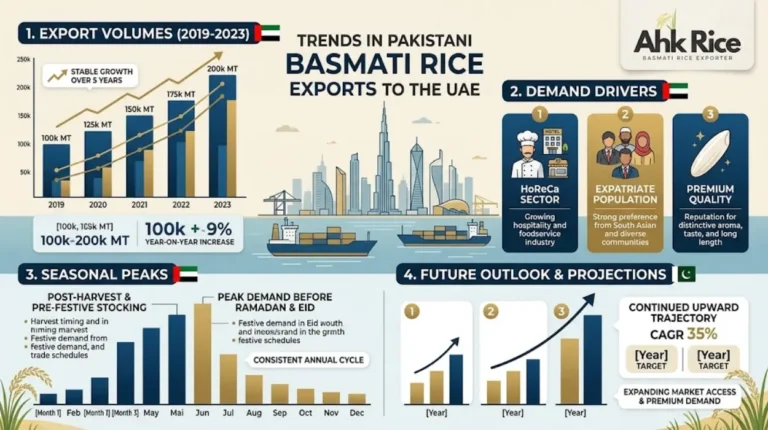
This requirement becomes more important when the rice comes from Pakistan. Pakistan is a major global rice exporter with established production and milling infrastructure. USDA reporting placed Pakistan’s 2024/25 rice exports at 5.2 million metric tons, including 661,907 metric tons of basmati rice. USDA projected Pakistan’s 2025/26 rice exports at 5.3 million metric tons in its published country outlook.
The United States also depends heavily on imported Asian aromatic rice. USDA reported that U.S. rice imports reached record levels in its recent outlook, with 2026/27 imports forecast at 49.8 million hundredweight. The August 2026 outlook also identifies tighter domestic rice supplies and record imports as important features of the U.S. market.
Tennessee adds a specific distribution consideration. USDA’s 2025 Tennessee agricultural overview lists major crops such as soybeans, corn, hay, wheat, and cotton, while rice does not appear among the state’s reported major crops.
This means a Tennessee distributor handling Pakistani Basmati rice relies on an external agricultural and processing supply chain. Reliable sourcing therefore becomes a commercial requirement rather than a simple purchasing preference.
Why does supply reliability matter specifically to Tennessee rice distributors?
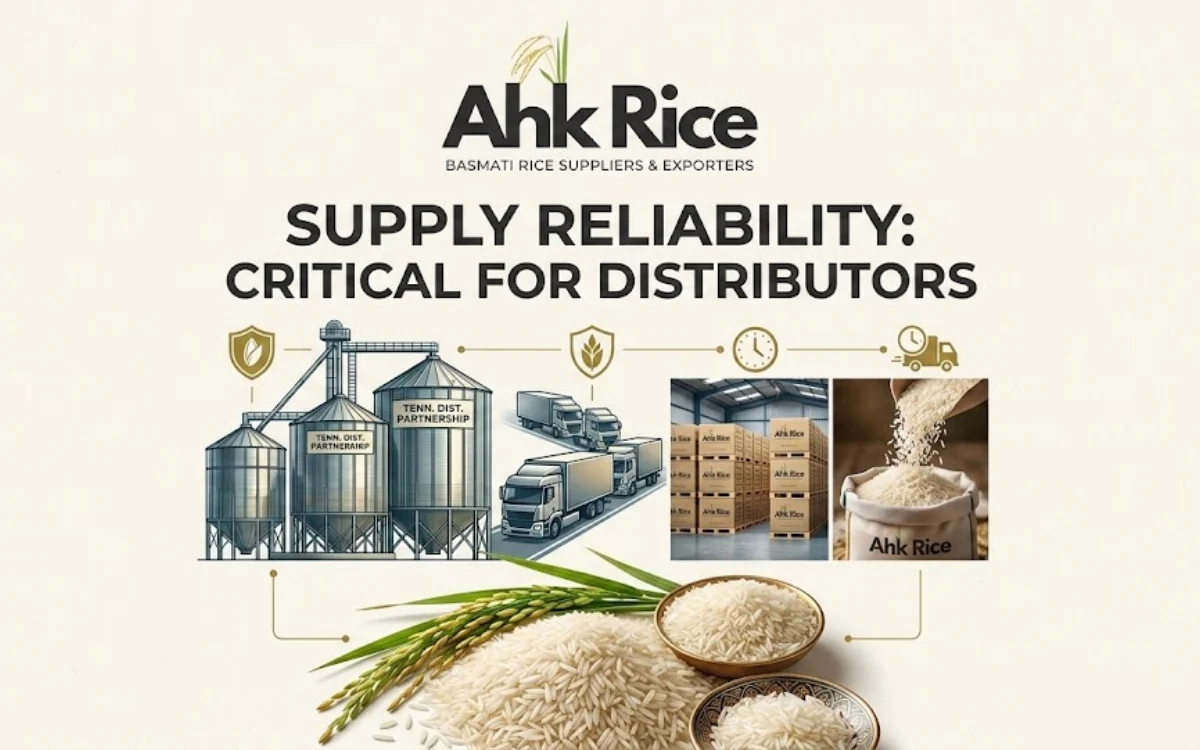
Tennessee distributors need reliable rice supply because their inventory depends on international production, milling, ocean transportation, U.S. import compliance, warehousing, and regional distribution. A disruption at any stage affects stock availability, customer orders, pricing, and retailer relationships.
A distributor selling 1121 Basmati rice needs the same product specification from one shipment to another. A buyer selling Super Kernel needs consistent kernel appearance, cooking characteristics, packaging, and grade. A foodservice customer purchasing 1509 rice needs dependable replenishment rather than an unpredictable substitute.
The supply chain contains several independent stages:
- Paddy cultivation in Pakistan.
- Paddy procurement.
- Drying and storage.
- Cleaning and grading.
- Milling and polishing.
- Sorting and quality inspection.
- Packaging.
- Export documentation.
- Container loading.
- Ocean transportation.
- U.S. customs and food import procedures.
- Inland transportation to Tennessee.
- Distributor warehousing.
- Final customer delivery.
A failure at one stage creates pressure on the following stages.
The 2026 U.S. rice market reinforces this issue. USDA’s August 2026 outlook forecasts 49.8 million hundredweight of U.S. rice imports for 2026/27, a record level, while ending stocks remain at a four-year low.
For distributors, reliability therefore means controlling predictable variables before inventory reaches a Tennessee warehouse.
How does Pakistani Basmati rice reach a Tennessee distributor?
Pakistani Basmati rice reaches Tennessee through an integrated chain that begins with cultivation in approved production areas, continues through harvesting, drying, milling, grading, testing, packaging, export clearance, ocean freight, U.S. import compliance, inland transportation, and final warehouse receipt.
Where is Pakistani Basmati rice grown?
Pakistani Basmati rice originates primarily from defined areas of the Indo-Gangetic Plains. Pakistan’s official Basmati specification identifies Basmati as a long-grain aromatic rice produced in specific geographical areas. The specification also defines characteristics such as minimum milled grain length, grain breadth, length-to-breadth ratio, aroma, amylose content, and cooked texture.
Punjab is particularly important for Pakistani Basmati production. The geographical origin matters because Basmati is not simply a description of long rice. Pakistan protects Basmati through its geographical indication framework.
For AHK Rice, the relevant sourcing context is Punjab, Pakistan, where the company operates as a Pakistani Basmati rice exporter supplying 1121, Super Kernel, and 1509 varieties to international markets.
How is rice processed after harvesting?
Rice processing starts when harvested paddy reaches the post-harvest handling stage. Paddy is dried to achieve safe storage conditions. It then passes through cleaning equipment that removes foreign materials such as stones, dust, straw, and other impurities.
The cleaned paddy enters milling equipment. The husk is removed first. Further milling removes bran layers and produces milled rice.
Modern processing then uses grading and sorting systems. Length graders separate kernels by size. Thickness and density separation improves uniformity. Optical sorting equipment identifies defective or discoloured kernels.
The final product is inspected against contractual specifications. Relevant parameters include grain length, broken percentage, moisture, foreign matter, damaged kernels, discoloured grains, and other quality characteristics.
The rice is then packed according to the buyer’s specification. Packaging can use different bag sizes and materials for retail, wholesale, foodservice, or private-label distribution.
Pakistan’s official Basmati specification states that export packaging and labelling follow applicable food requirements and the requirements of the importing country.
Which rice varieties matter when evaluating supply reliability?
Supply reliability depends on maintaining a defined variety rather than treating all long-grain rice as interchangeable. Pakistani exporters commonly supply varieties such as 1121, Super Kernel, and 1509, each serving buyers with different expectations for grain characteristics, appearance, cooking performance, and market positioning.
What is 1121 Basmati rice?
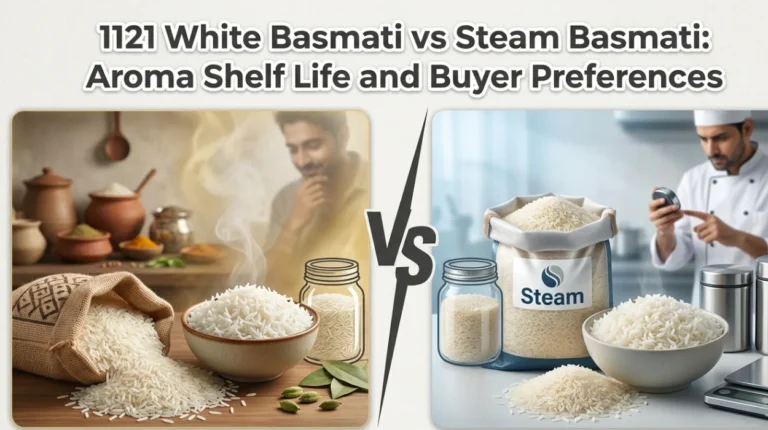
1121 Basmati is a long-grain Pakistani rice variety recognised for its exceptionally long slender kernel and strong visual appeal after cooking. It is widely used in premium rice markets and foodservice applications where grain length and separation are important.
For distributors, consistency in 1121 requires controlled sourcing and grading. A shipment with inconsistent kernel length or excessive broken grains does not provide the same commercial product.
What is Super Kernel Basmati rice?
Super Kernel Basmati is a traditional Pakistani Basmati variety associated with aromatic long-grain rice. It is used across retail, wholesale, restaurant, and foodservice markets.
Its commercial value depends on consistent grain appearance, aroma, cooking performance, and grade specifications.
What is 1509 Basmati rice?
1509 Basmati is a Pakistani aromatic rice variety with long slender grains. It is used in export markets where buyers require Basmati characteristics with a distinct variety specification.
A distributor must identify the exact variety in its purchasing documents. Mixing 1121, Super Kernel, and 1509 under a general “Basmati rice” description creates inventory and customer specification problems.
The official Pakistani Basmati specification provides measurable product characteristics, including a minimum pre-cooked milled grain length of 6.50 mm and a minimum length-to-breadth ratio of 3.50.
What are the key components of a reliable rice supply chain?
A reliable rice supply chain combines agricultural sourcing, processing capacity, quality control, inventory planning, documentation, export compliance, freight management, import compliance, packaging consistency, and communication between exporter, importer, distributor, broker, carrier, and warehouse.
How does agricultural sourcing affect reliability?
Rice supply begins with access to suitable paddy. Crop conditions influence availability, quality, and procurement prices.
A professional exporter needs defined sourcing channels and procurement controls. This creates better traceability between the agricultural origin and finished rice.
How does milling capacity affect reliability?
Milling capacity determines how quickly paddy becomes export-ready rice. Processing interruptions create shipment delays when the exporter lacks sufficient production capacity or alternative processing arrangements.
A distributor therefore evaluates processing capability alongside production volume.
How does quality control affect reliability?
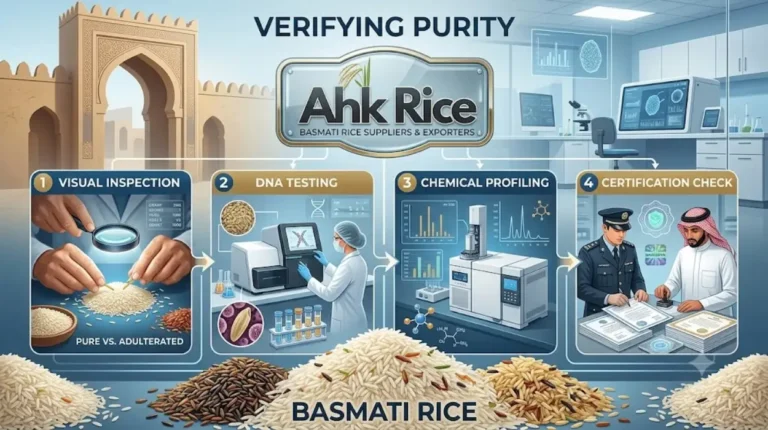
Quality control protects the specification agreed between buyer and seller. Testing and inspection address characteristics such as moisture, broken kernels, foreign matter, damaged grains, grain length, and other contract requirements.
FDA guidance identifies moisture and temperature control, sorting, milling, sampling, and analytical testing as relevant controls for imported grain products because hazards such as mycotoxins require management across the supply chain.
How do export documents affect reliability?
Documentation determines whether a shipment can move through the required export and import procedures.
Pakistan’s Department of Plant Protection states that phytosanitary export procedures involve meeting the importing country’s phytosanitary requirements, inspection, sampling or treatment where required, and issuance of a phytosanitary certificate under ISPM-12.
For Basmati, authenticity documentation also has relevance. Pakistan’s Basmati specification identifies the geographical indication and states that the Trading Corporation of Pakistan is responsible for verifying compliance with the notified product specifications for export shipments.
What certifications and compliance documents apply to Pakistani rice entering Tennessee?
Rice entering Tennessee is subject to U.S. food import requirements, while the Pakistani export side involves phytosanitary procedures and applicable product documentation. Voluntary food-safety certifications such as HACCP-based systems, ISO 22000, or BRCGS add assurance but do not replace mandatory U.S. import compliance.
The U.S. regulatory framework includes several important controls.
FDA requires applicable food facilities to register, and imported food shipments require prior notice. FDA also states that imported foods must meet U.S. requirements for safety, sanitation, and truthful English-language labelling.
The Foreign Supplier Verification Program is important for U.S. food importers. FDA guidance requires applicable importers to evaluate hazards, assess foreign suppliers, and conduct appropriate verification activities. These activities include supplier audits, sampling and testing, and review of food-safety records when appropriate.
The phytosanitary certificate originates from the exporting country’s plant-protection authority when required by the importing country’s rules. Pakistan’s Department of Plant Protection describes the certificate as part of its export procedure.
Basmati authenticity is a separate consideration. Pakistan’s official specification establishes Basmati as a protected geographical indication and provides product criteria for authentic Basmati rice.
A distributor evaluating suppliers therefore separates mandatory compliance from voluntary certification. FDA registration, prior notice, FSVP obligations, applicable labelling, customs documentation, and required phytosanitary documents belong to regulatory compliance. HACCP, ISO 22000, BRCGS, Halal certification, and similar schemes belong to supplier assurance when applicable to the product, facility, customer, or contract.
What benefits does reliable supply create for Tennessee distributors?
Reliable supply improves inventory planning, protects customer relationships, reduces emergency purchasing, supports predictable pricing, improves warehouse utilisation, strengthens product consistency, and gives distributors better control over recurring orders across retail, wholesale, foodservice, and institutional markets.
A reliable supplier gives the distributor better visibility over purchase quantities and delivery schedules. This supports warehouse planning and reduces unnecessary emergency procurement.
Product consistency also protects downstream customers. A restaurant purchasing 1121 Basmati expects the same cooking characteristics across repeated deliveries. A grocery distributor selling a private-label Basmati product requires consistent packaging and product specifications.
Reliability also improves working-capital planning. Predictable replenishment reduces the need to carry excessive safety inventory solely because supplier performance is uncertain.
The benefit becomes particularly relevant during periods of tighter U.S. supply. USDA’s August 2026 outlook reports lower U.S. ending stocks and record projected imports for 2026/27.
Where do Tennessee distributors use reliable Pakistani rice supply?
Tennessee distributors use reliable Pakistani rice supply across ethnic grocery retail, independent supermarkets, foodservice wholesalers, restaurants, catering businesses, institutional kitchens, private-label brands, and regional distribution networks that require repeatable rice specifications and scheduled replenishment.
A South Asian grocery wholesaler can require multiple grades and bag sizes throughout the year.
A restaurant supplier can require consistent 1121 Basmati for biryani and other rice-based dishes.
A private-label distributor can require identical packaging specifications across repeated purchase orders.
A foodservice operator can prioritise predictable delivery quantities over short-term price differences.
These use cases demonstrate why supply reliability is broader than having rice available. The product must arrive in the correct grade, package, quantity, condition, and timeframe.
What common supply problems affect rice distributors?
Common supply problems include inconsistent grades, shipment delays, documentation errors, quality deviations, insufficient inventory visibility, packaging mistakes, regulatory holds, poor communication, and dependence on one supply source without a defined contingency plan.
Why is low price not the same as reliable supply?
A low quoted price does not establish reliable delivery. The distributor must evaluate the complete landed supply chain.
A supplier offering a lower product price loses commercial value when a shipment arrives late, fails a specification, requires rework, or creates inventory shortages.
Why is Basmati not a single interchangeable product?
Basmati includes defined varieties and product specifications. 1121, Super Kernel, and 1509 are not identical inventory items.
Treating them as interchangeable creates purchasing errors. The distributor must define variety, grade, broken percentage, grain characteristics, packaging, and other contractual specifications.
Why does documentation matter as much as physical rice?
A container with compliant physical rice still requires the correct import documentation. FDA states that imported foods are subject to inspection at U.S. ports of entry and can be detained when they do not comply with U.S. requirements.
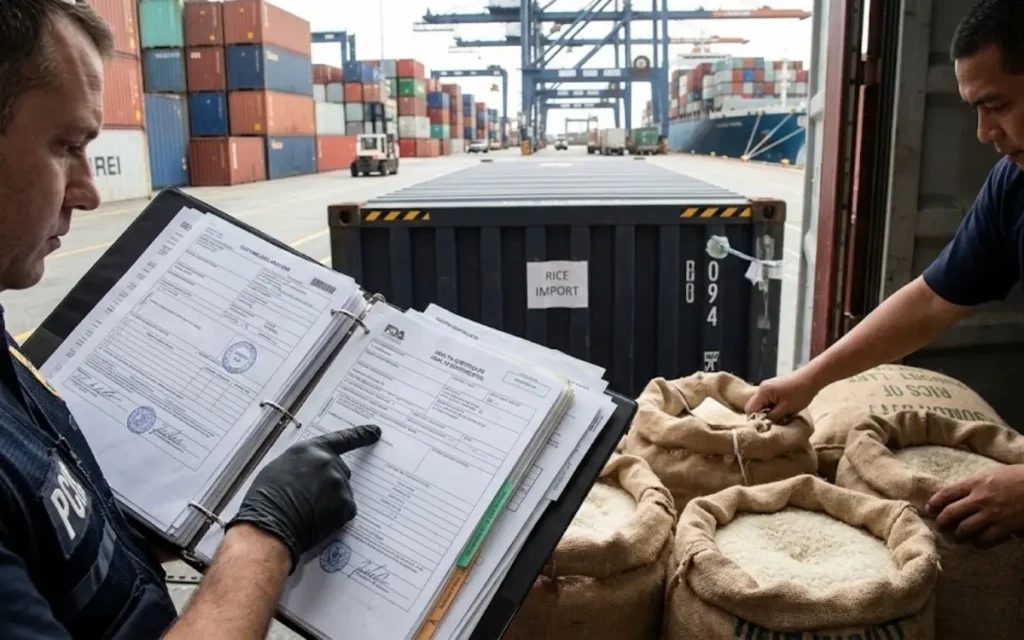
A reliable supply chain therefore includes documentation control before the container reaches the United States.
How should Tennessee distributors think about long-term rice supply stability?
Tennessee distributors should evaluate long-term stability through measurable supplier performance: consistent specifications, documented sourcing, processing capacity, quality testing, regulatory compliance, shipment history, packaging capability, communication, inventory planning, and the ability to support recurring purchase volumes.
This approach moves supplier evaluation from price comparison to supply-chain assessment.
A distributor can track order-fill rate, on-time shipment rate, rejected lots, specification deviations, documentation errors, transit delays, and response time. These metrics provide evidence of supplier performance.
The next stage is understanding how importers assess these factors before establishing recurring purchasing relationships. A detailed comparison of supplier capacity, quality evidence, compliance records, logistics performance, and continuity planning is covered in:
How importers evaluate long-term rice supply stability.
For Tennessee distributors, this distinction matters because international rice procurement involves more variables than domestic warehouse purchasing. The supplier must connect Pakistani agricultural production and processing with U.S. import requirements and Tennessee distribution needs.
In 2026, the wider U.S. rice market provides a strong reason to prioritise this discipline. USDA’s current outlook shows record projected imports alongside tighter domestic ending stocks.
Reliable supply therefore means more than having rice in stock today. It means maintaining the same product specification, documentation quality, processing standards, packaging requirements, and delivery performance across the next order and the order after that.
Frequently Asked Questions
What does supply reliability mean for Tennessee rice distributors?
Supply reliability means receiving the correct rice variety, grade, quantity, packaging, quality, documentation, and shipment on the agreed schedule without avoidable disruptions.
Why is Pakistani Basmati rice important to Tennessee distributors?
Pakistani Basmati rice provides Tennessee distributors with access to established varieties such as 1121, Super Kernel, and 1509 for retail, wholesale, restaurant, and foodservice markets.
Where is Pakistani Basmati rice grown?
Pakistani Basmati rice is primarily associated with geographical areas of Punjab and other designated production regions covered by Pakistan’s Basmati geographical indication specifications.
How is Pakistani Basmati rice processed?
The process includes harvesting, drying, cleaning, dehusking, milling, polishing, grading, optical sorting, quality inspection, and packaging before export.
What are the main Pakistani Basmati rice varieties?
Key varieties include 1121 Basmati, Super Kernel Basmati, and 1509 Basmati. Each variety has distinct grain characteristics and commercial applications.
What certifications and documents apply to imported Pakistani rice?
Applicable requirements include U.S. FDA food-import compliance, prior notice, Foreign Supplier Verification Program requirements for covered importers, applicable labelling, customs documentation, and phytosanitary certification when required.
How does reliable rice supply benefit distributors?
Reliable supply supports consistent inventory, predictable replenishment, customer satisfaction, warehouse planning, product consistency, and reduced exposure to emergency purchasing.
What problems can disrupt Pakistani rice supply to Tennessee?
Common disruptions include crop-related supply changes, processing delays, inconsistent quality, documentation errors, port delays, transportation problems, regulatory holds, and packaging issues.
How can Tennessee distributors evaluate rice suppliers?
Distributors can assess supplier performance through product specifications, processing capacity, quality-control systems, certifications, documentation, shipment history, delivery performance, packaging capability, and recurring supply capacity.
Why should distributors distinguish between 1121, Super Kernel, and 1509?
These varieties are not interchangeable inventory products. Each has different grain characteristics, specifications, cooking performance, and customer applications, so purchase contracts need clear variety identification.