Pakistan Saudi Arabia Rice Trade Value and Export Volumes in 2026
Pakistan supplied about 169,000 tonnes of rice worth US$163 million to Saudi Arabia in 2025. Here is why: the 2026 trade picture starts with this latest completed annual figure, while Saudi Arabia remains a major rice-importing market for Pakistani suppliers. The latest Pakistan-Saudi joint statement also identifies rice as a priority agricultural trade sector. (source: Saudi Ministry of Environment, Water and Agriculture, 2026)
What is the Pakistan Saudi Arabia rice trade in 2026?
The 2026 Pakistan-Saudi rice trade is a bilateral food trade channel measured through export value, shipment volume, rice varieties, processing grades, and Saudi import requirements. The latest completed annual benchmark is 169,000 tonnes and US$163 million.
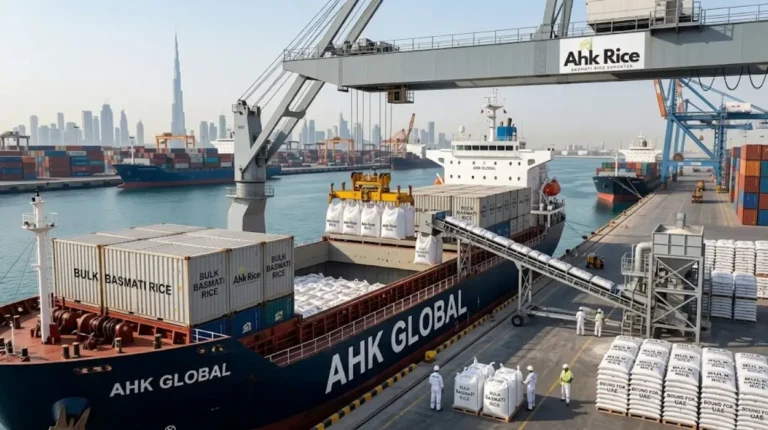
Pakistan exports rice to Saudi Arabia through commercial importers, distributors, wholesalers, retailers, restaurants, and foodservice businesses. The trade includes Basmati rice, Sella rice, Steam rice, and long-grain white rice.
Saudi Arabia imported 1.846 million tonnes of rice from all suppliers in 2024, valued at US$2.013 billion. Pakistan supplied 217,028 tonnes worth US$225.18 million in the same year. (source: UN Comtrade via World Bank WITS, 2024)
Pakistan therefore represented about 11.8% of Saudi Arabia’s 2024 rice import volume based on Saudi import records. Pakistan’s 2024 share by import value was about 11.2%. India supplied the largest volume and value during that year. (source: UN Comtrade via World Bank WITS, 2024)
The 2025 bilateral figure differs from the 2024 Saudi-reported customs data because trade statistics use different reporting dates, valuation methods, and reporter records. The 2025 government figure should therefore be used as the latest bilateral benchmark for 2026 planning.
With the trade value defined, the next question is how Pakistani rice reaches the Saudi market.
How does Pakistani rice reach Saudi Arabia?
Pakistani rice reaches Saudi Arabia through cultivation, harvesting, milling, grading, inspection, packing, documentation, customs clearance, shipping, and Saudi food-import release procedures. Each stage controls a different commercial requirement.
How is Pakistani rice cultivated and harvested?
Pakistani Basmati rice is cultivated mainly in Punjab’s rice-growing areas. Farmers irrigate fields, manage crop growth, harvest mature paddy, and transport the harvested crop for processing.
Rice variety affects grain length, aroma, cooking performance, milling yield, and market positioning. Examples include 1121 Basmati, Super Kernel Basmati, and 1509 Basmati.
How is rice processed before export?
Export processing converts harvested paddy into a defined commercial rice specification.
- Clean the paddy to remove field debris and foreign material.
- De-husk the grain to remove the outer rice husk.
- Mill the grain to produce brown or white rice.
- Polish the grain to achieve the required surface finish.
- Grade the rice according to size, appearance, and quality.
- Sort the grain using mechanical and optical sorting systems.
- Parboil the rice for Sella grades using controlled soaking, heating, steaming, and drying.
- Test the rice for moisture, broken grains, purity, and other agreed parameters.
- Pack the rice according to the buyer’s retail, wholesale, or foodservice specification.
The final specification normally identifies variety, grain length, broken percentage, moisture, packing, crop year, origin, and processing grade.
With the processing chain established, the next question is which commercial varieties form the trade base.
Which Pakistani rice varieties are important in Saudi Arabia?

1121, Super Kernel, and 1509 Basmati rice, Sella rice, Steam rice, and long-grain white rice form important categories in Pakistani shipments to Saudi Arabia. Shipment records show repeated transactions for these product types.
What is 1121 Basmati rice?
1121 Basmati is a long-grain Pakistani Basmati variety recognized for extended grain length, aromatic character, and strong cooked-grain presentation. Saudi shipment records show 1121 White, Steam, Golden Sella, and Creamy Sella transactions.
The 1121 category includes White, Steam, Golden Sella, Creamy Sella, Brown, and broken-rice forms. Each processing grade serves different cooking and distribution requirements.
Saudi shipment records from 2025 include 1121 Sella, 1121 Golden Sella, 1121 Creamy Sella, and 1121 Steam consignments. Examples include shipments of 25,805 kg, 75,000 kg, 250,000 kg, and 519,000 kg. (source: Volza shipment data, 2025)
What is Super Kernel Basmati rice?
Super Kernel Basmati is a traditional Pakistani aromatic Basmati variety used in South Asian retail, foodservice, and distribution markets. Its commercial specification focuses on aroma, grain quality, moisture, broken percentage, and consistent cooking performance.
Super Kernel shipments also appear in Saudi import records. Shipment data includes 22,000 kg consignments packed for Saudi distribution. (source: Volza shipment data, 2025)
What is 1509 Basmati rice?
1509 Basmati is a Pakistani Basmati variety associated with high yield, long grain, efficient cultivation, and commercial foodservice applications. The variety is processed as White, Steam, and Golden Sella.
1509 serves commercial buyers that require long-grain presentation and controlled procurement costs. Its use includes restaurants, catering operations, wholesalers, and private-label distribution.
With the major varieties identified, the next question is which specifications determine Saudi import value.
What are the key components of Pakistan-Saudi rice trade value?
Rice trade value depends on shipment volume, rice variety, processing grade, grain specification, broken percentage, moisture, packaging, freight, and delivery terms. These factors determine the commercial value recorded for each shipment.
Which specifications affect rice pricing?
| Trade component | Commercial effect |
|---|---|
| Variety | Determines market positioning and base value |
| Grain length | Separates long-grain and premium specifications |
| Broken percentage | Changes usable whole-grain yield |
| Moisture | Supports storage and quality control |
| Processing grade | Defines White, Steam, Sella, or other forms |
| Packaging | Changes packing and handling costs |
| Quantity | Affects procurement and freight economics |
| Destination | Determines freight and clearance costs |
| Incoterm | Defines seller and buyer cost responsibilities |
Saudi shipment records demonstrate substantial variation in transaction size. Examples include 15,000 kg, 44,000 kg, 75,000 kg, 148,800 kg, 250,000 kg, and 519,000 kg consignments. (source: Volza shipment data, 2025)
Trade value therefore cannot be interpreted from volume alone. A premium Basmati shipment and a commercial long-grain shipment can have different values per tonne.
With the value components defined, the next question is how Saudi buyers use imported Pakistani rice.
What are the main uses of Pakistani rice in Saudi Arabia?
Pakistani rice serves household consumption, ethnic retail, wholesale distribution, restaurants, catering, hospitality, foodservice, and private-label markets across Saudi Arabia. Processing grade and packaging normally follow the final use.
Which rice suits retail distribution?
Retail distribution uses smaller consumer packs such as 1 kg, 2 kg, 5 kg, and 10 kg. Premium Basmati grades focus on aroma, grain length, appearance, and cooking performance.
1121 Basmati fits premium retail positioning through long grain and multiple processing options. Super Kernel supports traditional aromatic Basmati demand.
Which rice suits catering and restaurants?
Foodservice buyers require consistent cooking results across large batches. Steam and Sella grades support different operational requirements.
Steam rice provides a white cooked appearance and firm grain structure. Golden Sella provides resilient grains for bulk preparation, holding, and service.
Which rice suits wholesalers?
Wholesale buyers prioritize specification consistency, container volume, packaging, and repeat supply. Long-grain white rice, 1121, Super Kernel, and 1509 can serve different wholesale segments.
With the use cases established, the next question is what certifications and import controls apply.
What certifications and documents apply to rice exports to Saudi Arabia?
Saudi food imports require registered importers, registered food products, compliant technical specifications, certified commercial documentation, and certificates required for the specific food item. SFDA controls imported food release.
Saudi Arabia’s Food and Drug Authority states that importers must maintain an SFDA account and register imported food products. Imported food must comply with Saudi regulations, technical requirements, and standards. The importer also requires a Commercial Register covering food trade. (source: Saudi Food and Drug Authority)
Required documentation can include a certificate of origin, certified commercial invoice, and other certificates required by SFDA. The exact document set depends on the product and applicable regulations. (source: Saudi Food and Drug Authority)
Food conformity documentation also forms part of Saudi import controls. Exporters should therefore verify current SFDA requirements with the Saudi importer before dispatch.
Certification does not replace product testing. Rice specifications still require verification for moisture, physical quality, contaminants, residues, and other buyer or regulatory requirements.
With compliance requirements established, the final issue is understanding common trade-data and product misconceptions.
What are the common problems and misconceptions in Pakistan-Saudi rice trade?
The main misconceptions concern 2026 trade totals, Basmati classification, shipment data, price comparisons, and certification requirements. Buyers should separate completed annual statistics from current-year activity.
Is US$163 million the complete 2026 rice trade value?
No. The US$163 million figure represents 2025, the latest completed annual bilateral figure reported in the 2026 government statement. It should not be presented as a completed 2026 total. (source: Saudi Ministry of Environment, Water and Agriculture, 2026)
Does every Saudi rice import from Pakistan represent Basmati?
No. HS code 1006 covers rice broadly. Pakistani exports include Basmati and non-Basmati categories. Shipment-level descriptions provide more detail than broad HS-6 trade statistics.
Do shipment databases equal official trade statistics?
No. Bill-of-lading databases record individual shipments and commercial descriptions. Customs statistics aggregate trade according to national reporting systems. The two datasets serve different analytical purposes.
Does certification guarantee every shipment is accepted?
No. Saudi import release depends on product compliance, documentation, importer registration, and applicable inspection procedures. Each shipment must satisfy the requirements applied at entry.
Pakistan supplied 169,000 tonnes worth about US$163 million in 2025, giving 2026 buyers a clear baseline for evaluating the Saudi market. The next layer is variety-level demand, especially the Pakistani Basmati grades appearing in Saudi shipments. (source: Saudi Ministry of Environment, Water and Agriculture, 2026)
What Pakistani Basmati rice varieties dominate Saudi import demand in 2026?
Saudi shipment records show strong representation of 1121 Basmati formats, including Sella, Golden Sella, Creamy Sella, and Steam, alongside Super Basmati and other Pakistani rice products. Product-level shipment data provides the clearest variety insight.
The detailed variety comparison should examine grain length, processing grade, cooking performance, packaging, buyer segment, and market application. This creates the logical transition from national trade statistics to product-level Saudi demand.
Frequently Asked Questions
What was Pakistan’s rice export value to Saudi Arabia in 2025?
Pakistan supplied approximately US$163 million of rice to Saudi Arabia in 2025. The reported volume was approximately 169,000 tonnes, according to the 2026 Pakistan-Saudi joint statement.
How much rice did Pakistan supply to Saudi Arabia in 2025?
Pakistan supplied about 169,000 tonnes of rice to Saudi Arabia in 2025. This figure is the latest completed annual volume cited by Pakistani and Saudi government sources.
How much rice did Saudi Arabia import from Pakistan in 2024?
Saudi Arabia reported 217,028 tonnes of rice imports from Pakistan in 2024, valued at approximately US$225.18 million. The data covers HS 1006 rice imports.
Which Pakistani Basmati grade appears frequently in Saudi shipments?
1121 Basmati appears across multiple Saudi shipment records, including White, Steam, Golden Sella, and Creamy Sella formats. Shipment records also show Super Basmati transactions.
What documents are required for Pakistani rice entering Saudi Arabia?
Saudi food imports require importer registration, food-product registration, compliant documentation, and certificates required by SFDA. A certificate of origin and certified commercial invoice form part of the general documentation framework.
Does the 2025 figure represent Pakistan’s 2026 rice exports to Saudi Arabia?
No. The 169,000-tonne and US$163-million figures describe 2025 trade. They provide the latest completed annual benchmark available for a 2026 market article.