How Should Imported Basmati Rice Be Stored in the UAE’s Hot, Humid Climate?
Imported Basmati rice stays in better condition in the UAE when warehouses control moisture, temperature, humidity, sunlight, pests and packaging integrity. Importers should store rice in a clean, dry, ventilated facility, keep bags off the floor, prevent condensation and follow a documented stock rotation system.
Basmati rice is an aromatic, long-grain rice associated with the Himalayan foothills of Pakistan and India. Pakistan’s Punjab region produces major export varieties, including 1121, Super Kernel and 1509. These varieties reach UAE supermarkets, wholesale distributors, restaurants, catering companies and food-service businesses through international supply chains.
The UAE presents specific storage challenges because outdoor temperatures rise sharply during summer, coastal humidity increases moisture exposure, and temperature differences between warehouses, transport vehicles and air-conditioned buildings encourage condensation. Correct storage practices protect grain quality from arrival at the port until distribution to the final buyer.
What Is Proper Basmati Rice Storage in the UAE?
Proper Basmati rice storage means protecting dry, milled rice from moisture, excessive heat, sunlight, pests and contamination throughout warehousing and distribution. In the UAE, importers need controlled storage conditions, intact food-grade packaging, regular inspections and documented inventory rotation.
Rice storage begins when a shipment arrives at the receiving warehouse. Staff inspect the container, verify the packaging and shipping documents, and check the condition of the bags before unloading. Wet cartons, damaged sacks, unusual odours and visible insect activity require investigation before the affected stock enters normal inventory.
Storage conditions depend on the rice’s moisture content, processing method, packaging and intended distribution period. White milled Basmati, parboiled Basmati and brown Basmati do not have identical storage characteristics. Brown rice contains more oil-rich bran, which increases its susceptibility to rancidity during prolonged storage.
Importers should distinguish between ambient warehouse storage and temperature-controlled storage. Ambient storage is suitable when the building remains dry, clean and protected from extreme temperature fluctuations. Temperature-controlled storage offers additional protection for longer holding periods or facilities exposed to severe heat.
How Does Basmati Rice Storage Work Step by Step?
Effective rice storage follows six steps: inspect incoming shipments, verify moisture and quality, select a dry warehouse, arrange pallets correctly, monitor environmental conditions and rotate stock. Each step reduces exposure to water, contamination, insects and avoidable deterioration.
1. Inspect incoming shipments
Check container walls, floors, roof areas and door seals for water entry. Examine bags for tears, damp patches, mould, insect activity and contamination. Compare received quantities, batch identifiers and packaging details against the shipment documents.
2. Verify grain quality
Review the supplier’s quality documents and certificate of analysis (COA). Confirm moisture content, broken-grain percentage, grain specifications and other agreed parameters. Use calibrated testing equipment and representative sampling procedures when independent verification is required.
3. Prepare the warehouse
Clean the storage area before unloading. Remove standing water, food waste, dust accumulations and pest harbourage. Repair roof leaks and seal openings that allow insects or rodents to enter.
4. Arrange bags on pallets
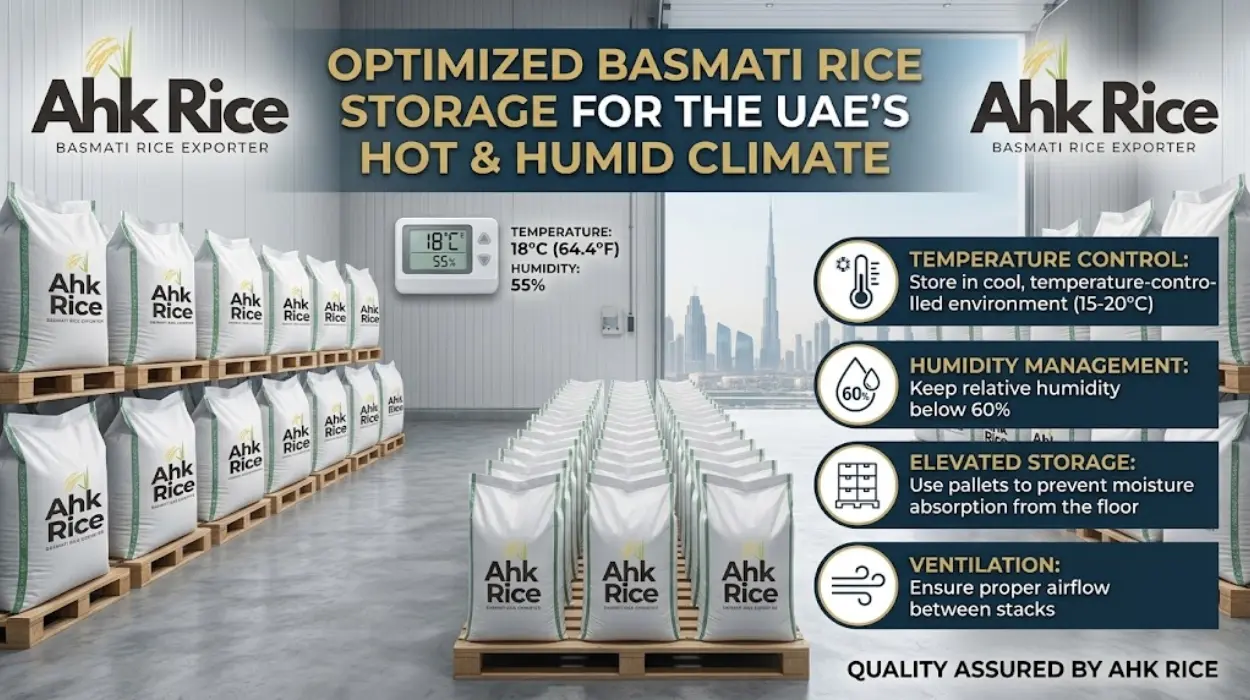
Place rice bags on clean, dry pallets rather than directly on concrete floors. Maintain clearance from walls and leave access routes for inspection, cleaning and stock movement. Follow local fire-safety rules and the warehouse’s approved stacking limits.
5. Monitor storage conditions
Record temperature and relative humidity at regular intervals. Inspect the warehouse during hot weather and after heavy rain or sudden changes in indoor temperature. Investigate condensation, rising moisture readings and unusual odours immediately.
6. Rotate inventory
Apply the first-expired, first-out (FEFO) method when products have different marked expiry or best-before dates. Use first-in, first-out (FIFO) when batches have equivalent shelf-life priorities. Maintain traceable batch records from receiving through dispatch.
What Are the Key Components of a Suitable Rice Storage Warehouse?
A suitable rice warehouse combines moisture protection, temperature monitoring, ventilation, pest exclusion, food-safe surfaces and organized stock management. These components work together to preserve grain quality, prevent contamination and maintain traceability throughout storage, handling and distribution.
Temperature and relative humidity
Temperature and relative humidity influence how rice behaves during storage. Warm conditions accelerate quality deterioration, while humid air increases the risk of moisture absorption when packaging allows exchange with the surrounding environment.
A practical warehouse target is a stable temperature below 25°C where feasible, especially for longer storage periods. This is an operational target, not a universal regulatory limit. Relative humidity should remain controlled, with approximately 50–60% providing a useful management target for a dry storage environment.
The warehouse team must interpret these figures alongside actual grain moisture, packaging specifications and the facility’s ventilation system. Outdoor air in the UAE is not always suitable for ventilation. Bringing humid air into a cooler warehouse can increase condensation rather than remove moisture.
Food-grade packaging
Packaging separates rice from dust, insects, handling contamination and environmental moisture. Common formats include woven polypropylene sacks, laminated bags, sealed retail pouches and food-grade bulk packaging.
Packaging selection depends on the distribution channel. Retail brands often use 1 kg, 2 kg, 5 kg or 10 kg bags. Restaurants and wholesalers commonly receive 20 kg or 25 kg sacks, while some institutional buyers use 50 kg bags, subject to handling and market requirements.
A suitable moisture barrier helps protect the grain during storage and transport. Packaging must also remain sealed, intact and suitable for food contact. A damaged bag requires inspection and appropriate repacking in a clean area.
Pallets and warehouse layout
Pallets prevent direct contact between rice bags and potentially damp floors. Clear aisles help staff inspect stacks, remove damaged stock and monitor pest activity. Storage layouts must also support safe forklift movement and emergency access.
Monitoring and traceability
Digital temperature and humidity loggers provide a record of changing warehouse conditions. Batch labels, receiving dates, inspection reports and dispatch records help importers identify affected stock when a quality issue occurs.
What Moisture Content and Shelf Life Should Importers Expect?
Milled Basmati rice generally enters export trade at a moisture content of approximately 12–13%, subject to the contract specification and applicable requirements. Shelf life depends on rice type, packaging, storage conditions and the manufacturer’s validated date marking.
Moisture content measures the proportion of water in the grain. It is one of the most important quality parameters because excessive moisture encourages mould growth and reduces storage stability.
Importers should verify moisture levels against the purchase contract and certificate of analysis. A reading within specification at loading does not eliminate the need to inspect the shipment on arrival. Water intrusion, condensation and damaged packaging can affect rice after loading.
White and parboiled Basmati rice generally store longer than brown rice under comparable conditions. Brown rice retains its bran layer, which contains oils that deteriorate over time. Actual shelf life must follow the product’s validated specification and applicable food-labelling rules rather than an assumed universal duration.
For commercial planning, importers should record the production or packing date, best-before date where applicable, batch number and recommended storage conditions. Stock with damaged packaging or signs of moisture exposure requires assessment before release.
For a detailed comparison of moisture targets, storage temperatures and product longevity, consult the related guide on [moisture content, shelf life and warehouse conditions for Basmati rice in the Gulf]([Insert Link to MOFU Article]).
What Are the Main Grades of Basmati Rice and Their Storage Needs?
Export Basmati grades differ by variety, grain length, processing method, broken-grain percentage and buyer specification. Pakistan’s principal commercial varieties include 1121, Super Kernel and 1509, supplied as white, steamed, parboiled or other contract-defined grades.
1121 Basmati rice
1121 is known for its long grain and pronounced cooked elongation. Export forms include white rice, Steam, Golden Sella, Creamy Sella, brown rice and broken grades, depending on the mill’s product range.
White and parboiled products need dry storage and protection from pests. Brown 1121 requires closer attention to storage duration because its bran layer retains more oil.
Super Kernel Basmati rice
Super Kernel is a traditional aromatic Pakistani Basmati variety associated with Punjab. Importers commonly select it for ethnic retail, regional distribution and food-service applications.
Storage controls focus on preserving aroma, grain cleanliness and the agreed moisture specification. Odorous chemicals, fuels and cleaning agents must remain separate from rice because grain can absorb unwanted odours.
1509 Basmati rice
1509 is valued in export markets for its long grain and commercial suitability for volume distribution. White, Steam and Golden Sella formats serve different cooking, retail and food-service needs.
Parboiled grades undergo soaking and heat treatment before drying and milling. Their processing history does not remove the need for dry storage, intact packaging and pest management.
Broken and brown rice
Broken rice consists of grain fragments separated during milling and grading. Brown Basmati retains its bran and germ, so it needs tighter control over storage duration and freshness.
Each grade should have a separate, clearly identified stock record. Importers should avoid mixing lots with different specifications or dates without documented authorization.
What Are the Benefits of Correct Basmati Rice Storage?
Correct storage preserves aroma, appearance, cooking performance and commercial value while reducing moisture damage, pest losses and rejected shipments. It also improves stock traceability, supports food-safety controls and helps distributors supply consistent products to UAE retailers and food-service customers.
Proper storage protects several quality attributes:
- Aroma: reduces exposure to strong external odours and unsuitable storage conditions.
- Grain appearance: limits moisture damage, staining and contamination.
- Cooking performance: helps maintain the characteristics expected for each grade.
- Inventory value: reduces avoidable losses caused by damaged or infested stock.
- Food safety: supports contamination prevention and documented inspections.
- Supply reliability: allows wholesalers to release batches according to quality status and stock rotation.
These benefits depend on the entire supply chain. A clean warehouse cannot correct poor-quality grain, inadequate drying or contamination that occurred before loading. Importers need receiving inspections, supplier documentation and appropriate storage controls working together.
Which Businesses Need Controlled Basmati Rice Storage?
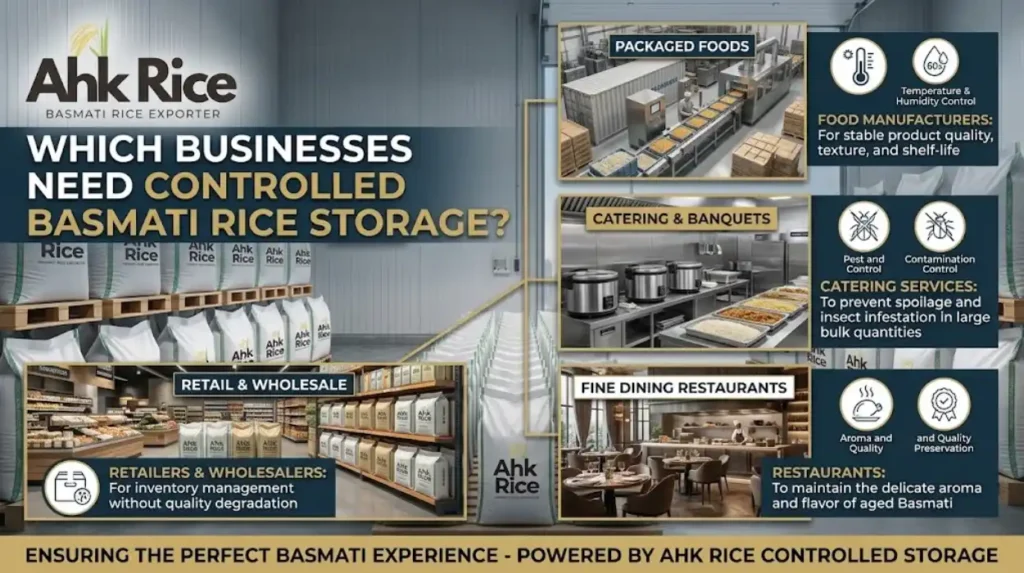
Rice storage controls apply to UAE importers, wholesalers, supermarkets, restaurant suppliers, catering companies and private-label distributors. Each business needs conditions and inventory procedures suited to its order volumes, packaging formats, stock turnover and distribution environment.
Importers and wholesale distributors
Importers typically hold full-container or bulk shipments before selling them to regional customers. They need sufficient pallet space, batch segregation, moisture monitoring and inspection records.
Supermarkets and retail distributors
Retail distributors must preserve branded packaging and prevent punctures, dampness and exposure to pests. Smaller packs also require clean handling during picking, shelving and replenishment.
Restaurants and catering companies
Restaurants often store opened sacks for repeated use. Staff should transfer rice into clean, dry, food-grade containers with secure lids, label the batch where practical and use clean, dry scoops. Containers should not sit beside sinks, steam equipment or other sources of moisture.
Private-label businesses
Private-label distributors need packaging that protects the grain during warehousing, transport and retail display. Label information, batch identification and shelf-life claims must remain consistent with the approved product documentation and destination-market rules.
What Common Storage Problems and Misconceptions Should Importers Avoid?
The most common storage failures involve damp floors, condensation, poor ventilation, torn bags, pest activity and excessive storage time. Importers should not assume that sealed packaging, hot weather or a dry-looking warehouse automatically guarantees safe, stable rice.
Misconception 1: Hot weather prevents mould
High outdoor temperatures do not eliminate mould risk. Mould develops when moisture and other growth conditions become suitable. Rice exposed to leaks or condensation requires inspection, regardless of the outdoor temperature.
Misconception 2: Ventilation always reduces humidity
Ventilation helps only when incoming air improves indoor conditions. In humid coastal locations, uncontrolled ventilation introduces moisture. Warehouse managers should compare indoor and outdoor conditions before operating ventilation systems.
Misconception 3: Sealed bags never absorb moisture
Packaging performance varies by material, thickness, seals and damage. Woven sacks without an effective moisture barrier offer different protection from properly sealed, high-barrier packaging. Importers should select packaging according to storage duration and distribution conditions.
Misconception 4: All rice grades have the same shelf life
White, parboiled and brown rice have different storage characteristics. Brown rice’s higher oil content increases its susceptibility to rancidity. Importers should follow the specific product’s shelf-life documentation rather than assigning one date to every grade.
Misconception 5: Fumigation fixes every pest problem
Fumigation does not replace sanitation, inspection or preventive pest management. Only authorized personnel should apply approved treatments according to applicable regulations. Infested stock must be isolated and assessed before distribution.
Which Certifications and Food-Safety Requirements Apply to Imported Rice in the UAE?
Imported Basmati rice must meet applicable UAE food-import, labelling and food-safety requirements. Required documents and approvals depend on the product, origin, shipment and importing emirate. Importers should verify current rules before dispatch and maintain traceable quality records.
The UAE’s food-import framework includes requirements administered through relevant federal and local authorities. Importers should confirm the applicable procedures with the competent authority in their destination emirate, including Dubai Municipality where relevant.
Important documentation and controls include:
- Certificate of origin: identifies the declared country of origin.
- Phytosanitary certificate: applies where required under the destination’s plant-health import rules.
- Certificate of analysis (COA): records agreed product parameters, such as moisture, broken grains and other tested characteristics.
- Food-safety management documentation: supports hygienic processing, handling and traceability.
- Product and shipment records: identify batches, quantities, packaging, dates and the relevant consignment.
- Conformity and inspection documents: apply when required by the destination’s rules or the commercial contract.
HACCP-based food-safety controls and ISO 22000 certification support systematic hazard management. These are not automatic substitutes for legal import approvals, and certification requirements vary by business and transaction.
Importers must also verify label language, ingredient declarations, origin information, date marking and other applicable labelling rules. A supplier’s certificate alone does not guarantee clearance or establish that every UAE requirement has been met.
How Can UAE Importers Maintain Rice Quality from Arrival to Delivery?
UAE importers maintain rice quality through shipment inspection, documented storage limits, routine environmental monitoring, pest prevention and batch-level stock rotation. A written procedure assigns responsibility for inspections, corrective action and release decisions at every stage.
A practical warehouse checklist includes the following actions:
- Inspect the container and bags before unloading.
- Verify the batch documentation and agreed moisture specification.
- Place bags on clean pallets with inspection access.
- Record warehouse temperature and relative humidity.
- Inspect for leaks, pests, damaged seals and unusual odours.
- Separate affected stock and document corrective action.
- Rotate inventory according to date markings and commercial priorities.
- Inspect packaging and batch records before dispatch.
These procedures apply to Pakistani 1121, Super Kernel and 1509 Basmati rice, although each product’s packaging and storage requirements must follow its individual specification.
Good storage begins with appropriate grain quality and continues through every handling stage. When UAE importers coordinate receiving inspections, warehouse controls and stock rotation, they protect product consistency and reduce avoidable losses across retail, wholesale and food-service distribution.
Frequently Asked Questions
What is the ideal temperature for storing Basmati rice in the UAE?
A stable temperature below 25°C is a useful operational target for longer storage where feasible. Importers should also monitor humidity, grain moisture, packaging integrity and condensation rather than relying on temperature alone.
What moisture content is suitable for imported Basmati rice?
Export Basmati commonly has a moisture specification around 12–13%. The applicable target depends on the product, contract and relevant requirements. Buyers should verify the actual shipment through documented quality checks.
How long does Basmati rice last in a UAE warehouse?
Shelf life depends on the variety, processing method, packaging and storage conditions. Importers should follow the manufacturer’s validated shelf-life specification and date marking instead of assuming every rice grade has the same storage duration.
Should Basmati rice be stored in airtight containers?
Airtight, food-grade containers help protect opened rice from pests and moisture when the rice is dry and the container remains clean. Containers must not trap moisture in wet or improperly dried grain.
Can Basmati rice be stored in a non-air-conditioned UAE warehouse?
Yes, when the facility maintains suitable dry conditions, prevents water intrusion, controls pests and protects rice from excessive heat and humidity. Temperature-controlled storage provides additional protection when ambient conditions are unsuitable for the intended storage period.