How Do Certified Rice Facilities Improve Buyer Confidence and Compliance?
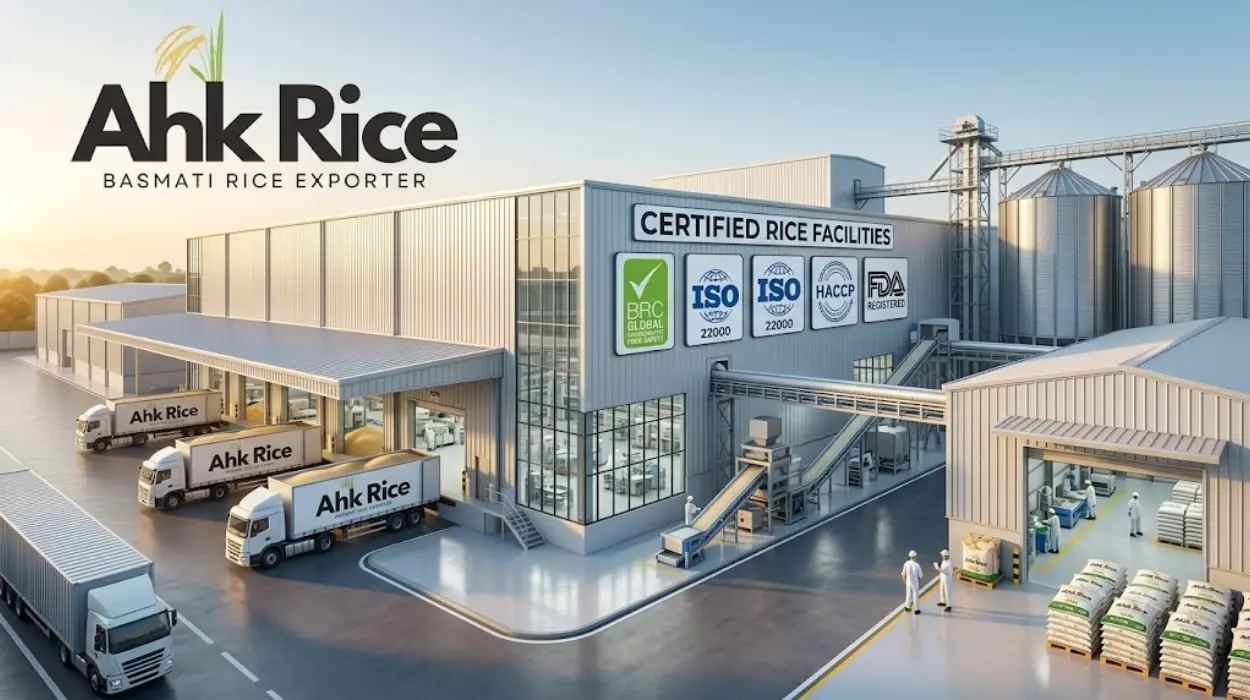
Certified rice facilities improve buyer confidence because they provide verified quality, traceability, food safety, and export compliance. Here is why: certified facilities inspect raw paddy, test finished rice, document every processing stage, and verify shipments against international standards. Buyers reduce risk, avoid customs delays, and receive consistent specifications across every container.
Importers sourcing Pakistani Basmati increasingly evaluate facilities before evaluating price. Food safety regulations continue to tighten across Europe and the Middle East. Regulatory authorities require documented quality systems, traceability records, and laboratory testing. Buyers need suppliers that can prove compliance rather than merely claim compliance. Facilities with recognized certifications provide that proof.
AHK Rice, a Punjab-based Pakistani exporter, supplies 1121, Super Kernel, and 1509 Basmati varieties through controlled processing, quality verification, and export documentation systems. Buyers researching quality assurance standards can also review our educational guide on certified rice production and export compliance (insert TOFU article link here naturally).
What Are Certified Rice Facilities and Why Do Buyers Prefer Them?
Certified facilities provide documented quality control, traceability systems, food safety verification, export compliance records, and standardized processing procedures that reduce procurement risk.
Certified rice facilities operate under recognized quality frameworks. Certification verifies that the facility follows documented procedures during milling, grading, packaging, storage, and dispatch.
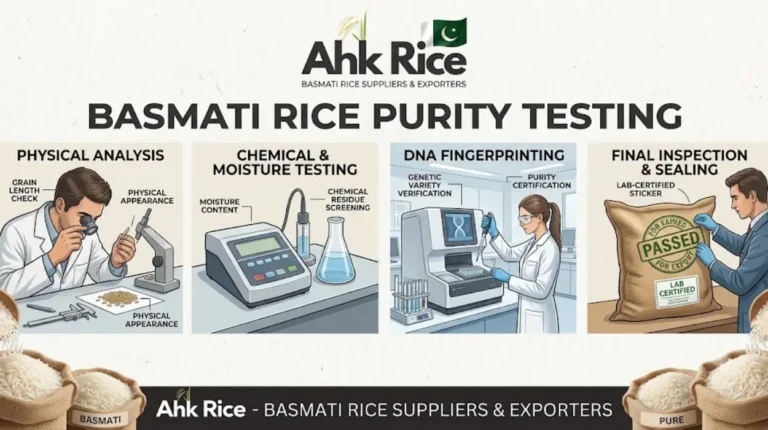
Food safety certification establishes controls across the processing chain. The facility must inspect incoming paddy, monitor production conditions, test finished products, and maintain records.
Traceability creates accountability. Buyers can identify cultivation sources, processing batches, laboratory reports, and shipment records.
Certification also improves supplier evaluation. Procurement managers compare documented systems rather than relying on marketing claims.
Which Certifications Matter Most?
The most common certifications include:
- ISO 22000 Food Safety Management
- HACCP Food Safety System
- BRCGS Food Safety Standard
- Halal Certification
- Phytosanitary Compliance
- Export Inspection Documentation
- Laboratory Testing Verification
Each certification addresses a different compliance requirement.
How Certification Builds Trust
Certification reduces uncertainty.
European importers require documented food safety controls. Gulf distributors require consistent quality specifications. Retail chains require supplier verification programs.
Certified facilities satisfy these requirements through documented evidence rather than verbal assurances.
With certification benefits established, the next question is how different compliance approaches compare.
What Are the Available Solutions for Rice Quality and Compliance Management?
Buyers can source from uncertified mills, partially certified facilities, or fully certified export-focused facilities, with each option providing different levels of risk control and compliance assurance.
Rice exporters generally operate under three compliance models.
Comparison of Available Approaches
| Approach | Documentation | Traceability | Food Safety Controls | Export Readiness | Buyer Confidence |
|---|---|---|---|---|---|
| Uncertified Mill | Limited | Low | Basic | Variable | Low |
| Partially Certified Facility | Moderate | Moderate | Controlled | Good | Medium |
| Fully Certified Export Facility | Comprehensive | High | Verified | Excellent | High |
Uncertified mills often compete on price. Documentation gaps increase procurement risk.
Partially certified facilities improve quality control. However, compliance coverage may remain incomplete.
Fully certified exporters provide integrated systems. Documentation, testing, and traceability remain available throughout the transaction cycle.
Why Documentation Matters
Documentation protects both buyer and supplier.
Import inspections require certificates. Customs authorities require shipment records. Retail chains require supplier verification files.
Missing documents create delays, penalties, and rejected shipments.
With available solutions compared, buyers must evaluate which approach performs best across specifications and commercial requirements.
How Do Different Approaches Compare Across Quality, Cost, and Shelf Life?
Fully certified facilities deliver higher consistency, stronger compliance performance, longer market acceptance, and lower transaction risk despite slightly higher processing costs.
Certification influences more than compliance.
It affects consistency, claims verification, shipment approval, and inventory performance.
Specification Comparison Table
| Attribute | Uncertified Facility | Partially Certified Facility | Fully Certified Facility |
|---|---|---|---|
| Traceability | Limited | Batch Level | End-to-End |
| Laboratory Testing | Occasional | Scheduled | Routine |
| Food Safety Controls | Basic | Controlled | Verified |
| Export Documentation | Variable | Good | Comprehensive |
| Buyer Audit Readiness | Low | Medium | High |
| Consistency of Specifications | Moderate | Good | Excellent |
| Compliance Risk | High | Medium | Low |
Buyers often focus on product quality first. Regulatory authorities focus on compliance first.
Successful imports require both.
Price per MT Comparison
Certified facilities generally incur higher operational costs because they maintain audits, testing programs, and documentation systems.
| Facility Type | Typical Cost Impact |
|---|---|
| Uncertified | Lowest |
| Partially Certified | Moderate |
| Fully Certified | Highest Processing Cost |
The higher processing cost often represents a small percentage of the landed import value.
Rejected shipments cost significantly more than certification expenses.
Shelf Life Comparison
Proper processing directly affects storage performance.
| Processing Environment | Typical Shelf Life |
|---|---|
| Basic Controls | 12–18 Months |
| Controlled Certified Environment | 18–24 Months |
Controlled facilities maintain moisture management, contamination prevention, and packaging integrity.
For Gulf distribution warehouses operating above 35°C, certified storage procedures protect product quality longer. For European retail distribution centers, documented storage controls support food safety requirements.
Having compared performance differences, buyers can evaluate regional preferences and purchasing priorities.
Which Market Regions Depend Most on Certified Rice Facilities?
Europe prioritizes compliance documentation and food safety verification, while the Gulf region prioritizes consistency, certification, and long-term supply reliability.
Regional requirements influence supplier selection.
European Market Preferences
European buyers prioritize:
- Food safety documentation
- Traceability systems
- Laboratory verification
- Import compliance records
- Retail supply readiness
Retail chains demand documented supplier controls.
Government inspections focus on compliance evidence.
European importers frequently source premium grades such as:
- 1121 Steam Basmati
- 1121 White Basmati
- Super Kernel Basmati
Gulf Market Preferences
Gulf buyers prioritize:
- Consistent grain length
- Stable cooking performance
- Halal compliance
- Reliable supply continuity
- Bulk shipment capability
Foodservice distributors and catering companies often purchase:
- 1121 Golden Sella Basmati
- 1509 Golden Sella Basmati
- Super Kernel Golden Sella
Regional Grade Comparison
| Region | Preferred Grades |
|---|---|
| Europe | 1121 Steam, White, Super Kernel |
| GCC Countries | 1121 Golden Sella, 1509 Golden Sella |
| Foodservice Sector | Golden Sella Grades |
| Retail Sector | Steam and White Grades |
Regional requirements demonstrate why certification must align with end-market expectations. The next step is determining which facility model suits specific buying scenarios.
Which Method Works Best for Different Buying Cases?
The best solution depends on market requirements, buyer size, regulatory exposure, and product positioning objectives.
Different buyers face different risks.
Decision Framework Table
| Buyer Situation | Recommended Solution | Reason |
|---|---|---|
| Retail Importer | Fully Certified Facility | Regulatory compliance |
| Foodservice Distributor | Fully Certified Facility | Consistency and traceability |
| Private Label Brand | Fully Certified Facility | Audit readiness |
| Wholesale Trader | Partially or Fully Certified Facility | Cost-performance balance |
| Spot Market Buyer | Partial Certification Minimum | Risk reduction |
Retailers face the highest compliance requirements.
Private label brands require documented systems because consumers increasingly demand transparency.
Foodservice distributors prioritize consistency because operational kitchens depend on predictable cooking performance.
When Full Certification Creates Maximum Value
Full certification provides the greatest value in regulated markets.
European imports require extensive documentation.
Retail contracts often require supplier audits.
Large-volume procurement programs require consistency across multiple shipments.
With buyer scenarios evaluated, decision-makers should also consider advantages and disadvantages before final supplier selection.
What Are the Pros and Cons of Certified Rice Facilities?
Certified facilities improve compliance, quality consistency, and market access, while increasing operating costs and documentation requirements.
Advantages
- Improved buyer confidence
- Reduced compliance risk
- Better traceability
- Stronger food safety controls
- Higher audit readiness
- Easier market access
- Greater shipment consistency
Certification supports long-term supplier relationships.
Buyers can verify processes rather than speculate about them.
Disadvantages
- Higher operating expenses
- More administrative procedures
- Additional audit requirements
- Increased documentation workload
These disadvantages primarily affect suppliers.
Buyers generally benefit from the resulting control systems.
Practical Example
A retailer importing 500 MT annually gains significant protection through documented traceability.
A rejected shipment can create inventory shortages, contractual penalties, and reputational damage.
Certification minimizes these risks through verification systems.
Understanding pros and cons naturally leads to the final decision factors buyers should evaluate before procurement.
What Decision Factors Should Buyers Evaluate Before Selecting a Supplier?
Documentation quality, certification scope, laboratory testing capability, traceability systems, and export experience should guide supplier evaluation.
Buyers should review supplier capabilities systematically.
Supplier Evaluation Checklist
- Certification validity
- Laboratory testing procedures
- Batch traceability systems
- Export documentation accuracy
- Packaging controls
- Storage standards
- Audit readiness
Each factor contributes to compliance performance.
Questions Buyers Should Ask
- Which certifications remain active?
- How frequently does the facility test rice?
- How are batches traced?
- Which markets receive exports?
- Which documents accompany shipments?
Objective answers indicate operational maturity.
Why Compliance Creates Competitive Advantage
Compliance increasingly influences procurement decisions.
Food safety regulations continue expanding globally.
Retail chains continue strengthening supplier requirements.
Certified facilities position buyers for long-term market stability.
As compliance requirements increase, certified processing becomes less of a differentiator and more of a procurement necessity.
Certified rice facilities improve buyer confidence because they verify quality, document compliance, and maintain traceability from procurement to shipment. They reduce operational risk, strengthen food safety assurance, and simplify international trade. For importers targeting Europe, the Gulf region, or regulated retail channels, certification functions as a practical risk-management tool rather than a marketing feature.
For buyers moving from evaluation to supplier selection, consider linking to the decision-stage article “Source Certified Pakistani Basmati Rice for Wales Through AHK Rice” after the conclusion paragraph or within a final call-to-action section discussing supplier qualification and procurement planning.
Frequently Asked Questions
Do certified rice facilities guarantee better rice quality?
Certified facilities guarantee controlled processes, documented inspections, and verified testing. These systems improve consistency and reduce quality variation across shipments.
Which certification is most important for rice exports?
ISO 22000 and HACCP remain the most widely recognized food safety certifications. Market requirements determine whether additional certifications are necessary.
Why do European buyers prefer certified rice suppliers?
European buyers require traceability, food safety verification, and regulatory compliance documentation. Certified facilities provide these requirements through documented systems.
Do certified facilities increase rice prices?
Certification increases operational costs slightly. However, reduced compliance risk and improved shipment reliability often create greater value than the additional cost.
Which rice grades are commonly sourced from certified facilities?
Importers frequently source 1121 Steam Basmati, 1121 Golden Sella Basmati, Super Kernel Basmati, and 1509 Basmati through certified export-focused facilities.
How does traceability help rice buyers?
Traceability links each shipment to production records, laboratory tests, and processing batches. This improves accountability and supports regulatory compliance.