Launch an Online Basmati Rice Brand in the USA with AHK Rice Private Labelling
Launching a private-label Basmati rice brand in the USA requires the right rice specification, compliant packaging, reliable export documentation, and a supply partner that understands international trade. A successful Amazon or e-commerce launch begins with a product that meets buyer expectations and US import requirements.
AHK Rice supports international buyers sourcing Pakistani Basmati rice, selecting suitable varieties, arranging customized packaging, and coordinating export shipments. For US entrepreneurs, importers, distributors, and established food brands, private labelling creates an opportunity to sell rice under an independent brand without operating a rice processing facility.
What is the best solution for launching a private-label Basmati rice brand in the USA?
The best solution is to partner with a Pakistani Basmati rice exporter that can supply consistent specifications, customized retail packaging, export documentation, and shipment coordination. This approach helps US sellers focus on branding, distribution, and customer acquisition while establishing a dependable supply chain.
Launching independently involves several decisions. You must select a rice variety, establish quality specifications, approve packaging artwork, confirm import compliance, and calculate the landed cost per retail unit. Managing every stage without an experienced supplier can increase delays and create avoidable procurement risks.
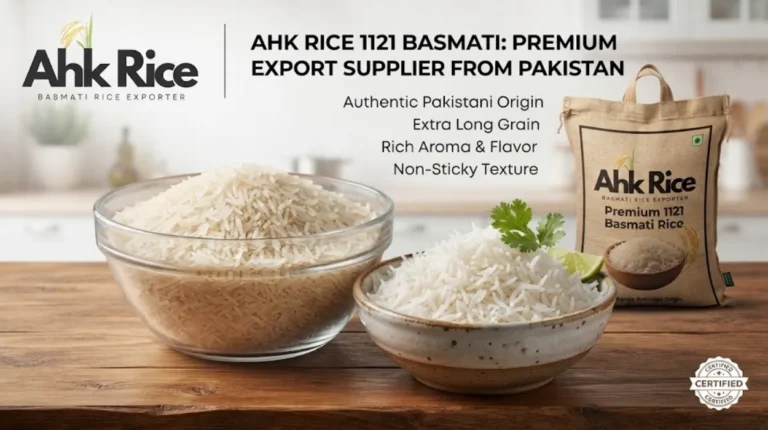
AHK Rice provides a sourcing and export solution for businesses developing their own rice labels. Buyers can evaluate varieties such as 1121, Super Kernel, and 1509 Basmati rice according to their target market, retail positioning, and budget.
Before placing a commercial order, define your intended sales channel. Amazon FBA sellers need packaging suitable for individual customer orders and fulfillment-center handling. Independent e-commerce stores need durable packaging, accurate product information, and a dependable delivery strategy. Wholesale brands require specifications and pack sizes that suit their distribution partners.
Businesses researching platform eligibility should first understand whether Pakistani Basmati rice can be sold on Amazon and US e-commerce platforms, including the relevant marketplace, import, and food-labeling requirements.
Why should US businesses choose AHK Rice for private labelling?
AHK Rice helps buyers develop private-label supply arrangements by connecting rice variety selection, processing specifications, customized packaging, and export coordination. Buyers can establish product requirements before shipment, reducing uncertainty about grain quality, packaging formats, and commercial order expectations.
A private-label supplier must deliver more than a recognizable rice variety. Consistency between approved samples and commercial shipments matters because customer reviews, repeat purchases, and retailer relationships depend on predictable cooking performance and product quality.
AHK Rice supplies Pakistani Basmati varieties suited to different commercial positions:
- 1121 Basmati: Suitable for premium positioning where long grains, aroma, and cooked grain elongation are important.
- Super Kernel Basmati: Appropriate for buyers targeting aromatic rice for South Asian grocery customers and ethnic retail channels.
- 1509 Basmati: An option for businesses evaluating long-grain Basmati with commercial value and competitive sourcing requirements.
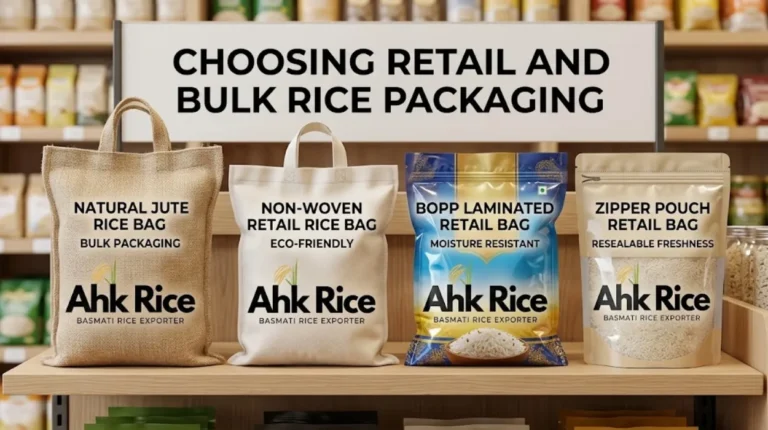
AHK Rice can discuss customized packaging requirements, including retail-oriented formats and larger packs for wholesale distribution. Final availability, minimum order quantities, packaging materials, and printing arrangements must be confirmed against the order specification.
For US importers, the purchasing agreement should identify the variety, crop year where applicable, grain length, broken percentage, moisture limit, packaging weight, labeling requirements, and agreed inspection criteria.
AHK Rice should also provide the available documentation relevant to the shipment and product. US importers remain responsible for ensuring that their business, food products, labels, and import arrangements satisfy applicable US requirements.
Which packaging and labeling requirements apply to online Basmati rice sales in the USA?
US-bound retail rice packaging must provide accurate product information and comply with applicable FDA labeling rules, while the importer must address relevant food-import obligations. Amazon sellers must separately verify current category, packaging, and fulfillment requirements before sending inventory to fulfillment centers.
Packaging decisions affect both product presentation and operating costs. A retail brand might choose 1 kg, 2 kg, or 5 lb packs for smaller households, while a 10 lb or 20 lb format may suit larger families and bulk-oriented customers. The best format depends on the target audience, shipping economics, and sales-channel requirements.
A US retail label generally needs review for applicable requirements covering:
- Statement of identity and product name.
- Net quantity of contents in appropriate US customary and metric units.
- Ingredient declaration where required.
- Nutrition Facts information where applicable.
- Name and place of business of the responsible manufacturer, packer, or distributor.
- Country-of-origin marking and other applicable import disclosures.
- Required allergen information, if relevant to the actual product and processing arrangements.
Plain rice may qualify for certain labeling exemptions depending on the product and circumstances. Do not assume that every exemption applies to a particular branded product. Confirm the applicable requirements before printing packaging.
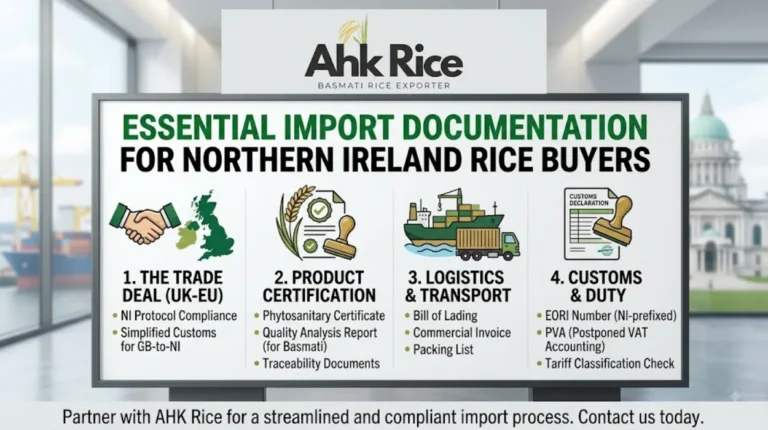
Imported food also requires an appropriate compliance plan. Depending on the operation, this can involve FDA food-facility registration, Prior Notice, Foreign Supplier Verification Program responsibilities, customs entry requirements, and applicable food safety controls. The importer should confirm which obligations apply to the specific transaction.
AHK Rice can coordinate export-side product and packaging discussions, but US regulatory compliance must be verified by the responsible importer and its qualified compliance adviser.
For a practical comparison of retail formats, label information, and fulfillment considerations, review packaging, labelling and FBA requirements for selling imported Basmati rice online.
What results can a new Basmati rice brand expect?
A new private-label brand can establish a repeatable sourcing process, differentiate its product through packaging and positioning, and prepare inventory for online distribution. Actual sales, profitability, and repeat purchases depend on pricing, product quality, competition, advertising, and fulfillment performance.
Consider a US entrepreneur targeting South Asian households through Amazon and an independent online store. The business selects 1121 Basmati for premium positioning, approves a retail pack design, and establishes a written grain specification before production.
The supplier prepares a commercial sample for evaluation. The buyer checks aroma, grain appearance, cooking results, packaging presentation, and consistency with the intended product description. After approval, both parties confirm the order quantity, packaging, documentation, and shipment arrangements.
This process creates measurable checkpoints before the business commits to a larger launch.
The buyer can track landed cost per pack, fulfillment expenses, advertising costs, returns, and gross margin. These figures help determine whether a product should target premium grocery shoppers, value-conscious households, or foodservice customers.
AHK Rice supports the supply side of this process. It does not guarantee Amazon rankings, sales volume, customer reviews, or a particular profit margin. Those outcomes depend on the seller’s commercial execution and market conditions.
How much does private-label Basmati rice cost?
Private-label costs depend on rice variety, quality grade, order quantity, packaging design, printing, inspection, freight, insurance, customs charges, and US fulfillment expenses. Buyers should calculate the complete landed cost rather than comparing suppliers on rice price alone.
A reliable quotation starts with a clear specification. A premium 1121 order may have a different price from a 1509 order because of grain characteristics, processing requirements, and market positioning. Packaging weight, printed material, order volume, and destination also affect the final commercial offer.
Request a quotation that separates the main cost components:
| Cost component | What the buyer should confirm |
|---|---|
| Rice | Variety, grade, crop year, grain length, broken percentage, and moisture |
| Processing | Cleaning, grading, and agreed Sortex requirements |
| Packaging | Pack size, material, printing, and minimum order quantity |
| Sampling | Sample preparation, courier, and applicable certification costs |
| Export | Documentation, inspection, and origin-related charges |
| Freight | Shipping method, destination, insurance, and agreed Incoterm |
| US import | Applicable customs duties, brokerage, examinations, and compliance costs |
| Online fulfillment | Marketplace fees, storage, pick-and-pack, delivery, and advertising |
Ask for the quotation in the required commercial format, such as FOB or CIF, where available and appropriate. Under FOB, the buyer generally arranges the main ocean freight and insurance. Under CIF, the seller arranges cost, insurance, and freight to the named destination port, subject to the agreed contract and applicable Incoterms.
Neither quotation automatically includes every expense associated with importing, clearing, storing, and selling rice in the USA.
For an accurate comparison, calculate the total landed cost divided by the number of saleable retail packs. Then add marketplace fees, advertising, and domestic fulfillment expenses to estimate the contribution margin per unit.
How does the sample and approval process work?
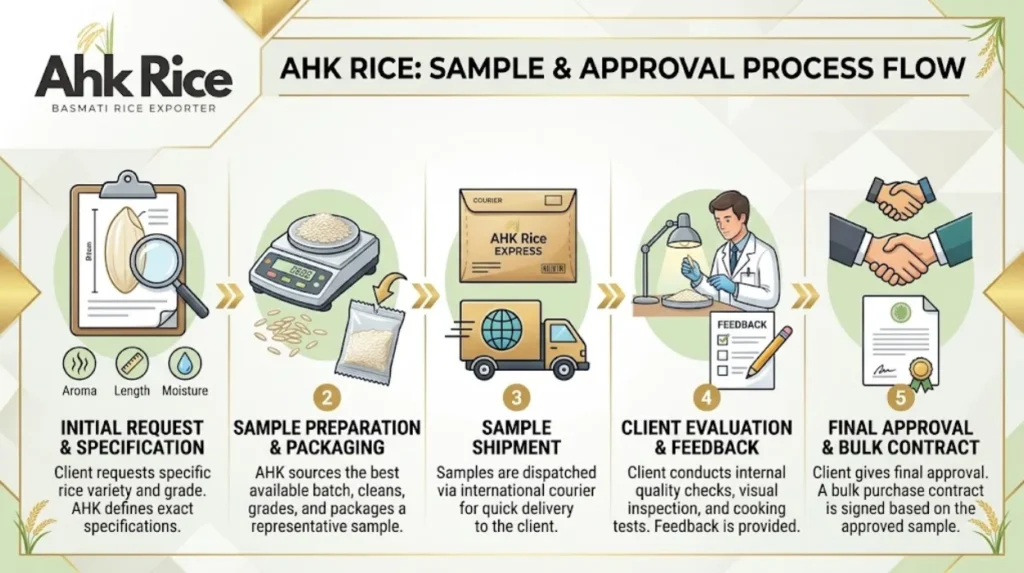
The sample process begins with the buyer’s target specification and ends with written approval before commercial production or shipment. Buyers should budget for sample preparation, international courier charges, and any applicable inspection or phytosanitary costs confirmed for the shipment.
AHK Rice buyers can follow a structured sample-to-order workflow.
Step 1: Submit the product specification. Identify the preferred variety, processing type, grain length, broken percentage, moisture requirements, pack size, and intended US sales channel.
Step 2: Confirm sample availability and costs. Ask AHK Rice to confirm the sample quantity, preparation charges, courier arrangements, and any applicable documentation or certification fees. A previously offered sampling arrangement may not apply to every variety or order, so obtain written confirmation.
Step 3: Evaluate the sample. Check grain appearance, aroma, cooking performance, texture, and consistency against your intended product specification. If the product will carry a premium brand, use a defined internal quality checklist.
Step 4: Approve packaging and documentation. Confirm the label artwork, retail pack material, net weight, product description, and export documents. Arrange a separate US compliance review before printing the final packaging.
Step 5: Confirm the commercial order. Agree on quantity, price, payment terms, production schedule, inspection requirements, shipment arrangements, and the final specification.
Step 6: Coordinate shipment and import clearance. Confirm the estimated transit schedule, required documents, customs arrangements, and delivery plan to the designated warehouse or fulfillment destination.
AHK Rice can coordinate the export-side stages according to the agreed order. The buyer should retain written approval records so the commercial shipment can be checked against the accepted sample and specification.
How many shipping days should US buyers allow?
Shipping time depends on the shipment’s origin, destination port, carrier schedule, transshipment, customs clearance, and inland delivery. US buyers should obtain a route-specific estimate rather than treating an indicative ocean transit period as a guaranteed delivery date.
For planning purposes, buyers can use these preliminary ocean-transit allowances from Pakistan:
| US destination | Indicative ocean transit planning range |
|---|---|
| US West Coast ports | Approximately 25–40 days |
| US East Coast ports | Approximately 35–50 days |
| US Gulf Coast ports | Approximately 30–45 days |
These are planning estimates, not live carrier schedules or guaranteed transit times. Actual shipping days can fall outside these ranges because of vessel availability, transshipment, port congestion, and routing changes.
The total procurement timeline also includes sample delivery, approval, packaging production, rice processing, export documentation, customs clearance, and inland transportation. These stages can add several weeks beyond ocean transit.
Amazon FBA sellers should not schedule a launch around vessel arrival alone. Confirm customs release, compliant shipment preparation, fulfillment-center requirements, appointment availability, and inventory receiving time before publishing a firm launch date.
How can a US business get started with AHK Rice?
Start by defining the product, target retail price, packaging format, and expected order quantity. Request a specification-based quotation, evaluate a commercial sample, confirm US compliance responsibilities, and approve the final order details before production and shipment.
A practical launch checklist includes:
- Select 1121, Super Kernel, or 1509 Basmati.
- Define grain specifications and processing requirements.
- Estimate demand and choose suitable retail pack sizes.
- Confirm packaging customization and label compliance.
- Request sample availability, courier costs, and evaluation details.
- Calculate landed cost and expected online selling margin.
- Confirm shipment terms, documentation, and delivery estimates.
- Approve the commercial specification before placing the order.
AHK Rice gives importers a starting point for building a Pakistani Basmati supply arrangement around their own brand requirements. A written specification, a documented sample approval, and a complete landed-cost calculation provide a stronger basis for the final purchasing decision.
To discuss your rice variety, private-label packaging, order quantity, and US shipping requirements, submit your requirements through the AHK Rice quotation request page.
Frequently Asked Questions
Can I sell Pakistani Basmati rice under my own brand in the USA?
Yes, subject to applicable US import, food safety, labeling, and business requirements. You must establish a compliant supply chain and verify marketplace rules. Your label must accurately describe the product. Confirm importer responsibilities before shipment.
Which Basmati variety is best for a private-label brand?
1121 suits premium positioning focused on long grains and aroma. Super Kernel targets aromatic Basmati customers seeking traditional cooking characteristics. 1509 offers another option for value-focused sourcing. The best choice depends on your customers, quality specifications, and target price.
Does AHK Rice provide customized packaging?
AHK Rice can discuss customized packaging according to the product and order requirements. Buyers should confirm available materials, pack sizes, printing arrangements, and minimum quantities. Final US retail artwork requires an appropriate compliance review before printing.
How much does a Basmati rice sample cost?
Sample costs depend on the variety, quantity, preparation requirements, courier destination, and applicable documentation or certification charges. Request a written breakdown before dispatch. Confirm whether any sampling offer applies to your selected product and commercial requirements.
How long does shipping rice from Pakistan to the USA take?
Indicative ocean transit can range from approximately 25 to 50 days, depending on the US destination and route. Production, export clearance, customs, and inland delivery add time. Obtain a current shipping estimate before committing to a launch date.
Can AHK Rice guarantee Amazon sales or profit?
No supplier can guarantee sales rankings, conversion rates, or profit. AHK Rice can discuss sourcing and export requirements. Your results depend on landed cost, product quality, pricing, competition, advertising, customer experience, and fulfillment performance.